

This article was initially published in the April issue of Global Drinks Intel magazine. For details on how to subscribe click here.
Vodka remains the largest spirits segment in North America, but it isn’t resting on its laurels. Brand owners are plugging into everything from flavour to social trends to hold off the challenge from tequila.
Vodka may be North America’s favourite spirit but that position is somewhat precarious – the segment faces some stiff competition from rival liquors, most notably tequila, which IWSR Drinks Market Analysis forecasts will overtake vodka in the region this year to become the spirits industry leader by value.
For now, vodka remains the largest spirits segment overall, but it needs to stay on its toes if it is to elevate its volumes, which were pretty flat in 2022 versus 2021 at +0.5%. IWSR’s North America research director, Adam Rogers, expands on the current state of play, which saw sales by value grow slightly more at 1%.
“Standard-priced vodka (US$10-$22.49) makes up over 50% of volumes and is the only sub-segment in growth, led primarily by the category’s leading brand,” he says. “Several brands across various premium price points are growing as well, so the category is showing mixed results.”
‘Better-for-you’ and flavour trends fuel the rise of the RTD
There’s plenty of activity from the big names as they feed into the key consumer trends, identified by Rogers as “sustainability, inclusiveness and better-for-you” attributes.
Flavour, he adds, “continues to be a driver, which is evident across all beverage alcohol – especially RTDs. We’re seeing more sophisticated botanical-led flavour combinations as well”.
Step forward Pernod Ricard’s Absolut brand, which has recognised the rising dynamism of RTDs and has a canned Absolut Cocktails line, which “really brings our mixology expertise to the forefront”, according to the brand’s VP of business acceleration & planning, Quentin Meurisse.
“Our three flavours – Grapefruit Paloma, Mango Mule and Berry Vodkarita – are all made with our signature Absolut Vodka and natural fruit flavours,” he says. “We’re getting positive reactions on Absolut Cocktails – Berry Vodkarita, for example, resonates well with consumers.”
Meurisse identifies the big vodka movements in North America as “cocktail-making, a consumer desire for trying new flavours, ‘home-tainment’ and regular but shorter nights out, as well as differentiation in products with varying or lower ABV”.
Of course, RTDs – vodka-based versions of which, Rogers predicts, will account for around 61% of spirit-based RTDs’ overall growth until 2026 – have their place in all those areas, and especially work to answer consumer requirements for lower-calorie and lower-ABV drinks.
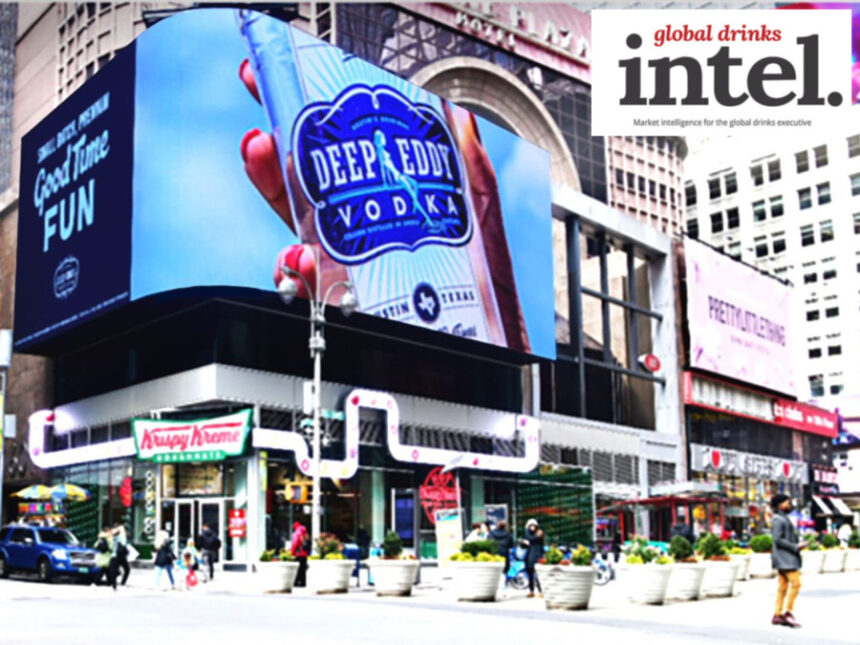
One of the US’s best-known homegrown brands, Heaven Hill Brands’ Deep Eddy Vodka, has been no slouch when it comes to homing in on what’s driving consumption, and has its own expanding RTD range. Deep Eddy VP Hannah Venhoff sees RTDs not only as a choice for consumers in their own right, but also as a vehicle for introducing them to its core range.
“We’ve got our Deep Eddy Vodka & Soda with Ruby Red, Lime and Lemon available in four-packs today, but this month [April] we are launching two new variety packs,” she says. “One’s a variety of those three flavours and the other – which we’re super-excited about – is a vodka tea.”
Increasing interest in brand provenance and backstories
Deep Eddy, named after the oldest ‘swimming hole’ in Austin, Texas, was actually born as a sweet tea vodka. “It was the product that really started everything for us,” says Venhoff, “and so we’re really excited to go back to our roots and lean into a very high-performing segment of the RTD category with a tea in a way that only Deep Eddy can do, based on our experience in the vodka tea space.”
While flavours have been a driver for the brand and “the core of its growth over the last 13 years”, Venhoff believes that both the category and consumer interests have evolved. “We have a lot of opportunity to further establish and grow our original vodka, so there are a lot of new programmes and initiatives in place to really take flight on that runway that we have ahead of us for our original.”
Similarly, Meurisse at Absolut has noticed a renewed interest among consumers in vodka’s provenance. “Since Covid, we’ve noticed people wanting to know more about what is behind the brand,” he explains. “We’ve achieved a truly unique and luxury product with our Absolut Elyx, our single-estate vodka made using a vintage copper column still from 1921. We wanted to celebrate the special role copper plays in the distillation process and Absolut Elyx allows us to communicate more about our heritage and DNA to consumers who are curious and looking for that more luxurious product.”
Nostalgic and bold spicy flavours trend in the on-premise
The on-premise, too, has flourished since the pandemic, with the IWSR’s Rogers pointing out that since the reopening of the channel, “vodka [in the on-premise] has grown approximately 12% over 2021 as it returns closer to pre-pandemic share levels”. He adds: “The segment has benefited from the continued demand of the Vodka Soda serve. In addition, certain comfort-oriented, vodka-based cocktails have been trending recently, such as the Espresso Martini and Dirty Shirley. In the off-premise, vodka sales will remain strong, thanks to consumers’ newfound awareness of the cost savings for consumption at home, which was amplified during the pandemic.”
Diageo’s Smirnoff has been quick to entice consumers back to the on-premise. “Adults are definitely seeking opportunities to connect in person again and making their way back to their local bars and restaurants,” says North America brand leader Jennifer Holiday Hudson. “Smirnoff has something for everyone to enjoy when they’re looking for quality at the bar – whether they’re looking for something spicy-sweet with our Smirnoff Spicy Tamarind or nostalgic flavours like our Lemonades portfolio.
Drinkers crave “new and exciting products”, which require “bold innovations that resonate in the on-premise”, according to Hudson. The flavoured spirits category, she adds, is “constantly evolving and seeing tremendous growth, specifically in the on-premise, and that includes cocktails – in fact, cocktails made with lemonade have risen to the number nine menu spot. The approachability of a nostalgic flavour like lemonade gives drinkers the opportunity to experiment and try unique, fun cocktails.”
That nostalgia Hudson references is also identified by her as a “major trend” and is well catered for in Smirnoff’s line-up. “We’ve seen the return of flavours that consumers know and trust, like pink lemonade. We’ve introduced a range of flavours within our line of Smirnoff Lemonades, like Pink Lemonade and Peach Lemonade, and recently debuted Smirnoff Blue Raspberry, which is sure to unlock another classic fruity taste”. Smirnoff has also pinpointed an appetite for bold and spicy cocktails.
“The sweet yet spicy nature of Smirnoff Spicy Tamarind provides drinkers with an unexpected twist on cocktails like the classic Margarita, the No.1 cocktail in America.”
Cocktail trend continues to drive vodka growth
Of course, cocktail culture has long been a driver for vodka, and Deep Eddy’s Venhoff says that, while “decades ago”, vodka was driven by “Sex and the City [television series] and the Dirty Martini”, she believes today’s growth – in the “mid-premium segment in particular” – continues to have a lot to do with consumer cocktail interest.
“When you think about trending cocktails like the Espresso Martini, when consumers latch on to a cocktail that they’re excited about, they discover the spirit right after. I think we’re seeing a lot of that in vodka.”
To that end, Vennhoff notes, Deep Eddy will spend a lot of the rest of the year on “bartender education programmes as well as engagement utilisation”.
Brands follow consumers and prioritise social initiatives
Many vodka brands have embraced the idea of playing a stronger role within their communities. Among the initiatives of Tito’s Handmade Vodka – the biggest vodka in North America – has been ‘Vodka for Dog People’, “to rescue and protect the animals that have come into our lives, many of whom now thrive alongside us at our distillery and office”. The brand, which is owned by Fifth Generation, has also donated US$3.7m to local non-profits in communities across the US to help with Covid-19 relief efforts.
Deep Eddy, meanwhile, has extended its support of the LGBTQIA+ community through “a philanthropic partnership with PFLAG, the first and largest organisation for LGBTQIA+ people, their parents and families and allies”. PFLAG is “committed to creating a world where diversity is celebrated and all people are respected, valued and affirmed”. The collaboration includes year-round displays and point-of-sale in the off-premise promoting Pride month.
The vodka brand is also a major sponsor of music festivals. “Our field marketing efforts remain an important pillar of our consumer marketing and engagement with the brand,” says Venhoff. “Over the last year-and-a-half, we’ve launched what we call our ‘farm-to-vodka’ trucks that service smaller-footprint festivals and events. Music continues to be a part of the brand’s DNA.
“This year, we’ve partnered with an organisation called Sofar Sounds. Their principal focus is to highlight and support up-and-coming artists through small, pop-up concerts all over the country. We’ve partnered with them on the ‘So Fun’ tour. We’ll be in six cities, highlighting up-and-coming artists to get the exposure that they deserve.”
Venhoff also flags that social initiatives remain a priority at Deep Eddy. “It means a lot to us as a brand to give back to the local communities that support us,” she explains. “From a consumer perspective, those are really important drivers. They make decisions for brands they want to align with, brands that they want to consume, that also support their own interests.”
In North America, then, success in vodka is about far more than just the liquid. And that’s the kind of focus that could well keep the segment ahead of would-be contenders for the title of top spirit.
This article was initially published in the April issue of Global Drinks Intel magazine. For details on how to subscribe click here.