In the US, creative innovators are fundamentally transforming the RTD category with a focus on ultra-premium ingredients and higher-ABV cocktails.
We are witnessing a new era for RTDs. Once defined by sugary profiles, cheap ingredients and low ABVs, the category has rapidly evolved to become a competitor to the top tier. With selections such as cucumber gin martinis, ginger mezcal margaritas and smoky old fashioneds, today’s labels read like a well-curated cocktail menu – and they have the quality ingredients and impressive proofs to match.
Across the US, this new level of premix cocktails is reshaping the category, moving it beyond light, sessionable seltzers into territory that more closely resembles an actual bar pour. For retailers and operators, these cocktail-specific RTDs offer a rare trifecta: premium positioning, strong margins and zero labour – making them one of the smartest (and fastest-moving) segments in beverage alcohol right now.
The question today isn’t whether RTDs belong in the premium conversation, it’s: how far can they go?
The industry’s rising star
From hard lemonades and iced teas to spirits-based seltzers, canned beverages have been gaining momentum for years. While these products remain popular, most sit at lower ABVs – typically around 4.5% – leaving room for a new wave of more alcohol-forward offerings.
Spirits-based RTDs have emerged as the alcohol industry’s strongest growth category, according to the Distilled Spirits Council of the United States. In 2025, premix cocktails reached US$3.8bn in sales, up 16.4% year over year, and have more than doubled their market share since 2021.
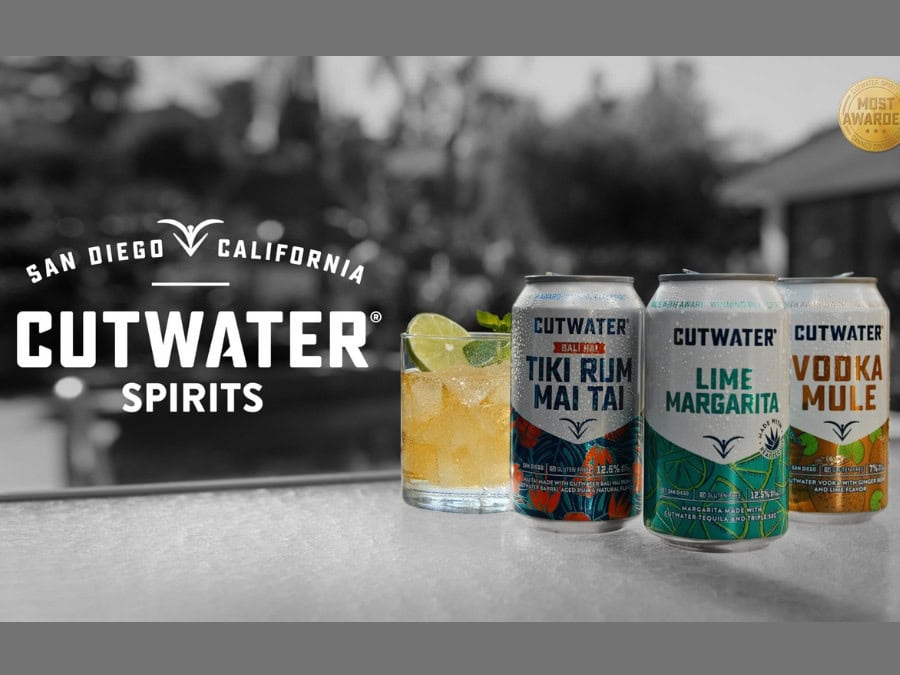
There are RTD extensions from brands such as Jack Daniel’s, Casamigos and Kahlúa, while in 2019, A-B InBev acquired the wildly popular Cutwater Spirits (below) and added it to its ‘Beyond Beer’ portfolio. Similarly, Sazerac Co and Suntory Global Spirits have been acquisitive in RTD cocktails in recent years.
But it’s the top-shelf segment grabbing increased shelf space and dollars. This is evidenced by the success of new brands from creative innovators aiming to take the category to the next level with ultra-premium ingredients and higher ABVs.
Upscale in a down economy
Massachusetts’ liquor superstore chain Yankee Spirits reports that RTDs continue to have strong momentum, with a noticeable upswing in the past 12 to 18 months.
“We’re seeing sustained growth in RTDs, but the biggest shift has been toward premiumisation,” says the store manager & spirits buyer for the chain’s Norwood and Swansea locations, Morris Karraz. “Consumers are moving beyond malt-based seltzers and into spirits-based cocktails with higher ABVs and more authentic formulations.
“Products that emphasise real spirits, classic cocktail formats and bartender-quality execution are outperforming.” At the same time, he notes, convenience remains a key driver of sales. “Brands that can balance quality with portability are seeing the most traction.”
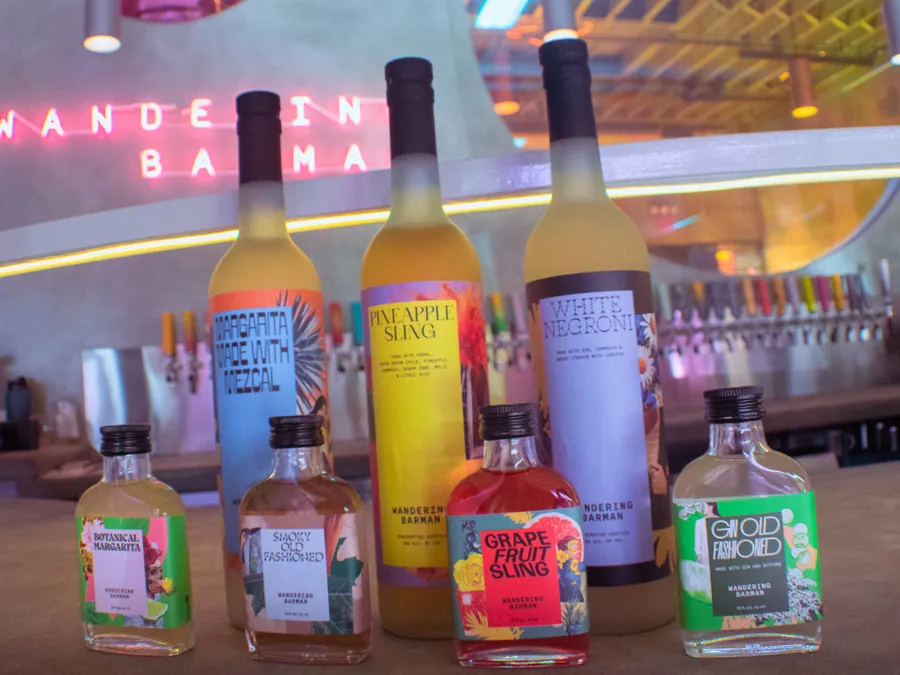
While demographics range from Gen Z to Millennials, the criteria for purchasing have changed. “Today’s consumer is well-rounded,” says Roxane Mollicchi, co-founder of The Wandering Barman (below), which has an extensive line of 10cl cocktails. “Eye-catching packaging and branding get you noticed on a crowded shelf, but what builds a loyal customer is quality and originality in flavour. You have to earn the repeat purchase.
“Most buyers are price-conscious but refuse to compromise on experience. It comes down to finding the sweet spot: craft quality at a price that doesn’t break the bank. Thoughtful sourcing makes that possible.”
Selective buying, selective drinking
Mixology enthusiasts have high standards for the integrity of their cocktails, and convincing them to go the premix route is a viable challenge.
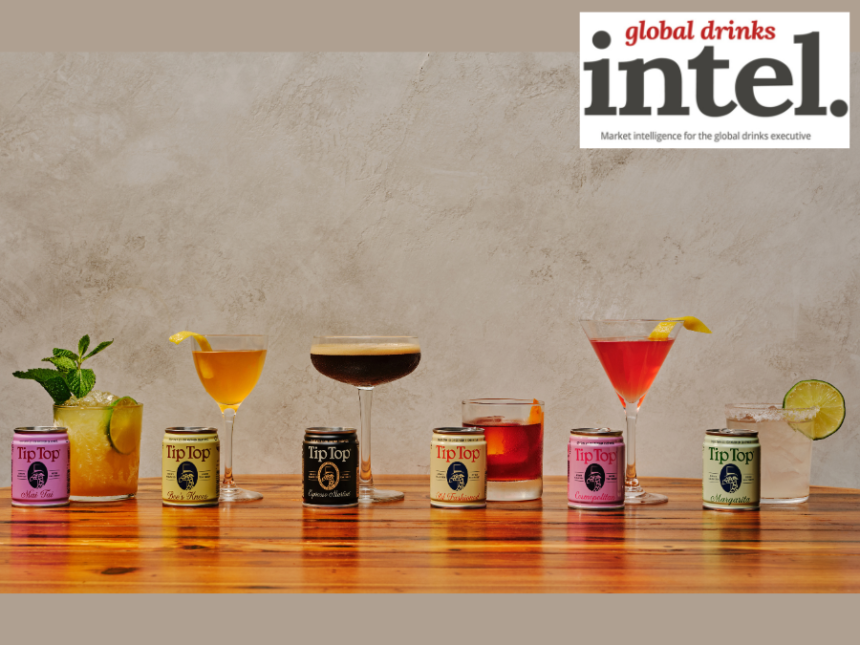
Tip Top Proper Cocktails co-founder & chief brand officer Neil Cohen addresses this head-on: “What matters most is whether the drink actually delivers on what it’s supposed to be,” he says. “Many people come into the category with low expectations, because they’ve been trained to expect something overly sweet, watered down or a loose interpretation of a classic.
“The reaction we hear most often is some version of, ‘Oh, this is a real cocktail’.”
This comes down to a few things, explains Cohen. “First is balance. The cocktails aren’t too sweet, so they drink the way they would at a good bar. Second is strength. They taste like real cocktails. And third is loyalty to the original recipes. We’re not reinventing these drinks; we’re making them the way they’re meant to be made.” Tip Top Proper Cocktails range from 44 to 74 proof.
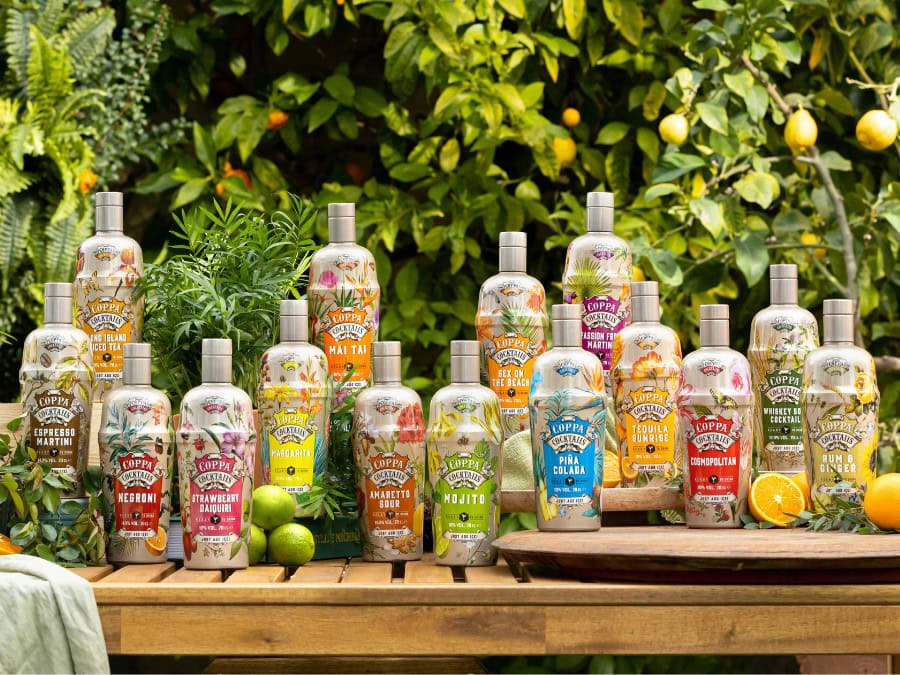
At MG Destilerías, which added the Coppa Cocktails brand (below) to its portfolio in 2024, global head of marketing Solène Bruna-Fiorentino believes the consumer has become more selective. “As drinking occasions decline and health awareness rises,” she says, “consumers are choosing more carefully – prioritising quality and making sure what they buy feels worth the spend.”
That shift is also influencing how consumers evaluate convenience and RTD formats. “Demand is growing for bar-quality experiences straight from the can or bottle as more shoppers look to recreate the on-premise experience at home,” adds Bruna-Fiorentino. “In that context, a US$6 canned cocktail feels like strong value compared to an $18 bar drink.”
Yankee Spirits’ Karraz points out that this mindset also ties in with the ‘small indulgences’ factor, noting: “There’s a ‘treat’ mentality at play; people may be going out less frequently, but they’re willing to spend a bit more for a premium at-home experience. Trust in the brand and consistency of the product are key factors in justifying that higher price point.”
Quality versus convenience
For years, the RTD conversation has centred on a trade-off between quality and convenience. According to Tip Top’s Cohen, that dynamic is beginning to shift. “For a long time, you had to choose between quality and convenience – that’s what’s changing,” he says. “Even at some of the best bars, batching is used to improve precision and consistency.”
That same logic is increasingly resonating with consumers at home, where the appeal of playing bartender can fade as the night goes on. “At home, it’s similar: making one or two drinks can be enjoyable, but over the course of a night, it becomes a chore,” Cohen explains.
“That’s where prepared cocktails fit in – you can keep things moving without stopping to build every round.”
Importantly, he notes, convenience does not have to come at the expense of experience: “You can still elevate it by shaking or stirring and serving over ice with proper glassware and garnish,” he adds.
Trading down or up?
There is an argument that the popularity of spirits-based RTD cocktails is having a negative effect on spirits sales; that rather than buying a bottle of vodka or tequila, consumers are ‘trading down’ with RTDs.
“That may have been true in the early days, but it doesn’t reflect where the category is today,” asserts Karraz at Yankee Spirits. “The premium segment, in particular, is more about trading across rather than down. Many of these products are priced similarly to mid-tier spirits, because they’re offering a different kind of value – consistency, convenience and a well-executed cocktail without the need for additional ingredients or skill.
“For many consumers, especially those who are entertaining or looking for ease, that’s a worthwhile trade-off rather than a compromise in quality.”
MG Destilerías’ Bruna-Fiorentino concurs. “Our mission is to make cocktails accessible and joyful to all, in an easy and convenient way, offering the highest possible quality while we meet the standards of industrial production and the distribution and retailing constraints,” she says. “We only use real spirits and natural ingredients and aromas.
“Cocktail bars and spirits will always be the benchmark, and they convey the whole experience, the craftsmanship, the history. One cannot substitute the other, but RTD cocktails can open the way to a cocktail culture where it was nonexistent.”
The Wandering Barman’s Mollicchi understands the concern. “Honestly, I get it,” she says. “Most RTD brands aren’t making quality cocktails, so the assumption is fair. But we do things differently: real ingredients, bottled in-house, obsessing over every detail.”
Coffee cocktails with kick
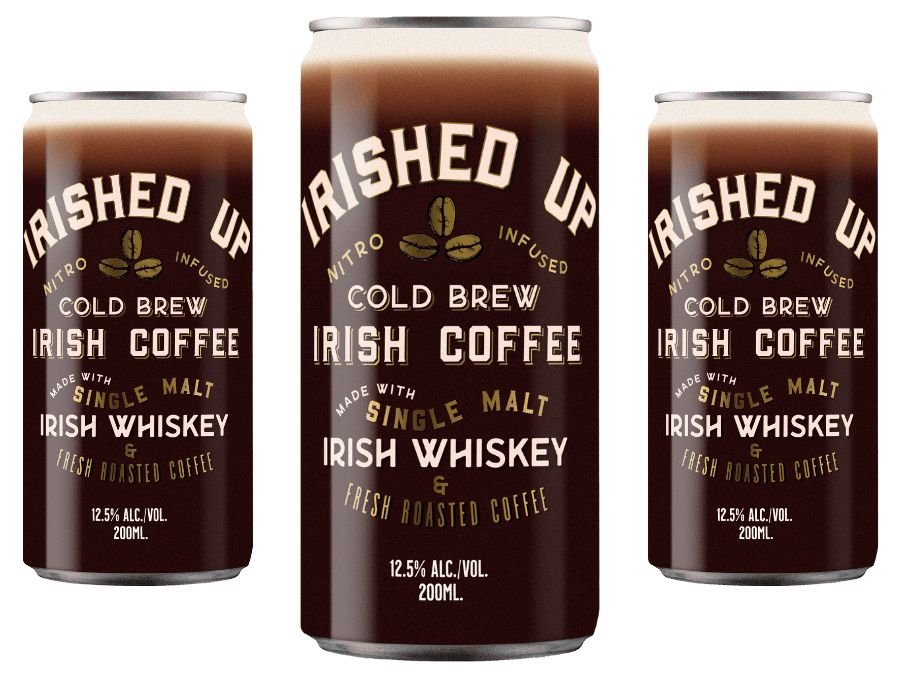
There’s more to the coffee cocktail conversation than just the espresso martini. Cobblestone Brands has entered the RTD space in the US earlier this year with Irished Up (above), a nitro cold brew Irish coffee packaged in a 20cl can.
Launched in time for St Patrick’s Day, the product is positioned as a year-round offering, with particular appeal in the summer months when cold brew consumption spikes. “The reaction to Irished Up has been phenomenal and has exceeded our expectations,” says head of commercial for the US Donal O’Gallachoir.
“Week by week, distribution is expanding and real momentum is building. Irished Up sits at the intersection of coffee culture and premium whiskey, and we see a clear opportunity for it to become the definitive ‘whiskey and coffee’ RTD.”
He notes that the product’s visual presentation – especially the nitro ‘cascade’ when poured – helps convert first-time buyers. Cobblestone is now targeting expanded on-premise placements, including golf courses, hotels, ships and train service.
On-premise… the next frontier
Perhaps the greatest potential for the category lies in the on-premise. Noted spirits specialist & brand consultant Sailor Guevara believes the opportunity is just beginning. “All the data show the RTD cocktail category is on a strong upward trend,” she says.
“Quality will be the next big driver. Many craft and emerging brands are making a real impact with genuinely top-notch products.” The challenge, she notes, is positioning. “How do you work premium RTDs into a higher-end bar programme? They can help manage costs, consistency and speed of service, but they need to be used intentionally.”
Tip Top’s Cohen points to espresso martinis as a clear example. “They’re one of the most in-demand cocktails, but difficult to execute consistently at scale,” he says. “Bars either end up with inconsistent versions or get backed up trying to make them. Offering a solution that improves both speed and consistency is a strong entry point.”
More broadly, Cohen says RTDs work best where execution is complex. “We focus on cocktails that are high-touch, require fewer common ingredients, or are easy to get wrong. In those cases, having something that’s already dialled in can make a lot of sense – especially for venues where cocktails aren’t the primary focus.”
Mollicchi believes it’s not the bartender who needs convincing but the bar owner. “Many don’t realise they’re leaving money on the table,” she asserts. “Not every bar is cocktail-forward, but every bar needs a cocktail offering today.
“Whether you’re a brewery, a wine bar or a music venue, that 20% of your guests are ordering cocktails might be the difference between people staying or walking out the door. We’ve been building this category since 2018 and were truly the first pre-made cocktail brand focused on the on-premise.”
Mollicchi co-founded The Wandering Barman with Darren Grenia and Julian Mohamed, who had built their reputations for top-shelf pre-batched cocktails at their bar, Yours Sincerely in Brooklyn, New York (Mollicchi was the bar manager), which focussed on cocktails pulled from a tap. The trio rolled out their first bottled RTD cocktails under the brand name in late 2017.
QiQi bar in New Orleans, Louisiana, carries The Wandering Barman’s Mezcal Margarita and Pineapple Sling. “The quality is superb,” says owner Angela Haber. “I love the variety, it offers something extra, especially when we’re in the weeds,” she says.
While Haber’s bartenders make most drinks from scratch, the RTD options offer something different, featuring ingredients that QiQi doesn’t necessarily keep on-site. “It was an excellent choice to do this,” she adds. “Honestly, I wish we’d done it sooner.”
Sky’s the limit
MG Destilerías’ Bruna-Fiorentino sees limitless possibilities for RTD cocktails in the on-premise. “It’s very promising: bars, festivals, sports games, pop-up venues… all are going to pick up,” she says. “The super-premium tier of RTDs will find their spot on menus. It won’t take long until the hospitality industry realises that gain of time, money, speed, recruitment through a new offer and consistency in serve are all benefits to a bar’s operations.
“There’s a whole new segment of bars, day eateries, coffee shops, that don’t have bartenders, but could serve premium RTD cocktails, as the consumer is curious.”
For operators facing staffing challenges or consistency issues, the appeal is increasingly practical. However, Guevara emphasises that premium RTDs shouldn’t be mistaken for shortcuts.
“Take Hoste Cocktails’ Gold Fashioned,” she says. “It retails for around $150, or about $15 per cocktail, with packaging that fits right into an upscale setting.
“RTDs could be a game-changer. I wouldn’t dismiss the category – the demand is obvious.”
Members-only intel
Keep reading this members-only article – and every one like it
- ✓All paywalled news and interviews
- ✓Category and market data
- ✓Monthly GDI magazine
- ✓Full archive + daily newsletter
Secure checkout · Cancel any time · Company invoices available
Already a member? Log in
See all plans, incl. 10-reader and corporate
Check if your company already pays for you Your company may already give you free access.
Corporate subscribers: AB InBev, Bacardi, Campari Group, Diageo, Moët Hennessy, Pernod Ricard, Proximo Spirits, Suntory Spirits Group, William Grant and Sons.
Activate company accessNot ready yet? Get the headlines free in our daily newsletter.
Sign up free