

- Last year, 54.5% of all consumer spending on spirits in Germany took place in the on-premise channel (CGA by NIQ)
- Sales of spirits in the on-premise fell last year by 7.1% in value and 5.5% in volume, with steep declines for brandy (-17.4%), vodka (-11%), white rum (-13.2%) and gin (-8%)
- Beer sales in Germany declined by 6.1% to 3.2bn litres in H1 2025, while exports dropped 7% (Federal Statistical Office)
- Non-alcoholic beer has 9% market share of overall beer sales and grew 8.4% in value in 2024
- In the month of September, 42% of consumers bought beer in the on-premise (CGA by NIQ)
- Wine consumption in Germany dropped 4% in 2024, with domestic wine declining 5% in sales and 6% in revenue (Deutsches Weininstitut)
Large parts of Germany’s beverage alcohol market are in worrying structural decline. Beer and wine, two cornerstones of the country’s drinks industry, are being squeezed hard by demographic shifts that include a larger number of non-drinking Muslim citizens, an ageing wider population and more health-conscious behaviour among younger people.
The country’s economy has also stalled. The Bundesbank expects GDP to stagnate in 2025, with growth of only 0.7% next year. Impacted by US tariffs, industries of all types are saddled with soaring labour, energy, packaging, machinery and repair costs.
Meanwhile, the beverage market’s few bright spots, such as alcohol-free products and RTDs, highlight how fast the market is shifting as the tastes of Millennial and Gen Z consumers come to the fore.
Challenging times for spirits
If one were to seek out a snapshot of exactly how challenging the spirits market in Germany has been, a glance at the statistics for the on-premise for 2024, compiled by international on-premise insight consultancy CGA by NIQ, is telling. Sales last year fell 7.1% by value and 5.5% in volume in a channel that accounted for a dominant 54.5% of all consumer spending on spirits.
There were steep declines for brandy (-17.4%), vodka (-11%), white rum (-13.2%) and gin (-8%), but there were significant gains for aperitifs, with double-digit gains in volume and value.
RTDs were another strong performer, with 35% of German consumers noticing an increase in availability in the on-trade last year, according to a CGA by NIQ survey.
Orange is the new black for Jägermeister
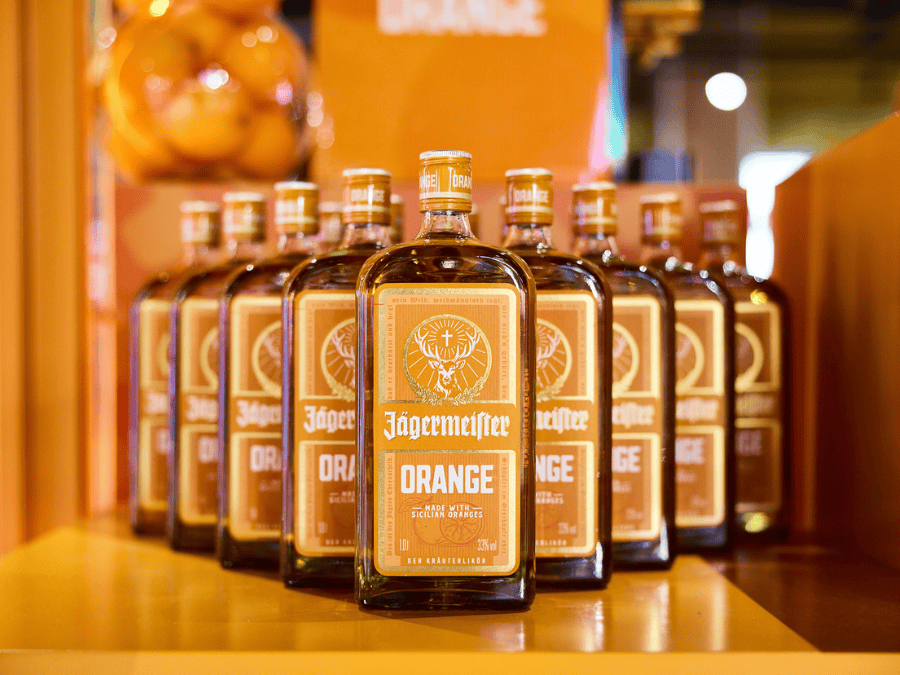
Mast-Jägermeister, one of the country’s largest spirits players, has defied the downturn by doubling down on innovation. Its latest launch, in May this year, is Jägermeister Orange (below), a citrus-flavoured extension of the famous herbal liqueur that has enjoyed “overwhelmingly positive” consumer and retailer reception, according to the CEO of Mast-Jägermeister Deutschland, Torsten Römsch.
“This new variant resonates particularly well with consumers who prefer lighter spirits and are looking to carry that summer feeling into their night out – especially younger audiences like Gen Z and women, who are increasingly shaping trends in the spirits market,” he explains. “It’s a perfect example of how we’re responding directly to current consumer needs – and a clear reflection of our commitment to consumer centricity.”
The privately-owned company has been investing in premium extensions, such as Jägermeister Manifest, a super-premium, barrel-aged variant, and in portfolio diversification through Dwayne Johnson’s Teremana Tequila, which Jägermeister distributes globally, and cocktail premix Gin Sul Limão Fizz.
“Innovation is a key pillar of our strategy to strengthen brand relevance and future-proof our portfolio – especially in times of economic uncertainty,” Römsch says.
Stock Spirits leans into innovation
Warsaw-headquartered Stock Spirits, which acquired German spirits company Borco-Marken-Import Mattiesen, the producer of Sierra Tequila, in 2023, is also investing in innovation. Its Sierra Tequila Lime and Strawberry RTDs, introduced only this spring, are already matching the sales rotation of category leaders after just 12 weeks, according to a company spokesperson.
In March, the company launched Limoncè Aperitivo, a lower-strength 14.8% ABV lemon aperitif made with 100% Sicilian Femminello lemons. “We are currently building the brand in the on-trade ahead of an off-trade roll-out next year,” the spokesperson explains. “So far, we have secured almost 1,000 on-trade listings across the country.”
The company also has high hopes for Finsbury 0.0, an alcohol-free extension of its popular German gin brand. “Initial feedback has been strong, and we’re planning to grow its distribution in the coming months,” says the spokesperson.
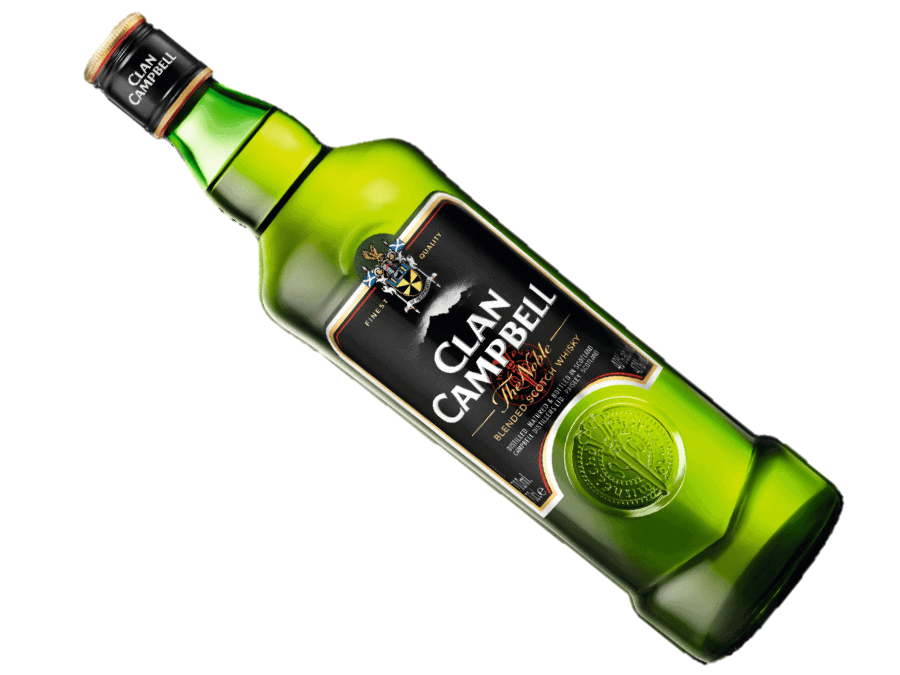
Finally, Stock Spirits introduced Clan Campbell (below), the blended scotch whisky acquired from Pernod Ricard in 2023, into the German market earlier this year. “As of June [2025], it already holds a 3% market share among scotch brands,” the spokesperson says. “The price point is right, and the brand resonates with consumers. The launch is supported by a strong cooperation with [mixed martial arts competition] Oktagon MMA to engage with a less traditional target group.”
Underberg – Festivals, RTDs and mindful drinking
For Semper idem Underberg, best known outside Germany for its eponymous herbal digestive, innovation is equally central. Brand director Vera Donner-Sander says RTDs now play “an increasingly strategic role” for the company, thanks to products like canned caipirinhas from cachaça brand Pitú and Jartails cocktail jars, a new line of premixed cocktails served in reusable glass jars.
“The market’s reaction encourages us to continue thinking of convenience not as a compromise, but as a promise of quality,” says Donner-Sander, noting figures from IWSR that showed RTDs as the only spirits category to grow in Germany last year. “Convenience formats are also becoming increasingly important, particularly among the younger target group.”
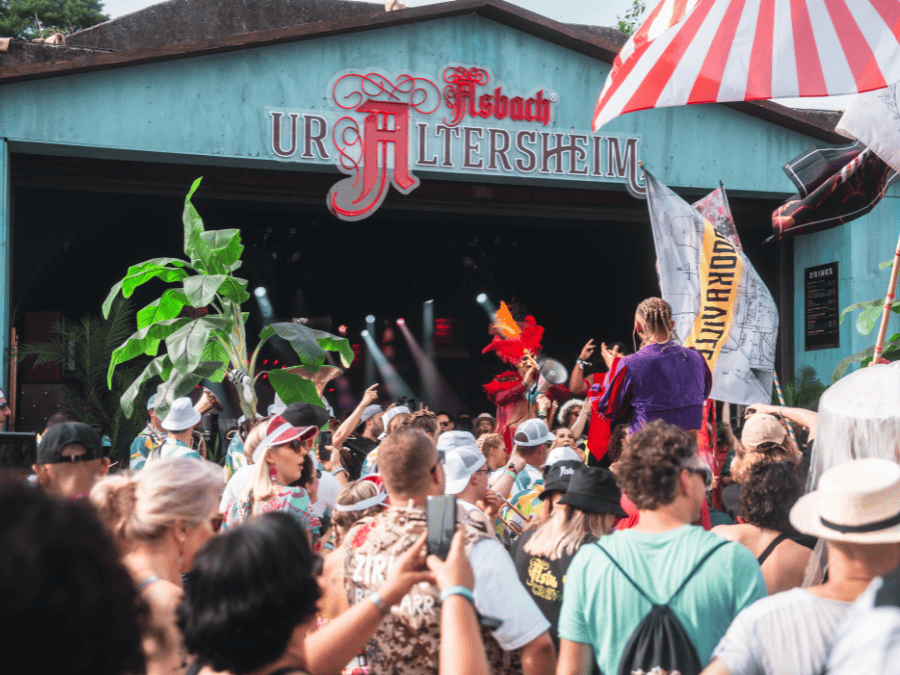
Experiential marketing is another priority for Underberg. This year, the company’s flagship brandy, Asbach, will generate over 1m live contacts through music festivals (below). “Festivals and live experiences are a key way for us to reach younger target groups emotionally,” notes Asbach international brand manager Steffen Ostendorf.
German brewers – Under pressure
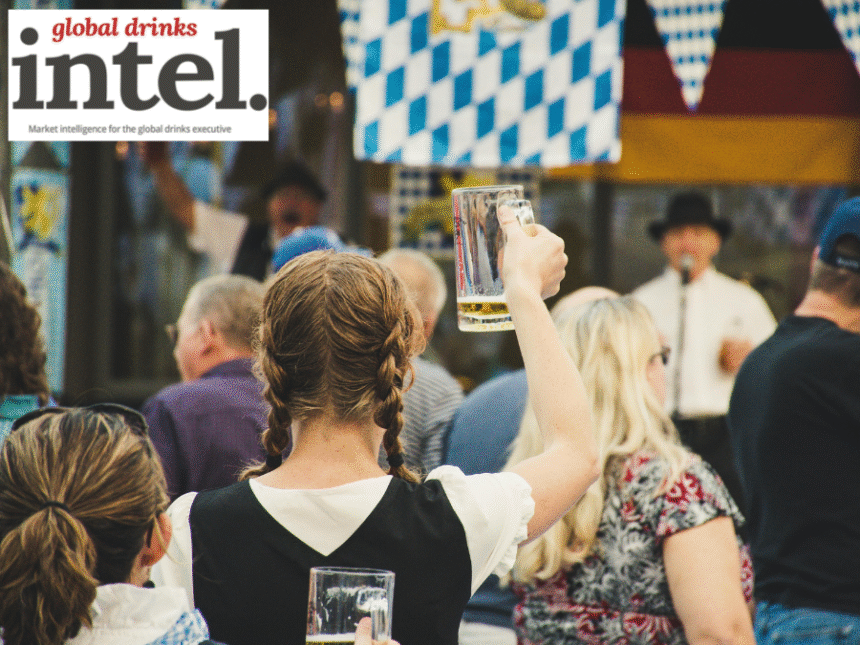
For centuries, beer has been one of the cornerstones of German camaraderie, tradition and celebration. There are still 1,459 breweries, according to the Federal Statistical Office, but this total has dropped 6% over the past five years as the population ages and immigration alters the population mix. The clinking of steins may still be a regular sound in beer gardens up and down the country, but German beer is clearly struggling as a category. According to the Federal Statistical Office, in the first half of this year, beer sales in Germany fell 6.1% to around 3.2bn litres, while exports dropped a disappointing 7%.
Responding to these lacklustre figures, the worst since the start of the Covid-19 pandemic in 2020, German Brewers Association CEO Holger Eichele warned in a press statement that “2025 remains an extremely demanding year”. He pointed to consumer restraint, rising raw material costs and shrinking distribution channels as the principal obstacles to growth. Eichele went on to urge the German Government to remove the 7% VAT tax levied on food to stimulate demand in the on-premise.
A much-needed silver lining for breweries is the growing demand for non-alcoholic beer, which now enjoys a 9% market share of overall beer sales and grew 8.4% in value in 2024. More than 800 non-alcoholic beer brands are being brewed in line with Germany’s purity laws, and one in every ten litres of beer sold in Germany’s on-premise is now alcohol-free.
Also encouraging for Germany’s brewers is recent data from CGA by NIQ that shows that beer remains the country’s most popular alcoholic drink in the on-premise, with 42% of consumers buying it in bars and restaurants in the last month.
Pils is still the most popular beer style, with seven in ten consumers trying it and sales rising 4.4% in 2024, but alcohol-free options are the true growth option.
German wine industry in crisis
Several factors are causing headaches for Germany’s wine producers, from economic pressures, rising costs and shifting consumer habits, to the effects of climate change and, in the case of some wineries, an oversupply of cheap wines destined for the bulk wine market.
A report published earlier this year by the Deutsches Weininstitut revealed that wine consumption in Germany last year dropped by 4%, with domestic wines performing disproportionately worse than imported, often cheaper, wines, declining 5% in volumes and 6% in value.
Yet innovation and premiumisation are offering this beleaguered industry hope. The move towards trocken (dry) styles now dominates, with nearly half of German wines falling into this subcategory, reflecting both warmer growing seasons and consumer preferences. Meanwhile, more premium, terroir-driven single-vineyard wines are gaining traction as winemakers embrace a more Burgundian mindset.
Climate change is forcing winemakers to adapt: chardonnay and sauvignon blanc are increasingly planted alongside PiWi (fungus-resistant) varieties, for instance. Sustainability is now mainstream across the industry, with organic and biodynamic farming widespread.
And while domestic sales have faltered in recent years, exports are climbing modestly, up 3% last year, with the US, the Netherlands and Poland proving reliable outlets.
Henkell Freixenet bucks trend
In Germany’s sparkling wine category, the outlook is brighter. Henkell Freixenet, the world’s leading sparkling wine company, is defying domestic headwinds.
“Compared to the almost stable overall German sparkling wine market, Henkell Freixenet and all its sparkling wine brands performed positively and better than the market as at year-to-date May [2025], with positive sales in terms of volume and turnover,” says the company’s head of communications, Vanessa Lehmann.
The group’s Freixenet, Mionetto and Henkell brands have been driving growth for the company in 2025, supported by double-digit increases for alcohol-free cocktails and sparkling wines. Prosecco also remains very popular – Mionetto became Germany’s top-selling brand last year, with 33% market share. Crémant’s stock is rising in the country too, with Henkell Freixenet’s Gratien & Meyer growing 7% in volume in 2024.
“Non-alcoholic sparkling wines are very much in vogue,” says Lehmann, citing 7% sales growth for the nascent subcategory last year. In 2025, Henkell Freixenet unveiled both Mionetto Aperitivo 0.0 and Henkell 0.0 to capitalise on the trend.
“As a company with over 30 years of expertise in de-alcoholisation, starting with sparkling wines, we see further growth potential in the no/low-alcohol product category [in Germany],” adds Lehmann.
Henkell Freixenet, Stock Spirits, Underberg and Jägermeister may operate in different categories, but their approach to the challenges facing Germany’s alcohol industry shares a common thread. Each is tackling the issue head-on through NPD and marketing, embracing themes of convenience, premiumisation, moderation and consumer engagement, which should hold them – and the broader drinks market – in good stead during these testing times.
Members-only intel
Keep reading this members-only article – and every one like it
- ✓All paywalled news and interviews
- ✓Category and market data
- ✓Monthly GDI magazine
- ✓Full archive + daily newsletter
Secure checkout · Cancel any time · Company invoices available
Already a member? Log in
See all plans, incl. 10-reader and corporate
Check if your company already pays for you Your company may already give you free access.
Corporate subscribers: AB InBev, Bacardi, Campari Group, Diageo, Moët Hennessy, Pernod Ricard, Proximo Spirits, Suntory Spirits Group, William Grant and Sons.
Activate company accessNot ready yet? Get the headlines free in our daily newsletter.
Sign up free