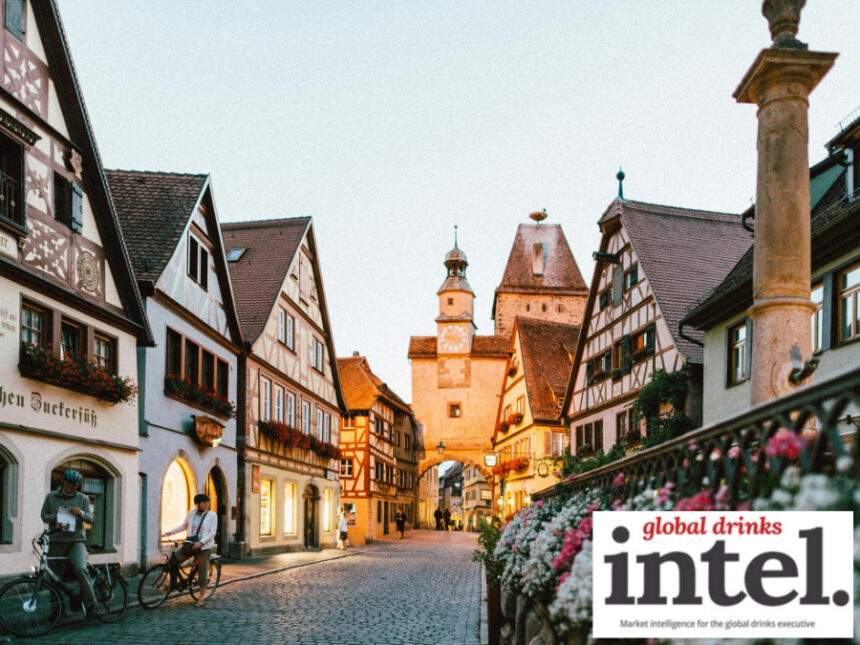
After a brief post-pandemic bounce, the complex and fragmented beverage alcohol market in Germany is struggling to shake off the effects of the country’s long-standing economic malaise. Indeed, according to global management consultancy firm Roland Berger, the country is forecast to record the second-worst GDP growth figures of the G20 this year, at just 0.1% (Argentina is set to take the No.1 spot with a decline of 3.9%).
Inflationary pressures, demographic challenges, an energy crisis and stifling bureaucracy lie at the heart of Germany’s economic problems. This long list has done nothing to loosen the purse strings of the country’s traditionally price-conscious consumers.
“Given the continuing international crises and related economic uncertainties, plus increasing prices, consumers, as well as the industry, are facing multiple challenges,” admits Torsten Römsch, CEO of one of the country’s biggest spirits producers, Mast-Jägermeister Deutschland. “The situation is leading to uncertainty and reluctance to buy, in other words, a negative consumption index.
“Despite these challenges,” he adds, “we’re very proud to have largely met our expectations for the first half of the year, due to the great efforts of the entire team.”
Jägermeister pushes craft credentials
Against the backdrop of these challenging market conditions, Römsch said that this year, the company has been focusing on highlighting the quality and exclusivity of its products. In spring, Mast-Jägermeister Deutschland launched a campaign called ‘Matured for the Best Nights’ to showcase the craftsmanship behind its flagship herbal liqueur and its maturation in oak barrels.
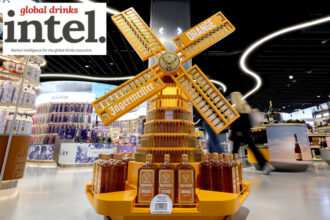
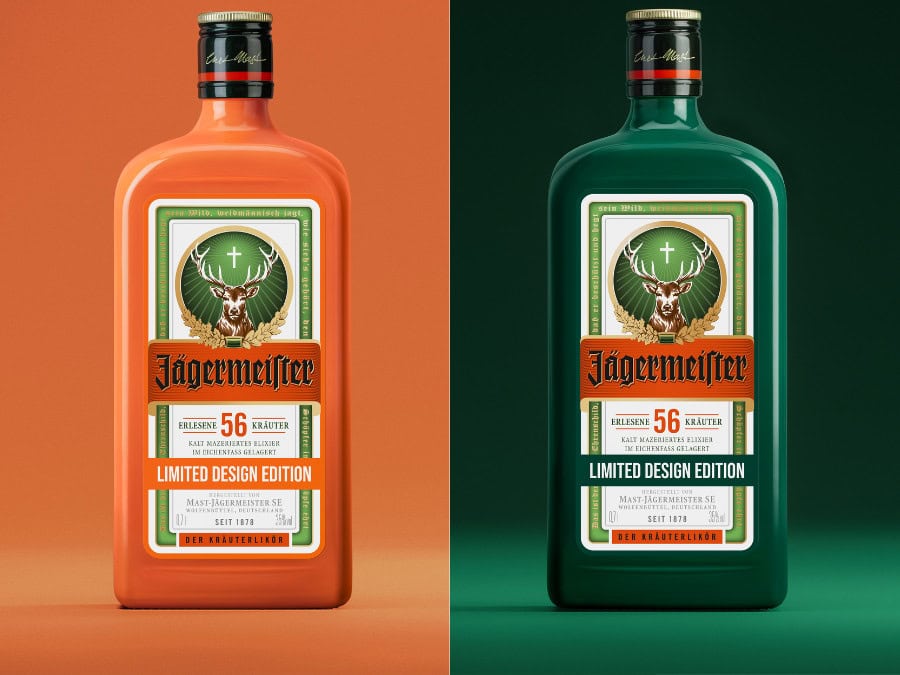
Then, last month, the brand worked with colour authority Pantone to define Jägermeister’s traditional colours, ‘Herbal Green’ and ‘Culture Orange’, launching two limited-edition packs (below) to celebrate the partnership. It also had a successful summer festival season with its ‘Giganten’ walk-in bottle installations across Germany.
Theis week, the company has introduced premium tequila Teremana to the German market at Bar Convent Berlin, with accompanying advertising and social media support.
Challenging outlook as supermarket spirits sales fall
The straitened times outlined by Römsch are quantified by recent data from the Federal Association of the German Spirits Industry (BSI), which revealed that sales of spirits in the dominant supermarket channel declined last year by 4.5% to around 528m 70cl bottles. This price-sensitive ‘food retail trade’ sector accounts for over three-quarters of the country’s total spirits sales.
In contrast, business in the off-premise and specialist retail trade was more robust in 2023, according to BSI’s data. Another positive is that the country’s per capita spirits consumption increased last year by 1.9% to 5.1 litres, with 69% of German households buying spirits at least once during the 12-month period.
At around 710m bottles, Germany remains Europe’s largest spirits market with an 8% share.
Nonetheless, the business outlook remains concerning. BSI’s MD, Angelika Wiesgen-Pick, highlights a shortage of skilled workers, inflation, energy prices, rising raw material prices and bureaucracy as the principal challenges facing spirits producers in the country.
“A serious consumption forecast for 2024 can only be made if it is foreseeable how inflation and further economic developments in Germany will show themselves,” adds BSI president Thomas Ernst. “Under the current conditions, the producers and importers of the [German] spirits industry appeal to politicians not to plan further state interventions in the various areas such as advertising, warnings, food law, etc, for the spirits industry, but to set reliable framework conditions.”
No & low gaining ground
In common with many other mature drinks markets, Germany’s non-alcoholic spirits sector is booming, defying the gloom of the wider beverage alcohol market in the country. Over the next five years, according to IWSR, non-alcoholic spirits are set to grow by 11%.
Figures from Germany’s Federal Statistical Office also reveal that the production of non-alcoholic beer, which contains less than 0.5% alcohol, has nearly doubled in the past decade. According to 2023 figures from the German Brewers’ Association, supermarket shoppers can now choose from 700 non-alcoholic beer brands – double the number available in 2010.
The same trend is now also evident in wine. “German consumers are increasingly asking for alcohol-free alternatives,” says Dan Harwood, the key account manager for the UK & Ireland at Schloss Wachenheim, the brand owner of alcohol-free Eisberg Wine. “We’ve noticed that this trend has gradually become a way of life over the years for some consumers.
“Leveraging our technical expertise, we pioneered the introduction of high-quality sparkling wine to the German market, establishing ourselves as one of the country’s leading producers. By commissioning a second de-alcoholisation plant this year, we can meet the high demand even better.”
Pernod Ricard, Campari Group thrive as imports fall
Spirits importers also had a generally challenging 2023, with shipments into Germany falling 12.7% to 446m bottles. If the fortunes of scotch whisky producers are anything to go by, the same pattern has continued into 2024. The Scotch Whisky Association revealed that scotch exports to Germany, the category’s eighth-largest market worldwide, plummeted 30.3% over the first half of the year to reach GBP63.5m (US$83.65m). Of the top ten export markets for scotch, only France (-32.6%) and China (-42.4%) fared worse.
That said, not every company’s recent experience in the country is wholly negative. For instance, in its results for the year to the end of June, Pernod Ricard said it had achieved a five-year sales CAGR of 12% in Germany, despite the country’s subdued economic performance and cost of living squeeze. With a 9% share of spirits in Germany, Pernod Ricard highlighted the performance of Absolut, now the country’s top-selling premium vodka, while French aperitif Lillet has been another star performer, boasting a CAGR of 28% over the last five years.
Similarly, Germany has been a growth market for Campari Group in its results for the first half of 2024. The market posted a 13.4%, year-on-year jump in sales, largely as a result of the continuing popularity of the company’s flagship brand, Aperol. In contrast, other key Western European markets, such as the UK and France, all recorded sales declines for Campari.
Another company with a positive view of the German market is Stock Spirits Group, which last year acquired Hamburg-based Borco-Marken-Import Matthiesen, the owner of Sierra Tequila, among other brands, for an undisclosed sum. The blockbuster transaction was part of Stock Spirits’s wider expansion strategy to become the leading mainstream spirits company in Europe by 2027.
Hendrik Schatz, marketing director of Stock Spirits Germany (the new name for Borco), says the company’s current market share in the highly fragmented country is 3%, a share it plans to grow quickly. “Stock Spirits Germany will play a key role in the drive to build strong European brands in the mainstream category,” he reveals. “The German team has just launched the group’s core brands, such as Żołądkowa vodka and Clan Campbell scotch whisky.
“Both launches will be accompanied by a strong media campaign that will help to gain significant market share in these very important spirits segments,” he continues. “At the same time, Stock Spirits is investing heavily in the original Borco brands, Sierra Tequila and Finsbury Gin.”
Schatz explains that Germany’s spirits market has several unique characteristics and challenges. Firstly, it is highly fragmented, he says, with a variety of trends coexisting simultaneously. This means that spirits brand owners need to be flexible and adaptable to appeal to different consumer segments.
Secondly, domestic consumers are price-sensitive, Schatz warns, so brands must balance quality and affordability. Finally, the main cities in Germany are more geographically dispersed than in many other markets, which requires a comprehensive and localised approach to market penetration and brand visibility.
Stock Spirits Germany’s strategy of focusing on growing categories such as tequila and scotch is a canny one. There are pockets of growth in this key European market, with no- & low-alcohol being another example. However, the overall outlook for spirits in Germany remains uncertain – and ultimately contingent on the country’s ability to address its underlying economic woes.
This article is available to Global Drinks Intel members only.
Click below for details on how to join the Global Drinks Intel community.
Already a member?
Log in here to read the article in full.
If you work for any of the following corporate subscribers to Global Drinks Intel, head here to activate your access.
- AB InBev
- Bacardi
- Campari Group
- Diageo
- Moët Hennessy
- Pernod Ricard
- Proximo Spirits
- Suntory Global Spirits
- William Grant & Sons