

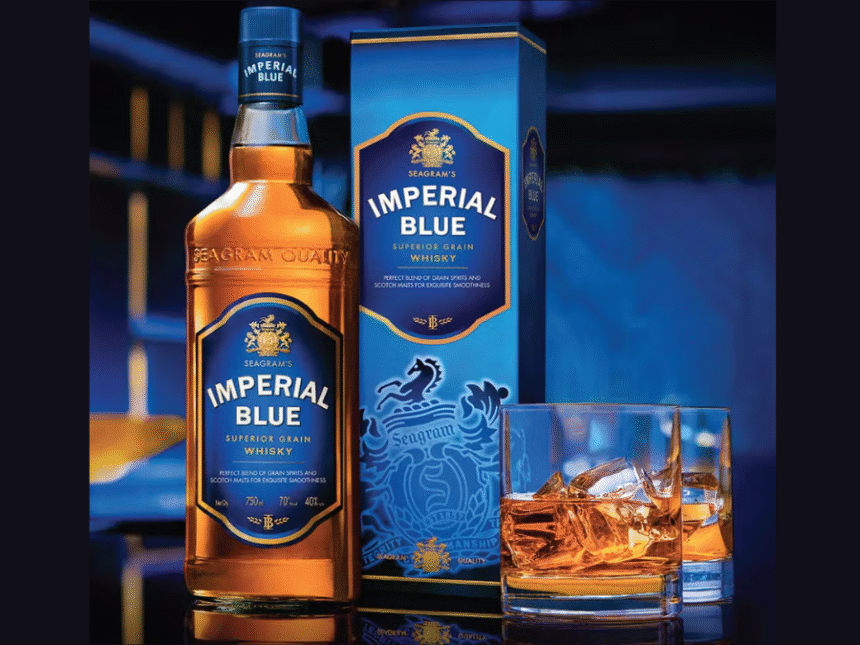
Pernod Ricard has agreed to sell its Imperial Blue whisky to India’s Tilaknagar Industries, following recent speculation around a possible deal.
Financial details about the transaction, announced today (23 July), were not disclosed, but a June article from India’s The Economic Times reported that the Indian spirits group had looked to raise US$500m to fund its purchase. Pernod Ricard said today that the sale to Mumbai-based Tilaknagar will enable it to “fully tap into premiumisation trends and support sustained, profitable growth”.
The Chivas and Ballantine’s owner added that the transaction “improves the ability to capitalise on the country’s strong macroeconomic fundamentals and long-term potential” and that once completed, the offload would be “immediately and meaningfully accretive to Pernod Ricard India’s operating margin and net sales growth rate”.
While subject to approval from India’s competition commission, Imperial Blue should move across in the coming months, Pernod Ricard said. CEO Alex Ricard added that the move will “sharpen our focus on more profitable and faster growing brands in India, as in the rest of the world”.
In September last year, several reports in India claimed that Pernod Ricard was considering offloading Imperial Blue, which is a blend of Indian grain spirits and imported scotch malts that was launched by Seagram in India in 1997, and then acquired by the France-headquartered company in 2002.
Imperial Blue now joins Mansion House Gold Barrel Whisky in Tilaknagar’s whisky portfolio.
Among the brands to have left Pernod Ricard’s portfolio in recent years are Finnish peppermint-flavoured liqueur Minttu in October, Clan Campbell blended scotch two years ago and Czech bitters Becherovka in late 2023. The group also found a buyer – finally – for almost all of its wine assets almost exactly a year ago, with Accolade Wines (now called Vinarchy) taking on the likes of Brancott Estate, Campo Viejo and Jacob’s Creek.
In June, Pernod Ricard confirmed the commencement of an “internal project” that centres around bringing its back-office operations together into two silos.