- Between 2023 and 2028, sales of both gin and vodka are expected to decline slightly in the Americas
- Cocktail trends are benefiting white spirits, particularly the resurgence of the espresso martini for vodka
- The premium tonic movement is making its way across the Atlantic
- Flavoured and pink gins are garnering attention, as are more complex aged gins
- Vodka is veering towards pure expressions, leaving flavour NPD to play in the RTD area
- Savvy, health-conscious consumers are demanding more transparency and ‘authenticity’ from brands
With every peak must come a trough, and so it is for gin and vodka in the Americas. IWSR forecasts both spirits will decline in the US between now and 2028 – even before taking into account the added tumult of US tariffs.
Gin may buck the trend in Central America, while vodka is expected to grow slightly in South America. The Caribbean also holds potential, IWSR data shows.
But the size of the market, particularly the US, is still alluring. Brand owners are as focused as ever on finding distribution and gaining share of throat. The Americas have certainly not lost appeal.
Just the tonic… eventually
The US has been a late adopter of the premium-G&T phenomenon – partly due to a sweeter palette and a lack of gin-&-tonic heritage – but UK-based Salcombe Gin says success there hinges on it.
“If there’s no adoption of the gin-&-tonic culture, you’re not going to see big growth, because it will remain a cocktail ingredient,” says co-founder & director Angus Lugsdin.
The VP of marketing for Hendrick’s Gin at owner William Grant & Sons, Michael Giardina, believes that low-quality tonic and the dreaded post-mix gun are largely to blame for the country’s slow uptake. “The gun is terrible,” he says. Hendrick’s steers away from the G&T serve during promotional events in the US, preferring its signature cucumber-with-lemonade serve.
“It’s changing,” notes Lugsdin, who’s seen an uptick in G&T menus in the on-premise and an opportunity for brands to position the serve “as a lifestyle drink”.
UK import Fever-Tree is blazing a trail here. In January, Molson Coors Beverage Co acquired a minority stake in the tonic maker and took over its distribution in the US, where the brand’s year-on-year sales have been strong of late. Fever-Tree communications & ESG director Oliver Winters notes “major opportunity” for tonics in the country.
Flavour NPD
Flavour development is “going to be particularly important” for attracting younger consumers looking to “explore”, says Hendrick’s Giardina.
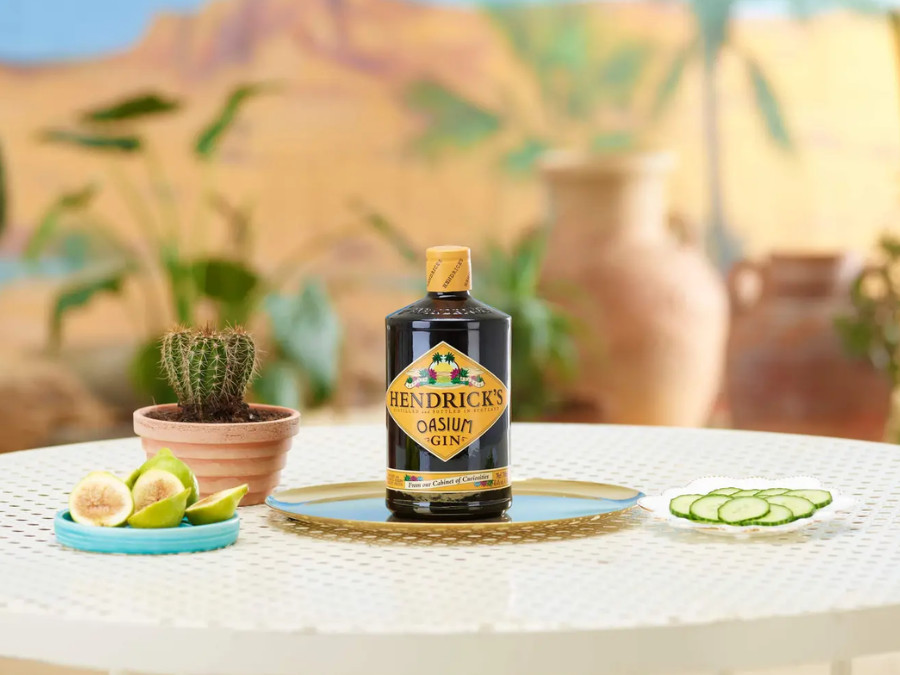
The brand launched its sixth limited-edition Cabinet Of Curiosities expression, Oasium (below), in March. The range “brings new people in” and acts as a “recruitment item” for Hendrick’s original.
Away from botanical experimentation, a trend for barrel ageing is also starting to take hold in the US. TikTok is awash with drinks recipes for barrel-aged-gin twists on classics like old fashioneds.
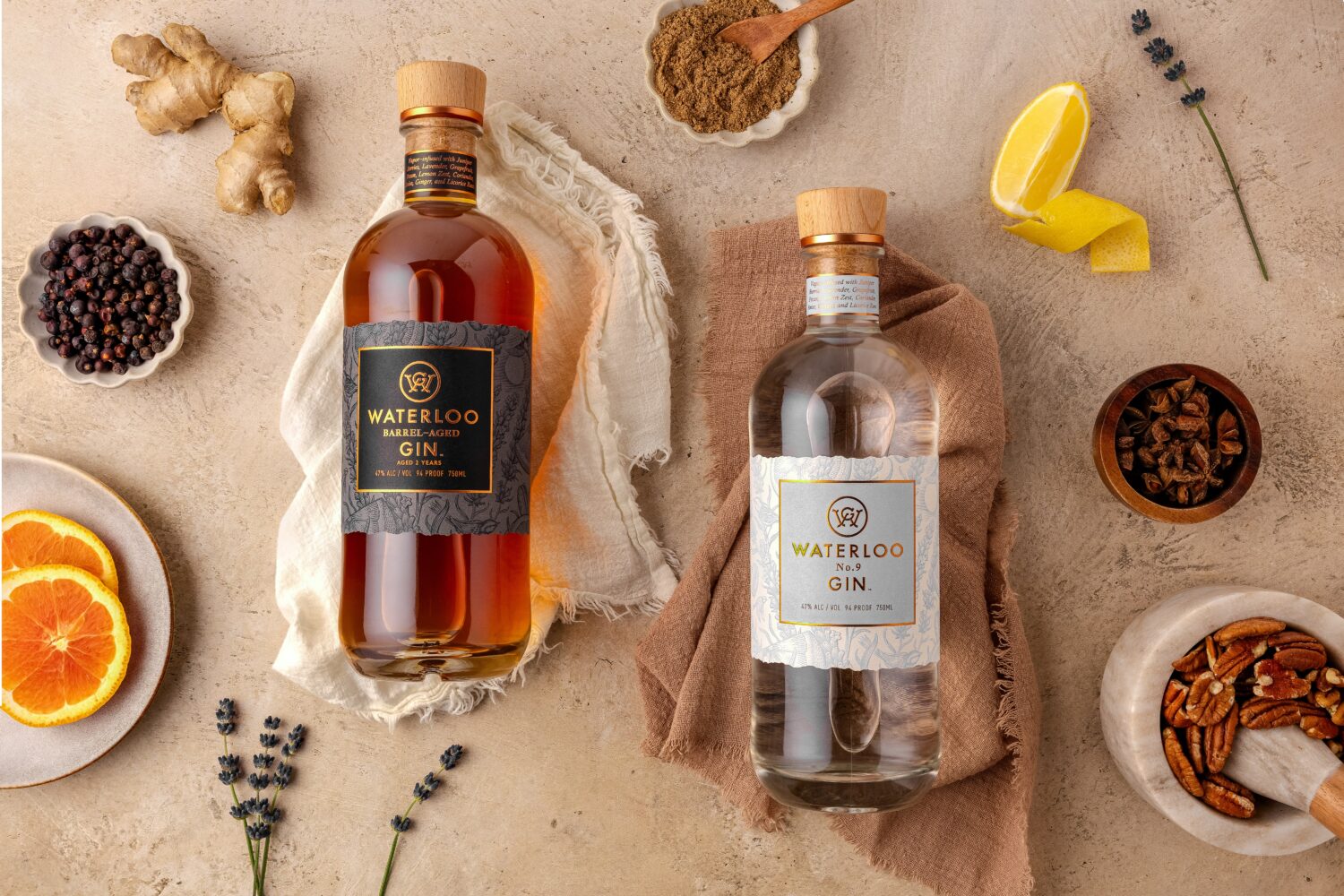
“The subcategory is taking off,” says Justin Meigs, CEO at Waterloo Gin, the Texan brand acquired by Patrón Tequila co-founder John Paul DeJoria last year. “We just launched in Georgia and the amount of excitement for the barrel-aged was infectious.”
While financially “a lot of gin producers probably struggle with the thought of putting back barrels when the subcategory hasn’t fully been proven out yet”, Meigs is confident in aged gin’s long-term potential.
Premium and pink
As the UK’s fervour for pink gins wanes, Lugsdin says the US is “rosé mad”. “We’ve seen [a repeat of] what we saw in the UK a few years ago,” he says, “[with] innovation and an interest in coloured and flavoured liquids.”
Meigs, who has led a rebrand of Waterloo Gin (below) while also bolstering national distribution this year, hints that an “innovation SKU” due to launch later this year could well be pink.
US labelling restrictions mean gins must have a minimum ABV of 40% and limit colouring and artificial flavours. While for well-established brands the name alone can suggest ‘gin’ – Diageo, for example, simply labels its 37.5%-ABV Gordon’s extension as a “premium pink spirit drink” – the restrictions are pushing smaller brands towards higher-ABV, ‘cleaner’ products.
Lugsdin sees pink gin as a gateway to premiumisation in the US, and Salcombe has been “on a mission” to get bars to serve its 41.4% ABV Provence-inspired Rosé Sainte Marie in wine glasses. “It immediately elevates the gin-&-tonic serve,” he says. “They see it as an instant cocktail.”
The gin ‘experience’
As the on-premise channel remains crucial for both trial and brand awareness, more brands are using experiential marketing to gain a foothold in the US.
Waterloo says being an experiential brand is “how you win” – but what does it mean? “We want every interaction with the brand to be immersive, sensory and emotionally resonant,” he explains.
And in practice? The team at Waterloo is developing “a series of on-premise activations that bring the Texas Hill Country to life with botanical garnishes, scent-driven cocktail pairings and even soundscapes inspired by Austin,” Meigs expands.
With its Phileas-Fogg-meets-Kew-Gardens aesthetic and the might of William Grant’s marketing budget behind it, Giardina says experience-led brand-building is “one of the roots of Hendrick’s success”.
The company once commissioned a cucumber-shaped blimp, for instance, which took people on short flights. “A Hendrick’s event is a theatrical experience!” says Giardina.
“It’s becoming even more important as the younger generations that have grown up on digital and social media are really yearning for real-life, authentic and novel experiences,” he adds. “Some of it’s for their digital feed, but some of it’s just because the social, digital world is not as fulfilling as real-life experiences.”
Hendrick’s ‘The World’s Most Utterly Inefficient Cocktail Bar’ is touring this year to promote just launched Oasium.

The outlook for vodka
“The projections for vodka consumption always need to be taken with a pinch of salt,” says Giulio Dorrucci, founder & director of Swiss-made Vodka 57. He highlights the impact of RTDs, which are “slowly cannibalising” – and thus potentially skewing – pure-vodka sales figures, and of economic uncertainty in the US that may be driving consumers to trade down to cheaper categories momentarily.
Tito’s Handmade Vodka, meanwhile, is placing “significant focus” on the global travel retail channel (above), scooping listings “as stores pare back on the space they once gave to gin”, according to the behemoth brand’s international MD, John McDonnell.
Outside the US, McDonnell says there’s great opportunity in Costa Rica and Caribbean islands like the Bahamas and Aruba – and “not just among tourists” either. “The Caribbean will always be a strong rum market, but consumers are always looking to discover new drinks,” he says.
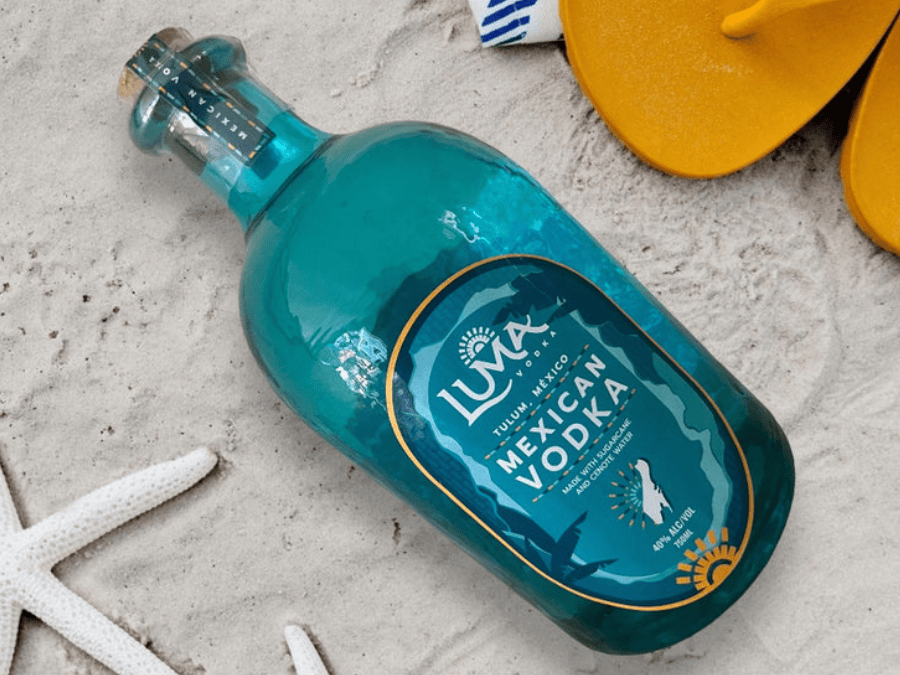
In Mexico, Luma (below) founder Jesse Devlyn is equally stoic: “While vodka remains the most-consumed spirit in the Americas, growth has stagnated and given up ground to agave-based spirits and whiskey/whisky.
“That being said, we see pockets of growth in differentiated premium brands and flavoured expressions. We don’t foresee vodka’s role as a staple to change anytime soon.”
Martini madness
The espresso martini: it’s in, it’s out, it’s… in again. And yet, thanks to rising interest in coffee and a blooming craft vodka movement, the serve tasted better than ever.
“We’re seeing considerable gin fatigue from some consumers and bartenders,” says Tito’s McDonnell. In light of this, consumers are “rediscovering the versatility of craft vodka – especially in an espresso martini”.
He estimates it’s now the US’s second most-popular cocktail, behind the almighty margarita. “The drink’s popularity has been driven particularly by female consumers and coffee culture, which only continues to grow stronger,” he says.
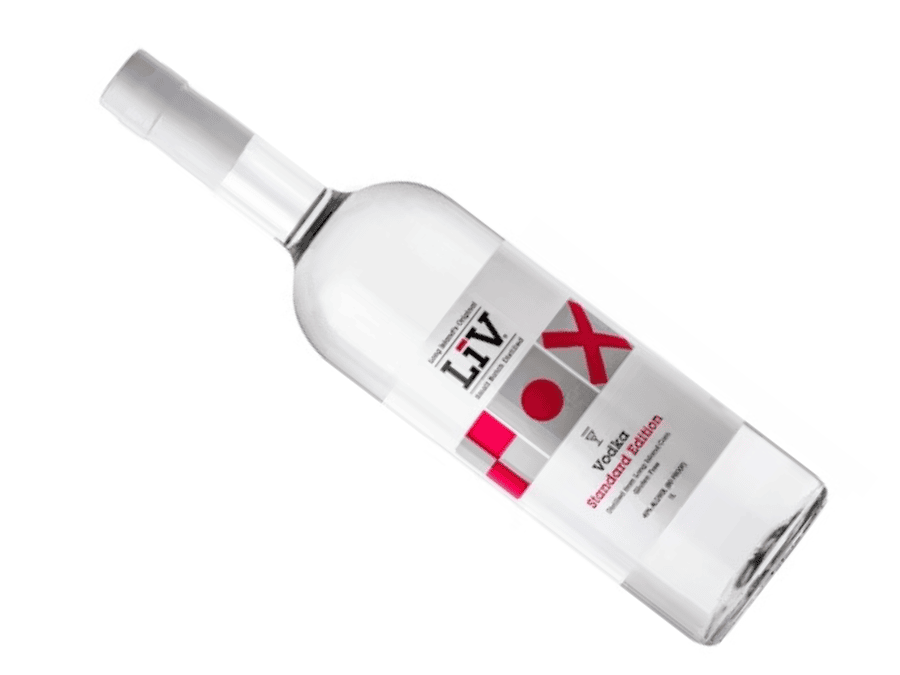
With its tasting room a short drive from NYC and the Hamptons, Long Island Spirits (LiV Vodka, below) has a front-row seat for one of the US’s most-vibrant cocktail scenes. “We’re seeing a strong shift toward cleaner, more elevated vodka cocktails; drinks that highlight quality ingredients and artisanal production,” says founder & master distiller Richard Stabile.
“The resurgence of the espresso martini has been especially prominent, and we’re seeing growing interest in lighter vodka spritzes, vodka-based negronis and herb-infused highballs.”
More authenticity, less flavour?
‘Authenticity’ is constantly on the lips of brand owners as drinkers become more value-conscious, but also more discerning.
“In a tightening market, authenticity and depth matter more than ever,” says Stabile. “Consumers are looking for spirits that deliver not only quality and flavour, but also a compelling story and transparent production.”
For Luma’s Devlyn, authenticity is also about connection. “Consumers are tired of the usual marketing ploys for vodka and gin,” he says. Luma, which is made from Mexican sugarcane, “seeks to appeal to Mexicans or individuals passionate about Mexican culture”.
With a growing interest in ingredients, health and authenticity, flavour variations should be unveiled with care.
In Latin America, Devlyn says market-specific innovation from the major brands, such as Smirnoff’s launch of Spicy Tamarind last year, “has become extremely popular”. But Luma, like Tito’s, has no plans of expanding beyond unflavoured vodka.
“Looking ahead,” says Long Island Spirits’ Stabile, “we see flavour expansion happening primarily within the RTD space, where consumers are eager for variety, but still expect craft quality and authenticity. It’s a way for us to innovate while staying true to the integrity of our core LiV Vodka.”
From his vantage point on Long Island, he summarises: “We see both spirits as essential parts of the evolving consumer palate; vodka for its clean canvas, and gin for its storytelling potential through botanicals.”