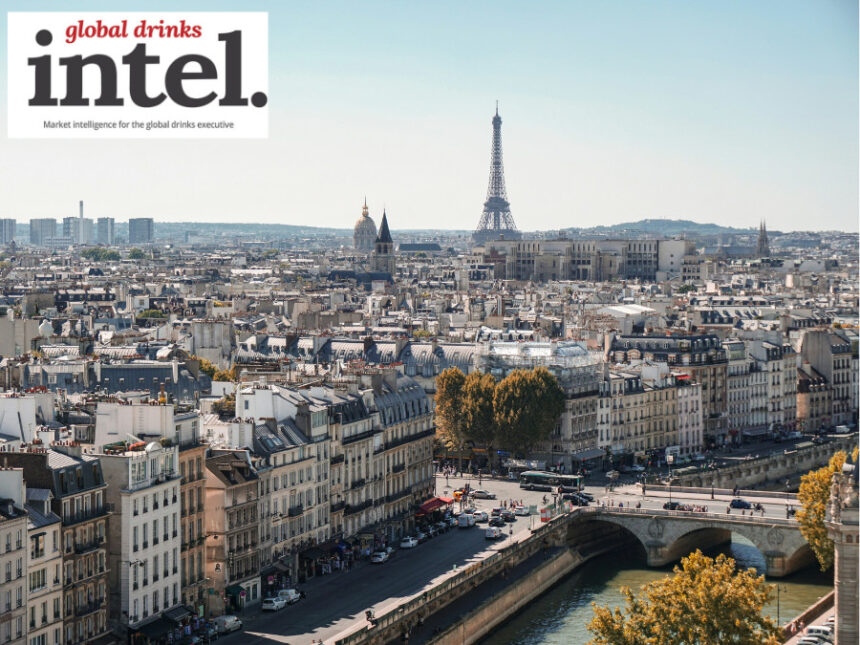
They may call one of the most alluring cities in the world ‘home’, but when it comes to drinks, Parisians are all about choosing quality over quantity, with choices that give a nod to their health and the environment.
The City of Lights is a sociable place; Parisians tend to live in small apartments, so going out is how they socialise and, in a city known for its art, fashion and cuisine, its inhabitants are just as discerning with what they put in their glasses. French drinking culture is often combined with food. This means they go out for many of their regular meals with friends and family – in restaurants, wine comes de rigeur – or they might have a pre-dinner aperitif in a bar and stay for small plates or a sharing platter.
The enduring appeal of Paris as a tourist destination means that the city’s residential population of 2.16m is joined by more than 40m tourists a year – making it the most-visited city in the world, and the fourth-largest metropolitan economy by GDP. Understandably, the French capital’s hospitality industry is huge: with 18,000 food and drink outlets accounting for more than 10% of the country’s total catering sector, according to 2019 figures from The National Institute of Statistics & Economic Studies (INSEE). This makes hospitality a significant employer – just under 168,000 work in the sector.
While some parts of the city are more residential, the culture of eating and drinking out means that most districts have a good number of bars and restaurants. The city is divided into 20 administrative arrondissements, numbered in a spiral outwards from the centre at the largely touristic 1er (premier arrondissement), which includes the Louvre. Le Marais, which covers the 3rd and 4th, has been a fashionable area for more than a decade and has expanded in recent years to include the ‘Haut Marais’ between the République and Bastille (and parts of the 11th arrondissement), where popular bars such as Max Y Jeremy and Candelaria are found.
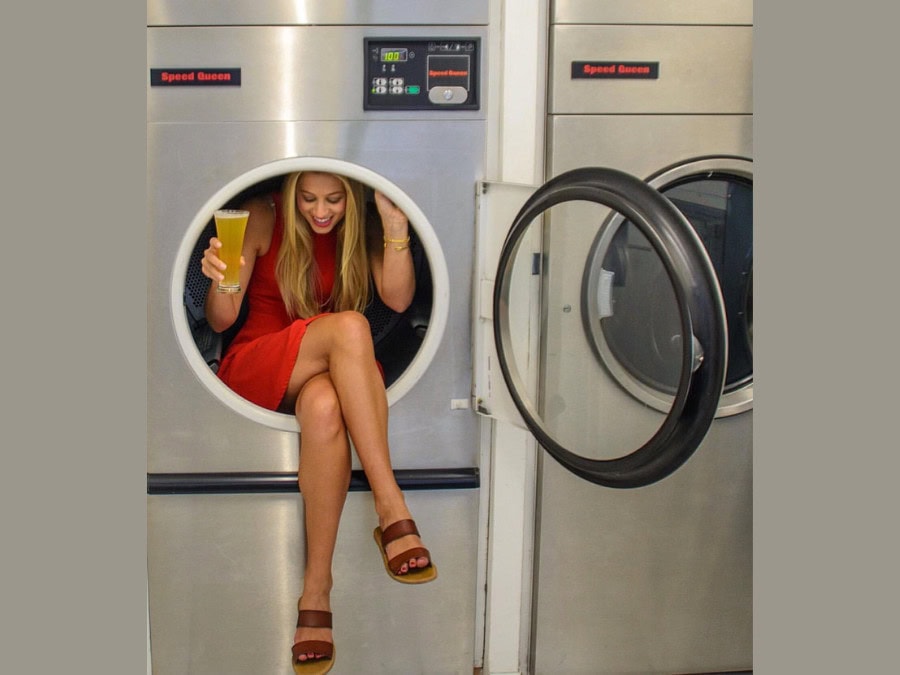
Another district that has become popular more recently, especially with the so-called ‘bobos’ (short for bourgeois-bohemians, the trendy crowd), is Strasbourg-Saint-Denis in the 10th, with Chez Jeannette and Le Syndicat, one of the city’s popular speakeasy bars. The clandestine and speakeasy bar scene is becoming huge in Paris, with bars hidden behind a variety of fronts, from a pizzeria for Moonshiner, a laundrette for Lavomatic and a convenience store for L’Épicier (The Grocer).
The trends
In terms of what Parisians are drinking, it isn’t so much brands that are leading the way, but a new approach to drinking, as Bruno Boccazzi, director of Experimental Cocktail Club Paris, explains: “It’s rather a combination of concepts and ideas that are opening everyone’s minds to a new way of drinking. On the one hand, we have the prevalence of low- and no-alcohol cocktails, which opens the opportunity for inclusivity during nights out. Everyone has an equal opportunity to enjoy great drinks and explore different aromatics, regardless of whether or not they’re indulging in alcohol.”
Meanwhile, when it comes to spirits, a curiosity for new flavours from around the world leads to mezcal proving popular. “The allure of this ancient spirit and its smoky flavour profile continues to stand out on our menus. Unlike vodka, gin or tequila, I find that mezcal is often the centre of the conversation when someone orders it,” says Boccazzi.
International and local players
For the last 20 years, gin has proven popular across France, with distilleries traditionally associated with other spirits – cognac or calvados, for example — expanding their range to include gin. This has translated to what bars are choosing to stock.
“Gin continues to be at the heart of Parisian cocktail culture,” says Boccazzi. “Of course, brands like Hendrick’s and Monkey 47 continue to grab people’s attention, but I see that bartenders and, ultimately, guests are looking for new brands to explore. When it comes to the Gin & Tonic, it’s a nice challenge to make a simple cocktail with only two ingredients that stand out. I’ve seen people interested in things like Japanese gins, as well as French gin with different characteristics, like the gin from Christian Drouin, which incorporates their apples for Calvados. There’s also a trend towards responsible production with brands like Djin or Le Petit Grain at the forefront.”
Many gin distilleries have pivoted towards no/low, and this is something the larger manufacturers have developed too. In 2021, Pernod Ricard bought a majority stake in Ceder’s, a South African no-alcohol gin. Meanwhile, brands such as Gimber and JNPR allow for the flavour of alcohol without the intoxication. Guillaume Bisiaux, spirits expert from Groupe Milliet distribution, explains: “A craze for locavore, organic, less sugary products is important for Parisians.”
Beyond the no/low market, the desire for the ‘new’ is also steering the bigger brands. “Major manufacturers like Pernod Ricard, Bacardi Martini, Moët Hennessy, Diageo, Campari and La Martiniquaise are constantly looking for innovative products and influencers for the French market,” says Bisiaux. “The aperitivo category is still in vogue with the fashion for Spritzes, while tequilas are constantly growing, just as vodka.” Otherwise, global cocktail trends continue, he adds, among the “many popular cocktails are the Spritz – Aperol, Campari, Italicus, St-Germain – as well as the Moscow Mule, Pornstar Martini, Negroni and Mojito”.
Meanwhile, the craft beer movement is alive and well in Paris, and IPAs and even stouts have found fans in the capital. According to the INSEE, in 2017, there were some 1,100 breweries registered in France, compared to just 200 in 2009. Groupe Milliet first began supplying beer across the capital in 1957 and selects beers from across France for its catalogue, including local breweries Paname Brewing Co, Deck & Donohue and Brasserie La Parisienne.
There is perhaps no bigger trend in the last few years than natural wine, so-called vins naturels or pét nat (pétillant naturel) with the natural wine and food app Raisin declaring Paris’ 11th arrondissement the world capital of vin naturel, with 440 outlets offering it, beating even New York and London in 2021. The desire for natural wine also stays true to the French buying principally French products, particularly with the climate crisis at the forefront of their choices.
Challenges and opportunities
Following the pandemic, Parisians are enjoying social life in bars and restaurants more than ever before. “The market has evolved drastically,” says Bisiaux. “Consumers drink more in establishments than at home; and they consume more French, organic, local products in order to drink less but better quality. They tune into the language of a brand and its history, making them connoisseurs who seek out taste experiences.”
This is reflected in clientele at the Experimental Cocktail Group too, which has seen the cost of living crisis change habits more broadly. “While people aren’t travelling as much, when they do travel, they travel well,” says Boccazzi. “And they often travel for longer periods, allowing them to fully explore a new region, many times a region that is ‘less popular’ than its expensive counterparts. This has helped spur the trend towards discovering new spirits and brands in South America, Asia and Europe, and it’s opened the conversation between guests and bartenders about their discoveries.”
So, what’s new for 2024? As Parisians continue to seek out drinks that are both healthier for themselves and for the planet, a glass shortage pushes manufacturers towards schemes such as the EcoSpirits refillable packaging system (reducing both waste and carbon) and encourages manufacturers to adopt a corporate social responsibility approach.
Meanwhile, cocktail lovers who are coming for the Paris 2024 Olympics this summer might find their tastebuds treated to drinks that use a hot new scientific method called Rotovap – or rotary evaporator – which uses vacuum distillation to create new flavour profiles.
“This is something that will continue to grow,” says Boccazzi. “Beyond the spirits made by brands, the Rotovap has opened the opportunity for bartenders to push the limits of what they can do to explore flavour.”