After a false start or two, zero-ABV spirits are offering real competition to alcoholic brands. There’s still a way to go in terms of education, but the prospects are enormous.
Over the last three years, alcohol-free in general has had growth rates to die for, and zero-ABV spirits are no exception. Double, even triple-digit figures have been common.
Admittedly, it’s from a low base. In 2022, according to IWSR Drinks Market Analysis, the UK, which is the largest alcohol-free spirits market, totalled 450,000 cases. To put that in context, alcoholic liqueurs – no-one’s idea of a particularly swashbuckling category – are at around 5m cases in the same country.
But this is a segment of potential, and brands operating in it at the moment are giddy at what they’re seeing.
“At the moment, non-alcoholic has only penetrated 3% of households across the US,” says Stéphane Rochefort, executive VP at Canadian distiller Duvernois. With producers around the world consistently seeing such high rates of growth, he believes that “non-alcoholic will become less and less niche” over the coming years.
Although an exceptionally young area, alcohol-free spirits is already on its second, even third iteration. A good number of producers admit that the brands in alcohol-free spirits 1.0 weren’t always good enough, and some may have turned off early adopting consumers. Alcohol-free 2.0 (from the late 20-teens onwards) were significantly better, while many 3.0 brands include ‘functional’ ingredients, some of which can have similar socialising effects to small amounts of alcohol.
‘Functional’ drinks could send alcohol the same way as tobacco
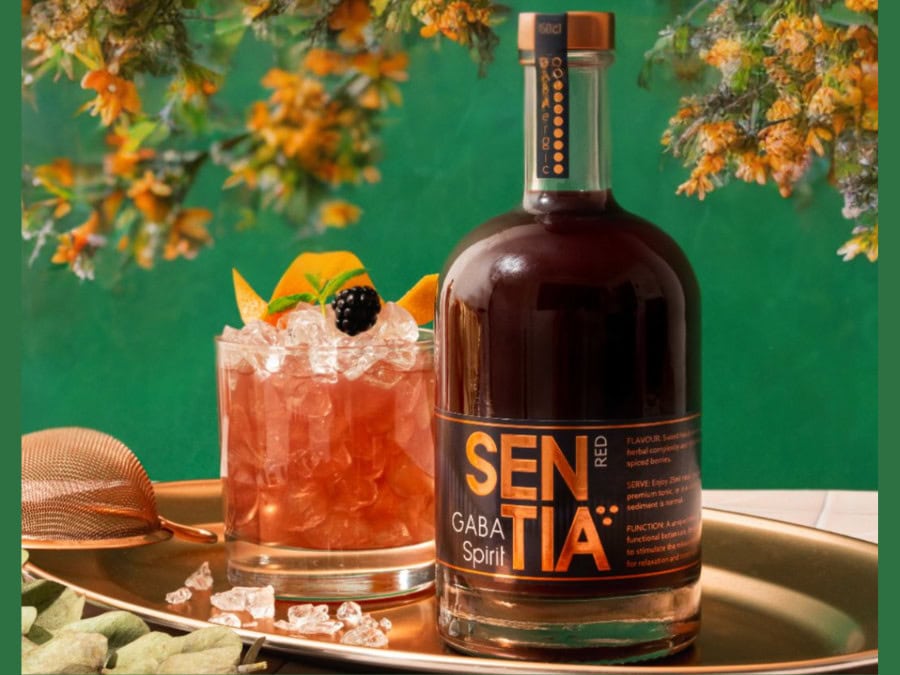
The Social Drinks Co created the Sentia brand as proof of concept to showcase its booze-free alcohol substitute ingredient, alcarelle. Since then, the brand proved to be so popular that it has multiple line extensions and growth is predicted to double every year.
Brands such as Sentia are one reason why more zealous spirits brand owners are suggesting that zero-ABV drinks will eventually usurp alcohol, sending it the way of tobacco: legal, but increasingly unacceptable.
This, though, is decades down the line. For the moment alcohol-free spirits remain a niche within a niche. Its recondite nature is, as much as anything, due to the fact that most were created during the Covid-19 pandemic — a time when both retail and, particularly, hospitality were closed. Brands grew either in direct-to-consumer or via equally embryonic specialist non-alcoholic retailers.
Shift into traditional retail
“It’s not abstention, it’s moderation,” says Roddy Nicoll of Spirits of Virtue, which recently secured GBP3.5m (US$4.5m) of funding. “We know the people who buy our non-alc gin also buy [alcoholic] Tanqueray or Gordon’s. It’s a school night drink.”
Brad Whiting, founder of Wilderton in Hood River, Oregon, agrees. “Ninety-four per cent of people buying non-alcoholic also buy alcohol,” he says. “So, we need to be everywhere people buy [alcoholic] spirits.”
This means in standard off-premise outlets, which is proving difficult for smaller players, at least. Diageo has come in hard with alcohol-free versions of its key brands Gordons, Tanqueray and, most recently, Captain Morgan.
For many retailers, this kind of brand extension covers off much of their alcohol-free requirements, not least because it’s easy for consumers to understand. The public may not know what to do with a unique zero-ABV functional spirit made with foraged local herbs and ashwagandha, but they know what to do with Gordon’s.
Calixte Payan, founder of the artisanal Sober Spirits in France, is concerned that the larger brand owners could damage the category. “The main risk is that they make a product that is not good at all and that they distribute it on a very large scale,” he says. “This would kill the market, because consumers buy once to taste and quickly form an opinion on the entire category.”
Danish alcohol-free brand Ish Spirits is growing at 40% a year in retail, and marketing manager Nicholas Buch Jørgensen believes their focus helps. “We cannot be as visible as Diageo,” he says. “However, we are exclusively non-alcoholic, making us a ‘pure player’, which gives us a competitive advantage.”
His belief – that Diageo putting muscle behind 0% variants of its globally recognised brands is good for the wider alcohol-free market – is widely shared.
“There’s plenty of headroom for the category to grow,” says Dan l’Anson of Everleaf. “Having some big players investing heavily can only be a good thing for everyone.”
Is the on-premise a better showcase?
While alcohol-free spirits are starting to appear in mass-market retail, the volumes sold there are still relatively low and many see the on-premise as a better showcase for their brands – particularly if it isn’t a zero-ABV version of an existing alcoholic drink style.
Sales are likely to increase further as bars become less apologetic about how they list alcohol-free drinks — whether moving them to the front of the drinks menu, or even mixing them in among alcoholic versions, with a clearly-marked ABV.
Duvernois’ Rochefort draws a parallel between alcohol-free and the rise of alternative milk drinks over the last 20 years. “Sales of oat milk and soy milk were definitely driven by coffee shops prior to the offer being there on supermarket shelves,” he says. “Having non-alcoholic sections on cocktail menus will definitely drive consumers to integrate the category at home.”
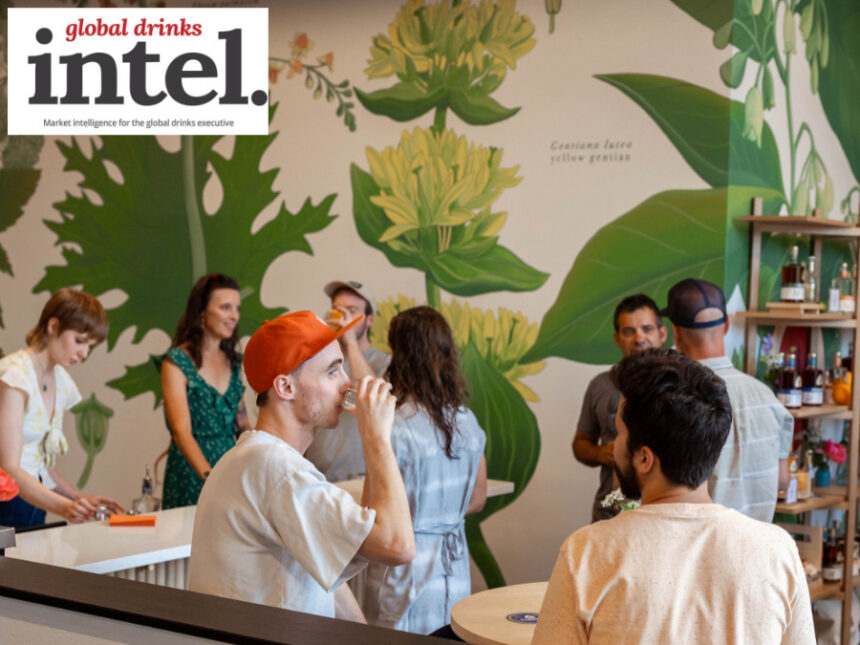
The ultimate aim, perhaps, is for brands to own their own hospitality venue. Wilderton, based in the tourist mecca of Hood River in Oregon, has seen significant footfall since opening its tasting room last year. Whiting describes it as “the best thing we ever did”.
Not only do 60% of visitors walk out with a purchase, but it’s proving an effective way of explaining a category that is new and confusing to people. After all, alcohol-free spirits are expensive and consumers are not confident.
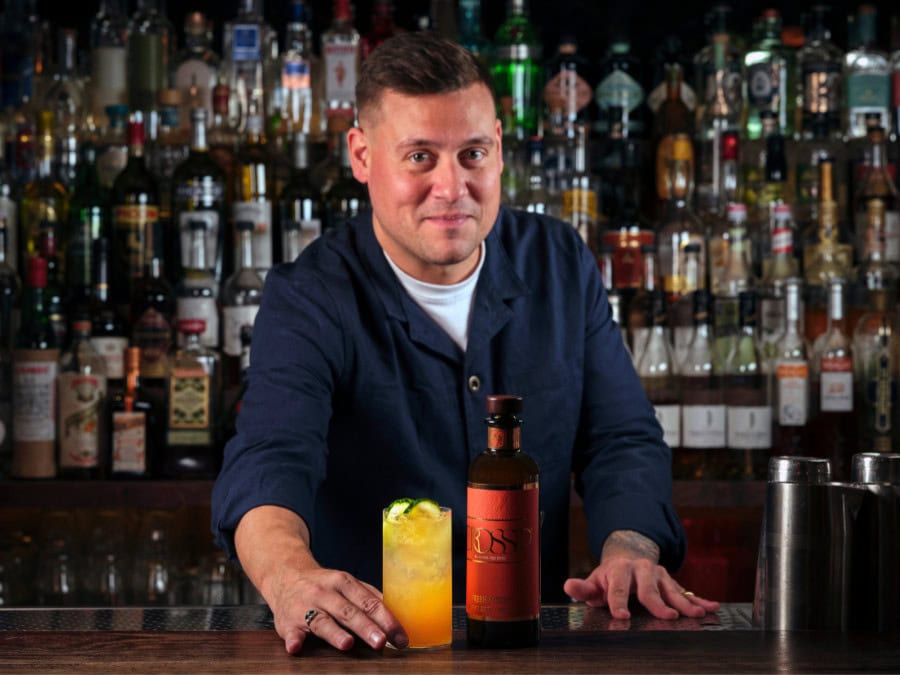
For decades, education has been cited as crucial for alcoholic drinks. It’s doubly the case for non-alc alternatives – and not just with the public. Few buyers have much experience with a category that is still, to all intents and purposes, just a few years old. On-premise focused brands such as Everleaf and Crossip spend a lot of time working directly with bartenders.
“We still need to show people how to drink it, not what it is,” says Crossip’s Blake. “I very much believe that the ‘how’ and the ‘when’ are more important than the ‘who’ and ‘what’.”
The dedicated non-alcoholic bottle shops that are springing up, particularly in the US, are hugely helpful in this regard, since they have knowledgeable and engaged staff, tasting events and, often, drinks on trial. For spirits, more than any other alcohol-free segment, ‘liquid on lips’ remains crucial.
Interestingly, some operators are shifting their promotional focus away from online (which is where the category mostly started) to IRL (in real life) activations. Ish Spirits reports that in-store point-of-sale material is having a big impact on its namesake brand’s visibility, while Wilderton is drawing back from digital and e-commerce to focus more on “the last six feet” in-store and in hospitality.
Gulf and Far East markets to watch
Given the positivity surrounding the sector, the final question, perhaps, is which alcohol-free markets will see the strongest growth. In a sea of positive numbers in 2022, France and Canada’s underperformance stood out. It will be interesting to see whether they bounce back once 2023’s numbers are collated.
Key to the category’s performance will be to what extent the cost of living crisis affects Europe. Feedback on the topic has been mixed – although alcohol-free sales are expected to keep their double-digit performance, rates might be somewhat lower than for the last two years.
The markets clearly on the agenda of many in alcohol-free, however, are the Gulf – complex but interesting – and the Far East. “Japan and China haven’t seen alcohol-free before,” says Spirits of Virtue’s Nicoll. “They have no non-alcs yet at all. There are large opportunities there: They have a low tolerance of alcohol and they’re super health conscious.”
Alcohol-free spirits mostly comprises small businesses that started up during a global hiatus and many are reaching a crossroads in their development. One operator described themselves as being “one month from success and one month from disaster”.
As investment runs out and commitment levels are tested, we can expect to see plenty of both. But with huge latent potential still untapped, the next two years should see more of the former than the latter.
Global Drinks Intel named media partner of World Alcohol-Free Awards 2024
Global Drinks Intel is pleased to announce that it has become the exclusive media partner to the World Alcohol-Free Awards, the only international competition dedicated solely to beverages that are 0.5% ABV and below. The inaugural competition was held last year gaining 400 entries from across the full spectrum of alcohol-free drinks.
Entries to this year’s awards are now open: online entries close on 9 February 2024 and samples must be delivered by 16 February. Medals will be announced on 27 March with the trophy awards ceremony set to take place on 24 April.
This article is available to Global Drinks Intel members only.
Click below for details on how to join the Global Drinks Intel community.
Already a member?
Log in here to read the article in full.
If you work for any of the following corporate subscribers to Global Drinks Intel, head here to activate your access.
- AB InBev
- Bacardi
- Campari Group
- Diageo
- Moët Hennessy
- Pernod Ricard
- Proximo Spirits
- Suntory Global Spirits
- William Grant & Sons