


Sign In
  • News
    • Beer
    • Spirits
    • Wine
    • Environmental, Social & Governance
    • Financial Results
    • Marketing
    • Mergers & Acquisitions
    • New Product Development
    • From the Industry
  • Intel
    • Comment
    • Interview
    • Category Intel
    • Consumer Intel
    • Market Intel
  • Awards
    • Global Drinks Awards
    • New Product Awards
    • ESG Awards
  • Magazine
  • Newsletter
  • Subscribe
  • Contact
  • News
    • Beer
    • Spirits
    • Wine
    • Environmental, Social & Governance
    • Financial Results
    • Marketing
    • Mergers & Acquisitions
    • New Product Development
    • From the Industry
  • Intel
    • Comment
    • Interview
    • Category Intel
    • Consumer Intel
    • Market Intel
  • Awards
    • Global Drinks Awards
    • New Product Awards
    • ESG Awards
  • Magazine
  • Newsletter
  • Subscribe
  • Contact
Search
Banner for Global Drinks Intel ESG Awards - https://gdiesgawards.com/categories/


Beer primed for growth across the Americas

Alex Smith
Last updated: 20/10/2021 at 9:17 PM
By Alex Smith
11 July 2021
11 Min Read

CGA evaluates the recovery of the beer category in the Americas on-premise, key changes in consumers’ habits and opportunities for growth Beer has long been the most popular choice of on-premise drink across the Americas, and suppliers will be closely watching the category’s recovery from the Covid-19 pandemic. Exclusive research from CGA reveals the clearest […]


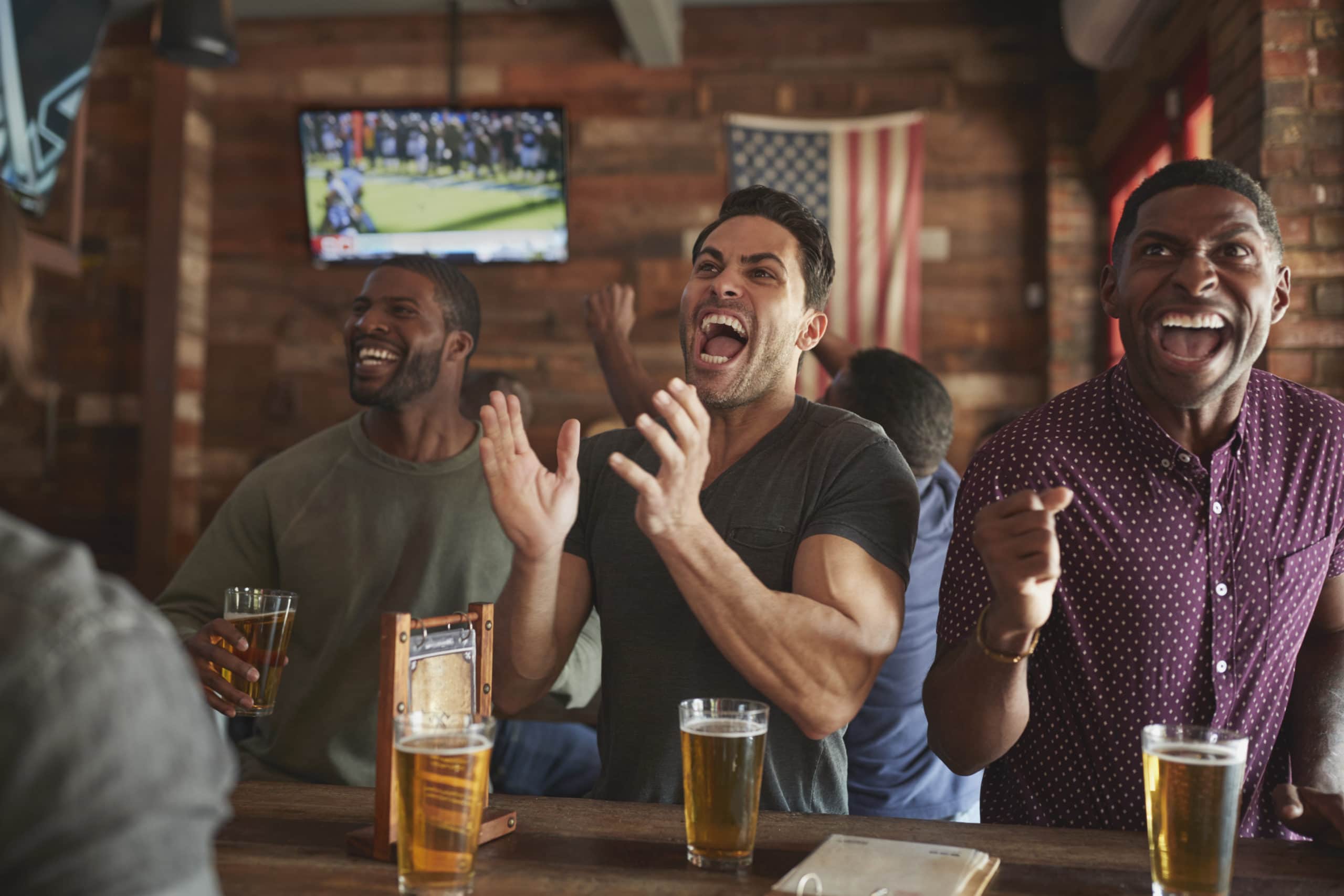
Group Of Male Friends Celebrating Whilst Watching Game On Screen In Sports Bar
SHARE

CGA evaluates the recovery of the beer category in the Americas on-premise, key changes in consumers’ habits and opportunities for growth

Beer has long been the most popular choice of on-premise drink across the Americas, and suppliers will be closely watching the category’s recovery from the Covid-19 pandemic. Exclusive research from CGA reveals the clearest picture yet of how it is shaping up after a tumultuous 15 months, and how consumer interaction with it is evolving fast.

CGA’s recent global research highlights the huge importance of beer to the on-premise, with more than half (53%) of all on-premise users choosing it when out — the figure rises to 56% in the Americas. With on-premise consumption far higher than at-home levels — on average, 13% more consumers in the Americas drink beer in the on-premise than at home — it is not only the category that is important to the channel, but the channel that is important to the category.

Beer drinkers pour back after Covid-19

This harmony between the on-premise and the beer category is particularly evident in Latin American countries, where two-thirds (66%) of on-premise consumers choose beer. Indeed, of the 24 markets featured in CGA’s recent global recovery study, three of the top four-ranking countries for beer consumption were in Latin America — Argentina, Mexico and Brazil, with Argentina the top-ranking country.

Beer drinkers are coming back to the on-premise

“Beer has always been a go-to choice in the on-premise across the Americas, and it is retaining its pole position as markets start to recover from Covid,” says Amy Warren, CGA’s director of client services for the Americas. “Beer consumers in all the big markets tell us they are drinking beer out even more frequently than before the pandemic, and they have been among the first to re-engage with the on-premise as restrictions ease, mitigating the enormous damage caused by prolonged closures.”

As a result, beer has been able to maintain — or even gain — share of total alcohol sales in markets in the Americas. While the US on-premise’s overall sales have been significantly down over the last year due to ongoing restrictions, the beer category (and associated long alcoholic drinks) has gained 0.5% of total alcohol volumes. Value share gain is even more impressive at 1.2%.

Premiumisation and polarisation

Sharper growth for value than volume points to one of the big category trends at play across the Americas: premiumisation. “In North America in particular, we’re seeing consumers happy to spend more for a better quality of beer in the on-premise,” says Warren. “They’re increasingly knowledgeable about the category, and find themselves with an ever-increasing range of high-quality options.”

However, many people — especially Latin Americans who have been hit financially by the pandemic — continue to choose cheaper beer in the on-premise. This is creating a new wave of polarisation in spend, between those seeking to trade up and those focused on value, which Warren expects to alter the category dynamics. “We expect to see continued growth in both super-premium and value offerings, with potential casualties those who do not articulate their quality or value credentials,” she says.

Changes in craft

There are more interesting dynamics in subcategory choices, including major differences between the north and south, with share of beer sales seemingly at a turning point on both sides of the equator. They include craft beer, a movement that has propelled sales in the US to the point where the latest CGA research shows more drinkers choose craft than imported or domestic beer in the on-premise, and it accounts for more than one in four beers sold. In Canada, meanwhile, more than two in five beer drinkers now opt for craft when they drink out.

However, there are early signs that this trend might be at a turning point. Domestic beer — especially high-quality or ‘super-premium’ brands — have gained share since the post-lockdown reopening. In both the US and Canada, a greater proportion of beer drinkers are choosing domestic than before the pandemic, while craft beer has declined.

“We’re seeing beer drinkers in the US revert to well-known domestic beer brands — partly because they trust them so much, but also because big breweries enjoy better distribution and more logistical power than smaller craft producers,” says Warren. The category that is perhaps meeting consumers’ needs best of all is domestic super-premium, where trust credentials are still important but quality cues are emphasised.

Domestic beer has been even more dominant in Latin American markets, with nine in 10 on-premise beer drinkers opting for the category in Mexico and Brazil, and eight in 10 in Argentina. However, in contrast to north of the equator, consumers have been slower to return to domestic beer. While it remains the top choice, drinkers in Latin America have been choosing imported beer more often than they did before the pandemic. They still like their trusted and favourite brands, but they also appear to be increasingly open to high-quality products with a good international reputation.

Craft beer has grown into a mainstream and intensely competitive on-premise category in the US and Canada, with numerous local and national players fighting for attention. Craft’s appeal is based on its perceived quality, which is the leading factor in its choice in both markets. “Craft drinkers love to try new beers, and there’s a big thirst for experimentation in the on-premise,” says Warren. “Specialist taprooms and brewery bars have allowed drinkers to trial new options and learn much more about the category, and they are essentially acting as incubators for category growth.”

Styles and serves

While craft isn’t quite as popular in Latin American markets, it still holds widespread appeal. More than two in five consumers in Argentina (44%) and Brazil (42%), and slightly fewer in Mexico (31%), say they would be likely to trial craft beer if it was available in an on-premise outlet.

However, CGA’s research shows the concept of craft beer is fluid, and varies by region. When asked about the factors that are essential for a beer to be defined as craft, ‘a unique flavour’ is the top factor — but ‘produced by a local company’ tops the list in Canada, and ‘high-quality ingredients’ leads in Mexico.

Preferred styles similarly vary from country to country. IPA is the most popular style of craft beer in the US, whereas amber lager is the No.1 choice in both Canada and Mexico. Sours also over-index in Mexico — the only market in which bottled craft beer is more popular than draft serves.

This mirrors the broader trend of bottled beer being by far the preferred serve style in Latin American countries, whereas draft, or on tap, is the most popular serve for domestic beer across North American markets. Bottles are more popular for imported beer in North America, with Mexican and European brands the most common choices. In total, imported beer accounts for 19.4% of the category’s sales in the States, down slightly from 19.9% a year ago.

On the rise: Hard seltzers and no/low options

It is not just imported beer that has lost share of the total beer and long alcoholic drinks category over the past year in the US on-premise: domestic premium, craft, import, below-premium and cider have all dropped too. Aside from domestic super-premium, the other big subcategory winner over the past year has been hard seltzers, which have gained 1.4% of the total category. That equates to a huge 38% growth in category share, and takes it to 4.1% of total volumes in beer and long alcoholic drinks.

Hard seltzer brands like White Claw have impacted the beer category’s share of the US on-premise

While hard seltzers have disrupted the sales mix in North America, an appetite for no/low-alcohol beer may have the potential to do so in Latin America. More than a quarter of consumers in Mexico, and nearly as many in Brazil, say they would trial no/low beer in the on-premise if it was available — notably higher than the global average of 18%.

“Beer is going to remain fundamental to on-premise occasions across the Americas, but we are in a period of major change in the way consumers interact with the category,” summarises Warren. “Consumers are becoming polarised in their finances, which is increasing interest in both high-quality and value options, and trusted and new brands alike. Consumers have never been as knowledgeable and demanding about their beer choices, and the rise in hard seltzers and no and low-alcohol categories is continuing to add even more disruption to a category that has traditionally been very stable.”

All these shifting dynamics potentially put some domestic beer brands at risk, unless they can leverage a combination of local, community, value and quality links — all of which will continue to be very important to beer drinkers. Whatever changes lie in store, it is certain that the on-premise will remain fundamental to the overall health of the beer category — and vice versa.

Previous Article My Story: DAN SZOR
Next Article CityScapes: NEW YORK
MPU for Bayou Rum - https://bayourum.com/

The Newsletter

Sign up to receive our newsletter email

  • The very latest news from across the world's beverage alcohol industry
  • Cutting-edge intel from our in-depth category & market analyses, backed by benchmark industry data
  • The best insight on your competitors from our interviews with the industry’s leaders

This field is for validation purposes and should be left unchanged.

Follow on Social

Linkedin Twitter
Short Tower for Le Tribute Pink Grapefruit - https://letribute.com/en-gb?srsltid=AfmBOooXoAFSrBVrsVtLnlySLXXjT62LG4oJ5imdqTABCraYG_SULm5V
Banner for Bayou Rum - https://bayourum.com/

You Might Also Like

Two bartenders preparing cocktails behind a bar

What’s driving cocktail choices in the US on-premise in 2026? – Consumer Intel

24 July 2026
Drinkers with balls of BuzzBallz

Drinks brands must identify category codes before embarking on search for sales – Comment

24 July 2026
Brown-Forman logo and CEO 2022

Another Covid vet heads for the exit as Brown-Forman CEO prepares to retire – Comment

24 July 2026
Skyline of Italian city

How the spirits industry is weathering Italy’s unique challenges – Market Intel

24 July 2026
Linkedin Instagram

What next?

  • Sign up to our FREE newsletter
  • Subscribe
  • My Account
  • Sign up to our FREE newsletter
  • Subscribe
  • My Account

About

  • Contact
  • Privacy Policy
  • Cookie Policy
  • Terms & Conditions
  • Contact
  • Privacy Policy
  • Cookie Policy
  • Terms & Conditions

Copyright © 2025 Global Drinks Intelligence Limited. All Rights Reserved

Built and Managed by Kukoo Creative

This website uses cookies to improve your experience. Read our privacy policy | Cookie settings | ACCEPT
Privacy & Cookies Policy

Privacy Overview

This website uses cookies to improve your experience while you navigate through the website. Out of these cookies, the cookies that are categorized as necessary are stored on your browser as they are as essential for the working of basic functionalities of the website. We also use third-party cookies that help us analyse and understand how you use this website. These cookies will be stored in your browser only with your consent. You also have the option to opt-out of these cookies. But opting out of some of these cookies may have an effect on your browsing experience.
Necessary
Always Enabled
Necessary cookies are absolutely essential for the website to function properly. This category only includes cookies that ensures basic functionalities and security features of the website. These cookies do not store any personal information.
Non-necessary
Any cookies that may not be particularly necessary for the website to function and is used specifically to collect user personal data via analytics, ads, other embedded contents are termed as non-necessary cookies. It is mandatory to procure user consent prior to running these cookies on your website.
Functional
Functional cookies help to perform certain functionalities like sharing the content of the website on social media platforms, collect feedbacks, and other third-party features.
CookieDurationDescription
li_gc6 monthsLinkedin set this cookie for storing visitor's consent regarding using cookies for non-essential purposes.
lidc1 dayLinkedIn sets the lidc cookie to facilitate data center selection.
VISITOR_INFO1_LIVE6 monthsA cookie set by YouTube to measure bandwidth that determines whether the user gets the new or old player interface.
yt-remote-cast-availablesessionThe yt-remote-cast-available cookie is used to store the user's preferences regarding whether casting is available on their YouTube video player.
yt-remote-cast-installedsessionThe yt-remote-cast-installed cookie is used to store the user's video player preferences using embedded YouTube video.
yt-remote-connected-devicesneverYouTube sets this cookie to store the user's video preferences using embedded YouTube videos.
yt-remote-device-idneverYouTube sets this cookie to store the user's video preferences using embedded YouTube videos.
yt-remote-fast-check-periodsessionThe yt-remote-fast-check-period cookie is used by YouTube to store the user's video player preferences for embedded YouTube videos.
yt-remote-session-appsessionThe yt-remote-session-app cookie is used by YouTube to store user preferences and information about the interface of the embedded YouTube video player.
yt-remote-session-namesessionThe yt-remote-session-name cookie is used by YouTube to store the user's video player preferences using embedded YouTube video.
ytidb::LAST_RESULT_ENTRY_KEYneverThe cookie ytidb::LAST_RESULT_ENTRY_KEY is used by YouTube to store the last search result entry that was clicked by the user. This information is used to improve the user experience by providing more relevant search results in the future.
Performance
Performance cookies are used to understand and analyze the key performance indexes of the website which helps in delivering a better user experience for the visitors.
Analytics
Analytical cookies are used to understand how visitors interact with the website. These cookies help provide information on metrics the number of visitors, bounce rate, traffic source, etc.
CookieDurationDescription
_ga1 year 1 month 4 daysGoogle Analytics sets this cookie to calculate visitor, session and campaign data and track site usage for the site's analytics report. The cookie stores information anonymously and assigns a randomly generated number to recognise unique visitors.
_ga_*1 year 1 month 4 daysGoogle Analytics sets this cookie to store and count page views.
YSCsessionYSC cookie is set by Youtube and is used to track the views of embedded videos on Youtube pages.
Advertisement
Advertisement cookies are used to provide visitors with relevant ads and marketing campaigns. These cookies track visitors across websites and collect information to provide customized ads.
CookieDurationDescription
__Secure-ROLLOUT_TOKEN6 monthsYouTube sets this cookie to manage feature rollout and experimentation. It helps Google control which new features or interface changes are shown to users as part of testing and staged rollouts, ensuring consistent experience for a given user during an experiment.
__Secure-YNID6 monthsGoogle cookie used to protect user security and prevent fraud, especially during the login process.
_fbp3 monthsFacebook sets this cookie to store and track interactions.
bcookie1 yearLinkedIn sets this cookie from LinkedIn share buttons and ad tags to recognize browser IDs.
yt.innertube::nextIdneverYouTube sets this cookie to register a unique ID to store data on what videos from YouTube the user has seen.
yt.innertube::requestsneverYouTube sets this cookie to register a unique ID to store data on what videos from YouTube the user has seen.
Others
Other uncategorized cookies are those that are being analyzed and have not been classified into a category as yet.
CookieDurationDescription
__Secure-YECpastYouTube sets this cookie to stores the user's video player preferences using embedded YouTube video
advanced_ads_visitor1 monthDescription is currently not available.
personalize_sync1 dayDescription is currently not available.
RBUUID2 monthsDescription is currently not available.
stackprotect1 hourDescription is currently not available.
syncTimeout12 hoursDescription is currently not available.
unique_session_id1 yearDescription is currently not available.
SAVE & ACCEPT
Powered by CookieYes Logo