

Zak Oganian, founder & CEO of Origen X, passionately believes heritage-led innovation and a return to patient, long-term business principles are critical aspects of long-term spirit brand building.
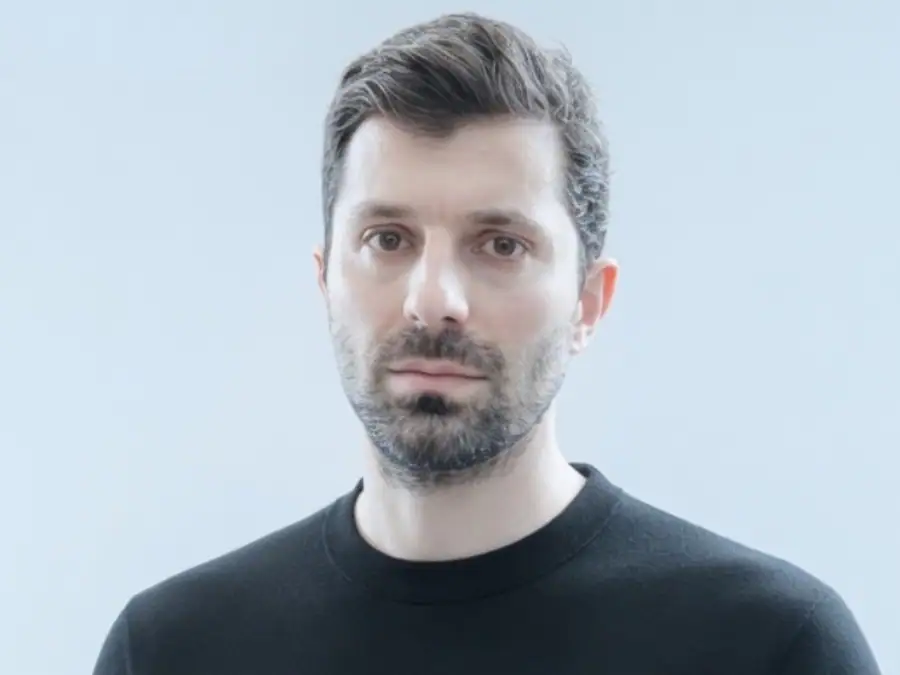
In a global spirits industry increasingly dominated by corporate short investment horizons, fast-growth brand models and increasingly short-term commercial thinking, Zak Oganian (below), the founder & CEO of Origen X, prefers a more grounded, slow-and-steady approach to brand building. The former lawyer-turned-CEO of the Geneva-based private spirits group is confounded by the drinks business’ obsession with short-termist business models overpromising huge financial returns.
Instead, Oganian’s goal for Origen X is much more traditional in nature, but it is anything but unambitious. “We wish to build the most valuable portfolio of heritage-driven spirits of any privately owned European company,” he states. Such a lofty ambition won’t be achieved overnight, he realises, of course, but rather built over a 30-year horizon through a careful investment in distribution and supporting infrastructure.
Why pump-and-dump rarely works
“Nobody ever built brands to exit before the mass market started,” Oganian insists. “People built to last. This is why you had brands. Right now, 95% of brands are just made up of quick turnarounds, hopefully with the idea of making a EUR50m or EUR100m exit in five years. Quite frankly, it rarely proves sustainable. The idea of building, scaling and selling at ten times value in five years very rarely happens.”
Oganian’s critique of the current drinks landscape is sharpest when discussing how premiumisation has been weaponised by newcomers who mistake an expensive craft price tag for offering true consumer value. He points directly to the systemic issues facing many modern spirits start-ups, where founders find themselves trapped in a cycle of endless fundraising.
Too often, growth models become detached from long-term commercial fundamentals, he argues, leaving founders caught in cycles of valuation pressure and continual fundraising.
Making it pay from day one
Origen X operates on a significantly longer commercial horizon than much of the modern spirits landscape.. Rather than inventing new labels out of thin air, the group scours the globe for undervalued, historic “sleeping giants”, neglected legacy brands with authentic, historical roots, waiting for care and attention to become relevant for modern consumers.
For Origen X, the solution to avoiding the all-too-typical lion-to-lamb corporate trajectory of many newly-launched brands is an uncompromising metric: every project must be EBITDA-positive from year one. “Everybody has this idea of a minimum of five years, and then you break even, and that’s nonsense,” he insists. Instead, every new addition to Origen X’s portfolio must be commercially viable from day one.
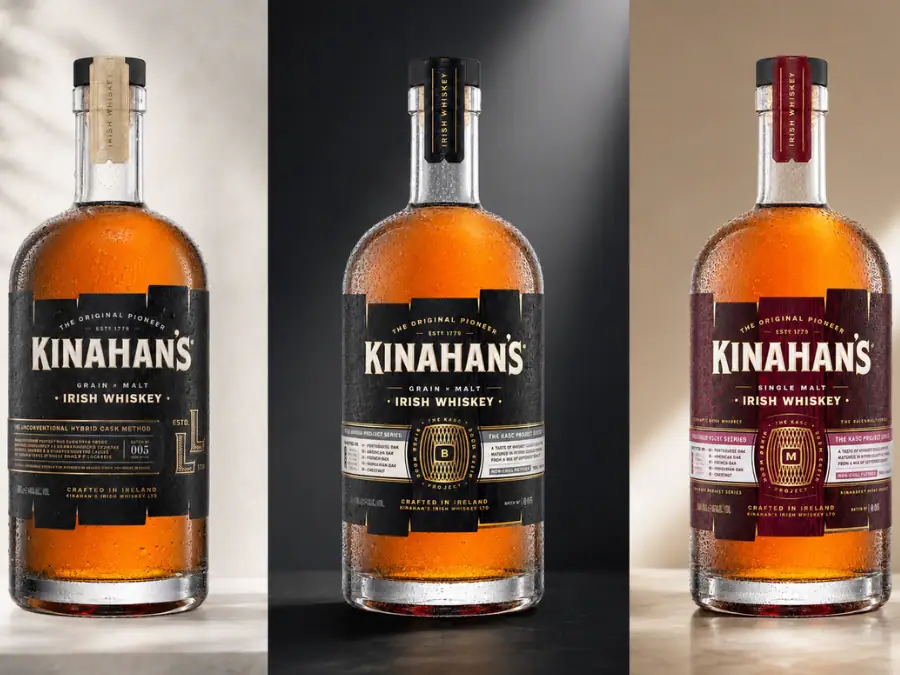
The company’s portfolio already boasts the likes of Mikolasch, an historic Ukrainian vodka dating back to 1842, and Bouvil, an authentic Haitian rum, but Origen X’s first hidden-gem find was Kinahan’s whiskey (below) in 2014, a family-owned brand that predates Jameson by a year, founded on Dublin’s Trinity Street in 1779, which pioneered cask-aged whiskey at a time when most spirit was drunk as clear, unaged, fiery poitín.
In 1807, the powerful Lord Lieutenant of Ireland Charles Lennox fell in love with Kinahan’s, requisitioning every single cask for his private use, marking them with the initials ‘L.L’.. It became a moniker synonymous with the brand from that time forth, but the high-level plaudits didn’t stop there. Kinahan’s went on to receive coveted Royal Warrants from both Queen Victoria (in 1884 and 1886) and her son King Edward VII in 1901, an honour only a few iconic scotch whiskies such as Johnnie Walker and Dewar’s ever received.
Less glamorous admirers were also drawn to Kinahan’s, forcing the brand to become one of the first spirits to be trademarked in response to unscrupulous merchants and publicans trading on its name with inferior, counterfeit products. Famously, in 1863, the Court of Dublin awarded Kinahan’s L.L. Whiskey legal protection against other Irish whiskey producers, the first protection of a whiskey trademark in history.
Rewriting the age maturation rulebook
The good times didn’t last, however. Prohibition in the US, war in Ireland, and the rise of blended scotch saw Kinahan’s fade into obscurity. On acquiring the brand in 2014, Oganian’s Origen X was faced with a central dilemma: how to stand out in a newly-revitalised Irish whiskey scene bursting with start-up distillers and countless new expressions flooding an expanding market.
The answer for Oganian lay in rewriting the rules of maturation via ‘The Kasc Project’. While competitors poured huge sums into setting up their own bricks-and-mortar distilleries or fixating over offering age statement releases, Origen X invested heavily in wood research and management, taking advantage of Ireland’s more flexible ageing laws.
“Instead of creating a point of difference at the level of the liquid, we create the recipe at the level of the wood, which is where most of the flavour originates,” says Oganian. Through a partnership with a traditional Portuguese cooperage, Origen X developed the world’s first hybrid casks. Each bespoke barrel is hand-built from five distinct types of wood: Hungarian oak, Portuguese oak, French oak, American oak and chestnut, before being heat-treated to unlock the different flavour compounds of each wood type.
This experiment in ‘wood terroir’, as Oganian terms it, has allowed the brand to move away from traditional age statements, with each tree species bringing a century of growth from entirely different regional climates into a single barrel. The result is a complex, multi-layered flavour profile, which after some initial scepticism from Irish whiskey purists, the now three-strong collection, comprising of Kask B, M, and LL, has been well received, helping Kinahan’s record outstanding volume growth of 300% last year.
“Rather than simply acquiring brands, Origen X positions itself as a long-term custodian of heritage assets, investing in their relevance, infrastructure and future growth,” explains Oganian.
Reaping the rewards of a long-term strategy
For Oganian, Kinahan’s premium quality, authentic roots, experimental approach to maturation and relative affordability make for a winning combination and a real point of difference over rival companies. A strong logistical supply chain, which includes a recently-opened Irish bottling facility capable of processing 5m bottles a year and strong relationships with smaller, independent distributors, has helped grow distribution to over 45 markets worldwide.
What distribution partners value, Oganian explains, is that they know he is not scaling to flip to a multinational giant. They can invest their own effort and time into building a brand and know it won’t be whipped away from them.
“I see this happen three or four times a year – big brands are taken away from smaller distributors once sold, so they become much more selective,” he adds. “This has helped us a lot because they know we’re not building to sell.
“This long-term alignment allows partners to invest with greater confidence, knowing strategy is built for decades, not short ownership cycles. We’re investing more and looking to acquire new brands.”
In a pump-and-dump age, Oganian is looking to do things differently with a slow, cautious, clear-eyed approach to doing business. “Where you can’t go wrong is in steadily building growth in partnerships. Invest in the right partnerships, be in the right places, and only spend money when there’s a clear ROI, not a hypothetical one.”