

Ceramic bottles are attracting renewed interest from spirits brands looking to create stronger tactile presence, more sculptural forms, and greater emotional engagement than traditional glass packaging typically allows.
But while the visual impact of ceramic is undeniable, producing premium ceramic bottles at industrial scale requires a level of technical expertise, manufacturing integration, and production control that few companies have fully mastered.
Ceramic bottle manufacturing remains one of the most labour-intensive segments of premium packaging production, with many stages still relying on highly specialised manual craftsmanship. As a result, Western manufacturers often face significant challenges in achieving competitive production costs at scale.
China, whose ceramic and porcelain traditions date back more than 4,000 years, has therefore become a global centre for high-end ceramic production expertise. Within this landscape, companies such as Rockwood Ceramics have emerged as key export-focused manufacturers, combining traditional craftsmanship with European creative direction, industrial engineering, and large-scale production capabilities to help premium spirits brands move from concept to finished bottle with greater efficiency, precision, and production reliability.
Ceramic bottles were never meant to blend in
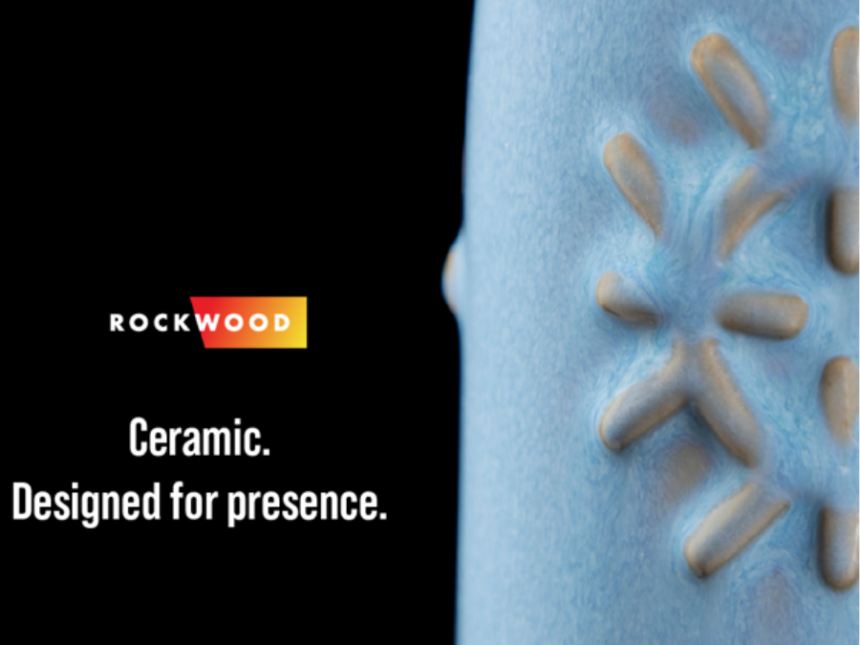
More than traditional packaging, ceramic creates a physical presence that consumers can both see and feel. Texture. Weight. Sculptural depth. Artistic finishing. A tactile experience that changes how consumers perceive a brand before the product is even opened.
Consumers instinctively slow down when interacting with ceramic. They hold it longer. Examine it more closely. Display it more proudly.
Unlike glass, ceramic allows for:
- Deep embossing and sculptural relief
- Complex textures and tactile finishes
- Matte, satin, reactive and layered glazes
- Organic and unconventional forms
- Artistic hand-finishing and detailing, and
- Shapes and undercuts beyond the limitations of traditional glass production
This makes ceramic particularly well-suited for luxury spirits, limited editions, anniversary releases, collector series, and high-end gift sets where presentation plays a central role in perceived value.
While ceramic bottles typically carry higher production costs than standard glass, they are also positioned at significantly higher retail values. Consumers are increasingly prepared to pay more for packaging that feels artistic, luxurious, tactile, and collectable.
The challenge is no longer creativity. It is manufacturability
As AI-assisted design tools become increasingly common within packaging development, bottle concepts are becoming more visually ambitious than ever before.
Complex geometries, sharp angles, sculptural contours, and unconventional silhouettes can now be generated within seconds. However, many of these designs are not immediately viable for industrial production.
This is where manufacturing expertise becomes critical.
For more than a decade, Rockwood’s in-house design team in Shanghai, led by French art director William Volcoff, has developed bespoke bottle concepts for spirits brands worldwide while working directly alongside production engineers and manufacturing teams.
Because design and production are developed together from the earliest stages, projects are approached with technical feasibility, structural integrity, decoration compatibility, and scalable production efficiency already integrated into the process.
Today, this same expertise also allows Rockwood to refine and adapt AI-generated concepts into production-ready ceramic bottles without losing the originality of the initial vision.
The result is a faster, more efficient development process that helps brands avoid costly redesigns and production limitations later on.
Why integration matters in ceramic bottle production
One of the biggest challenges in premium packaging development is fragmentation.
Design agencies, bottle manufacturers, decorators, closure suppliers, label providers and bottling facilities, often operate independently from one another, increasing the risk of delays, inconsistencies, and communication breakdowns throughout a project.
Rockwood’s integrated production model centralises these capabilities within a single ecosystem that includes:
- In-house bottle design
- Glass bottle manufacturing
- Ceramic bottle manufacturing
- Closure development
- Decorative finishing
- Label development
- Spirit sourcing through partner distilleries in Europe
- Bottling
- Packaging, and
- Logistics support and shipping coordination
This integrated approach allows projects to move from concept to finished bottle with greater coordination, shorter development timelines, and stronger production control.
Rather than developing bottles purely for visual impact, the focus remains on creating packaging solutions that are commercially viable, scalable, and engineered for real-world production.
Solving the historical technical limitations of ceramic bottles
Historically, one of the primary concerns surrounding ceramic spirit bottles has been leakage, particularly when lower-density or porous clay materials are used.
Over the years, Rockwood has invested heavily in solving these technical limitations through continuous R&D and process refinement.
Unlike standard glass production, Rockwood machine-drills the inner neck of each ceramic bottle after firing. This allows for an extremely precise tolerance of approximately ±0.02 mm, compared to roughly ±0.05 mm in traditional glass bottle production.
The increased precision ensures a highly accurate fit between the bottle neck and the cork or stopper, significantly reducing leakage risks.
Rockwood also uses a single porcelain-grade clay sourced locally in China. This dense, highly refined material is significantly less porous than many standard ceramic clays commonly used elsewhere in the market.
The bottles are fired at approximately 1300°C, achieving the density and strength associated with porcelain-type materials while maintaining the flexibility required for premium spirits packaging.
Combined with systematic porosity and leakage testing before shipment, these production methods have allowed Rockwood to achieve a 0% leakage rate and 0% returns related to leakage defects.
Hybrid packaging is opening new creative possibilities
As premium packaging continues to evolve, brands are increasingly exploring multi-material concepts that combine the strengths of different materials within a single bottle design.
Rockwood now produces hybrid packaging concepts that integrate glass bodies with ceramic components or closures.
Because both materials are manufactured in-house, the company can maintain a unified design language, precise tolerances, reliable sealing performance and consistent finishing across materials.
This opens the door to increasingly expressive packaging concepts that combine the transparency and elegance of glass with the tactile depth and sculptural freedom of ceramic.
Beyond manufacturing: An end-to-end production ecosystem
Rockwood’s bottling facility operates within an Export Processing Zone (EPZ) outside Shanghai, creating significant operational and financial advantages for international beverage brands.
Depending on the destination market and project structure, brands may benefit from reduced import duties and optimised international production workflows by importing bulk liquid into the zone for bottling prior to global shipment.
The EPZ structure also creates an important labelling advantage for many international spirits brands. Because the bottling takes place within the Export Processing Zone, labels only need to reference the country of origin of the spirit itself, rather than the country in which the bottling occurred. This can be particularly valuable for brands wishing to preserve origin perception and premium positioning within international markets.
Combined with Rockwood’s integrated capabilities across bottle design, ceramic and glass manufacturing, decoration, bottling, packaging, and logistics, the model creates a rare end-to-end production ecosystem within the premium spirits industry.
As premium spirits brands continue exploring new ways to strengthen identity, shelf presence, and perceived value, ceramic bottles are evolving from niche packaging into a powerful strategic differentiator.
But bringing ambitious ceramic concepts to life at an industrial scale requires far more than creative vision alone. It demands the ability to combine craftsmanship, engineering precision, and manufacturing expertise within a single production ecosystem.
That intersection is where ceramic packaging is evolving most rapidly — and where the next generation of premium spirits packaging is beginning to take shape.
Discover the Rockwood Ceramics website
Follow Rockwood’s Founder & CEO, Henri Berthe, on LinkedIn
Connect with Rockwood on LinkedIn