- The next year will be vital to tequila’s expansion beyond its American heartland, with markets in Europe, Latin America and Asia Pacific all showing promise
- Brands are simultaneously targeting the fashionable early evening consumption occasion and touting tequila’s higher-end cues as a sipping spirit to be taken seriously
- RTD and RTS extensions are becoming increasingly popular, aimed at casual, on-the-go opportunities, while flavoured variants are also a useful recruitment tool
- Consumer knowledge of tequila outside North America remains limited, so category education will be a key driver of future growth
- Ultimately, tequila brand owners are looking to balance the spirit’s fun, accessible character with its heritage, provenance and authenticity
If tequila is to have a winning 2026, then the category’s performance across Europe, Latin America and Asia Pacific is arguably every bit as important as how it fares in its key US market. As the stateside agave boom wanes, brand owners are looking beyond the country’s borders for future growth.
“While the US remains the definitive global market for tequila, cooling growth and category saturation dictate that success in 2026 will be based on international diversification,” says the recently-appointed MD of Pernod Ricard’s House of Tequila unit, Tim Croizat. He highlights accelerated growth for super-premium-plus iterations across the UK, Australia, Canada and Italy, and references strong potential for premium tequila in Türkiye, China, South Africa and Colombia.
A spokesperson for Stock Spirits Group points out that category growth is already faster outside North America. “Over the last five years, tequila has grown around 40% in North America,” the spokesperson says, “but we’ve seen growth of 98% in Europe, over 110% in Asia Pacific and 184% in Africa & the Middle East, admittedly from much smaller bases, but these regions are where tequila is really just taking off.”
Stock Spirits’ Sierra brand, which it acquired in 2023, is the market leader in “most countries” across central, north-west and Eastern Europe, plus the Nordics, with the spokesperson airing excitement at the recent growth trajectory experienced in southern Europe.
US spirits group Brown-Forman sees potential closer to home. The global MD of the company’s tequila portfolio, Shannon Taylor, says Mexico is an important driver, with sales growth across the portfolio in early fiscal-2026 hitting 22%. Taylor says the group will “double down” on its tequila-based RTD line New Mix this year, with the brand already shifting some 14m cases a year, making it the world’s fifth-largest RTD brand.
Beyond New Mix, Taylor is encouraged by the momentum experienced by tequila brands Herradura and El Jimador in emerging hubs such as Brazil. Outside of the Americas, meanwhile, the UAE and India have emerged as the largest super-premium-plus tequila markets in the global travel retail channel.
“For GTR, we consider this channel our ‘luxury showroom’,” adds Taylor. “The success of the Herradura Legend launch demonstrated a powerful halo effect. Creating high-visibility activations in major hubs like Mexico City Airport elevates the perception of our entire tequila portfolio for international travellers.”
For Suntory Global Spirits, owner of the Hornitos and El Tesoro brands, Western Europe and the Asia Pacific region (including India and GTR) are the top priorities in 2026, alongside “emerging opportunities” in South-East Asia.
“Western Europe is an attractive market due to its established cocktail culture and strong food-and-drink occasions, where tequila is increasingly fitting into aperitivo and early evening consumption moments rather than being limited to late-night occasions,” says Suntory’s VP of marketing for tequila & mezcal in the US, Rashmi Raine.
“In Asia Pacific, curiosity around tequila craftsmanship continues to grow, particularly among consumers already engaged in whisky and premium spirits exploration,” explains Suntory’s Raine. “GTR also plays a critical role in discovery, serving as an entry point for consumers encountering tequila brands in a premium and educational context.”
Raine’s comments allude to two key aspects of tequila’s global development: its ability to tap into current consumer trends and the need to attract new recruits into the category, alongside educational efforts.
Balancing act
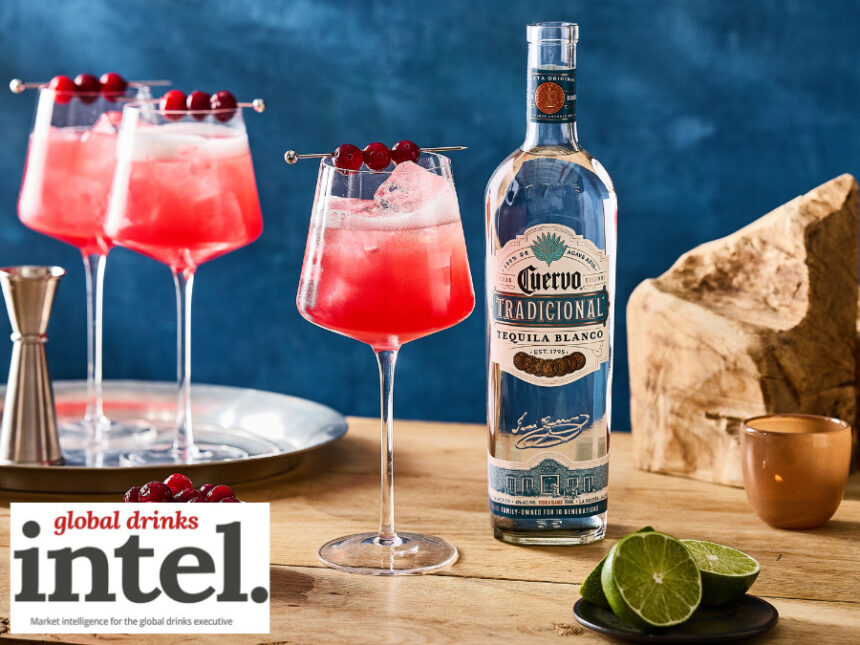
Proximo Spirits’ tequila portfolio spans entry-point SKUs such as Jose Cuervo Especial to higher-end brands Reserva de la Familia, 1800 and Maestro Dobel, and commands a 33% volume share of premium-plus tequila across the Europe, Middle East & Africa and Asia-Pacific regions (according to IWSR data).
For a business with such category breadth, there is a balance to be struck between the zeitgeist of casual, low-energy consumption occasions and selling tequila as a luxury sipping spirit on a par with single malt scotch or cognac.
“A growing trend for refreshing, longer drinks has sparked a sharp rise in tequila’s popularity in key markets such as Spain, the UK, Australia and the Philippines,” says Proximo’s international marketing director, Muiris Ó Riada. “We want to keep this positive momentum throughout 2026.
“Equally, the success of our 1800 Añejo in Japan is evidence of the growing popularity of sipping aged tequilas as new and curious fans develop and understand an appreciation for the unique aromas and flavour profiles of each brand.”
Broadening appeal
Pernod Ricard’s Croizat highlights two “major shifts” in consumer behaviour. “First, we are leaning into the ‘golden hour’ – that transitional, early evening occasion where premium yet accessible drinks thrive,” he explains.
“Secondly, we are capitalising on the convenience trend. Recognising that consumers no longer want to sacrifice quality for ease, we’ve accelerated the growth of Altos by scaling both our RTD and RTS offerings. This allows us to deliver a high-quality tequila experience in formats that fit the modern, on-the-go lifestyle.”
RTD or RTS spin-offs of tequila franchises – as well as flavoured variants – are viewed as increasingly important recruitment agents to attract curious consumers into the category.
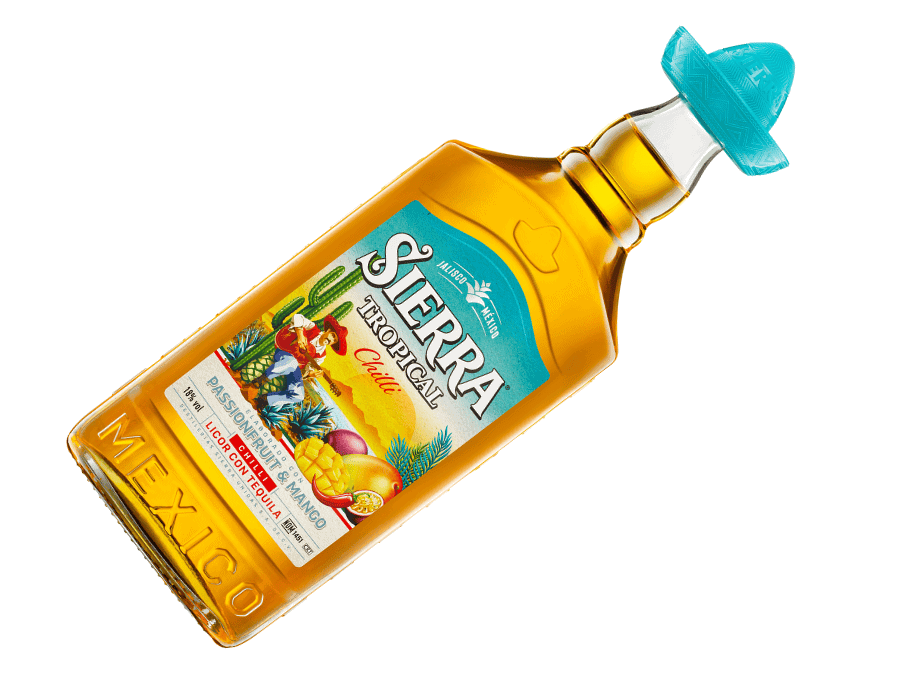
Stock Spirits launched Sierra RTD cocktails into Germany, the UK and other European markets in 2025, and the company’s spokesperson also reports a strong performance from lighter liqueur options such as Sierra Tropical Chilli (below), at 18% ABV.
Jumping the gun?
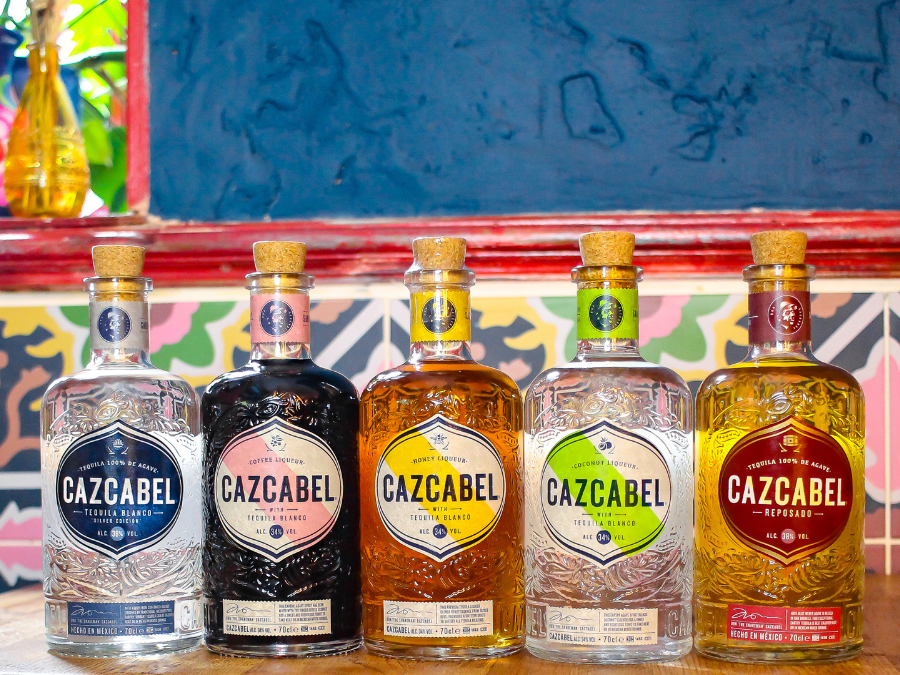
However, none of this – the internationalisation of tequila’s footprint, or the use of RTDs or flavours to broaden its appeal – is news to a brand like Cazcabel (below), which claims to be the best-selling premium independent tequila outside North America.
Global marketing director Chris Richards believes that, in emerging markets for tequila, flavours (Cazcabel has coffee, honey and coconut variants, with a jalapeño-infused blanco to launch this year) and signature margarita and paloma cocktails offer excellent entry points. He also wonders, however, if the category is getting ahead of itself.
“We believe there is more of a category-led approach required in these markets, helping to educate on what tequila is, how it is made – especially around the care that is required to nurture the agave for around seven years until it is ready to be harvested – and, most importantly, the many different ways in which tequila can be enjoyed, to dispel some of the many negative perceptions people still have of bad experiences drinking tequila,” Richards explains.
“In North America, we see that the level of understanding of the tequila category is a long way ahead of the rest of the world, but many brands are just taking the same communications across and expecting consumers new to the category to pay premium prices versus other spirits categories.
“The growth of tequila went through three to four fundamental phases, where it seems in emerging markets we’re asking consumers to just make a big jump on understanding straight to where it is established in North American markets today.”
Is the US tequila boom definitively over?
For all the promise of international markets, the US remains tequila’s mainstay and is likely to command around 70% of global category value in 2026, according to Suntory Global Spirits’ Raine.
“Premium tequila will continue to be the primary engine of value growth, but premium today is about more than price alone,” Raine says. “Consumers are increasingly looking for clear quality signals and what a brand stands for.”
So is the boom over? Thinking that would be a “mistake”, argues Brown-Forman’s Taylor. “We view the current environment as one of healthy recalibration, where brand authenticity and high-quality liquid – rather than celebrity hype – are the true keys to success,” she explains.
For Taylor, winning in today’s market hinges on “standing for something unmistakable”, offering clear value and emotional resonance, while reaching younger LDA to 34-year-old consumers through their preferred social media channels.
“Success in 2026 will favour brands with credible production credentials, flavour integrity and a clear point of view that resonates with the occasions consumers care about most,” adds Raine. “As the category matures, winning is less about constant expansion and more about focus – strong core expressions and innovation that feels intentional.”
Linking old and new
The desire to be taken seriously by consumers who have only limited knowledge of your product: that’s a delicate situation for the category in 2026, and for a brand like Sierra that bridges the old world of shots and slammers with the new environment of cocktails and sipping.
“The key is linking tequila to the right occasions across social moments, nightlife and celebrations,” says the Stock Spirits spokesperson. “Ultimately, we want to make tequila feel both authentic, accessible and fun across markets, while retaining our strong Mexican heritage and global brand identity.”
This article is available to Global Drinks Intel members only.
Click below for details on how to join the Global Drinks Intel community.
Already a member?
Log in here to read the article in full.
If you work for any of the following corporate subscribers to Global Drinks Intel, head here to activate your access.
- AB InBev
- Bacardi
- Campari Group
- Diageo
- Moët Hennessy
- Pernod Ricard
- Proximo Spirits
- Suntory Global Spirits
- William Grant & Sons