
The agave slowdown
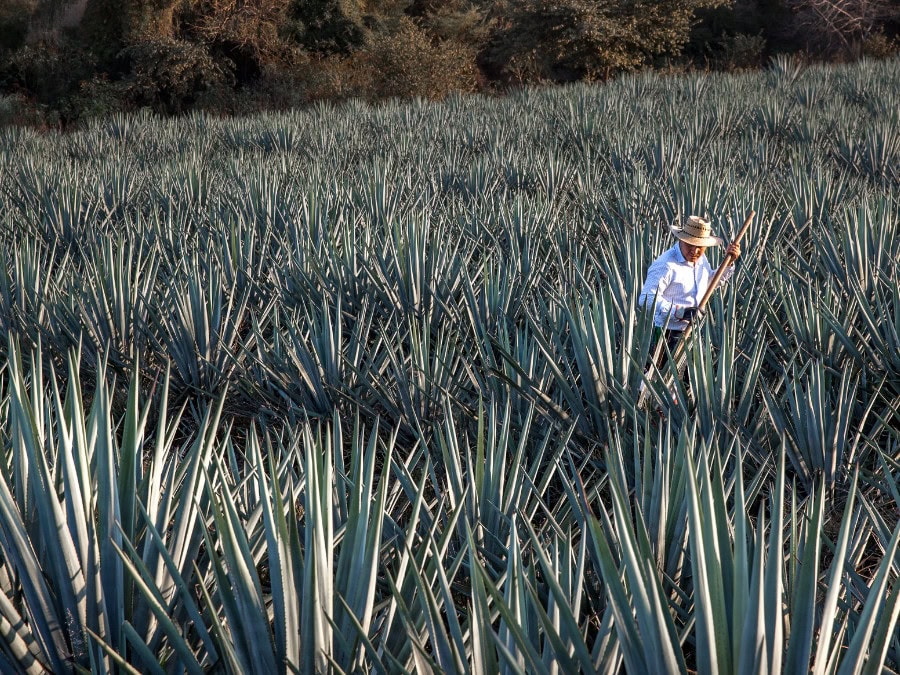
Agave-based spirits, previously a seemingly unstoppable force in the spirits world enjoying premiumisation and a growing worldwide presence, finally succumbed to the old law of Newtonian physics: ‘What goes up, must come down.’ According to Banxico, Mexico’s central bank, in the first half of 2024, exports of tequila, mezcal and other distilled spirits declined by 10.9% to reach US$2.1bn.
Over the past six years, exports of tequila to markets such as the US, the UK and Italy have soared, with last year’s total reaching $4.4bn – more than double the pre-pandemic 2019 total of $1.9bn. Yet in the first six months of this year, exports to the economically troubled US, the linchpin export market for agave-based spirits, dropped by over 5%, and there was a far steeper, more worrying, drop of 65.5% in the EU over the same period.
On a much-needed brighter note, tequila exports to Asia-Pacific soared by 49%, giving agave spirits producers a welcome silver lining to what could turn out to have been a tough year.

All eyes on Trump and tariff threats
US President-Elect Donald Trump’s fondness for tariffs is hardly a secret, and the prospect of a potential blanket 10% tariff on all imports into the US once the Republican Party takes office in January is a chilling prospect for beverage alcohol executives on both sides of the Atlantic.
Imports from Canada, Mexico and China look set to be the hardest hit – Trump has pledged a 25% tariff on all imports from Canada and Mexico, and an additional 10% charge on goods from China on top of existing tariffs.
The Distilled Spirits Council of the US, whose members include all the major international brand owners, plans to argue that spirits should be exempt from the tariffs given so many liquors can only be produced in legally defined countries or regions.
Industry insiders, however, are not optimistic.
“Trump, as we know, is going to implement policies to drive isolationism and further the objective to drive US self-reliance,” says Dawn Davies, master of wine & head buyer at UK-based online drinks retailer The Whisky Exchange. “This means tariffs will come back into play, which has a huge implication for the drinks industry both in and outside America.
“If taxes rise on tequila, this could change the whole trajectory of the agave growth, as the US is a huge market,” she adds. “Cognac has already been hit by declining sales in the US, and Asia will be further hit. The response to the American tariffs, which may mean the reinstatement of the ‘bourbon tax’ (on imports into the European Union), can only hurt sales of bourbon and American whiskey on a global scale.”
In the UK, drinks producers are bracing themselves. “We’re yet to see what the actual percentage will be, but we’re anticipating a significant impact in import/export costs,” says Sophie Brisbourne-Rhodes, the global chief marketing officer of no/low spirits brand CleanCo.
“This will hit the smaller players the hardest. With a Labour government in parliament in the UK, it feels less likely that a trade deal will materialise between the UK and the US, and it’ll be interesting to see if food standards continue to be a contentious issue between the two countries.”
Roast broccoli and hot dogs – Savoury cocktails have their moment
Ask ten mixologists for their views on which cocktails people will be drinking over the next year, and you’ll likely get ten different answers. But one clear trend that’s emerging from the noise is the increasing popularity of savoury cocktails.
Umami-rich ingredients like miso, tahini and mushrooms that add depth to cocktails speak of a growing fondness for culinary inspired mixology that is also gaining momentum due to Millennial and Gen Z consumers’ preference for less sugary drinks.
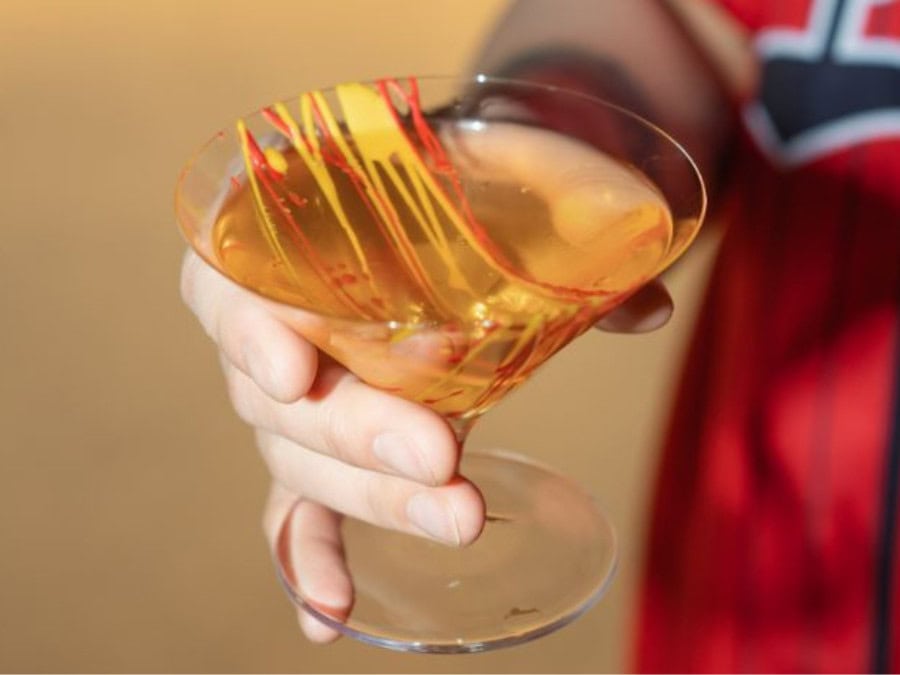
Singapore’s Cat Bite Club, winner of the ‘Campari One To Watch’ award at The World’s 50 Best Bars 2024, heroes ingredients such as roasted broccoli, celery bitters and shiitake mushroom-infused sherry. Meanwhile, the baseball inspired drinks list at Tokyo Confidential, a high-energy cocktail bar in the city’s Azabujuban district fronted by British editor-turned-mixologist Holly Graham, now offers the glizztini (above) – ‘a hot dog in cocktail form’, made with Roku gin, shochu, tomato pickle, Lillet Blanc, onion brine and MSG.
UK mixologist Ryan Chetiyawardana, the founder of Mr Lyan Studio, also predicts a growing role for fermented ingredients. “People are getting more confident with fermented products, and the availability of interesting takes on these products – everything from garums [fish sauce] and vinegars, to kombucha and gochujang [a savoury, sweet and spicy paste] – people are underpinning everything from classics to new inventions with these deeper flavours.”
The blurring line between food and drink was one of the key trends unearthed in Bacardí’s latest Cocktail Trends Report, which pointed to mixologists experimenting with kitchen staples like milk, oil and brine to create a new wave of gastro-inspired drinking experiences. According to the report’s survey of bartenders, some 70% of respondents said they drew inspiration from the culinary world when creating cocktails.
“Cocktails are partly moving towards the eating occasion, because that’s where consumers are telling us they want to spend their money,” says Bacardí global advocacy director Jacob Briars. “But there’s also a growing familiarity with really interesting and esoteric food flavourings, which are making their way into drinks.”
No & low – Welcome to ‘zebra-striping’
While the final figures aren’t in yet, IWSR is confident they will show that no- & low-alcohol was the only market segment to increase in 2024, driven by growth in India, the US, the UK and China.
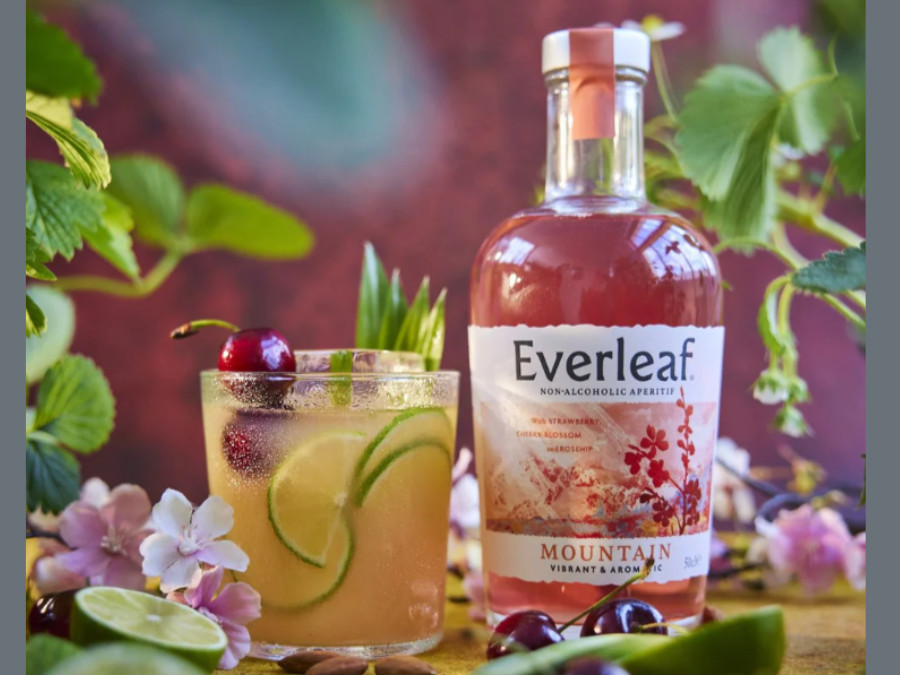
Almost a quarter of UK drinkers are now ‘zebra-striping’ (alternating between alcoholic and non-alc drinks) or ‘bookending’ (starting and ending with non-alc options) when visiting the on-premise, reveals Everleaf non-alc spirits brand (above) founder Paul Mathew.
“We’re making non-alc versions [of cocktails] as delicious as possible to keep people out enjoying the hospitality of bars for longer with no regrets,” he says.
This flexitarian zebra-striping trend is also apparent within food, with consumers happily switching between meat and vegetarian dishes, points out Sophie Brisbourne-Rhodes, global chief marketing officer of no/low spirits brand CleanCo.
“Once, it was either vegans or meat-lovers,” she says. “It was so divisive; it was all one extreme or the other. Now, we see this huge wave of flexitarianism. It’s the same for alcohol. There’s a happy medium and world where both co-exist, and most importantly, the consumer is in control and can adjust the balance as they see fit.”
RTDs enter maturity
RTDs are fast losing their new-kid-on-the-block status and are becoming increasingly viewed by consumers as an affordable alternative to wine, spirits and beer. IWSR predicts that over the next four years, ten leading markets will see RTDs post healthy CAGR volume gains, with Brazil (+6%), Australia (+3.5%), Germany (+3.5%), the US (+3%) and Canada (+3%) leading the way.
The key growth market for RTDs continues to be the US, where hard tea, flavoured alcoholic beverages (FABs) and cocktails are forecast to be the fastest-growing subcategories. As the wider category matures, however, the pace of innovation is slowing, and consumers are becoming less experimental. In 2021, there were more than 3,300 RTD product launches, according to IWSR data; in the first half of 2024, there were fewer than 1,000.
Where new RTD products are declining, the focus is increasing on health-conscious options, especially low-sugar and functional ingredients.
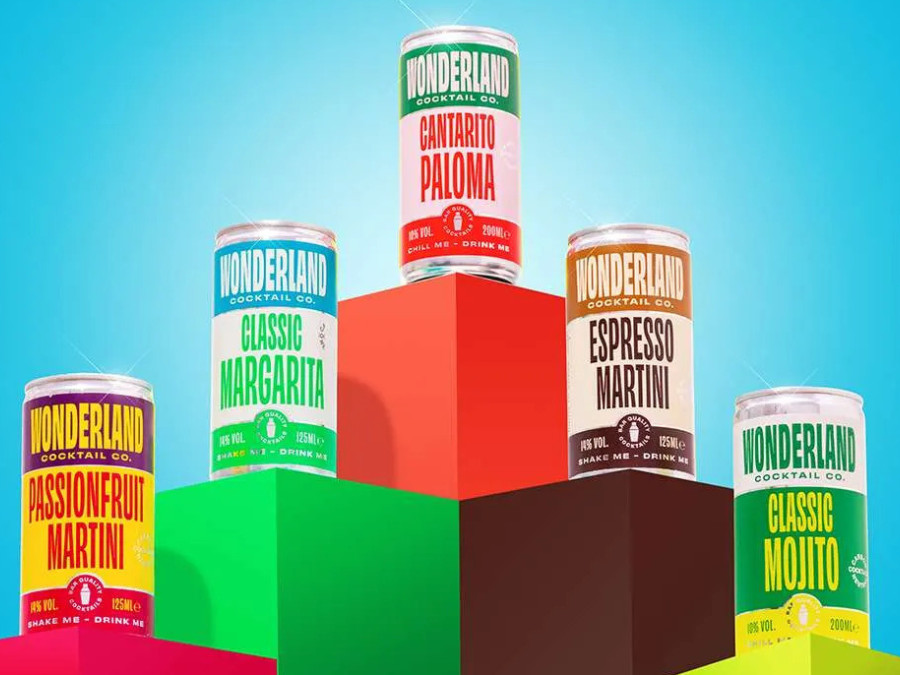
For Daniel Jones, head of product marketing at Scotland’s BrewDog Distilling Co, which owns the Wonderland RTD brand (above), the convenience of premium RTDs for fast-paced on-premise outlets will be a major factor in their likely growth next year.
“There will be areas of growth within the on-premise, as premium bar-quality RTDs offer a solution to bars not equipped to churn out a high volume of cocktails,” says Jones. “Wonderland will thrive in these spaces for a number of reasons: it makes serving great cocktails easy and time efficient, reduces wastage and waiting times, delivers consistency every time, and they’re ready in an instant.”
This article is available to Global Drinks Intel members only.
Click below for details on how to join the Global Drinks Intel community.
Already a member?
Log in here to read the article in full.
If you work for any of the following corporate subscribers to Global Drinks Intel, head here to activate your access.
- AB InBev
- Bacardi
- Campari Group
- Diageo
- Moët Hennessy
- Pernod Ricard
- Proximo Spirits
- Suntory Global Spirits
- William Grant & Sons