Global Drinks Intel: What do you do?
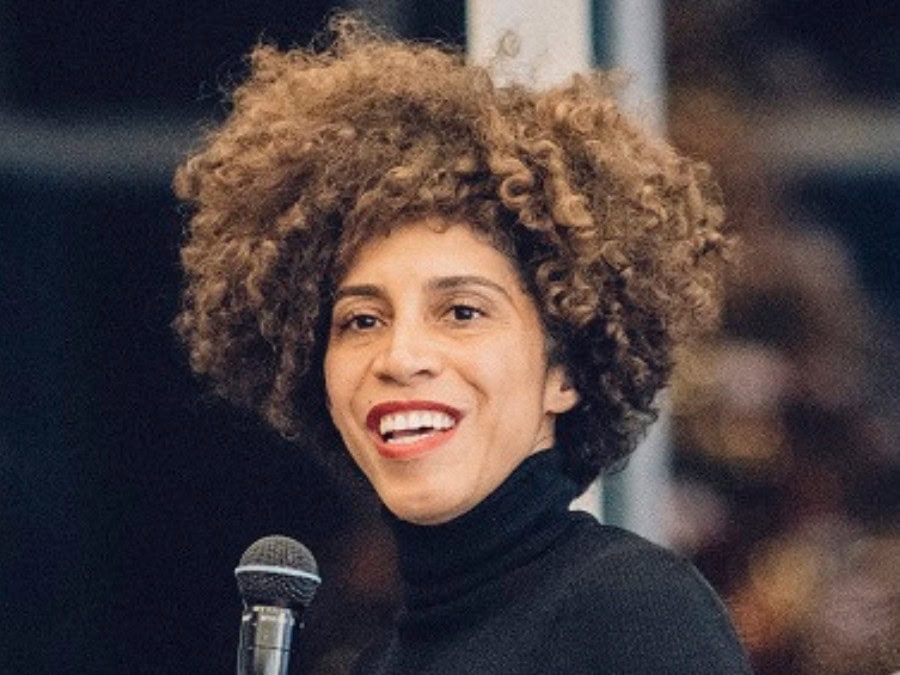
Daphnée Hor, Pernod Ricard head of cultural foresight: My role is to imagine how people will socialise, entertain and consume in the future. It’s a field that the group has been interested in for quite a while – Pernod Ricard put the foresight practice in place ten years ago, which for a wine and spirits company, was very innovative. Generally, it’s businesses like car manufacturers and energy companies who look this far ahead.
I sum up my job as bringing the long-term pressure to the business.
GDI: What’s the definition of long term?
DH: We consider ten years for our outlook. Then, we ‘backcast’ to understand how that can impact our strategy and tactics today.
My most recent project has been to look to 2050. We’re trying to understand how climate change will impact lifestyles, behaviours and, most importantly for us, how people will socialise and entertain.
GDI: Do you ever feel like a therapist? If you’re talking about this far ahead in the future, it’s impossible not to internalise it.
DH: You need this emotional connection when you look at the future, otherwise it doesn’t impact you enough for you to react. It’s exactly what we’ve tried to do with these scenarios.
It’s critical to imagine various possible futures and not just one. As human beings, we naturally tend to focus on dystopias. Through this type of work, we need to also picture more positive futures that can then become performative.
In business today, the idea of foresight is consolidating and becoming more professional. It’s anchored in hard data and projections made by experts, scientists and so on. The element of reality is key for us – I don’t work for Netflix, basically.
GDI: Can looking that far ahead provide any sort of competitive advantage for a company like Pernod Ricard?
DH: Yes and no. We’re sharing the results publicly because we acknowledge there’s a need for a collective approach to find the right solutions together.
But it’s definitely a competitive advantage – after all, it’s a big investment for the company to produce this type of research. We know that foresight has an impact on strategies and tactics in the here and now. So, it’s very actionable. In the end, it’s what you do with it.
GDI: Can you talk us through your 2050 research?
DH: When you’re looking as far out as 2050, we talk about possible futures. It wouldn’t be serious to talk about probable futures. Working on possible futures accepts uncertainties. In fact, this acceptance helps build these possible futures and better anticipates them.
We start by identifying driving forces – sustained, long-term trends that can be economic, demographic or societal and influence our daily lives already. We also look at emerging signals, which are a sign of the future.
Then we look at those uncertainties. These are questions that we know we don’t have answers to, and we have to live with that – even if we don’t like uncertainties. This is innovative for businesses because it makes traditional strategic planning techniques, which project for one future, obsolete. The top teams combine strategic planning and foresight because then you can plan in an age of uncertainty.
The last step, which is the most important, is discussing implications with different teams in the organisation to better plan for future opportunities and risks.
The basis of our work is based on data from the Intergovernmental Panel on Climate Change (IPCC), which projects the evolution of temperature, CO2 emissions, rising sea levels and things like that. The IPCC also works on the social science aspect of climate. They’ve built shared socioeconomic pathways that explain the trajectories in terms of economic, geopolitical and demographic trends. These societal movements really help us build our scenarios.
We then enrich this research with the trends ecosystem that’s already within Pernod Ricard. That’s what makes this a custom-made approach for the group.
One example of a critical uncertainty for the planet is that while we know temperatures are going to continue to increase, will this increase be moderate or will it be dramatic? Nobody knows. On a societal basis, an example is, will the model for consumption be purposeful – which we already see today in premiumisation – or will we be more pragmatic – consumption based more on price, deals and availability? Again, we don’t know.
We’ve synthesised all these uncertainties into two axes, one on planetary health – will it be nurtured or will it deteriorate? – and the other on societal conditions – will they worsen or will they strengthen? From this, we’ve defined four future scenarios, all of which we’ve anchored to signals we already see today.
We’ll start with the worst one, so we can get it out of the way and things can only get better.
Apocalypse Express
The challenge for us all today is to absolutely avoid this scenario. This will be an age of a lack of consensus between nations and regions, and people have to survive in chaotic conditions as a result. It won’t be totally apocalyptic yet; it’s more between 2050 and 2100 that the curves really start to diverge.
For businesses, this will not be a world of opportunities. There will be a lot of people to feed, which means pressure on food production and rising food insecurity. The production of crops for things that are seen as non-essential will be deprioritised. The definition of what’s essential or non-essential will be a critical point in this future.
What comes from nature will require a premium and people who aren’t rich enough to afford it will have to look for laboratory-grown or synthetic alternatives.
We’ll be in a world of social polarisation, where loud luxury will not dominate – The lucky few will be keen to be discrete. Members clubs and exclusive venues will thrive as high net worth individuals stick together.
There are already signs today that socialising has moved into the home; in this future, that will not be by choice but by necessity – It will be a challenge for people to go out. This will result in a lot of home entertainment innovation as consumers will be keen to recreate the on-trade experience at home.
Eco-Harmony Society
Like Apocalypse Express, this future feels familiar. There are already strong signals pointing in both of these directions.
In this one, we’ll have accepted to change as a society, but to change at every single level. There will be a consensus around the priorities that need to be given to the climate crisis. It’s a future where we reach carbon neutrality in 2075, which is still possible. There will also be a desire and an ability to invest in education, health and well-being, which will put the right conditions in place to slow down the demographic curve.
The ageing population trend will be quite strong, with the exception of Africa, where half the population will be under 25. Soft power will have moved from the global north to the global south. Prosperity for Africa will be very promising, resulting in a lot of cultural influence globally. The IPCC already predicts that in 2050, Kenya’s education system will be at the same level as the ones we have in Europe today. That means there will be a lot of young, talented, creative people in this part of the world.
The definition of luxury will have evolved from being based on scarcity to being based on positive impact. That’s what will give value to your brand. Purpose will be at the core of it. We’ve already moved into consuming less but consuming better, but it will be a much more urgent signal in 2050.
Finally, this future will be hyper-inclusive. The notions of inclusivity and diversity will be anchored in our system values to such an extent that it will be applied to more than human beings. There are already laws and regulations today in Australia and New Zealand, for example, that give the same rights to ecosystems as to people. It’ll very much get rid of our anthropocentric perspective.
Green Totalitarianism
This future is similar to Eco-Harmony, but the changes will have been imposed. It will have been inaction that will have led to stronger reactions and more regulation. This will mean less freedom and fewer individual rights because of the urgency.
Our idea with this scenario is to show there needs to be a collective movement for it to be appealing and for humanity to be successful. It’s also a way for us to auto-regulate ourselves and to backcast to avoid this type of scenario. Nobody wants to to live in an ‘eco-credits’ type of hyper-transparent society.
Among the changes in this future will be adaptations in the way we eat and drink, towards more local products. We won’t be able to consume as we do today.
Pleasure First Planet Second
The IPCC calls this the middle-of-the-road pathway because it follows our historical path – it’s the world we are in today. This future will be a continuation of the perma-crisis we’re experiencing now, which means we will have de-prioritised the attention we should have been focusing on the climate emergency. Environmental issues will be just another problem amongst a lot of others.
This will be a future of cognitive dissonance, where we go to climate protests in our SUVs. It’ll be a world that wants to do good, but we will prioritise our own comfort and convenience – too little, too late.
We’ll be living in a very innovative society, like today, but will we want to put this into technology that will improve our comfort or will we want to prioritise technologies that will solve the real – maybe the only – problem that we should be focusing on?
It’s a matter of priorities.
Conclusion
The future is performative. We make it exist in the way we imagine it. The small changes in behaviours and practises that we put in place make it more accessible.
People talk a lot about eco-anxiety and eco-paralysis. We have all this information – and a lot of it is open source, by the way – but still we don’t know how to react. We need to cut it into very accessible steps, even if they are baby steps and they might be imperfect, to show that progress is possible.
The way we visualise performative futures is super important.
GDI: How does a company identify which future to place its bets on to ultimately grow sales of, say, Ballantine’s?
DH: This work is anchored in the company’s ten-year growth plan and refreshes our strategy. We need to make sure we can benefit from multiple perspectives, backgrounds and profiles. People talk a lot about diversity; we need to inject diversity of perspective, cultures and functions to be sure that we avoid blind spots, historical bias or industry bias.
The first priority is, where a risk or an opportunity is present in more than one scenario, then that risk or opportunity needs to be a specific focus for the business. Once we have this prioritisation, we look through different lenses to understand the ‘so what?’.
So what for the position of alcohol in society? So what for Pernod Ricard’s position in society? So what for our categories? And, so what for our brands?
All of this is based on the projections we’re able to make on, for example, what the new moments of conviviality, the new types of human interaction, even the new formats for alcohol in-store will be. It starts at a very macro level, but then you can imagine where we land.
We have growth hypotheses for each of the four scenarios, by the way.
GDI: How much of your time is spent battling confirmation bias?
DH: The amount of data we all have access to today is creating external intelligence. As human beings, we’re becoming more extelligent.
By looking beyond our traditional lenses and having a multi-local, multi-cultural and multi-industry perspective, I believe it will help us get rid of cognitive bias.
GDI: Are you expected to make Pernod Ricard future-proof?
DH: Our goal is to identify risk, but most importantly opportunities in every scenario. We need to make the company ready for each of these scenarios by being able to anticipate the systemic risks and the systemic opportunities.
I’ve never presented it this way, but it’s a very good way to pitch my job!
GDI: What pressure did you feel from the company to pick the one likeliest future scenario?
DH: The senior management came to us with the challenge of building different possible futures because the goal was to future-proof the business. Once we’d explained the foresight approach and why it’s healthy to do future scenarios, I’ve had no pressure to position ourselves on one.
You want to have one bet but we’re living in a plural reality now.
This article is available to Global Drinks Intel members only.
Click below for details on how to join the Global Drinks Intel community.
Already a member?
Log in here to read the article in full.
If you work for any of the following corporate subscribers to Global Drinks Intel, head here to activate your access.
- AB InBev
- Bacardi
- Campari Group
- Diageo
- Moët Hennessy
- Pernod Ricard
- Proximo Spirits
- Suntory Global Spirits
- William Grant & Sons