
What would Janus, the two-faced Roman god of transition the month of January was named after, make of the changeover from 2024 to ’25? Most likely he’d throw his hands up in despair!
The past year has been marked by worsening conflicts in Ukraine and the Middle East, extreme weather events, rising inflation, tax hikes, increased regulation, soaring costs and tariff rises, and looks set to make way for more of the same in 2025.
Throw into the mix the volatility and chaos a protectionist Donald Trump-led US may bring, and there seems little light on the horizon for the alcoholic beverage industry.
The sector faced challenges on many fronts in 2024. The poor performance of the US, the world’s most important premium spirits market, was a recurrent black spot in the financial results of many key industry players. Indeed, consumer confidence in the country is at rock bottom, affected by rising inflation, high interest rates and political polarisation.
In the first seven months of 2024, according to IWSR, total beverage alcohol in the US fell 2.8% with every category except RTDs shrinking. Even tequila, the star performer stateside for so many years, fell victim to the downturn (-1%), while wine was particularly badly impacted (-4%).
Despite evidence of increased downtrading in multiple markets as consumers watched the pennies and focused more on their health, brand owners remain wedded to the idea that the premiumisation trend will pick up once the global economic picture brightens. How else to explain the decision by several players to this year offload mass-market brands to concentrate on more premium lines?
The most eye-catching examples of this M&A activity were Edrington’s sale of The Famous Grouse to William Grant & Sons in September this year, and Pernod Ricard’s decision to offload its international wine brands, including Jacob’s Creek and Campo Viejo, to the owner of Accolade Wines, Australian Wine HoldCo, in July.
Bright spots for our beleaguered industry included the sustained growth of no- & low-alcohol (the only sector to grow in H1 2024 in 15 key markets tracked by IWSR) and RTDs (where premiumisation also continues apace), as well as the robust rates of volume and value growth seen in India.
As a dismal 2024 comes to an end, the prospects for 2025 aren’t too encouraging. Yet the performance of emerging markets led by India, the multiple benefits of advancing AI technology, and the continued growth of the no/low and RTD sectors could offset some of this gloom and doom.

Wine’s latest annus horribilis
The past year was undoubtedly an annus horribilis for the global winemaking industry. Erratic weather patterns — characterised by periods of extreme heat and drought, followed by torrential rains — wrought havoc on vineyards worldwide.
The International Organisation of Vine and Wine (OIV), the wine industry’s leading international trade body, has forecast that global wine production in 2024 could fall to below 250m hectolitres, its lowest level in over 60 years. The OIV blames droughts, early frosts and flooding as key factors for this likely disappointing result.
Fluctuations in growing conditions are, of course, a fact of life of winemakers. Yet, as the OIV has pointed out, over the past century, global wine production has fluctuated between 250m and 300m hectolitres. To fall below the 250m-hectolitre threshold, as happened in 2023 and looks likely for this year, marks, in the words of the OIV, a “potential turning point for the industry”.
As if the vagaries of the weather weren’t enough to contend with, winemakers have also had to endure numerous other headwinds this year, from inflationary pressures and supply chain challenges to trade tensions and regulatory hurdles. Arguably, more troubling is the dismissive attitude of many Millennial and Gen Z consumers towards wine.
In March, the San Francisco Chronicle ran an article detailing how US sommelier & social media influencer Warner Boin had asked her 127,000 followers on TikTok why they weren’t drinking wine. She received nearly 35,000 comments, many of them labelling wine as “toxic”, “poison” and even as the “2024 cigarette”. Others cited the high cost of wine and more tempting alternatives, such as cocktails, mocktails and cannabis, as reasons for giving wine a wide berth.
It seems that wine’s well-documented ‘Millennial problem’ runs deeper than many in the wine industry had previously thought.
Celebrity brand gold rush
The news in November that British actor, DJ & entrepreneur Idris Elba had partnered with Maison Ferrand to launch his own cognac brand, Porte Noire, capped off yet another busy year of celebrity drinks launches.
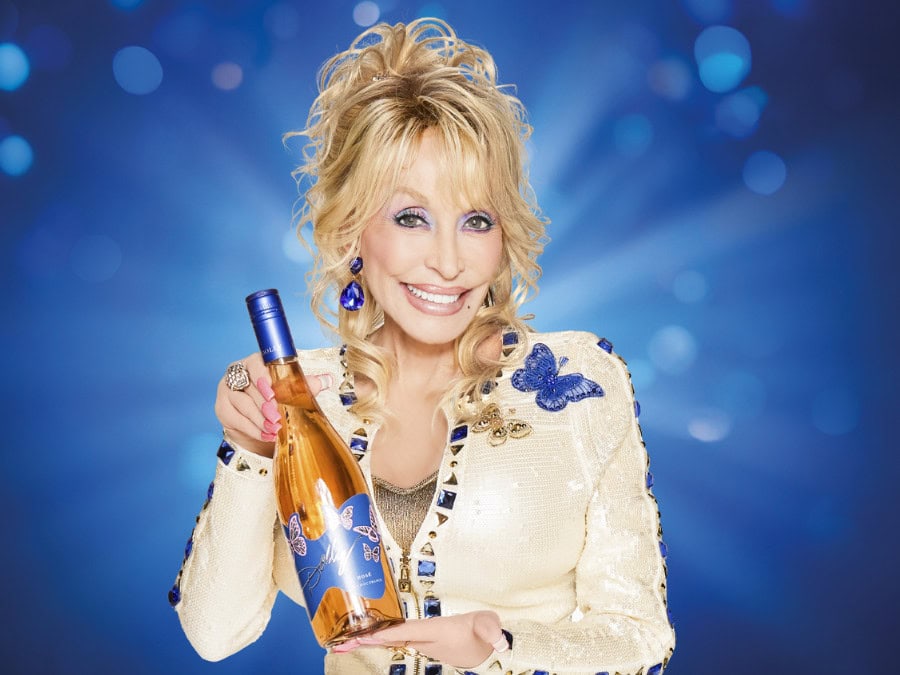
Whether it was country music icon & actor Dolly Parton’s tie-up with Accolade Wines for the Dolly Wines range (above), hip-hop stars Snoop Dogg and Dr Dre’s Gin & Juice RTD or pop diva Beyoncé Knowles-Carter and Moët Hennessy’s rye whisky SirDavis, 2024 was a peak year for collaborations.
From the celebrity’s perspective, the attractions are numerous, from revenue generation and diversification to increased fan engagement and boosted brand marketing power. It can be lucrative too – IWSR figures show celebrity whisk(e)y grew 8% in volume last year versus 2% for the overall whisk(e)y category. Celebrity tequilas, meanwhile, performed even better, rising 16%, compared with only 3% for the category as a whole.
There are pitfalls, however. Negative publicity or controversies associated with the celebrity can impact the brand’s reputation. Consumers are quick to spot if the celebrity has little or no involvement in the brand and the ecosystem that supports it.
“Celebrity brands are a bit like having amazing PR,” says Paul Mathew, the founder of UK-based non-alcoholic spirit Everleaf. “They get noticed very quickly which is great, but they have to offer something that people want to buy and, most importantly, buy again. Ideally, they also need a link to the celebrity in question.
“We were approached by a celebrity, but I couldn’t see the connection to Everleaf, our passion for flavour or our love of wonderful plants, so it didn’t go any further,” he reveals. “There has to be something linking personality to product.”
Much-hyped Chinese rebound continues to elude
Rewind the clock to before the Covid-19 pandemic and many international brands were focussing much of their attention on China, the then-most populous nation (it’s now India), with its aspirational, burgeoning middle class to turbocharge their profits.
The country’s post-pandemic economic recovery has been sluggish, however, due to its struggling real estate sector, weak consumer spending and a slowdown in investment. The real estate crisis, with its ripple effects on related industries, has significantly impacted economic growth and consumer spending.
The headwinds affecting the Chinese market have been all too apparent in the results of drinks multinationals. Pernod Ricard recorded a substantial 26% slump in sales in China in Q3 2024, while Rémy Cointreau reported an 8% decline in sales in Asia-Pacific in the six months to the end of September, a drop it partly attributed to tougher market conditions in China.
The worsening global geopolitical situation has only heaped fuel onto the fire. As anticipated, China slapped tariffs on grape-based spirits imported from the European Union in October, arguing ostensibly that imported brandy was being dumped in the country, threatening “substantial damage” to its domestic brandy industry. In reality, the move from Beijing was widely seen as a retaliatory tit-for-tat measure after Brussels announced extra levies on Chinese-made electric vehicles.
Importers of EU brandy must now put down security deposits ranging from 34.8% to 39% of the value of the import, according to China’s Ministry of Commerce.
Looking ahead to 2025, Beijing is trying to revive its flagging economy, announcing in November a huge support package of CNY10tn (US$1.4tn) to assist debt-ridden local governments. Yet US President-Elect Donald Trump’s promise to impose tariffs of up to 60% on Chinese goods could well derail these efforts.
Tellingly, IWSR predicts total beverage alcohol volumes in China will remain flat over the next four years.
AI enters the mainstream
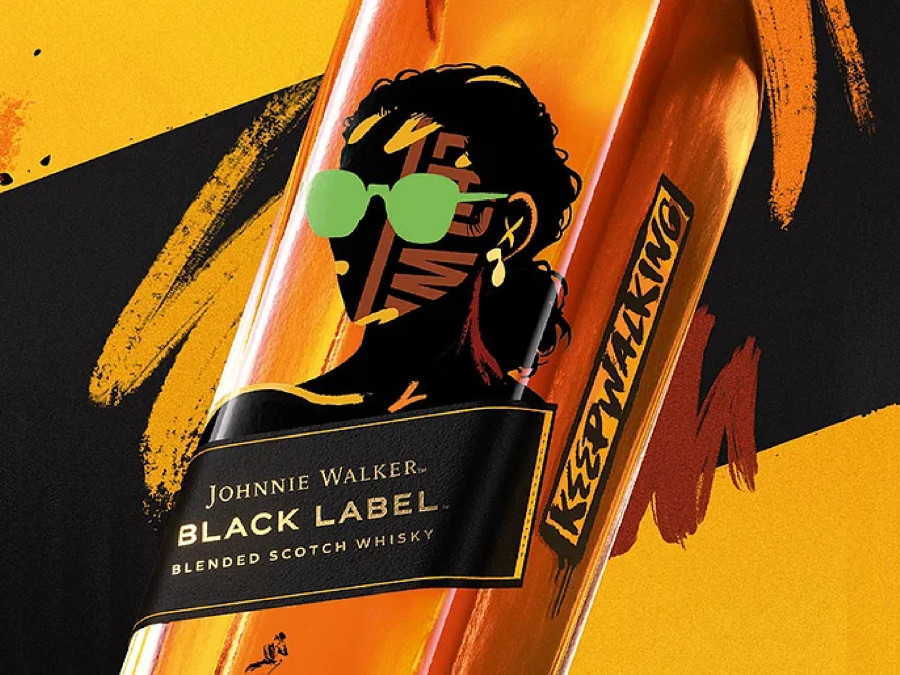
In October, Diageo launched a collection of 5,000 Johnnie Walker bottles featuring designs inspired by 50 original artworks by German graphic artist Andy Gellenberg (above) and created through the use of generative artificial intelligence (AI).
The project was the latest example of the technology’s growing influence on the alcohol industry, whether by using AI-powered tools to enhance the consumer experience, optimise supply chain efficiencies, improve quality control, or, as in Diageo’s case, create bespoke marketing campaigns and even develop new products.
“AI will transform the drinks industry, mainly through enhanced customer engagement,” opines Tanya Sklar, export director at Wine & Spirit International, the owner of Hapsburg Absinthe and Villa Lobos Tequila. She believes the large brand owners will use AI-driven analytics to develop innovative products based on consumer data, enabling them to stay ahead of trends, refine marketing strategies and boost brand reach.
“It’s a no-brainer, really,” she adds. “We all need to get on the bandwagon and utilise AI to stay competitive, drive innovation and meet evolving consumer expectations in an increasingly tech-driven market.”
Yet, not everyone is so bullish about AI’s potential.
Lasse Öznek, master distiller at Copenhagen Distillery, which produces Copenhagen Whisky, New Nordic Aquavit and Nordic Dry Gin, argues AI’s potential has limitations.
“While we use AI to enhance our brand and refine our reach, the heart of what we do is rooted in a tradition that can’t be matched by algorithms,” he insists. “Our spirits are born from a balance of art, craft and science, guided by intuition that no machine can replicate.”