With big brand investment and a growing contingent of challenger products, the aperitif consumption occasion has become a global phenomenon. Is the category enjoying a brief moment in the sun or will its ascendency continue in the long term?
Every once in a while, a beverage alcohol category is able to slot perfectly into the contemporary zeitgeist. To do so takes a lot of brand and segment-building labour, but luck also plays a significant role: market conditions and consumer attitudes need to be just right.
At this moment in time, the aperitif category is basking in its own shower of stardust.
Aperitifs have deep roots in Continental Europe and the pre-dinner drinking occasion. However, these bittersweet, light-bodied drinks – which are often mixed with sparkling wine and tonic to create a spritz serve – have stretched far beyond their traditional local markets and now have global appeal.
“[The] aperitivo is booming around the world and today is a global phenomenon with stable double-digit growth in the last five years, becoming the fastest-growing category in spirits,” says Julka Villa, group head of marketing at Campari Group, whose market-leading aperitif brands include Aperol and Campari.
A confluence of beneficial trends and behavioural shifts has created ideal conditions for aperitifs to thrive. Post-pandemic drinking has moved to an earlier point in the day, meaning consumers are looking for more sessionable, lower-ABV beverages to enjoy. Flavour preferences have inched towards the more bitter end of the spectrum, and consumers are increasingly looking for alternatives to beer, as well as wine and gin.
“The aperitivo category has been developing strongly and that growth has been boosted by changes to the way consumers live their lives,” says Louise Higgins, marketing VP for Europe at Bacardí, whose brands include Martini and St-Germain. “A major influence in recent years was the way in which the trade had to adapt to the lockdown by creating outdoor spaces and offering more food options alongside simple-to-make, lighter-style cocktails.
“Daytime has become the new nighttime as consumers have become more conscious about moderation and have fallen in love with spritz-style cocktails served with food.”
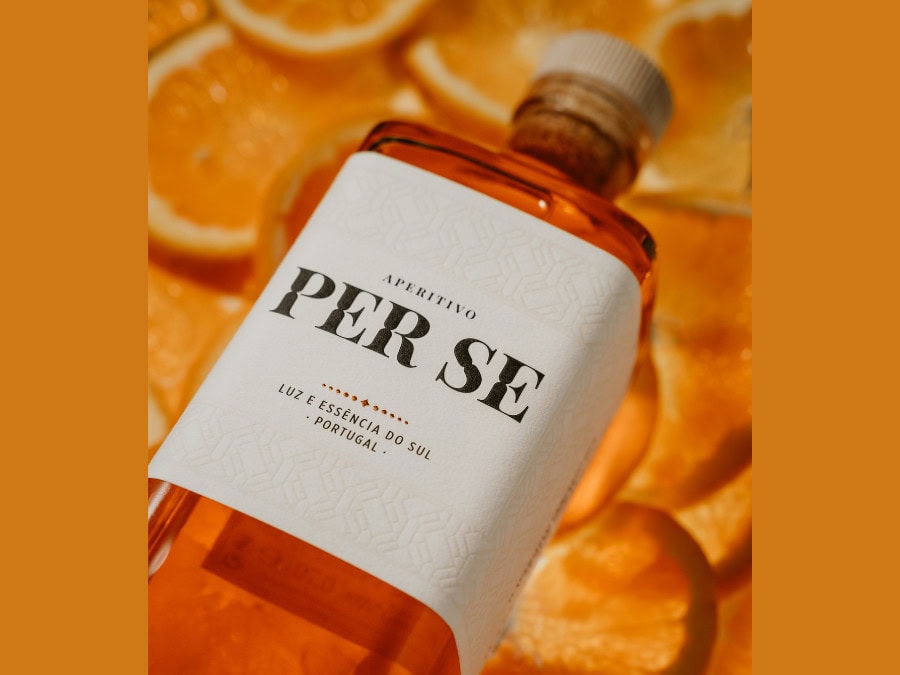
According to Daniel Redondo, CEO of Casa Redondo, maker of Portuguese aperitif Per Se (below), there has been a “shift towards more experiential consumption moments”.
“The aperitivo category has been one of the most dynamic segments in recent years,” he adds. “We’ve observed consumers embracing it as a unique experience, often linked to enjoying more time outdoors and socialising.”
Cultural and social cachet
Aperitifs have also cultivated an impressive cultural cachet thanks to exposure on popular television programmes such as HBO’s The White Lotus, celebrity endorsements and social media visibility, allowing the category to further embed itself in the consumer consciousness.
The result is a widespread and authentic connection to culture that most categories could only dream of. Campari’s Villa claims that since aperitif consumption is so closely linked to socialisation, there is a “natural connection between [the] aperitivo ritual and the world of social media and entertainment formats”.
Villa adds: “The visibility gained by the aperitivo and the spritz within a TV series or influential personality profiles is proof of the cultural impact of this phenomenon, which is now a part of people’s daily lives, both in Italy and worldwide, embodying the traditional Italian way of enjoying life.”
This widespread aspiration for ‘la dolce vita’, combined with increased travel to Italy and the ‘Italian-ification’ of food and drink, has fuelled the category’s trajectory even further. Of course, it’s not only drinks from Italy that are reaping the rewards.
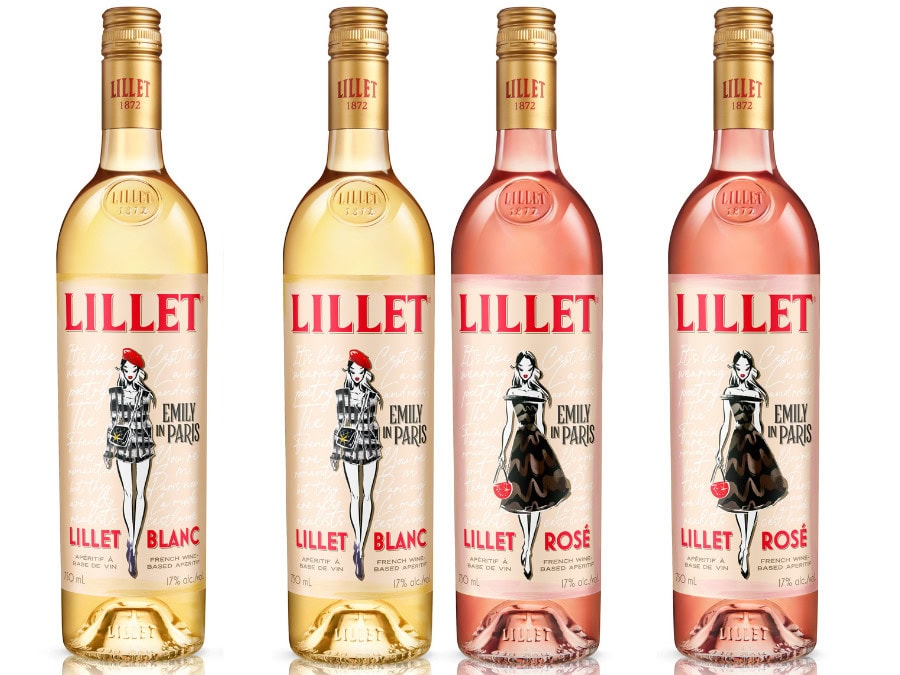
A spokesperson for Pernod Ricard, owner of the anise-based Pernod and wine-based citrus Lillet aperitifs (below), as well as Italian-made bergamot-infused aperitivo Italicus, notes that “culture has been a key vehicle of expansion” for the group’s aperitif portfolio. Lillet, for example, “has clearly benefited from the original highlight of the vesper martini via the Casino Royale movie and even the recent viral phenomenon of Taylor Swift saying on social media that one of her favourite cocktails was made from Lillet”. If the legions of Swifties were taking note (let’s face it, of course they were), this could result in big bucks for the brand.
More generally, the spokesperson says, aperitifs and spritz cocktails benefit from “visual vibrancy” – which today translates into a much-desired currency: Instagram-ability. Images of brightly coloured, extravagantly garnished, energetically fizzing highballs and goblets flood social media platforms, usually signalling the end of a working day.
In 2022, according to Campari, there were 1.6m ‘aperitivo’ mentions online.
Focusing on the consumption occasion
The integral social enjoyment of aperitifs, combined with the fact that the segment encompasses so many styles from different cultures and geographies, means brand owners rarely strategise in terms of a singular traditional ‘category’ and instead focus on the aperitif ‘occasion’. Consumers appear to understand aperitifs in this way, as opposed to as a particular style of drink.
“While the category is indeed diverse, we believe consumers are confident in exploring and enjoying the aperitivo moment rather than focusing on the technicalities,” says Per Se’s Redondo. “There’s been significant innovation from both brands and bartenders, leading to creative cocktails that emphasise ease and enjoyment. The aperitivo consumer looks for great-quality, laid-back and easy-to-drink beverages rather than complexity.”
Aperitifs and their signature spritz serves are not only easy drinks for consumers to make themselves, but they are also inexpensive to buy in the on-premise, further augmenting their popularity across demographics. In fact, spritzes offer great value right through the supply chain, says Pernod Ricard’s spokesperson.
“[Spritzes] are seen very much as gender-neutral drinks and have a value chain that is attractive to all participants,” they explain. “For the spirits makers, it is a very profitable category as there is no ageing. For the on-trade, there is a better margin than beer or wine. And for consumers, it is the cheapest of all cocktails.”
Expanding international footprints
Good value for money is a quality that will never cease to be important to consumers across the globe, so it’s easy to see why brands are confident in growing their international footprints. This year, Per Se has significantly expanded its distribution network in Europe and will launch in 20 new countries via global travel retail. Campari Group is making big investments in the US to build Aperol and Campari, and Bacardí recently launched the ‘Dare to Be’ campaign for Martini in Europe.
Pernod Ricard, meanwhile, is looking eastward: “With regards to Asia, we feel confident in leveraging our historical strength within the market to drive and shape the aperitif momentum in this part of the world,” says its spokesperson.
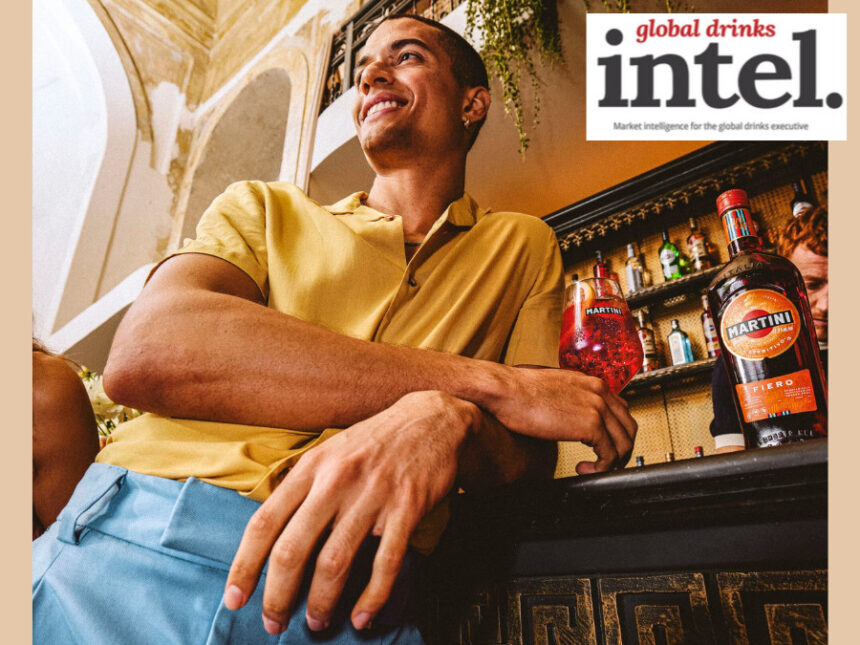
The big players that have historically dominated the space have expanded their portfolios through both innovation and acquisition. For instance, Bacardí’s Higgins says Martini Fiero, launched as a competitor to Aperol in 2019, is performing strongly across Northern and Eastern Europe, while the Martini Non-Alcoholic Aperitivo range “has made people rethink what is possible in the no/low category”. Pernod Ricard’s purchase of Spanish vermouth St Petroni in 2020 signified a “great local win” for the group, according to the spokesperson.
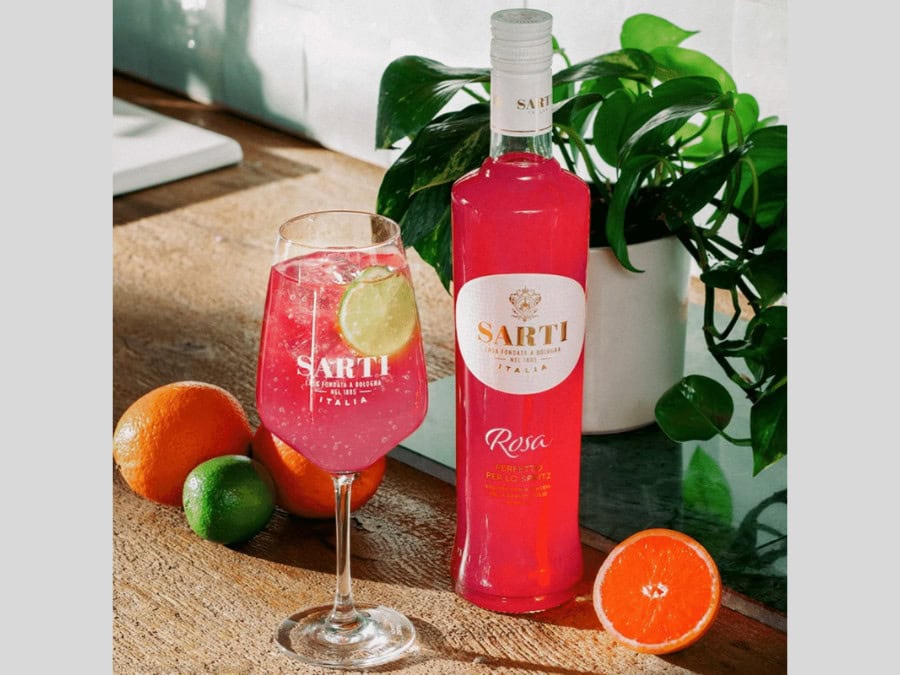
Campari, meanwhile, bought bitter aperitif Picon from Diageo in 2022 and launched fruity pink variant Sarti Rosa (above) last summer.
“We focus on category ownership as the ones who invented [the] spritz as we know it today,” says Villa, referring to the ubiquity of the Aperol spritz. The market-leading brand is fighting to maintain share and visibility with sponsorship of huge events such as Coachella and the US Open. “At the core of Aperol is [a need] to be close and available to consumers in the most authentic and relevant places,” says Villa.

Following gin’s path?
There’s no denying the increasing diversity of the aperitif segment today, with a swarm of challenger brands looking to make their mark. Sipello is one example: launched in 2021, the brand is described as a “gooseberry-led, bitter-sweet aperitif” and is made in the UK county of Surrey.
“Since we’ve launched, the category has evolved enormously, led by the on-trade and the never-ending quest for new and different,” says founder Tim Simmons. “New brands, new styles and great liquids [are] popping up globally. We’re seeing that smaller, ingredient-led producers are leading bartenders to question the omnipresent mainstream products they were using before, and this is driving experimentation and premiumisation.”
The pattern mirrors that of another alcohol category in the not-so-distant past. Powered by a rampant flavour craze, gin burned brightly only to fizzle out in some of its key markets a few years later. Could the same fate befall aperitifs? Simmons remains positive: “The big difference here is that gin has matured and is consolidating around a few market-leading brands, whereas the aperitif occasion is shifting the other way by decentralising from the market leaders.”
For Elwyn Gladstone, founder of both the Starlino aperitif brand and US distributor Biggar & Leith, aperitifs are at a disadvantage to gin when it comes to consumer understanding. “I think it’s a harder category than gin, because a higher percentage of consumers understand what gin is, whereas I think a very low percentage understand what aperitivo is,” he says. “As with gin, being local or craft is not enough – you need a really interesting brand.”
With the plethora of new ‘aperitif’ and ‘aperitivo’ products that highlight different ingredients, provenances and serving suggestions, interest is certainly mounting. The increasingly diverse array of brands has helped the category itself to diversify. While still closely associated with pre-dinner consumption, particularly in the summertime, aperitifs are gradually de-seasonalising and are being enjoyed in an expanded number of settings and occasions.
That said, Per Se’s Redondo expresses caution: “There is definitely progress in making the aperitivo category appealing throughout the year, though more work remains. We anticipate significant developments in this area.”
Pernod Ricard’s spokesperson notes the increased frequency of consumption: “The aperitif moment itself has been diversifying in nature; the aperitif now extends beyond pre-dinner and can go on longer into the evening.” In addition, they say that while the traditional spritz has been an integral part of the segment’s ascendancy, new serves are helping it move further upmarket.
“There’s also been a real diversification of drinks in the aperitif moment,” reflects the spokesperson. “We’re no longer seeing just the usual suspects, like a traditional spritz. We’re seeing new serves, new colours and new brands. Undoubtedly, there has been a clear premiumisation movement within the category.”
Bacardí’s Higgins elaborates: “As much as we might want to describe the category as being vermouth, bitter and liqueur-based, the occasion cannot be defined so easily. Classics like the Bombay Sapphire-and-tonic and, increasingly, the Patrón paloma are as much a part of the occasion, even in a traditional aperitivo market like Italy. We’re expecting the St-Germain hugo spritz to again be one of the cocktails of the summer season, as it was last year.”
For Sipello’s Simmons, while the spritz has offered a “great gateway” to aperitifs, the category’s “rebirth” is leaning into “the quality and provenance of the liquid rather than the fluorescent spritz serve”. He adds: “Where the category is getting interesting is at the top end, where premium brands are slowly starting to elbow in. The spritz as a formulaic serve doesn’t match the expected lavish experience at luxury venues when the chain pub next door is serving the same serve, only cheaper.”
In some instances, this means a divergence to luxury highballs; in others, classic cocktails such as the americano or negroni will capitalise on the aperitif moment. “The spritz is critical to some brands, but the category in general is too varied to rely on one serve,” adds Simmons.
The aperitif segment is indeed a broad church, requiring brands to adopt totally new strategies. In a way, this is uncharted territory, but one that brands are eager to explore.