

This article has been available to Global Drinks Intel subscribers since October. For details on how to join them, please click here.
Rum has long had a poor reputation for not keeping pace with premiumisation, but the sector is finally on the move – an explosion of NPD activity is (finally) catching the consumer’s attention.
Innovation is thriving in the world of rum – but it increasingly means different things to different people. At the premium-plus end, there’s a growing trend towards innovative cask finishes, different distillation methods and sustainable production. For many mainstream brands, meanwhile, something new has to make the waves, forcing existing rum drinkers to pay attention, while tempting curious new consumers to purchase.
As an example of the latter trend this year, Halewood International-owned Dead Man’s Fingers, a spiced rum made in the UK, announced a collaboration with global fast-food chicken giant KFC to create a limited-edition expression featuring KFC’s famous secret blend of 11 herbs and spices. Available in the UK for GBP25 (US$31.70), KFC x Dead Man’s Fingers Rum was launched in early September in the southern, coastal town of Margate at a pop-up bar serving rum cocktails and – you guessed it – free chicken.
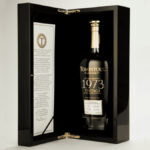
Some category purists would be horrified by this approach, decrying it as debasing a serious spirit that can boast all the quality and craft credentials of a single malt Scotch or XO Cognac. They would rather point to the many high-end releases launched by brand owners to satisfy a growing demand for premium sipping rums. Consider the $2,800 Andrés Brugal, released by Edrington last October – an ultra-premium rum from the Dominican Republic bottled in a handblown crystal decanter with an accompanying display cabinet, and limited to 460 units.
That said, the $17.4bn-per-year rum category is wildly diverse, spanning multiple styles, countries of origin and price points, that no one definition of ‘innovation’ would ever suffice. What might be agreed on, however, is that more NPD is needed in all areas if rum is to catch up with other spirits in the premiumisation stakes. After all, according to IWSR Drinks Market Analysis, premium-plus rum only accounts for around 4% of the sector’s total volumes – for overall spirits, the figure is almost 10%.
Havana Club harnesses ‘unusual’ casks to reach new drinkers
One major brand that has already bought into the need for more innovation is Pernod Ricard’s Havana Club. “We place a real focus on using innovation to recruit consumers from other categories, expanding their repertoires to include new quality rum experiences,” explains global marketing director Anne Martin, who reveals 2022 was a record year for the Cuban brand in sales terms. “Finishing rum in unusual casks is one of the ways we’re tapping into drinkers from other categories, by introducing them to the world of rum in a way that feels familiar.
“Our latest partnership with [online spirits retailer] The Whisky Exchange, for example, saw the creation of Havana Club 11-Year-Old,” says Martin. “Aged in American white oak barrels, the liquid … offers subtle notes of vanilla and tobacco that are evocative of whisky. Additionally, our award-winning expression, Cuban Smoky, has been aged in malt whisky barrels from Islay. The flavours, typically associated with single malt or mezcal, appeal to premium spirits drinkers, enabling us to target a wider range of consumers.”
Appleton Estate capitalises on the classics
From the invention of the Daiquiri in the late 1800s and the Mai Tai in the 1940s, through to the Piña Colada in the 1950s and the Mojito in the 1990s, cocktail trends have always exercised a potent influence on NPD. Today, much interest remains in classic rum cocktails, often with modern twists and creative adaptations.
In June, Campari Group-owned Appleton Estate capitalised on this with Appleton Estate 17 Year Old Legend, an attempt by master blender Joy Spence to recreate Wray & Nephew’s 17-year-old iteration, which was used by legendary bartender Trader Vic to create the Mai Tai in 1944.
Meanwhile, Diageo co-owned Ron Santiago de Cuba is keen to put its own stamp on the iconic Daiquiri. In July, the brand celebrated ‘Daiquiri Day’ by inviting leading bars and bartenders to create their own twists on the famous cocktail. Featuring bars in a raft of European capital cities, the new creations were then made available at an online Casa Del Daiquiri hall of fame’, allowing other bartenders to take inspiration.
For specialist rum producer Spiribam, meanwhile, bartenders played a valuable part in an extension of the St Lucian Bounty Rum brand. “We’ve recently announced the UK launch of Bounty Strong 151 to add to the ‘Spirit of St Lucia’ collection,” explains Spiribam UK sales manager Dave Marsland. “This was an answer to many demands received from bartenders, St Lucian people and tourists who had the opportunity to experience this staple of St Lucian culture while on the island.”
Bounty Strong 151 draws its inspiration from the “time-honoured cask rum tradition that has been cherished for generations by St Lucians”, according to Marsland. “Even now, locals continue the tradition of bringing recycled bottles to procure their rum directly from the cask, enabling them to craft their own homemade spiced rums and other cherished family concoctions.
“This new release, a blend between fresh column still rum and 3-year-old rum, offers a smooth composition that softens the initial punch of traditional high-strength rum. Adding a few centilitres of 151 to your cocktail will showcase the classic cask rum character that St Lucians anticipate from their local distillery.”
Brands strengthen rum’s historic ties with music
Rum and the music of the Caribbean, Latin America and Africa have a long, intertwined, multi-faceted and sometimes troubling history stretching back to the 17th Century. Often given as a form of payment for labour on sugar plantations, rum became a symbol of freedom and resistance for enslaved Africans and was often used in the music they created – the drums used in many Caribbean and Latin American genres, such as the rumba, calypso and samba, were originally made from rum barrels.
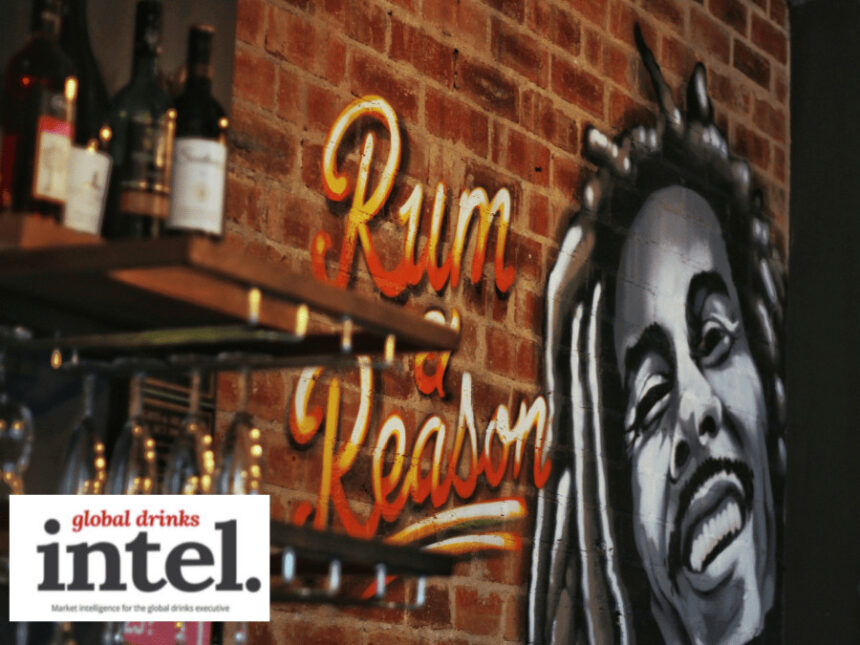
The category has retained its close association with contemporary Afro-American musical genres such as reggae, ska and, more recently, hip-hop and R&B with the drink namechecked by stars such as Bob Marley, Gloria Estefan, Rhianna and Nas. The spirits’ long musical legacy, party image and mixability are increasingly making rum a natural choice of sponsor for a variety of music events.
Venezuelan brand Diplomático Rum, now part of Brown-Forman’s stable of brands, became the official sponsor of four US music festivals this year: the Innings Festival Tampa, a rock and pop event; the indie music Shaky Knees Music Festival; Sea. Hear. Now, an annual New Jersey music, art and ocean sustainability festival; and the Austin City Limits Music Fest, one of the country’s biggest and most eclectic events.
As well as fronting on-site bars, Diplomático also staged free-to-enter sweepstakes for all four festivals, offering entrants the chance to win VIP tickets, round-trip flights, a complimentary hotel stay and a $200 gift card to cover additional transport costs.
“Bringing Diplomático to music festivals for the first time opens a door to reach some of our most passionate consumers,” says senior brand manager Alex Fellows. “Music brings people together from all walks of life – something that deeply aligns with Diplomático’s core values.”
Meanwhile, Bacardi partnered with MTV and Paramount Brand Studio to celebrate this September’s MTV Video Music Awards (VMAs) commemoration of 50 years of hip-hop culture and the songs, artists, albums and videos that have defined the genre. The tie-up saw the opening of a vintage pop-up store in New York showcasing hip-hop’s influence on music and fashion, selling vintage sneakers and limited-edition merchandise, as well as boasting a Caribbean-inspired Bacardi cocktail lounge.
The partnership also included a limited-edition Bacardi x VMA bottle and gift set. The label housed a QR code giving consumers a chance to win tickets to the awards ceremony. “As the VMAs have long celebrated both the sound and the style of hip-hop, Bacardi has long been embedded in hip-hop culture, inspiring some of the most memorable lyrics, movements and music video moments from artists who have defined a generation,” says Bacardi North America VP Lisa Pfenning.
More big players join the rum race in GTR
As a spirits category, rum continues to underperform in global travel retail compared to its size and importance in domestic markets. According to IWSR, only five rums – Bacardi, Captain Morgan, Havana Club, Cruzan and Barceló – made it into the ‘Top 50 Travel Retail Spirits Brands’ in 2022, compared with 15 Scotch whiskies and nine vodkas. Rum clearly has some catching up to do (although it did equal gin, which saw a drop in entries from six to five).
Rum’s lack of an aspirational presence in Asia-Pacific, GTR’s engine room for spirits’ value growth over the past three decades, combined with a general lack of premium-plus expressions, has traditionally been held up as the cause of its poor showing in a channel largely dependent on upscale spirits. Yet rum did enjoy a strong year of growth in duty free in 2022, growing volumes by 100%, according to IWSR, as international travel in the Americas region, the segment’s heartland, recorded a strong post-pandemic recovery.
The data indicates the long-term challenge for rum in GTR is to premiumise and broaden its appeal. Last year, for instance, 78% of rum volume sales in duty free were in the value and standard price categories; only 22% were in the premium, super-premium and ultra-premium tiers, according to IWSR. In 2018, 85% of sales were in the value/standard category, so modest progress toward premiumisation has been made.
Moët Hennessy and Campari join Bacardi in travel retail push
Bacardi, the market leader in global travel retail, has banged the drum for rum premiumisation in the sales channel pretty much alone in recent years, releasing and promoting more premium expressions such as Añejo Cuatro, Ocho and Gran Reserva Diez and unveiling a worldwide marketing activation last year called ‘Depth in Every Drop’ to drive premiumisation within the category. The omnichannel campaign featured social media and airport advertising, as well as in-store cocktail demonstrations.
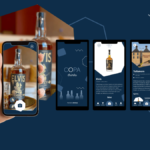
This year, however, Bacardi has been joined by two major brand owners keen to further the premiumisation cause in GTR. In March, Campari’s GTR unit opened a multi-sensory Appleton Estate boutique at Jamaica’s Montego Bay Airport. Billed as Campari’s largest investment in the channel to date, the high-tech store featured a large digital screen running an engaging film about the distillery’s production process, while travellers were able to scan the bottle label of any rum in the store to discover content about its age statement, individual characteristics and taste profile, all narrated by Appleton Estate master blender Joy Spence.
Then in June, Moët Hennessy Travel Retail Europe launched high-end Cuban rum brand Eminente Reserva in the channel with a high-profile activation at Paris Charles de Gaulle Airport. First released domestically in 2021, Eminente was developed in partnership with César Marti, Cuba’s youngest rum ‘maestro’; aged for a minimum of seven years, the brand is positioned as being suitable both for sipping and for mixing in cocktails.
Smaller brands explore GTR’s marketing potential
Smaller brands are also engaging with travel retail, recognising its marketing potential. In June, Dominican premium spiced rum Candela Mamajuana opened a pop-up store in partnership with Dufry Group in the departures terminal of Santo Domingo’s Las Américas International Airport. As well as selling the brand itself, a blend of ultra-premium Dominican rum, natural spices and honey, the outlet also sold branded merchandise.
Meaning ‘on fire’ in Spanish slang, Candela was created after co-founder Alejandro Russo tried mamajuana, a popular local beverage of rum, wine, honey, herbs and spices, while on holiday in the Dominican Republic. Impressed by the flavour – and realising mamajuana was not easily available overseas – Russo launched Candela Mamajuana in 2016; the brand now has distribution across the Dominican Republic, as well as in New York, Florida, New Jersey and California.
As welcome as these activations and launches by rum brands large and small are in GTR, more clearly needs to be done, especially in regions hitherto largely resistant to the charms of premium-plus rum. Over the next four years, IWSR predicts rum will grow in GTR at a CAGR of 7%, one percentage point behind overall spirits at 8%.
More sustained supplier investment and buy-in from duty-free retailers will be necessary to quicken rum’s premiumisation progress.
This article has been available to Global Drinks Intel subscribers since October. For details on how to join them, please click here.