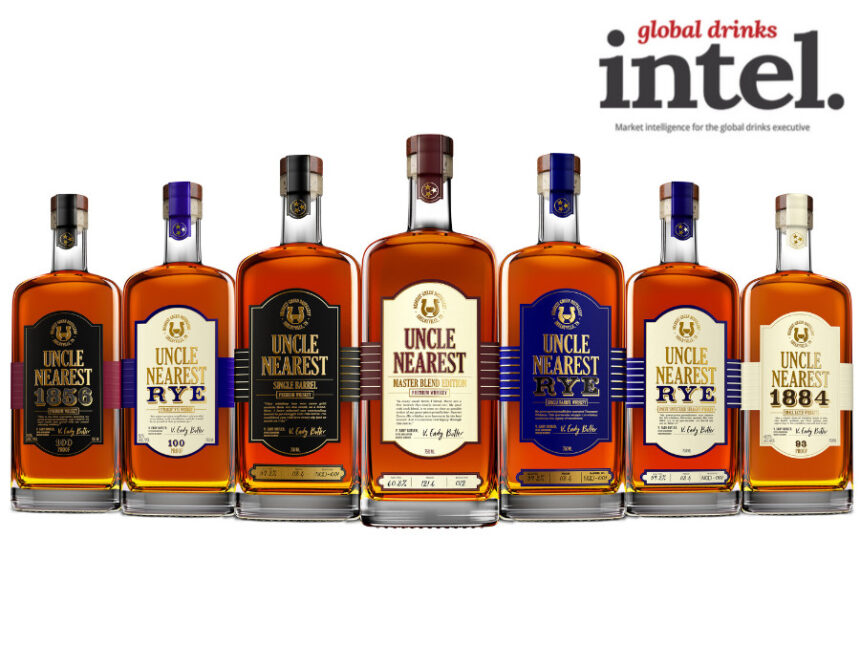
Fawn Weaver founded the Uncle Nearest American whiskey brand with her husband, Keith, in 2017. The brand is named after Nathan ‘Nearest’ Green, who was born into slavery in the US in around 1820 and went on to become the master distiller at Jack Daniel Distillery in Tennessee. Earlier this month, Weaver sat down with Global Drinks Intel editor Olly Wehring to tell the remarkable story of both Nearest Green and Uncle Nearest.
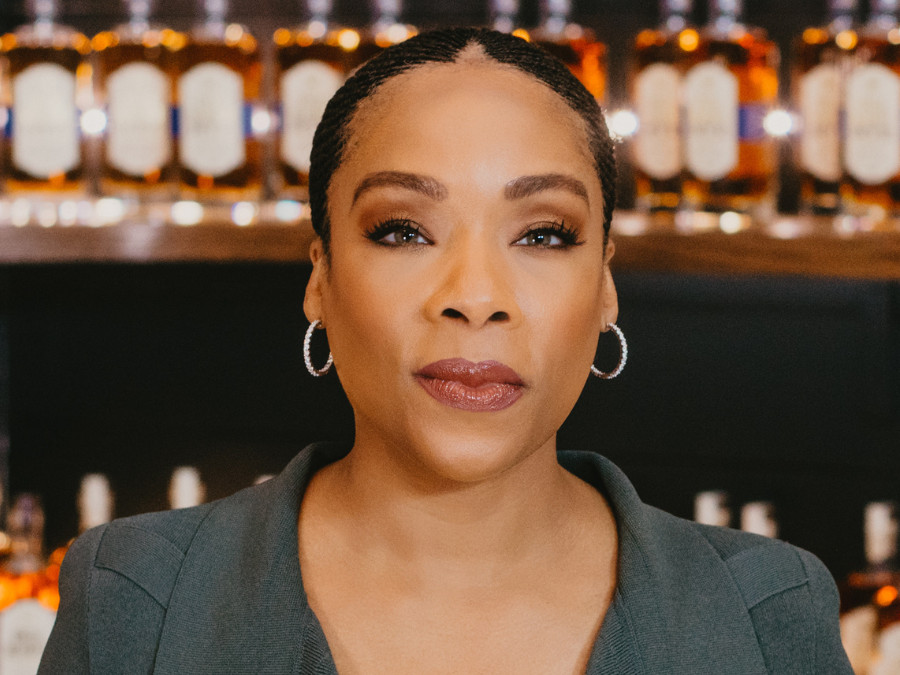
What was it about the spirits industry that appealed to you?
It wasn’t the industry that I was interested in, so much as it was the story of the first African-American master distiller.
During the era of the slave trade, the census stated that all of these Africans who came to America couldn’t read or write. Historically in our country, that’s caused people to believe that we were illiiterate and weren’t intelligent. What people fail to understand is we simply didn’t understand English and no one would teach it to us.
One of the things that’s been really important to me is that – even in my own culture – people need to understand that we don’t come from a history of ignorance and illiteracy. We were just brought to a country and not taught the language. Trying to reverse that psychology of African-Americans in America has always been really important to me.
With Nearest Green, we’re still talking about him now because of the legacy of excellence that he created that became Jack Daniel’s. This ‘illiterate’ was able to teach the most famous American whiskey maker of all time. I travel around the world and when I say I’m from Tennessee, everyone says ‘Jack’! Or at least they did, before Nearest became more known.
What drew me to his story is that here in the US, it was the enslaved people that were doing the distilling. There’s a photo of Jack Daniel from 1904 (below) and to his immediate right is an African-American who we know now to be Nearest Green’s son, George. Jack was not in the centre of the photo; it was George. What was Jack trying to say?
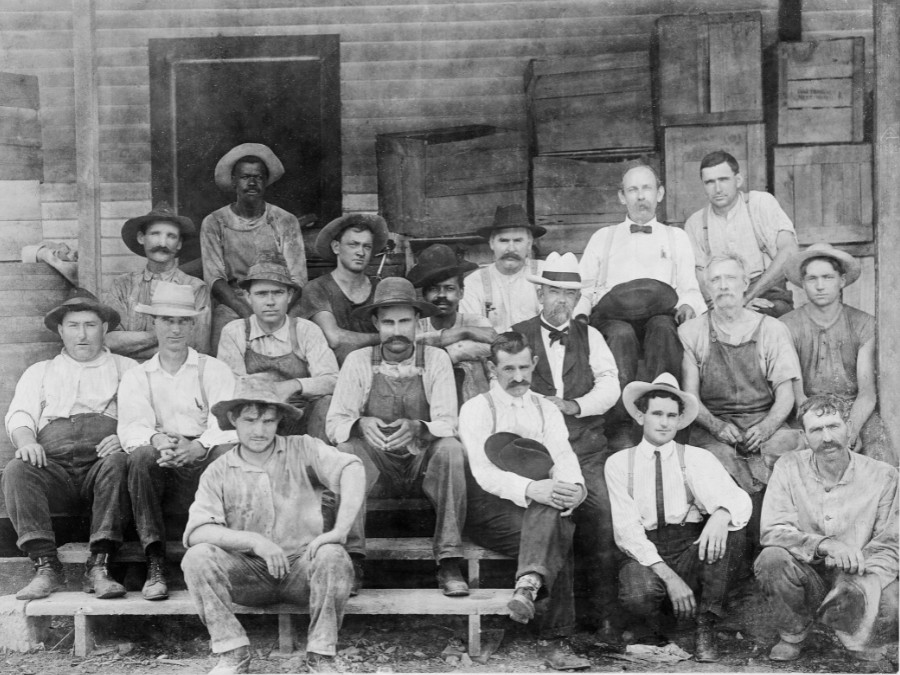
Throughout Jack Daniel’s biography, written in 1967, Nearest Green and his sons, George and Eli, are mentioned more times than Jack’s own family. All of this suggested to me that Jack was one of the first cases of allyship that we know of. If we could prove that there was camaraderie among blacks and whites in Lynchburg, Tennessee, with the most famous American whiskey maker of all time being taught by an enslaved man and then choosing him as the first master distiller, then we’ve got a different storyline coming out of the South with regard to African-Americans and whites. That’s the story I was chasing.
Up to the point when Uncle Nearest entered the market in July 2017, there had never been a bottle that commemorated an African-American, even though we had been working in the industry for 400 years. My interest in the spirits space was exclusively limited to wanting to cement the legacy of Nearest Green.
In spirits, 99.9% of new products fail. I had to figure out how to make this one succeed to such an extent that when I’m finished building it, it’s so large that the next generation can’t screw it up! There was no way that this thing would be able to grow if it wasn’t the most awarded and if it wasn’t something that people enjoyed drinking. All of those things had to happen in order for this to work.
How did you get the business operational?
I raised US$3m from friends and family, then hired Sherrie Moore, the former director of whiskey operations at Jack Daniel’s. When Sherrie retired, after 31 years, she also had an interest in seeing the story of Nearest Green told.
Then, I brought in Katharine Jerkens as head of sales & marketing to start to understand how the second tier works in our country. The distributor tier is where most small and independent brands die.
For the first four years, we were sourcing our product – We opened our Nearest Green Distillery (below) in Tennessee in September 2019.

How did the historical connection with (Jack Daniel’s brand owner) Brown-Forman play out?
At the beginning, we took a ‘Tasmanian devil’ approach, because I didn’t know how they would respond. What that means is if we were doing so many things in so many different places and rolling out to so many states so quickly, if they tried to land bombs over here, then we would already be over there.
Even though they didn’t respond how I thought they were going to, which I’m really grateful for, it set the course for us to continue with this strategy of always making sure we’re running ahead and moving too quick to be able to attack.
The thought of what they might do propelled us to move much faster than anyone would usually build in this industry. In less than two years, we were in all 50 states.
I knew that our superpower would be what I have been doing for the last 30 years, which is PR. I’ve never looked at the press as their job is to tell our story. I’ve always looked at it as my job to give their readers a reason to view in higher numbers. I knew that I would be able to craft individual storylines for every major media outlet in this country.
Most national outlets don’t want to report on something that’s regional. One of the reasons a lot of new brands die so fast is because they’ll start in one state, then try to push into a second. They’re having to pay all of that money for paid media, but they’ll never be able to compete with the big guys that are going to outspend them in every single state.
The strategy of moving into all 50 states in less than two years was risky as heck and it cost a lot of money. But it allowed me to talk to the press non-stop and tell the different aspects of the Uncle Nearest story in a way that would be interesting to their readers.
That’s why you’ve seen us grow so fast – That had never been done by an independent brand before us.
Has the journey been a smooth one?
Not a chance! There’s nothing smooth about growing this fast in an industry that’s been locked down by the same group of people for 400 years. There’s a reason why no woman or person of colour had ever succeeded in this industry before me. The irony is, it has less to do with race or gender; I’ve seen more white men fail in this industry since I’ve come in than any other group of people.
I think it’s because there’s one group of people and their descendants that have essentially run this entire industry for so long. In the US, over 90% of the alcohol sales volumes come from six companies. Coming into this industry, has been challenging on every side.
I have an ability to compartmentalise; I can deal with putting out fires while also continuing to lead this company forward and focus on the positive. I believe that what you focus on grows. Problems and challenges are not those things!
What other impressions of the industry did you have coming into it?
It wasn’t until I came into the industry that I learned that every single one of the bourbons that I liked were all from one distillery – Buffalo Trace. I’m sipping all of these bourbons and thinking they were made by independents. It was like, wait a minute; y’all own everything!
When you get to the core of actual independent brands that have succeeded in America, you come down to one; Tito’s Handmade Vodka. For 15 years, nobody would loan him (founder Bert ‘Tito’ Beveridge) money and no one would invest. This is a person who maxed out every single credit card for almost a decade – that’s how he acquired his first distillery. I love Tito’s story because he should’ve quit, and he didn’t. His fortitude was unbelievable – very similar to mine.
I had no preconceived notions of the industry, but now that I’m in it, I absolutely find it to be welcoming. It’s a friendly competition. We all compete – There’s a very limited amount of shelf space – but I haven’t come across anybody in this industry that I wouldn’t want to sit down and have a drink with.
Do you feel that your ethnicity and gender have been a challenge for you to overcome?
I think it’s neutral – one thing cancels out the other. The majority of bourbon consumers in this country are white men. When you look at who people tend to gravitate toward, it’s familiarity. If you take a little white girl and a little black girl to a toy store and let them pick out a doll each, the former is more likely than not going to come back with a white doll and the latter is going to come back with a black doll. I think that familiarity begins with our ancestors and having to look at everything that is not like you as a potential threat.
Here, you have an African-American woman with a product that historically has been consumed by one group of people. I’m having to make them familiar and comfortable with who I am, and I look nothing like the consumer.
Where it has been helpful is when I’m talking to the press, most of which are white men who have been media trained. They’re using the same talking points and the same style. Then, they come to me, who’s not had media training, who looks different and whose swagger is different. My talking points are different from everyone else’s, because I’m looking at it from a different vantage point. In that regard, it’s been greatly beneficial.
What’s been the best advice you’ve received?
None! The reason we’ve been so successful is because I disregarded every bit of advice that I received from the experts. The industry had never seen an outsider succeed, so it didn’t make sense to me to receive advice from insiders because they kept the outsiders out for a really long time.
It goes back to what I was saying about focusing on one state at a time. Most people that have done that journey have failed. If by any chance they don’t fail along the way, they end up having to sell to one of the spirits conglomerates.
The advice I was being given makes sense if your plan is to flip the company, to sell to one of the big guys. In my instance, I was coming in with an absolute resolve to not sell. So, for my purposes, the advice that I was being given was garbage. I would say the best piece of advice I received came from me.
I had to create a new roadmap and learn from scratch instead of learning from other people.
Are you enjoying yourself?
I absolutely love what I’m doing.