

Sign In
  • News
    • Beer
    • Spirits
    • Wine
    • Environmental, Social & Governance
    • Financial Results
    • Marketing
    • Mergers & Acquisitions
    • New Product Development
    • From the Industry
  • Intel
    • Comment
    • Interview
    • Category Intel
    • Consumer Intel
    • Market Intel
  • Awards
    • Global Drinks Awards
    • New Product Awards
    • ESG Awards
  • Magazine
  • Newsletter
  • Subscribe
  • Contact
  • News
    • Beer
    • Spirits
    • Wine
    • Environmental, Social & Governance
    • Financial Results
    • Marketing
    • Mergers & Acquisitions
    • New Product Development
    • From the Industry
  • Intel
    • Comment
    • Interview
    • Category Intel
    • Consumer Intel
    • Market Intel
  • Awards
    • Global Drinks Awards
    • New Product Awards
    • ESG Awards
  • Magazine
  • Newsletter
  • Subscribe
  • Contact
Search
Banner for Global Drinks Intel ESG Awards - https://gdiesgawards.com/categories/


No-alcohol segment expected to post US$4bn+ growth by 2028 – Category Intel

IWSR
Last updated: 19/12/2024 at 7:32 PM
By IWSR
19 December 2024
8 Min Read

Latest IWSR data highlights the US and Brazil as two of the priority markets for no-alcohol.


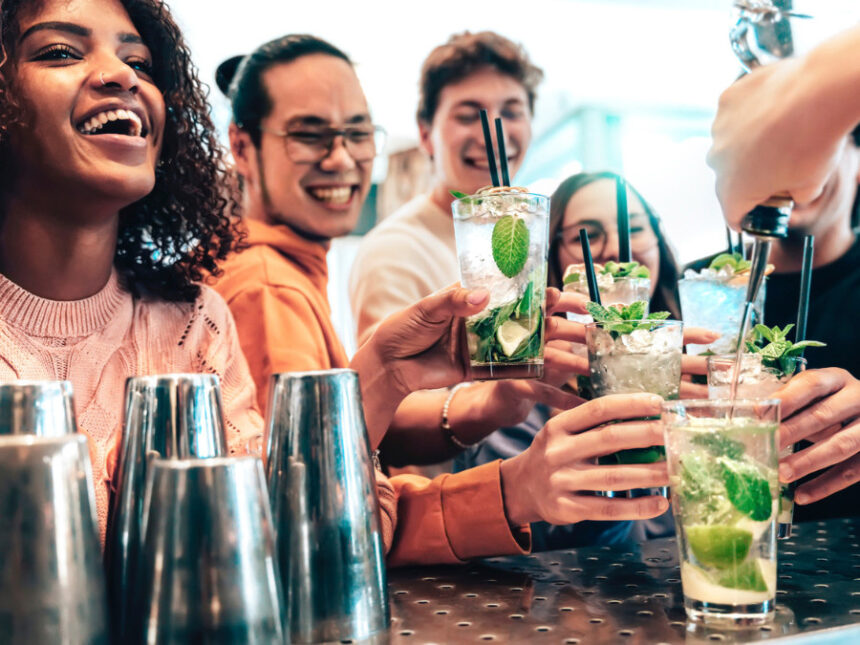
Drinkers raising glasses in a US bar
Credit: charmedlightph/iStock
SHARE

The no- and low-alcohol drinks category is experiencing a transformative period of growth, driven by evolving consumer behaviours and a strengthening momentum for no-alcohol.

To 2028 and across ten key markets, the combined no- & low-alcohol category is expected to expand by 4% volume CAGR, with no-alcohol driving the majority of this growth, at +7% volume CAGR, while low-alcohol volumes remain broadly static.

The no-alcohol segment is expected to deliver incremental growth by 2028 of over US$4bn.

Latest findings from IWSR’s ‘No- and Low-Alcohol Strategic Study 2024’ show that the no-alcohol segment recruits more new consumers than its low-alcohol counterpart, with an increase of 61m buyers versus 38m for low-alcohol (2024 compared to 2022) in ten large markets (Australia, Brazil, Canada, France, Germany, Japan, Spain, South Africa, the UK and the US).

Across markets, new recruits entering the category are skewing younger than the core buyer demographic and demonstrate higher frequency and intensity of consumption. In line with global trends, alcohol purchases among no/low buyers are decreasing, particularly in beer and wine. Across the ten key markets, per-capita consumption in litres of pure alcohol is at 80% of its level in 2000.

As the no/low category develops and more products come to market, other drivers besides alcohol moderation are rising in importance to drive consumption frequency, particularly in emerging no-alcohol subcategories. Factors such as taste, availability and brand are increasing in importance in segments outside of no-alcohol beer.

“As the no-alcohol category matures, consumers want more than just an absence of alcohol,” says IWSR’s head of no- and low-alcohol insights, Susie Goldspink. “They want products that deliver on taste, complexity and overall drinking experience.

“This evolution is pushing the category further, prompting brands to innovate and raise the bar in terms of quality and variety.”.  

No-alcohol will continue to drive future growth

Throughout this year, strong growth across no-alcohol has continued, with RTDs expected to have the fastest growth rate through to 2028, off a lower base (+10% volume CAGR, 2024-2028). Beer will rise at 7% volume CAGR, and will continue to lead future no-alcohol growth in absolute volume terms.

No-alcohol’s share of TBA across the ten key markets will increase to over 3% by 2028, with its share of the US’s total beverage alcohol category doubling in that time. Brazil, Canada and the US will see higher rises in the no-alcohol segment in the near future, whereas growth is predicted to be more gradual in Spain, South Africa and Germany.

The US and Brazil emerge as top markets

No-alcohol growth in the US (+18% volume CAGR 2024-2028) and Brazil (+10%) is expected to come from the recruitment of new consumers, increased frequency of consumption and higher incidence in both markets. Growth in the US will come from a wider array of no-alcohol subcategories, while in Brazil, growth will be led almost entirely by beer.

Smaller markets such as Canada and Australia, also offer attractive opportunities with relatively high growth rates (7.5% and 5% respectively) off a lower base.

No-alcohol consumption frequency led by Gen Z and Millennial consumers

Markets with a younger legal drinking age (LDA) consumer base for no-alcohol, for example Brazil, the US and South Africa, continue to show heavier consumption per occasion, while markets with an older consumer base, such as Japan and Spain, report fewer drinks per occasion.

Gen Z consumers who have recently reached legal drinking age are more likely to substitute non-alcoholic drinks, especially soda and energy drinks, while older age groups are more likely to substitute alcohol, especially beer/cider.

Moderation attitudes vary by age cohort

Of the ten key markets, the US has the largest proportion of ‘occasional’ moderators. Along with the UK, it’s a market in which more buyers have participated in alcohol-free challenges.

Younger buyers are more likely to adopt an occasional moderation strategy, limiting alcohol consumption during defined periods or participating in alcohol-free challenges such as Sober October or Dry January (albeit from a small base).

Occasional moderators are more likely to choose no-alcohol beverages based on social influence and training for sports.

Overall, markets skew non-loyal to brands, while younger buyers show more loyalty

Markets such as Spain, UK and Japan tend to be less brand-loyal. In Spain, which has a wide range of available brands, consumers are more likely to choose a different brand in the same beverage category. Meanwhile in South Africa, the US and Brazil, consumers are more likely to stay with their preferred brand.

Brand loyalty also varies by age cohort. Frequent drinkers and younger consumers, who are more engaged with no/low, are more likely to be driven by brand and sensory characteristics. Up to 57% of Millennials, meanwhile, are swayed by brands they are familiar with, compared to only 45% of Boomers, who are less engaged and claim more occasional consumption of no- & low-alcohol.

“Younger consumers are more likely to be moderating alcohol, but they also drink less alcohol to begin with. These consumers tend to participate in a wider repertoire of no/low subcategories, and to be more brand-loyal,” notes Goldspink. “Older consumers are less likely to be moderating but more likely not to drink alcohol at all, and their preferences tend to be skewed to no/low beer and alcohol brand extensions.”

Availability remains the main barrier

The biggest reason preventing people from drinking no/low more frequently in emerging no/low markets such as Brazil, South Africa and the US is availability. This is a barrier for fewer no/low consumers in more established markets such as Spain, France, Japan and Germany. Greater product availability in the on-premise and via e-commerce is helping to enable category growth.

Pricing is not a main barrier to purchase for consumers, but has a part to play in no/low’s future trajectory. In the UK and Spain – both are more developed no-alcohol spirits markets – pricing becomes more aligned with full-strength offerings as the category gains traction.

Innovation trends

NPD investment continues to focus on functional attributes. The Free AF brand, for example, offers no-alcohol beverages that feature Afterglow, a patented 100% natural, gluten-free and vegetarian botanical extract that is said to mimic the warming sensation of alcohol. Meanwhile, Parch Spirits & Cocktails has launched a line of no-alcohol agave cocktails containing desert botanicals and adaptogens such as ashwagandha, L-theanine and ginseng.

Products that do not have added functionalities and are not directly analogous to alcohol categories are also on the rise. Examples include sparkling teas, hop waters and vinegar-based switchels.

For more in-depth data and current analysis from IWSR, click here

Previous Article A pile of newspapers on a table Global Drinks Intel Review of the Year – The biggest news stories in 2024
Next Article Bottle of Ciroc Diageo silent on Cîroc vodka sale claim – data
MPU for Le Tribute Pink Grapefruit - https://letribute.com/en-gb?srsltid=AfmBOooXoAFSrBVrsVtLnlySLXXjT62LG4oJ5imdqTABCraYG_SULm5V

The Newsletter

Sign up to receive our newsletter email

  • The very latest news from across the world's beverage alcohol industry
  • Cutting-edge intel from our in-depth category & market analyses, backed by benchmark industry data
  • The best insight on your competitors from our interviews with the industry’s leaders

This field is for validation purposes and should be left unchanged.

Follow on Social

Linkedin Twitter
OKI Tall Tower - https://www.oki.com/uk/printing/label-printer/?utm_source=OKI+Web+Chat&utm_medium=Bing&utm_campaign=Global+Drinks+Awards&utm_content=ACTFUND-1070&activity_code=ACTFUND-1070
Banner for Le Tribute Pink Grapefruit - https://letribute.com/en-gb?srsltid=AfmBOooXoAFSrBVrsVtLnlySLXXjT62LG4oJ5imdqTABCraYG_SULm5V

You Might Also Like

Two bartenders preparing cocktails behind a bar

What’s driving cocktail choices in the US on-premise in 2026? – Consumer Intel

24 July 2026
Drinkers with balls of BuzzBallz

Drinks brands must identify category codes before embarking on search for sales – Comment

24 July 2026
Brown-Forman logo and CEO 2022

Another Covid vet heads for the exit as Brown-Forman CEO prepares to retire – Comment

24 July 2026

Torch Beverages bolsters marketing team with ex-Mark Anthony Brands know-how

24 July 2026
Linkedin Instagram

What next?

  • Sign up to our FREE newsletter
  • Subscribe
  • My Account
  • Sign up to our FREE newsletter
  • Subscribe
  • My Account

About

  • Contact
  • Privacy Policy
  • Cookie Policy
  • Terms & Conditions
  • Contact
  • Privacy Policy
  • Cookie Policy
  • Terms & Conditions

Copyright © 2025 Global Drinks Intelligence Limited. All Rights Reserved

Built and Managed by Kukoo Creative

This website uses cookies to improve your experience. Read our privacy policy | Cookie settings | ACCEPT
Privacy & Cookies Policy

Privacy Overview

This website uses cookies to improve your experience while you navigate through the website. Out of these cookies, the cookies that are categorized as necessary are stored on your browser as they are as essential for the working of basic functionalities of the website. We also use third-party cookies that help us analyse and understand how you use this website. These cookies will be stored in your browser only with your consent. You also have the option to opt-out of these cookies. But opting out of some of these cookies may have an effect on your browsing experience.
Necessary
Always Enabled
Necessary cookies are absolutely essential for the website to function properly. This category only includes cookies that ensures basic functionalities and security features of the website. These cookies do not store any personal information.
Non-necessary
Any cookies that may not be particularly necessary for the website to function and is used specifically to collect user personal data via analytics, ads, other embedded contents are termed as non-necessary cookies. It is mandatory to procure user consent prior to running these cookies on your website.
Functional
Functional cookies help to perform certain functionalities like sharing the content of the website on social media platforms, collect feedbacks, and other third-party features.
CookieDurationDescription
li_gc6 monthsLinkedin set this cookie for storing visitor's consent regarding using cookies for non-essential purposes.
lidc1 dayLinkedIn sets the lidc cookie to facilitate data center selection.
VISITOR_INFO1_LIVE6 monthsA cookie set by YouTube to measure bandwidth that determines whether the user gets the new or old player interface.
yt-remote-cast-availablesessionThe yt-remote-cast-available cookie is used to store the user's preferences regarding whether casting is available on their YouTube video player.
yt-remote-cast-installedsessionThe yt-remote-cast-installed cookie is used to store the user's video player preferences using embedded YouTube video.
yt-remote-connected-devicesneverYouTube sets this cookie to store the user's video preferences using embedded YouTube videos.
yt-remote-device-idneverYouTube sets this cookie to store the user's video preferences using embedded YouTube videos.
yt-remote-fast-check-periodsessionThe yt-remote-fast-check-period cookie is used by YouTube to store the user's video player preferences for embedded YouTube videos.
yt-remote-session-appsessionThe yt-remote-session-app cookie is used by YouTube to store user preferences and information about the interface of the embedded YouTube video player.
yt-remote-session-namesessionThe yt-remote-session-name cookie is used by YouTube to store the user's video player preferences using embedded YouTube video.
ytidb::LAST_RESULT_ENTRY_KEYneverThe cookie ytidb::LAST_RESULT_ENTRY_KEY is used by YouTube to store the last search result entry that was clicked by the user. This information is used to improve the user experience by providing more relevant search results in the future.
Performance
Performance cookies are used to understand and analyze the key performance indexes of the website which helps in delivering a better user experience for the visitors.
Analytics
Analytical cookies are used to understand how visitors interact with the website. These cookies help provide information on metrics the number of visitors, bounce rate, traffic source, etc.
CookieDurationDescription
_ga1 year 1 month 4 daysGoogle Analytics sets this cookie to calculate visitor, session and campaign data and track site usage for the site's analytics report. The cookie stores information anonymously and assigns a randomly generated number to recognise unique visitors.
_ga_*1 year 1 month 4 daysGoogle Analytics sets this cookie to store and count page views.
YSCsessionYSC cookie is set by Youtube and is used to track the views of embedded videos on Youtube pages.
Advertisement
Advertisement cookies are used to provide visitors with relevant ads and marketing campaigns. These cookies track visitors across websites and collect information to provide customized ads.
CookieDurationDescription
__Secure-ROLLOUT_TOKEN6 monthsYouTube sets this cookie to manage feature rollout and experimentation. It helps Google control which new features or interface changes are shown to users as part of testing and staged rollouts, ensuring consistent experience for a given user during an experiment.
__Secure-YNID6 monthsGoogle cookie used to protect user security and prevent fraud, especially during the login process.
_fbp3 monthsFacebook sets this cookie to store and track interactions.
bcookie1 yearLinkedIn sets this cookie from LinkedIn share buttons and ad tags to recognize browser IDs.
yt.innertube::nextIdneverYouTube sets this cookie to register a unique ID to store data on what videos from YouTube the user has seen.
yt.innertube::requestsneverYouTube sets this cookie to register a unique ID to store data on what videos from YouTube the user has seen.
Others
Other uncategorized cookies are those that are being analyzed and have not been classified into a category as yet.
CookieDurationDescription
__Secure-YECpastYouTube sets this cookie to stores the user's video player preferences using embedded YouTube video
advanced_ads_visitor1 monthDescription is currently not available.
personalize_sync1 dayDescription is currently not available.
RBUUID2 monthsDescription is currently not available.
stackprotect1 hourDescription is currently not available.
syncTimeout12 hoursDescription is currently not available.
unique_session_id1 yearDescription is currently not available.
SAVE & ACCEPT
Powered by CookieYes Logo