With two decades of experience in the single malt scotch segment, Caspar MacRae carried all the credentials that Moët Hennessy was looking for to appoint the head of The Glenmorangie Co last summer. Global Drinks Intel examined those credentials late last year.
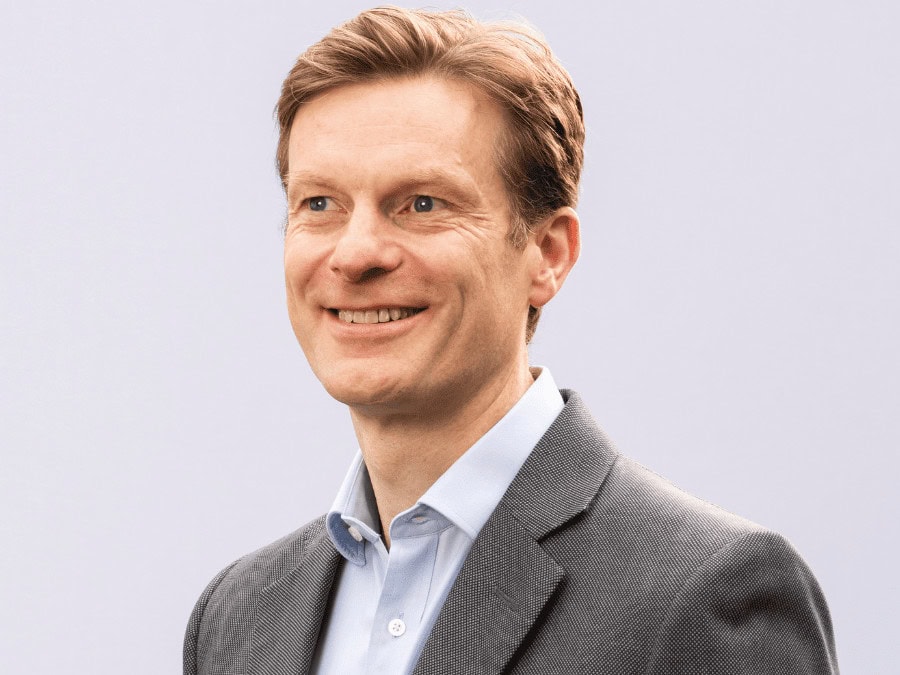
Global Drinks Intel: You’ve been in your current post since July. What’s the history of your relationship with scotch whisky?
Caspar MacRae, The Glenmorangie Co CEO: It goes back about 20 years. I started as a brand ambassador for scotch and loved talking about the craftsmanship and the quality, telling stories of the heritage and the people behind the brands. Moving on from being an advocate for single malt, I became fascinated with the marketing side as well, so, I did my marketing qualifications and then went on to do an MBA.
It’s been an ongoing curiosity to be able to influence the brands and the organisations that I’ve found myself moving up in, to where I am today.
GDI: Your career includes time with Edrington and William Grant & Sons, prior to joining Moët Hennessy in late 2018. How does working for a category specialist compare to working for a larger group?
CM: Every organisation has different dynamics and system strengths. What’s exciting about Moët Hennessy is that we operate as independent companies within a wider network. I have a high degree of autonomy to drive the business for Glenmorangie and Ardbeg and I’m the group’s senior representative here in Scotland. I do both of these within the wider Moët Hennessy sales and distribution network.
I enjoy the duality of being able to lead a Scottish company alongside the multicultural aspect of the international business.
GDI: What are the main markets for Ardbeg and Glenmorangie?
CM: It’s very roughly driven one-third by the Americas, one-third by Europe & Africa and one-third by Asia. It’s fairly well balanced.
In Europe, our lead markets are the UK and Germany, although France is also very important and Central & Eastern Europe continue to grow. The US is our leading market in terms of volume and value, but we’re really excited about the growth and development of emerging markets in Asia. Japan, Taiwan, South Korea and India are really important both for today, but also for their longer-term potential.
We’ve got very good growing markets in Latin America and Africa and we’re also benefiting from the return to travel. The global travel retail channel is extremely important for us as well.
GDI: What’s Glenmorangie Co’s share of voice within Moët Hennessy?
CM: I’d be doing the company a disservice if I ever thought we had enough share of voice within Moët Hennessy! I’ll always fight for more because I enormously believe in the potential of the single malt category, Glenmorangie and Ardbeg in particular – Glenmorangie is only just starting to touch the sides of its opportunity, while Ardbeg is a great cult proposition.
GDI: How have you seen the single malt segment evolve over the last 20 years?
CM: We’re definitely in one of the most interesting periods of my experience. We have to recognise the difference between long-term, enduring trends and shorter-term, economic situations.
The consumer’s behaviour in the last ten to 15 years has evolved significantly. Consumers today are much less brand- and category-loyal: They’re much more interested in exploring and discovering new tastes. They’re also less reliant on formal learning and are more driven by Instagram or TikTok. They learn through social channels rather than through awards or magazines.
Finally, consumers are much more confident to experiment than they used to be – they’re less afraid of making what’s perceived as the wrong choice in social settings, whether in terms of brands or the way they drink it.
There are some consumer motivations that have remained very similar over the two decades, and I think they’ll endure. In premium spirits, people still use brands for social signalling, whether that’s to display success or discernment and knowledge.
Despite short-term trends, consumers will still desire to premiumise in the longer term – it’s an inherent consumer motivation that people always want to improve their drinking experience. The trend to drink less but drink better suits single malt very well.
GDI: We’re seeing a very different approach to alcohol from younger LDA consumers. How are Ardbeg and Glenmorangie approaching this?
CM: That’s fundamental to our strategy. It still starts with making the best whiskies in the world – It’s a lot easier to have success if you’re underpinned by quality fundamentals.
We believe that single malt should be open and welcoming to all. That’s not necessarily how the category has traditionally been seen by consumers – they’ve seen it as perhaps too formal and serious and rule-bound. To appeal to a newer generation, we want to be more forward-looking. We’re doing that in our communications, which are designed to appeal to broad audiences and bring people into the category in a way that’s interesting to them.
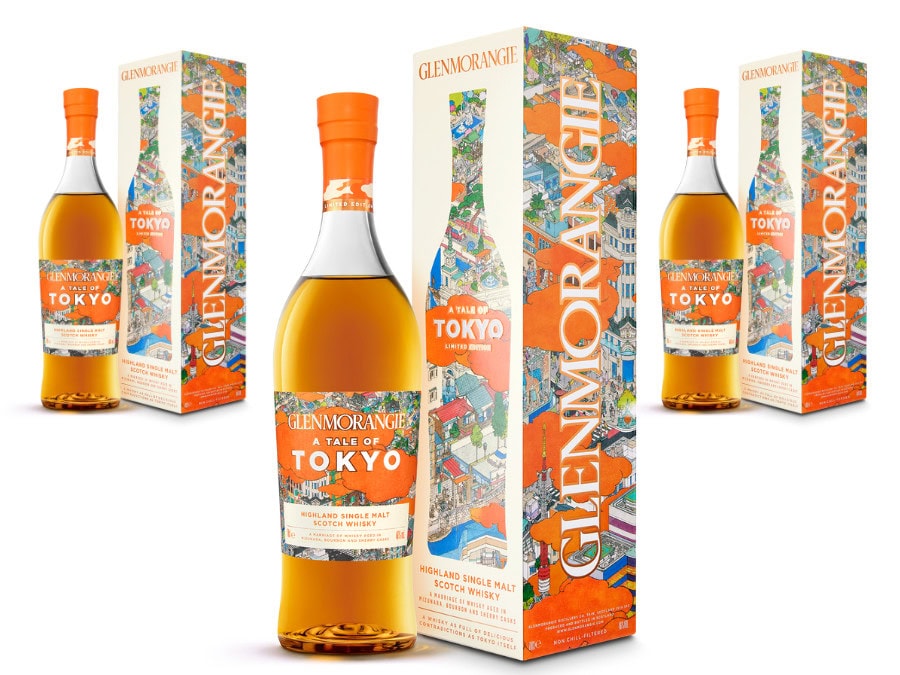
Secondly, we’ve really got to focus on innovation. In September, we launched ‘A Tale of Tokyo’, the fourth in Glenmorangie’s ‘Tales of’ series. It’s highly visual with great packaging, which is a wonderful way to capture people’s attention, it’s also a storied whisky that uses Japanese oak casks.
The new generation of consumers has a desire to consume luxury, and that plays very well in to single malt and particularly us – we have excellent higher-end prestige projects, whether that’s Glenmorangie Grand Vintage or Ardbeg Rollercoaster, which is an extraordinary piece of history for EUR100,000 (US$107,000) per pair.
Finally, you’ll have heard from lots of people that consumers are more interested in experiences than ever before – that idea of wanting to immerse themselves in a brand that they admire or covet. Two years ago, we refurbished Glenmorangie House, turning it into a fully immersive brand experience. And just last year, we acquired the Islay Hotel, which we think can be a great place to immerse consumers in the experience of what it means to be an Ardbeg brand fan.
GDI: What kinds of innovation won’t you do?
CM: I don’t know that there’s a limit. We must always be very careful not to confuse or mislead the consumer. We’re really respectful of the guidelines laid down by the Scotch Whisky Association – they’re what underpins the category’s long-term success. One thing that consumers know about single malt is that it’s a category that has a lot of quality criteria baked into its rules.
Having said that, the mantra for Glenmorangie is to create the most delicious experiences in the world. I don’t think they necessarily have to be limited to single malt scotch. They may be in partnerships, or in different types of spirits. We remain open to all of those in the future.
GDI: Would a premix of sorts from Glenmorangie appeal?
CM: Absolutely. Why not? The idea for pre-mix or pre-batched cocktails has been around for a while. We’d be really open to that, but if we’re going to do it, we’d want to bring something unique to the category. That would be my criteria.
GDI: Does Glenmorangie have a case to answer for its prolific rate of new releases?
CM: It’s a fair challenge! We’re respectful of the irrepressible creativity and desire of [director of whisky creation] Doctor Bill Lumsden and [master blender] Gillian Macdonald to try new things. Besides, that does meet an important consumer need. One of the things we know from speaking to our consumers is that they’re interested in both the novelty of trying new things as well as the discovery of new ways of doing things. That’s something we want to continue to serve.
There will always be periods in our history where we have a higher or lower frequency of limited-edition releases – some of that is driven by our stock model and what’s ready to be released. We will always try to release a product when it’s at its optimal in terms of maturation and the perfect in terms of flavour.
GDI: How do you see 2024 shaping up for Glenmorangie Co?
CM: I need to be a bit circumspect here; we never comment on financials or sales forecasts. We’ve had very strong growth over the last five years and one of the key considerations of that growth is we’ve driven value ahead of volume, both through price increases and mix as well as the markets that we’re growing in. That’s allowed us to increase our investments behind the two brands, both in infrastructure and marketing. Over the last five years, we’ve built really strong fundamentals that will allow us to grow the brands in 2024.
I’m excited about the opportunity in emerging markets, especially in Asia Pacific, as well as Africa, the Middle East and Latin America. I’m excited about the opportunity for continued success in our direct-to-consumer sales, through ardbeg.com and glenmorangie.com in the US and UK. I’m also really excited about growing our luxury and prestige offerings.
We recognise that we’ll continue to see some pressures on consumer’s discretionary spending. We’ll be looking at ways we can adjust to meet that challenge, particularly in some European markets and the US.
GDI: You’re almost stuck with two brands at the premium-plus level.
CM: We have to lean into the strength of our portfolio. One of the great things about single malt is we distil the same spirit at year zero. then we mature that spirit and have multiple opportunities to realise it in the market. For us, that means products from perhaps EUR30 all the way up to EUR30,000 a bottle.
In the year ahead, we need to look carefully at how we manage our portfolio to make sure we’re best presenting to the consumer and customer needs in the market.
GDI: How annoying do you find it when consumers pronounce ‘Glenmorangie’ wrong?
I’m very happy for them to pronounce it however they like, as long as they don’t pronounce it as a different Glen altogether.
This article is available to Global Drinks Intel members only.
Click below for details on how to join the Global Drinks Intel community.
Already a member?
Log in here to read the article in full.
If you work for any of the following corporate subscribers to Global Drinks Intel, head here to activate your access.
- AB InBev
- Bacardi
- Campari Group
- Diageo
- Moët Hennessy
- Pernod Ricard
- Proximo Spirits
- Suntory Global Spirits
- William Grant & Sons