
- The successful aperitif & spritz category is becoming more sophisticated, although younger consumers are seeking out more accessible flavours
- Key foundations for success include an understanding of local trends, a portfolio approach and a focus on the visual appeal of serves
- Aperitifs and spritzes are capitalising on consumers’ desire for lighter and more sessionable drinks, with lower-ABV levels – or no alcohol at all
- RTDs are another key growth area, opening up new consumption occasions, such as at-home entertaining and festivals
- The success of the category has made it very competitive, but brand owners are optimistic that growth will continue
In the Northern Hemisphere, aperitifs and spritzes are gearing up for another bumper summer, with new flavours, no- & low-alcohol extensions and RTD releases set to drive renewed growth.
Against a troubled backdrop for beverage alcohol, the aperitivo occasion – and its near-ubiquitous spritz serve – offer a beacon of hope, with consumers continuing to embrace earlier, lower-energy and more casual occasions and the drinks that go with them: refreshing, photogenic and easy to create.
But change is in the air. According to Luxardo export manager Matteo Luxardo, 2026 is “the year of the spritz 2.0” as the serve evolves from its classic origins (bitter orange plus prosecco and soda) to more elaborate combinations involving amari, vermouths, liqueurs, citrus cordials and botanical aperitifs, with saline or acid adjustments, and umami notes achieved with olive brine or herbal modifiers.
At the same time, however, there is an apparently contradictory appetite for simplicity. “Younger LDA consumers are actively seeking novelty and discovery,” says Luxardo, “but they prefer flavours that feel accessible rather than challenging.
“Instead of embracing intensely bitter, amaro-forward profiles, they gravitate towards bright citrus such as lemon, blood orange and grapefruit; gentle florals like elderflower, rose and hibiscus; and juicy fruit notes including peach, berry and tropical fruits. This reflects a desire for complexity without confrontation. They want drinks that feel elevated and interesting, but still easy to enjoy from the first sip.”
New spins on the spritz
A similar dynamic is reported at Rossi d’Asiago Distillers. “The spritz serve today has expanded as consumers tend to experiment more and are willing to try different flavours,” says international marketing manager Cinzia Tosato. “Fruity and citrusy notes are flying, with limoncello spritz leading the way as one of the biggest trends in the market when it comes to spritz and aperitivo, thanks to its bright appearance, zesty taste and flavourful profile.”
Tosato adds that the limoncello spritz has become the “cornerstone” of the company’s strategy for Rossi Limoncello, with the aperitivo occasion also central to its work with Kranebet Italian Botanical Gin via the ‘KranebeTonic’ serve. In a more experimental vein, the on-premise is being targeted with new flavour combinations using Volare liqueurs, such as the lychee or passionfruit spritz.
Stock Spirits Group has noticed growing interest in “more aromatic and layered profiles”, such as elderflower, mint and lavender, according to CMO Anne Martin, who describes the latter as “emerging as a rising star for the complexity and colour it brings to the glass”.
She adds: “There’s a meaningful shift more broadly towards natural flavours rooted in Mediterranean ingredients and traditions; thinking that directly inspired our Limoncè innovation last year.” (Stock Spirits’ 14.8% ABV Aperitivo designed specifically for the spritz occasion launched in France, Germany, Poland, Italy, Czechia, the Balkans and Slovakia last March.)
Martin believes there’s a geographic twist to these trends, however. “In Southern Europe,” she says, “the spritz remains closely tied to established aperitivo culture, while markets like the UK and Northern Europe tend to see more experimentation with flavours, serves and occasions.
“The common thread is consistent: consumers everywhere are looking for drinks that combine great flavour, sociability and a strong visual presence.”
Portfolio approach
This increasing diversity necessitates a portfolio approach to find success. Campari Group focuses strongly on category colossus Aperol, but its aperitivo stable also includes Campari itself, plus Cynar, Sarti Rosa and Crodino.
“The spritz ritual is becoming increasingly year-round, with consumers drawn to more experiential drinking moments where versatility, refreshment and storytelling play a central role,” says Campari Group’s ‘house of aperitifs’ MD, Andrea Neri.
Alongside flavour, aesthetic appeal also counts. “Spritzes are highly visual drinks, and that matters,” says Luxardo. “Platforms like TikTok and Instagram reward light, pastel or vibrant colours, effervescence [demonstrated by] visible bubbles, elegant glassware, fresh garnishes – like citrus wheels, herbs and edible flowers – and aspirational lifestyle cues, such as terraces, sunsets and aperitivo moments.
“Flavour trends increasingly align with this visual language.”
Beyond flavour and visual appeal, product innovation in the aperitivo/spritz space also encompasses ABV and format. “Wine-based aperitifs and vermouth-style profiles are benefitting from the broader shift towards lighter, more sessionable consumption,” says Marie Brizard Wine & Spirits (MBWS) international brand director Caroline Alzieu.
“The no- & low-alcohol segment is also growing as consumers seek variety in social drinking occasions. We also adapt to specific market needs by offering selected classics in lower-ABV versions, such as Triple Sec and Blue Curaçao at 18%.”
It’s a view echoed by De Kuyper Royal Distillers. “Younger LDA consumers, particularly Millennials and Gen Z, are reducing their alcohol intake while maintaining social participation,” says a company spokesperson. “This highlights the necessity for non-alcoholic products.
“With the broad offering already in non-alc beers, and with the increasing popularity of non-alc cocktails, if spritzes want to remain relevant, they also need to come with their non-alcoholic equivalent.”
‘High potential’ of non-alc
Brand owners are answering that call. Henkell Freixenet’s head of communications, Vanessa Lehmann, sees “high potential” in non-alcoholic aperitifs, including the company’s Mionetto Aperitivo Alcohol Free and just-launched Mionetto Ready-to-Serve Alcohol Free, as well as the incoming Freixenet Solare alcohol-free variant.
“While [Gen Z consumers] are not abandoning alcohol,” says Lehmann, “they’re reshaping drinking culture in ways that make alcohol-free options more relevant, more acceptable and more expected than ever before.”
Bottega MD Sandro Bottega needs no convincing of the importance of no-alcohol, having launched Bottega 0 Rosé and Bottega 0 White four years ago. “Our portfolio also includes Elixir 0 Bottega, a non-alcoholic ‘amaro’, and Limoncino 0.0,” he says. “We’re also studying an alcohol-free version of our Lemon Spritz.”
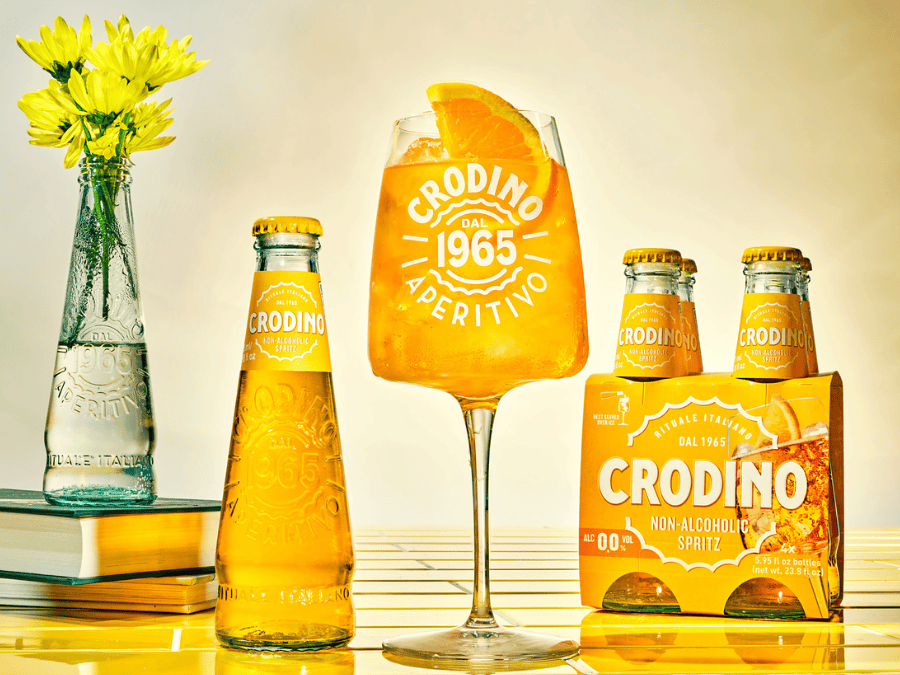
For Campari Group, non-alcoholic aperitifs such as Crodino (above) have become “a fully integrated part of the category, offering the same ritual, quality and flavour credentials as alcoholic serves”, says Neri.
“Consumers are no longer seeking substitutes, but genuinely satisfying aperitif experiences, whether alcoholic or alcohol-free.”
RTDs as a recruitment tool
RTDs are another significant growth area, with different formats targeting different consumption occasions.
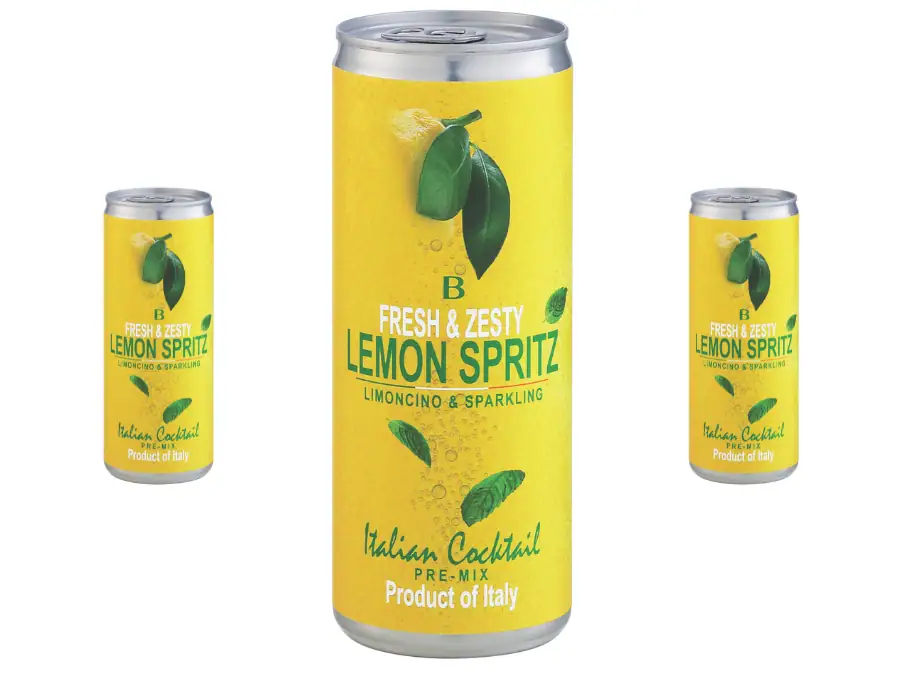
In 2023, for example, Bottega introduced its premixed Lemon Spritz, available in 20cl bottles, 25cl cans (below) and 75cl bottles, and Sandro Bottega says it is a “best seller” in the airline channel. Likewise, Lehmann says Henkell Freixenet’s new Mionetto Aperitivo RTS – available in a 20cl bottle, with and without alcohol – is a response to consumers gravitating to smaller formats because of convenience.
Campari’s Neri, meanwhile, points out that ready-to-drink products are helping to expand consumption occasions. “RTD spritzes play a highly complementary role in expanding the aperitif universe by making the spritz ritual even more accessible,” he says, highlighting the company’s Aperol RTD and, in the on-premise, Aperol on Tap.
“They bring the experience into new occasions such as at-home socialising, outdoor moments, festivals and informal gatherings,” Neri adds. “From an occasion perspective, RTDs target spontaneous and convenience-led moments, recruiting new consumers and expanding usage occasions, rather than replacing the classic spritz serve.”
Challenges and opportunities
The aperitif and spritz scene is dynamic and fast-paced, but – because of its success – also highly competitive. “The main challenges in the RTD and spritz market include increasing competition and market saturation as more brands enter the category,” says Alzieu of MBWS. “In markets such as the UK, where the spritz has become extremely popular as a summer drink, everyone is jumping on the trend, making it even harder to stand out.”
Other challenges highlighted by Alzieu include the impact on pricing and margins of the UK’s new duty regime for alcohol, potential consumer confusion in a cluttered marketplace and seasonality – aperitif and spritz consumption remain closely tied to summer sunshine, although Henkell Freixenet’s Lehmann points to a notable sales spike in December in the UK.
De Kuyper Royal Distillers also pinpoints the impact of economic pressure and health & wellness concerns on the on-premise, which remains a key channel for trial and sampling, as being areas of concern.
But most in the industry remain optimistic that aperitif/spritz consumption is still some way short of its likely peak. “There are still opportunities to further develop the aperitivo ritual in some countries,” says Stock Spirits’ Martin.
“In places where the tradition is less established, consumers may benefit from clearer guidance on how to enjoy the serve and the different styles available. Retailers are also increasingly introducing dedicated spritz sections on shelf, helping shoppers navigate the growing range of brands more easily.”
Henkell Freixenet’s Lehmann sees a “behavioural shift” in consumption as aperitifs and spritzes – and sparkling wine in general – transcend fixed occasions and become more embedded in everyday life. “The spritz not only represents an easy-going lifestyle,” she adds. “It’s simple to prepare and marks the transition from work to leisure, inviting people to relax, unwind and enjoy time together.”
Matteo Luxardo dismisses concerns about potential challenges such as competition and seasonality. “The spritz/aperitif category is not structurally weak – it’s structurally competitive,” he argues. “The brands that will win are those that offer clarity on a crowded shelf, balance bitterness with accessibility, engineer around duty intelligently, own specific occasions, deliver credible no/low options and expand beyond summer.
“The challenge is not demand – it’s differentiation, discipline and intelligent portfolio design.”