
- The UK drinks market is navigating aggressive taxation, record pub closures (366 closed their doors in 2025) and new environmental packaging fees
- Cost-savvy consumers are increasingly recreating premium bar experiences at home to save money without sacrificing quality
- In 2025, scotch exports declined by 4.3% in value and gin volumes continued to fall, but categories like tequila (+14% 2019-24) and no- & low-alcohol are thriving
- Brands are pivoting towards sustainable lightweight bottles and convenient single-serve cans
The beleaguered UK beverage alcohol market is being assailed on all sides. Aggressive taxation, new packaging regulations, rising operational costs and a looming nationwide deposit return scheme are nipping at the heels of a mature industry already struggling under the weight of a cost-of-living crisis that continues to drain the wallets of its prospective customers.
The drinking habits of those customers are changing too. Some health-conscious consumers are avoiding alcohol altogether; others are zebra striping between traditional full-strength alcohol and non-alcoholic alternatives. Many are drinking less but better, with pockets of premiumisation still on display.
Experiential alcohol tourism is also booming, with drinkers keen to spend big on meaningful, immersive experiences. William Grant & Sons-owned blended malt whisky Monkey Shoulder, for instance, recently partnered with London-based menswear brand Percival Soho to create an in-store vinyl listening bar where personal shopping appointments were welcomed with complimentary old fashioneds.
UK distilleries, such as single malt whisky maker Ardbeg, are moving towards deeper-immersion storytelling. In September last year, the Moët Hennessy-owned distiller opened Ardberg House, a boutique hotel just a few miles from its distillery on the Scottish island of Islay. More than a whisky-themed hotel, Ardbeg House offers a narrative-driven experience that recently saw it named ‘Best Place to Stay in the UK’ for 2026 by The Times.
The distillery’s DNA is woven through the hotel’s interior, with copper wall art made from retired stills and buttons labelled ‘press for smoke’, which activate hidden whisky experiences. Guests can take part in private distillery tours and a special ‘whisky hour’ ritual at the hotel’s bar each evening.
Rising costs and staying in
The mainstream on-premise continues to battle with high business rates, hikes in national insurance (a mandatory tax on earnings designed to fund state benefits) for employees and, most recently, a 3.66% hike in alcohol duty linked to the Retail Prices Index (RPI, a UK measure of inflation) that came into force in February. Last year, according to tax firm Ryan, an astonishing 366 pubs closed nationwide, and nearly 2,000 have shut their doors in the past five.
The cost-of-living squeeze is driving more of the country’s consumers to adopt a “big night in culture” rather than go out, according to port wine producer The Fladgate Partnership. “Consumers are choosing to recreate dining-out experiences and both formal and informal dinner parties at home,” says CEO Adrian Bridge.
“The customer has become savvier and knows how much a good bottle of Taylor’s Port is going to cost them in a supermarket or wine shop versus the same bottle in a casual or fine-dining setting,” he adds. “As the consumer remains thrifty with their spend on a Friday and Saturday night and might only be going out once or twice a month, this doesn’t mean they’re stopping their consumption of good-quality alcoholic drinks; they’re simply changing their environment to the home.”
Heavier packaging, steeper fees
Another bugbear for the drinks industry is the Extended Producer Responsibility (EPR) scheme, a policy that makes producers accountable for the full net cost of managing the packaging they introduce to the UK market once it reaches the end of its life.
Critics claim EPR effectively penalises glass packaging due to its weight. The scheme began impacting businesses in late 2025, and further changes this year will see modulated fees based on a traffic-light system, with problematic packaging – such as prestige glass or bottles with non-washable adhesives and foil sleeves – facing higher fees.
Fladgate’s Bridge admits the EPR scheme is a “key issue” for his company to address. “Taylor’s Port must lead by example,” he says. “We have a major initiative to lightweight bottles due for unveiling during 2026.”
Meanwhile, Lyme Bay Winery MD Wolf Sieg-Hogg has a more upbeat take on EPR, arguing it is “driving innovation and change for the better”, as the liquid inside must now “shout quality” without relying on a heavy bottle to convey a premium message.
All the rage: single serves
As well as lighter glass bottles, aluminium cans and alternative packaging formats are gaining ground, with single-serve packaging proving particularly attractive among consumers seeking affordability and moderation, according to North South Wines, the UK distributor of Italian wine producer La Gioiosa, which offers 20cl bottles and cans.
“Single-serve formats are one of the key trends this year,” says senior customer marketing manager Rachel Osborne. “Cans are outperforming mini bottles within the small‑format sparkling category, driven by convenience, portability and occasions where glass is restricted, such as events, picnics and festivals.”
Scotch faces multiple challenges
Scotch whisky continues to face numerous headwinds including: rising costs and domestic taxation, falling exports (-4.3% in value in 2025), 15% tariffs on the key US market (possibly rising to 35% for malts in July when a five-year suspension of a 25% single malt tariff caused by the Boeing–Airbus dispute elapses), and a post-Covid-19 pandemic inventory glut.
According to a recent report from restructuring firm BTG, one in five Scottish distilleries is in financial distress, with a further 217 English, Welsh and Northern Irish distilleries reporting difficulties.
These challenging trading conditions have prompted major scotch players to hit the pause button. Last year, Diageo closed its Speyside distillery Teaninich “temporarily”, while Brown-Forman “paused” production at Glenglassaugh Distillery, as part of the US firm’s plan to recalibrate stock levels in response to a global slump in demand.
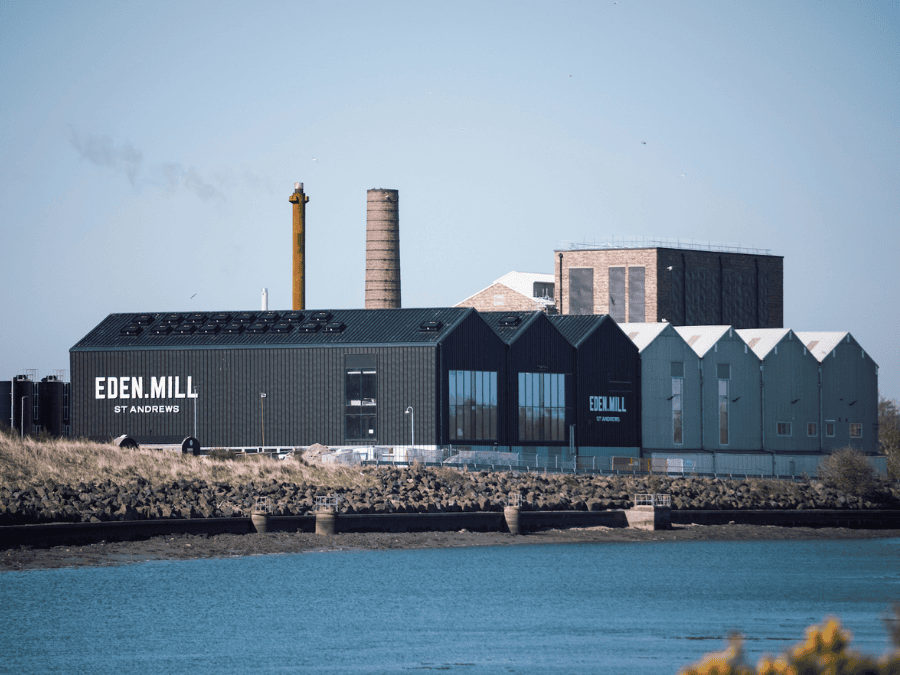
Smaller distilleries have been hit even harder, with Eden Mill (below) and Perth independent small-batch bottler Chapter 7 both going bust last year (although St Andrews-based Eden Mill was later rescued by a private equity firm).
Times may be tough, but whisky’s luxury players remain resilient and growth-oriented. In March, Edrington opened a branded outlet for The Macallan at London’s Harrods department store, showcasing some of the Speyside distillery’s rarest collectable expressions. In the same month, The Dalmore unveiled personalised, immersive tours at its distillery.
Gin: down but not out
In 2024, according to IWSR, gin volumes in the UK fell by 8%. Although 2025 data is not yet out, it is clear that last year was another tough one for the category. The Spirit of Manchester Distillery was a notable victim of the category’s decline, shuttering its city centre distillery and bar last August, while Pernod Ricard closed the visitor centre at its Beefeater Distillery in London three months later.
The Whisky Exchange’s commercial buying director, Dawn Davies, argues that gin is experiencing a cyclical dip that many other categories have suffered at various points. “As with all industries, trends in the drinks sector come and go,” she says. “For the time being, gin has had its day, and other categories are coming to the fore, but this will eventually swing back.”
Unsurprisingly, international trade body The Gin Guild takes a more bullish view. In its latest annual report, the organisation points to a modest 1% volume upturn in exports in the first half of last year, and notes that, while the UK market is challenged, consumption is still 40% above pre-boom levels and gin remains the nation’s second most popular spirit after vodka.
The Gin Guild notes a consumer move back to juniper-based gin and classic serves such as gin-and-tonic and the dry martini. It says flavoured gin, once the category’s growth engine, continues to lose ground.
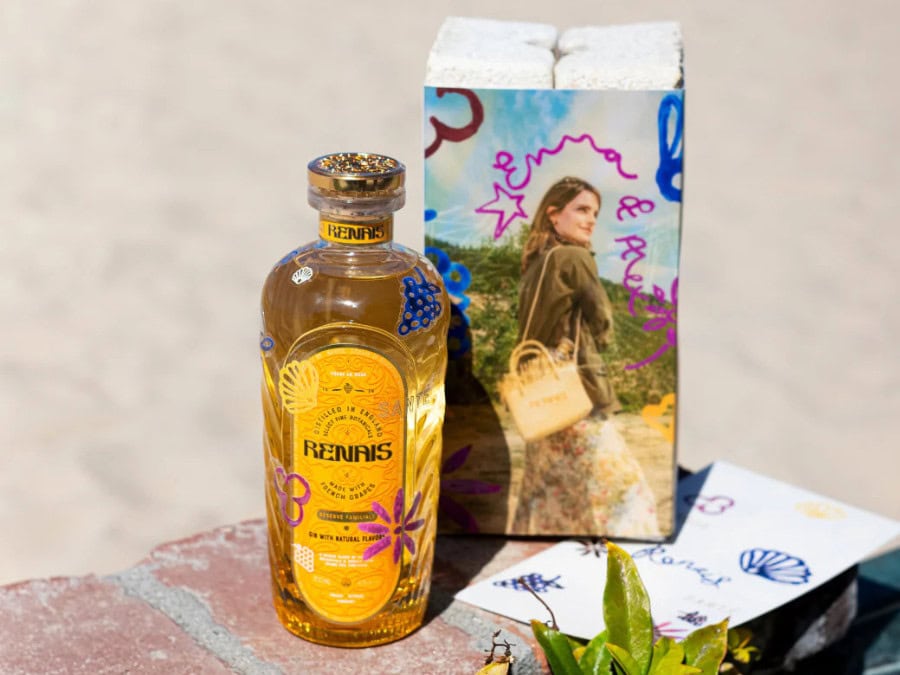
While flavoured variants are floundering, celebrity brands still have mileage. Renais Gin (below), co-founded by Harry Potter star Emma Watson and her brother, Alex, in 2024, is now available in 11 countries and won several high-profile on- and off-premise listings last year, including 85 Fuller’s pubs, the restaurant chain Evolv Group, online retailer Ocado and Waitrose supermarket.
Tequila gains ground
While gin stagnates in the UK, tequila is undoubtedly the country’s spirit of the moment, with a marked consumer shift to 100% agave and additive-free styles. Tequila has successfully moved from being a shot of late-night regret to a sophisticated sipping category that’s aggressively stealing market share from gin and vodka. Between 2019 and 2024, according to IWSR, the category’s UK sales grew by 14%.
“We’ve taken the same approach to tequila and mezcal as we have to our other aged spirits,” says The Whisky Exchange’s Davies, noting how the spirit has come of age as a serious category. “We have flavour camps to guide consumers online. We hold a tequila and mezcal show both for the on-trade and consumers to show customers these are serious spirits in the same way that we do with rum, whisky and cognac.”
The surging popularity of the margarita – ranked the most popular cocktail in the UK’s ’50 best cocktail bars’ by Class Magazine – and high-profile celebrity brands such Dwayne Johnson’s Teremana and George Clooney’s Casamigos have undoubtedly helped build tequila’s status among Brits.
Later this year, additive-free tequila Casa Malka, founded by health & fitness entrepreneur Malka Roth and her ex-husband Jay Winer, a US entrepreneur & artist, will join their ranks when it launches in the UK.
No- & low-alcohol: all-year opportunity
The size and importance of the UK no- & low-alcohol market – valued at GBP413m (US$560.2m) by Mintel last year – continues to grow.
A YouGov study published in January revealed that nearly a quarter (24%) of UK alcohol drinkers who’d tried no/low alternatives said they had helped to reduce their alcohol consumption, while the British Beer & Pub Association says around 86% of pubs now serve a no/low beer option.
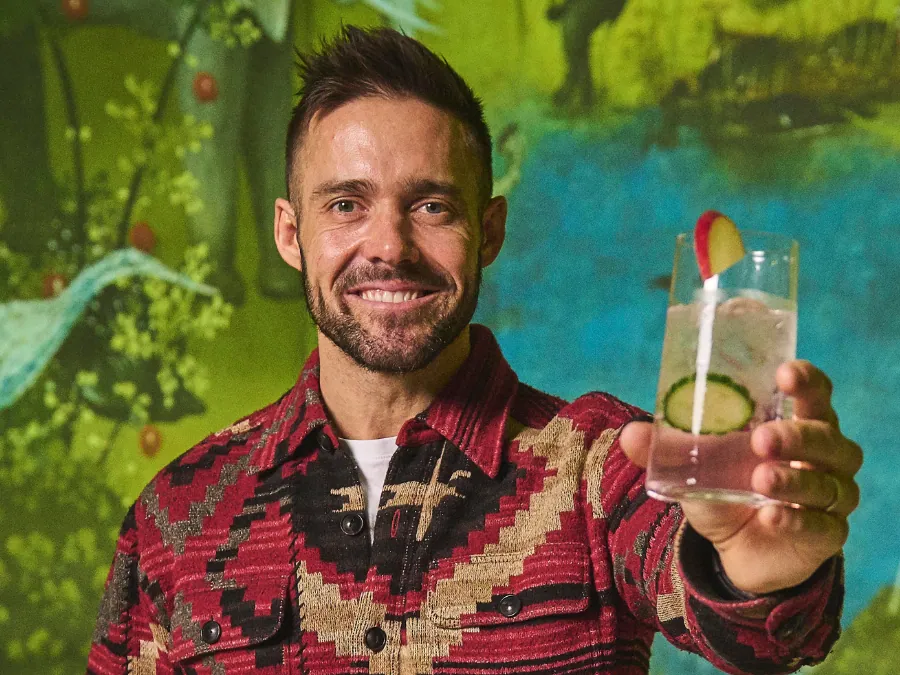
In this competitive and fragmented sector, non-alcoholic spirit brand CleanCo is one of the category’s biggest independent players. Founded in 2019 by reality TV personality Spencer Matthews (above), CleanCo offers low-calorie, alcohol-free alternatives to gin, rum, tequila and whisk(e)y.
The brand is already has listings in around 1,200 UK venues and, in March, signed Cask Liquid Marketing as its exclusive on-premise partner, with the aim of growing its footprint yet further. The focus will be on increasing CleanCo’s presence behind the bar in premium hospitality groups, cocktail bars, hotels, members’ clubs and leading pub operators.
For long-standing exporters to the UK, no/low has become a much higher priority.
“No/low is now a consolidated, year‑round consumer habit in the UK, and our strategy reflects this shift,” says Sandro Bottega, the president of Italian wine & spirits group Bottega Spa. “Our Bottega Sparkling Zero [wine] and Limoncino 0.0 [lemon liqueur] continue to perform extremely well in the on‑trade thanks to their versatility.”
Not everybody holds the no/low category in high regard, however. “We’re very picky about what no/lows we take on,” says The Whisky Exchange’s Davies, who believes the category needs more regulation. “Many are just water, potassium sorbate and essences, which for me isn’t value for money for the customer. We’re often looking for products that aren’t trying to replicate alcohol but are creating a great drink.”
“High-quality liquids” are an absolute must for any serious category, says Damian McKinney, the founder & CEO of UK-based non-alcoholic drinks start-up DioniLife. He says the company’s La Borosa brand, a non-alcoholic blue agave spirit that entered the company’s portfolio last year, aims to replicate the “premium experience of full-strength tequila”.
The growth of the no/low and tequila categories are welcome bright spots in a market characterised by shifting consumer habits and falling volumes – IWSR expects the UK’s total beverage alcohol market will see a volume CAGR of -1% through to 2028.
While regulatory pressure and a heavy tax burden act as long-term dampeners, the industry continues to demonstrate remarkable resilience. By adapting to evolving consumer habits and pursuing the distinct pockets of premiumisation that remain, brand owners are proving that even in a climate of moderation, there is still an appetite for quality.