


Beer is continuing to reap the rewards of consumers leaning into premium-and-above brands, despite volume declines in key markets – but the impact of the Middle East crisis is casting a shadow over the category’s future performance.
According to preliminary IWSR data for 2025, total beer volumes (in the world’s leading 21 markets/T21) fell by 1% last year, but value* grew slightly, despite a reduction in the number of serves. Volume declines were driven by the large markets of the US and Brazil, while leading growth destinations included South Africa and India – and stout recorded solid gains in its core markets.
“The investment by global brewers in premium-plus propositions is yielding dividends across both developed markets such as the UK, France and Canada, and developing markets including South Africa, India and countries in Latin America,” reports IWSR‘s senior beer insights manager, Roisin Vulcheva. “Beer continues to benefit from consumer willingness to upgrade to more premium offerings – particularly no-alcohol beer, which has seen strong growth in almost all of the T21 markets, and which skews premium-plus.”
Volumes of no-alcohol beer last year increased by 8%, versus a 1% decline for the overall category. 29% of no-alcohol beer volumes were in the premium-plus price bands in 2025 (T21), up from 20% in 2019.
* Value calculations were made using a 2024 fixed exchange rate to neutralise US dollar volatility.
Diversification and innovation
Companies are employing a number of strategies to respond to shifting dynamics in the beer category, including diversification and innovation. This can mean geographical expansion – for instance, Asahi moving into Africa, and Tilray’s acquisition of BrewDog’s UK/Ireland, US and Australia operations – or strategic divestment, such as Diageo’s sale of its Guinness Ghana Breweries stake to Castel Group and Heineken’s divestment of its DRC brewing operations (selling to local owners while retaining brand licensing), and its winding down of large-scale production in Singapore.
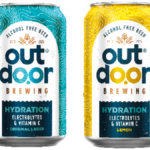
Meanwhile, breweries are launching new products designed to tap into current consumer trends, via flavoured beer variants, innovation in the no-alcohol space (including flavours and blending with soft drinks, especially in the UK), as well as no-sugar and no-/low-calorie and functional offerings, such as Heineken’s Outdoor Brewing, to address health & wellness concerns. Sweeter flavoured products also aim to exploit RTD-adjacent trends.
According to IWSR’s Radius innovation tracker, fruit-forward flavours are at the fore, from orchard fruits to peach, apple and pear, while cherry and berry variants are building clear cross-category momentum, appearing not only in beer, but also in spirits and RTDs.
“The fragile state of the market has prompted more restructuring and further diversification beyond beer during the last year, as brewers have looked to spread their bets,” explains Vulcheva. “Brand owners are redefining their core with a renewed focus on fewer, stronger brands and smarter distribution, with many closing breweries, aiming for more depth over breadth.”
Growth trends in Asia
Asia Pacific is the largest beer region in volume terms, accounting for around a third of beer volumes consumed globally each year.
In China, packaging is a vital tool in helping to differentiate premium from standard brand lines, helping these products to stand out in the country’s fast-growing modern retail channel. Innovations such as the one-litre can and the full-open top have been especially well-received.
According to IWSR’s Bevtrac consumer research, Gen Z consumers in China are increasingly migrating from spirits to beer, with more than 80% of Gen Z drinkers reporting to consume beer.
In India, brewers’ strategic moves to sponsor top-level global athletics have helped them to gain attention and exposure for their brands in a country noted for its passionate sports fans – boosting the performances of premium brands as a result.
“The expansion of premium beer portfolios is an important component for the success of global brewers in China and India, but challenges persist,” explains Vulcheva. “Growth in the premium price band has come at a cost to key brand owners in terms of increased marketing spend.
“Expected price increases as a result of the Iran war will put further pressure on brand owners and could dampen consumer demand.”
The Middle East crisis
The prolonged crisis in the Middle East poses multiple challenges for global brewers, both on the supply side in terms of trade disruption, and on the demand side where higher prices are likely to exacerbate existing structural consumption declines.
However, beer’s comparatively shorter supply chains and often highly localised production and distribution networks may help cushion the category from the full impact of global trade disruption, with some markets such as India more impacted than others.
Liquefied natural gas shortages – the result of shipping disruptions in the Strait of Hormuz – have pushed up glass production costs, and the prices of fertiliser, aluminium and CO2 have also risen, meaning that, even with a near-term resolution, supply-side pressures are likely to persist throughout 2026 and potentially into 2027.
Meanwhile, higher prices and weaker growth are likely to weigh on beer demand, although demand elasticity remains highly market-specific, and a sharp volume decline is unlikely.
Demand is expected to remain broadly stable in emerging markets, although increased prices could dampen that demand. Higher prices are likely to accelerate structural declines in developed markets. The impact will be more pronounced in the on-premise channel, where higher costs amplify price rises for the end consumer.
“The breadth, duration and interaction of supply-side shocks with fragile consumer sentiment differentiates this event from prior disruptions, such as Covid-19 and the war in Ukraine,” says IWSR‘s senior econometrician, Martin Belchev. “The industry faces a prolonged period of elevated input costs, constrained capacity and increasingly value-conscious consumers. The upside for beer is that it’s a bit more insulated due to local production, meaning the product doesn’t face the same difficulties as, say, wine or spirits in navigating global shipping volatility.”
Vulcheva adds: “The challenge will be that producers are confronting this shock following several years of cost absorption during the pandemic and subsequent price-driven volume pressure (the 2022-24 inflation cycle), meaning that the ability to absorb costs has already been stretched.
“One potential bright spot could be playing into the affordable treat occasion, which has boosted premium beer in previous years as consumers down-trade from higher-priced drinks in other categories to the more affordable luxury of premium beer.”