- Volume contraction – A decline in Europe for sales of cava and prosecco will drive down overall sparkling wine volumes in global travel retail by a CAGR of -1% between 2026 and 2030
- Regional pressures – The US-Iran war and slower spending by Chinese travellers are also having a dampening short-term effect on sparkling sales in the channel
- Premium opportunities – Premium champagne, English sparkling wine and top-tier prosecco are faring much better than cheaper alternatives by focusing on high-end gifting exclusives, brand heritage and immersive airport activations
- Category momentum – The Americas and Africa are two regions that IWSR has highlighted for future growth potential for sparkling wine, especially champagne, in GTR
In recent years, sparkling wine has consistently outperformed its still counterpart in the global travel retail channel. The brand-driven nature of champagne, not to mention the overall category’s suitability for gifting, makes sparkling wine an ideal duty-free product for retailers.
On the other hand, with its plethora of styles, varietals, classifications and countries of origin, still wine is far broader, more fragmented and undoubtedly harder for channel operators to curate into a compelling, cohesive offer – especially within the restricted space environment of a typical airport store.
However, recent IWSR data suggest that, for the rest of the current decade, sparkling wine’s impressive growth in GTR is set to go into reverse, at least in volume terms.
“Sparkling wine in GTR is entering a period of value-led rather than volume growth,” says IWSR’s GTR senior insights manager, Charlotte Reid. “From 2025 to 2030, sparkling volume is forecast to contract at a -1% CAGR , while still wine will hold flat at 0% CAGR.”
A choice of futures in GTR
According to Reid, the sparkling wine category is being “pulled in two different directions”.
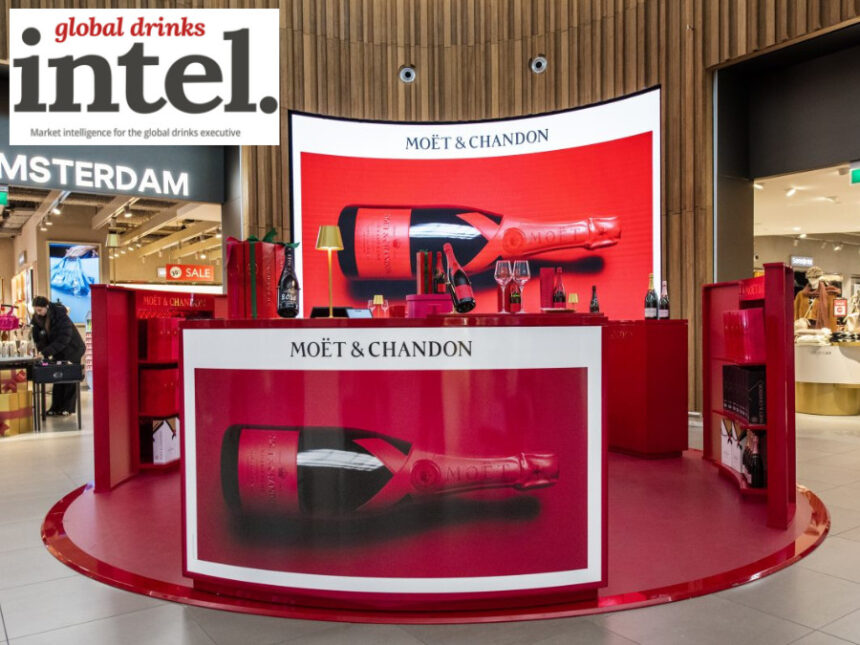
The more premium champagne segment is forecast to stand up comparatively well, even outperforming sales in its domestic market, Reid notes, with travellers drawn to champagne houses’ strong backing for in-store activations and gift-led launches.
The outlook for cheaper entry-level lines, however, is bleaker, with prosecco expected to shrink by a CAGR of -4% through to 2030. Spanish cava will fare even worse, with volumes predicted to plunge by a third over the same timeframe.
“This is a clear structural decline with shopper fatigue in entry-level categories,” Reid warns, noting that the decline is centred around price-conscious Europe, which accounts for 60% of volumes.
The slowdown of prosecco and cava is, she says, largely a European phenomenon, with the two sub-categories destined to decline over the next four years by CAGRs of -7% and -9%, respectively, in the region. Champagne is forecast to shrink more slowly, with a negative CAGR of only 2%.
The outbreak of the US–Israel war on Iran in February dealt a particular blow to the sparkling category. Home to Dubai Duty Free with its annual sales of US$2.4bn last year, the UAE was the joint third-largest sparkling wine market in GTR in 2025, alongside France after the UK and Germany, according to IWSR, boasting a 9% market share.
“The conflict had an immediate impact on travel retail business,” acknowledges Sandro Bottega, the MD of Bottega Spa, a leading producer of premium prosecco. “However, we are positive for the future.
“No changes are expected for Q3 2026, because this part of the year is the low season due to the heat. For Q4 2026, we hope for a sales recovery of up to 70%, while a full recovery is projected for Q1 2027.”
Americas and Africa
Casting an eye over the wider map, momentum for sparkling wine is to be found in the Americas and Africa and is predominantly champagne-led, according to Reid. Prosecco still has potential in the Americas, however, with a forecast CAGR through to 2030 of 1%.
Disappointingly, Asia, the growth region for so many beverage alcohol categories in the GTR channel over the first quarter of this century, will see sparkling volumes decline for the rest of the decade – a victim of lacklustre spending by Chinese travellers. Only non-alcoholic sparkling wine is predicted to show any growth.
Producers remain upbeat
IWSR’s predictions for sparkling wine make for depressing reading, but leading producers and brand owners strike a defiant note – even while recognising the channel’s current headwinds.
“Despite a challenging global trading environment, H1 2026 has reinforced the resilience of the premium champagne category,” says Champagne Lanson export director Emmanuel Gantet. “While economic uncertainty and evolving consumer behaviours influence purchasing decisions, we’ve seen travellers increasingly seeking authenticity, quality and meaningful experiences.”
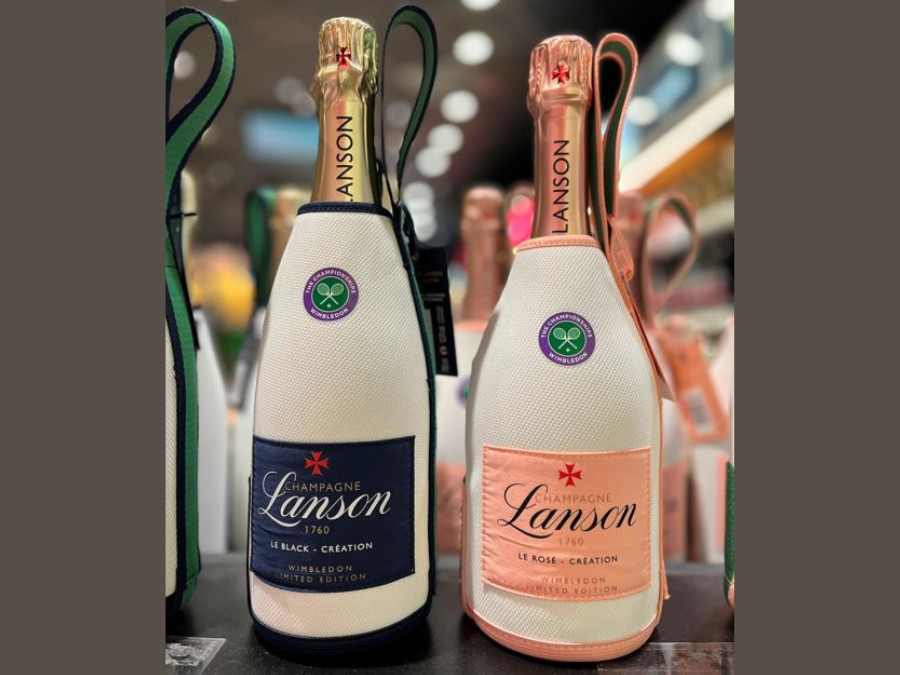
Gantet says Lanson’s GTR strategy leverages its 265 years of heritage and the house’s “signature elegant and fresh style”. Engaging activation and exclusive gifting options are important elements alongside Lanson’s continuing sponsorship of the Wimbledon tennis tournament, which next year reaches its 50-year milestone.
At the TFWA World Exhibition & Conference in Cannes last month, a key focus for the company was a bi-pack gift pack for Lanson Le Black Création (above) – the house’s signature non-vintage brut.
“Combining two bottles of our signature cuvée in a premium travel-friendly presentation responds perfectly to the growing demand for high-quality gifting solutions,” says Gantet. “We will also offer buyers an exclusive preview of our 2027 Wimbledon Limited Editions, developed to celebrate a truly exceptional milestone: 50 years of Champagne Lanson being poured at The Championships, Wimbledon.”
Premium route to growth
As noted, IWSR’s forecasts paint a challenging outlook for prosecco in GTR. The stakes are particularly high for Bottega, with the channel accounting for 27% of the company’s total volumes. Sandro Bottega admits trading in GTR is becoming tougher, but believes his company’s premiumisation strategy is well aligned with the channel’s evolving trading environment.
“The travel retail channel now requires impressive storytelling, exclusive products and real sustainability,” he insists. “This cultural evolution of the GTR consumer is benefiting brands that invest in quality, packaging and brand identity rather than competing primarily on price.”
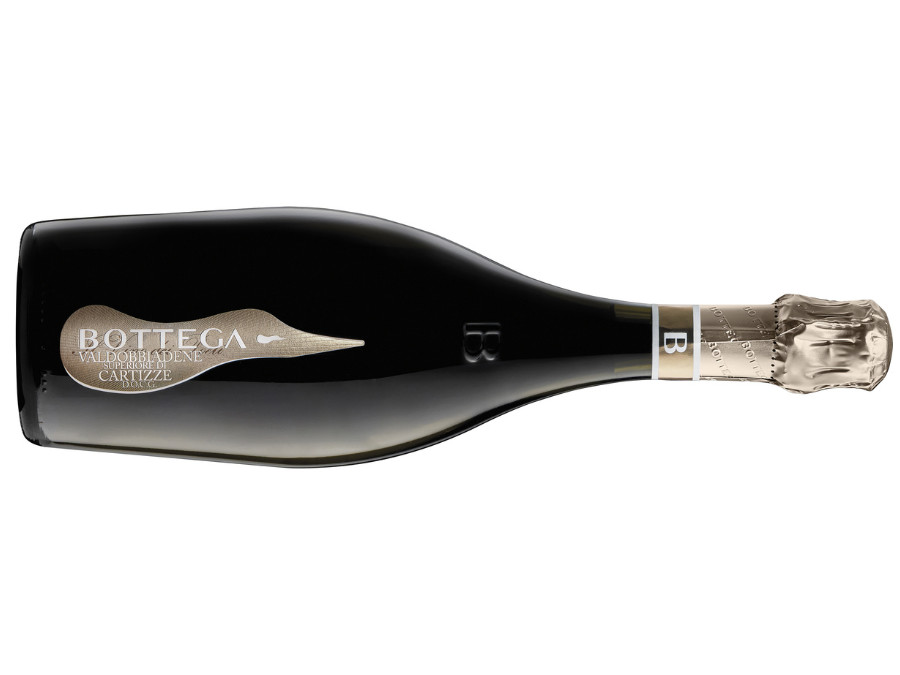
At TFWA Cannes, Bottega reinforced its commitment to driving premiumisation in the prosecco category with the launch of Cartizze Valdobbiadene Prosecco Superiore DOCG (below). “Cartizze represents the pinnacle of the Conegliano Valdobbiadene Prosecco Superiore appellation,” says Bottega.
“It is produced from grapes grown on the hill of the same name – an area spanning just 108 hectares, approximately 1km sq, between the hamlets of San Pietro di Barbozza, Santo Stefano and Saccol, in the municipality of Valdobbiadene.
“Unique soil and climate conditions make this wine truly distinctive within the Conegliano Valdobbiadene area.”
The alcohol-free opportunity
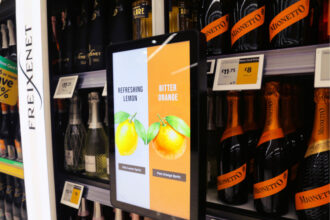
Meanwhile, Henkell Freixenet, the world’s largest sparkling wine group, tapped into the growing potential of the aperitivo spritz occasion at TFWA Cannes, focusing its presence on Mionetto Orange Spritz and Freixenet Solare.
Mionetto Orange Spritz is an RTD take on the classic bitter orange Italian aperitif, made with Mionetto Prosecco and available in both alcoholic and non-alcoholic versions. Freixenet Solare, meanwhile, is an 11%-ABV Mediterranean aperitif made with % natural flavours, including Spanish lemon and clementine, complemented by botanical notes of rosemary and thyme.
“They are highly relevant for today’s travellers, who are increasingly looking for convenient, premium and experience-driven products that fit social and casual moments,” says Henkell Freixenet’s head of sales for GTR, Ramón Olive.
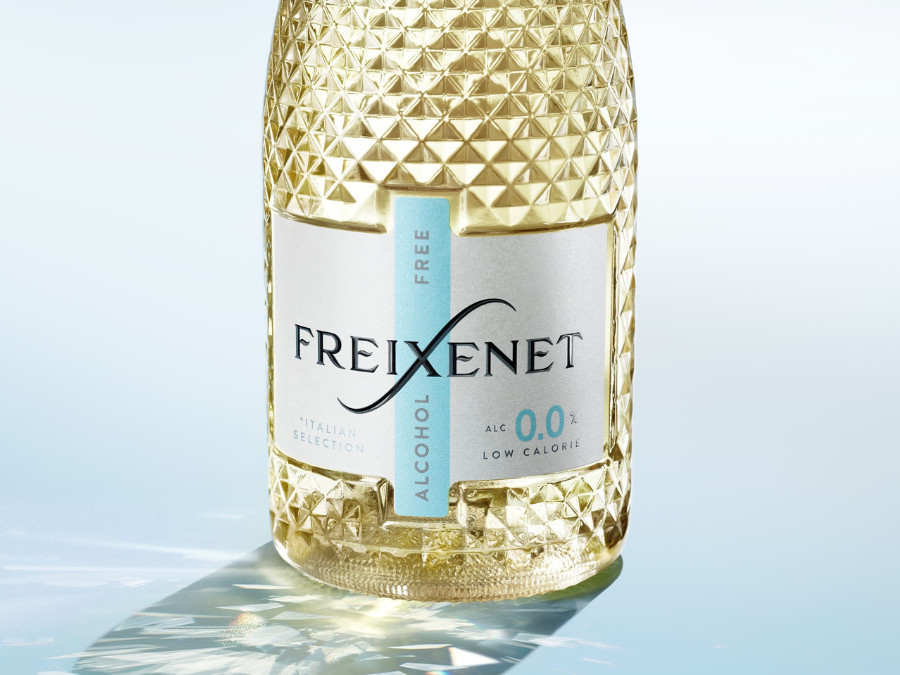
The company’s non-alcoholic sparkling wines have been performing particularly well in GTR, according to Olive, who maintains that Freixenet Diamond 0.0% (below), a super-premium wine launched earlier this year, is well positioned to lead the premiumisation of the category.
“While airport retail remains an important showcase for the brand, we see particularly strong opportunities for alcohol-free sparkling in hospitality-driven channels such as airport F&B outlets, airlines and cruise lines,” he explains.
“These environments are increasingly responding to consumer demand for premium non-alcoholic options and are looking to broaden their beverage offerings beyond traditional soft drinks.”
UK sparkling gains ground
While the outlook for lower-priced, entry-level non-champagne sparkling wines in GTR is becoming gloomier, IWSR expects English sparkling wine – still very much a niche subcategory – to deliver growth in the channel over the coming years.
Certainly, Nyetimber, one of the pioneers of the country’s sparkling wine industry, now sees travel retail as an important sales outlet. “Last April, we announced a partnership with British Airways, whereby our 1086 by Nyetimber wines became the first English prestige cuvées to be served on an airline,” reveals Nyetimber group sales director Adam Williams.
“As with all our GTR activity, this was as much a brand-building exercise as it was a sales one, as we were able to sample to first-class customers who might be open to converting from champagne to English sparkling wine.”
Now available in around 40 markets, Gusbourne gained its first in-flight listing with British Airways in 2018 and has a travel retail footprint that includes listings with Avolta-owned World Duty Free, Baltic ferry operators such as Tallink, Viking Lines and Color Line, and Japan Airlines.
In July, the producer launched an English sparkling bottled exclusively for British Airways Club World – Gusbourne Airbourne Reserve 2021, a pinot noir-dominant wine chosen for its performance at altitude – and announced its H1 2026 international and GTR sales had increased by 15% to GBP1m (US$1.3m). “We view GTR as an important channel in its own right, generating important levels of sales and revenue,” says head of exports & travel retail Duncan Brown.
The evidence that, despite changing market dynamics, sparkling wine producers continue to see GTR as a key revenue driver – both in the air and on the ground – is on the up.
This article is available to Global Drinks Intel members only.
Click below for details on how to join the Global Drinks Intel community.
Already a member?
Log in here to read the article in full.
If you work for any of the following corporate subscribers to Global Drinks Intel, head here to activate your access.
- AB InBev
- Bacardi
- Campari Group
- Diageo
- Moët Hennessy
- Pernod Ricard
- Proximo Spirits
- Suntory Global Spirits
- William Grant & Sons