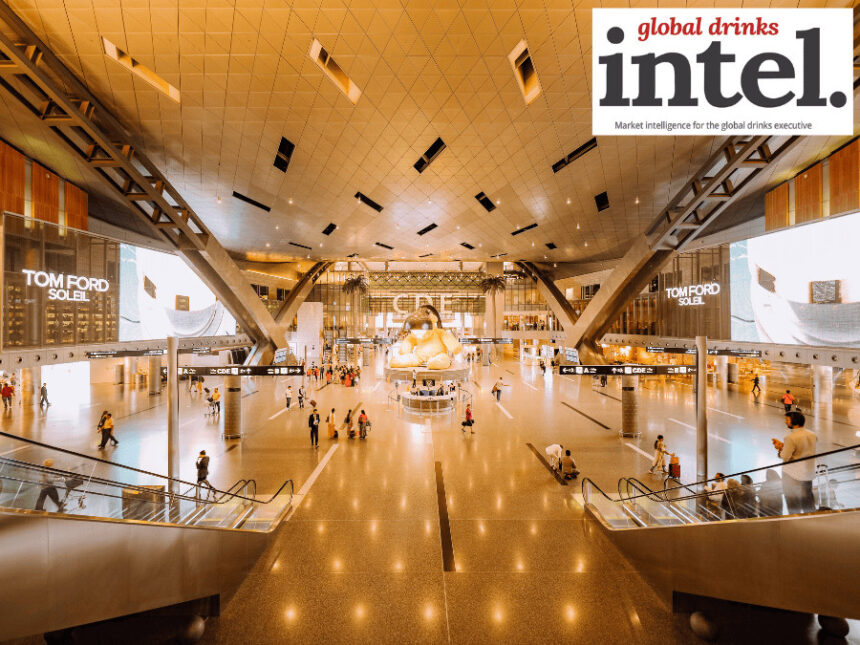
The global travel retail channel is in the midst of a ‘me-centric’ revolution, where travellers are increasingly prioritising personal treats over traditional gifting. This trend, however, is particularly nuanced within India’s alcohol sector.
Research from m1nd-set covering the 12 months of last year shows that across all duty-free purchases globally, personal consumption remained the primary purchase driver, accounting for over half (56%) of sales. Gifting, meanwhile, remained the second-largest category (23%). This represents a significant change from the pre-Covid period of 2017–20, when gifting represented 40% and personal use 46%.
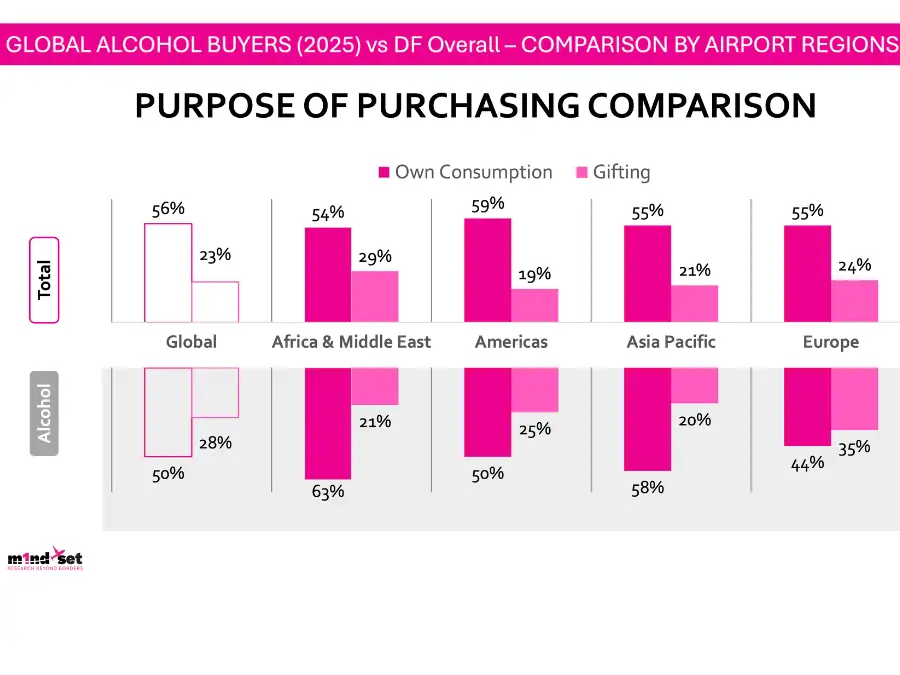
Asia Pacific alcohol buyers put themselves first
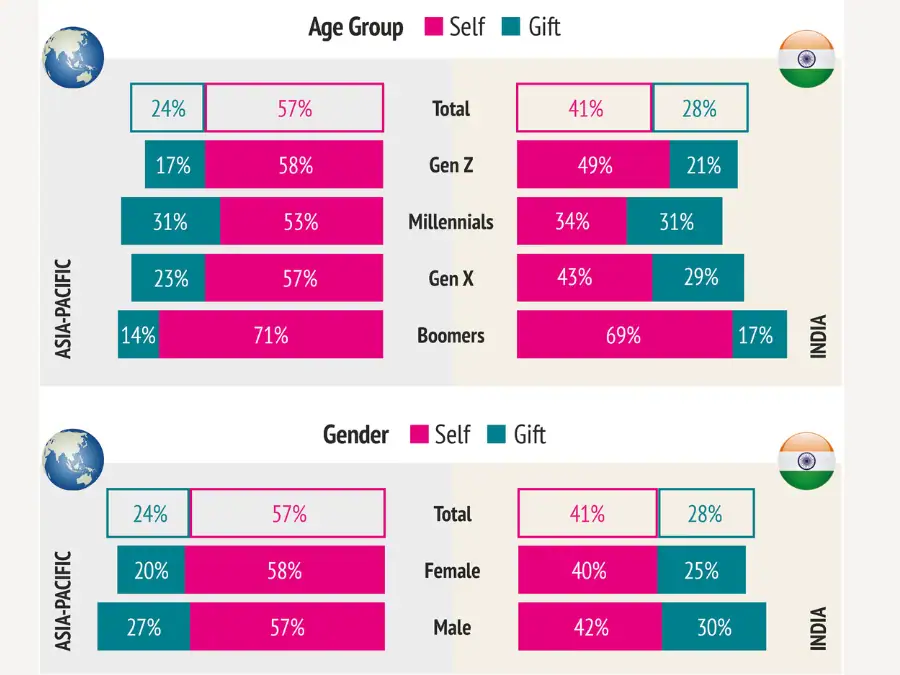
Drilling into the Asia Pacific region, the data from m1nd-set show an accelerating move toward self-reward, with the desire to buy alcohol for self-consumption jumping from 45% in 2024 to 57% in 2025.
As for the age dynamics, Boomers-plus are the primary drivers of self-consumption, well above average at 71%, whereas Millennials are the most likely to purchase alcohol as a gift (31%). Men and women in Asia Pacific both show similar self-consumption rates at 57%–58%, but men in the region are considerably more likely to purchase alcohol as a gift (27% vs 20%).
The class factor
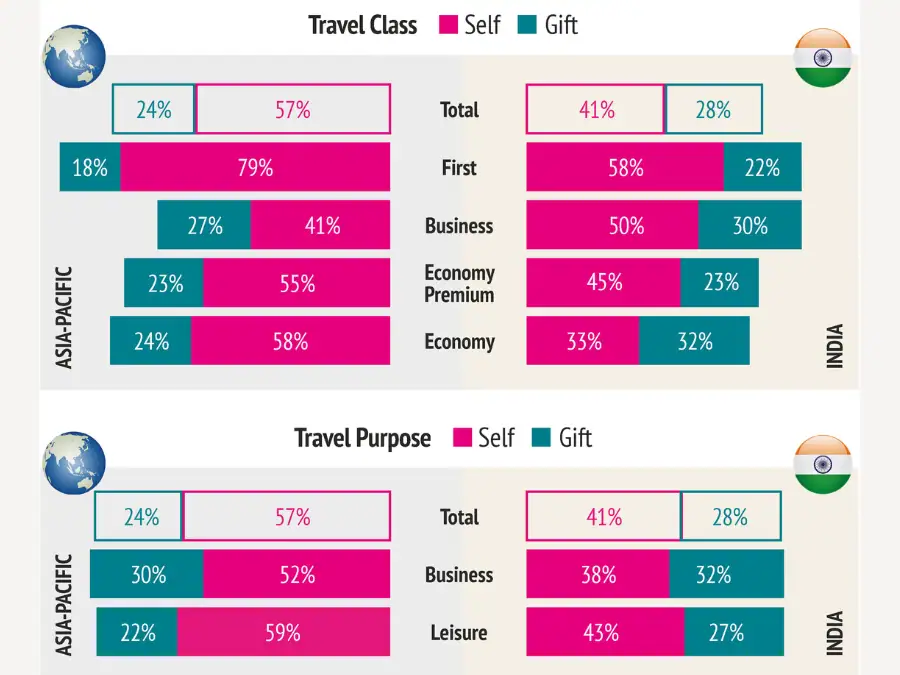
Among alcohol shoppers in Asia Pacific’s GTR, there is an interesting correlation between travel class and self-indulgence. Most (79%) first-class passengers in the region buy for themselves – almost double the percentage of business-class travellers who purchase for self-consumption. However, they are the most likely to purchase for gifting, at 27% compared with 18% of first class passengers.
Turning from travel class to travel purpose, m1nd-set’s research shows that leisure travellers (59%) are significantly more focused on personal use when shopping for alcohol in Asia Pacific than those travelling for business trips (52%). However, business travellers have a higher tendency to purchase alcohol as a gift (30% vs 22%).
Alcohol Buyer Profile – Asia Pacific vs India – Purpose of Purchase
India – A culture of requests and social ties
The Indian alcohol buyer presents a vastly different profile, characterised by cultural and social obligations, as well as a high volume of delegated shopping. While personal purchase is growing, up from 36% in 2023 to 47% in 2025, it remains a full ten percentage points behind the Asia Pacific average.
Key regional divergences highlighted by m1nd-set’s data include the significantly lower self-centricity among Millennial consumers in India compared with the regional average. Only 34% of Indian Millennials buy for self-consumption vs 53% in Asia Pacific.
The research also identifies a stark difference among Indian women shopping for alcohol. Only four in ten Indian women purchase alcohol for themselves compared with 58% of women across Asia Pacific.
The class analysis shows even stronger divergences. In India, economy passengers are the most likely to gift (32%), with only 33% purchasing for themselves. In the wider Asia Pacific region, however, economy passengers have a much greater tendency to buy alcohol for themselves (58%).
The importance of alcohol purchases for professional networking and gifting can also be seen through the research. Indians travelling for business have a higher gifting rate (32%) than their leisure counterparts (27%). The country’s business travellers also have a lower self-consumption rate (38%) compared with its leisure travellers (43%). Their tendency to purchase for themselves is also significantly below average compared with their regional counterparts (59% business/52% leisure).
The m1nd-set research also identifies a stark generational divide among Indian shoppers’ purchasing motivations, particularly between Boomers and Millennials. Self-consumption is the primary driver for Boomers, with 69% purchasing alcohol for their own use. In contrast, only 34% of Millennials purchase for themselves, making them the age group least likely to buy for personal consumption.
As for gifting purchases of alcohol, Indian Millennials are much more conscious of their social obligations, with 31% purchasing alcohol as a gift, compared with only 17% of Boomers.
Indian home & away self-purchases
Recent m1nd-set research analysed the differences in global shopper behaviour, comparing those who purchase for self-consumption when back at home to those who purchase for themselves for use during the trip.
Applying the same analysis specifically to travellers from India reveals some key differences. Average spend shows a significant gap; those buying for home consumption spend an average of $102, while trip-use buyers spend only $81.
The motivations for entering a store and ultimately buying an item reveal two different psychological states: trip-use shoppers are more likely to be drawn in by an inviting store appearance (29% vs 20%), while home-bound shoppers are twice as likely to be influenced by an advert they saw before arriving (13% vs 7%) and are more focused on securing a price advantage (20% vs 14%).
As for purchase drivers, trip-use buyers are motivated more by self-indulgence (25% vs 13%) and are more likely to find a product that is suitable as a self-treat (36% vs 28%). They are also 8% more likely to buy a product that is different from their usual choice (14% vs 8%).
The price-comparison behaviour of Indian self-consumption buyers also reveals a stark difference: 67% of home-bound buyers compare prices significantly more than the 51% of trip-use buyers.
Finally, while staff interaction levels are similar (59% vs 57%), their reasons for not interacting vary significantly. Sixty per cent of trip-use shoppers prefer browsing alone, compared with 50% of home-bound buyers. However, interest in future services, such as airport pick-up, is higher among trip-use shoppers (71% vs 65%).
A dual Asia Pacific & India approach
The 2025 outlook demands a dual strategy when marketing to alcohol shoppers in Asia Pacific and India. Across the wider region, alcohol shoppers will generally be more sensitive to marketing and communications that focus on self-indulgence and premiumisation for the individual.
Alcohol brands and retailers in the region should prioritise self-reward marketing specifically directed at high-spending individualists, particularly first-class passengers, 79% of whom purchase for themselves.
For the Indian shopper, however, gifting remains a powerful shopping driver for alcohol purchases. Stakeholders marketing to India’s travellers should cater specifically to business travellers who gift spirits as a fundamental element of their social networking culture, ensuring that the shopping experience is adapted to those looking for a bespoke gift, as well as those buying for personal indulgence.
For a more detailed analysis of alcohol shopping behaviour, click here to contact m1nd-set directly.
This article is available to Global Drinks Intel members only.
Click below for details on how to join the Global Drinks Intel community.
Already a member?
Log in here to read the article in full.
If you work for any of the following corporate subscribers to Global Drinks Intel, head here to activate your access.
- AB InBev
- Bacardi
- Campari Group
- Diageo
- Moët Hennessy
- Pernod Ricard
- Proximo Spirits
- Suntory Global Spirits
- William Grant & Sons