
Against a backdrop of seemingly never-ending geopolitical rifts and trade tensions, running alongside surging global economic uncertainty, the beverage alcohol industry still offers scattered pockets of potential. Over the coming 12 months, competition will no doubt be fierce.
As 2026 beckons, our industry is without doubt facing up to more challenges than opportunities. The macroeconomic and geopolitical backdrops continue to be largely unhelpful, with world trade looking fragile as the Trump administration in the US continues its aggressively protectionist tariff policy.
A glance at the recent results of the industry’s big hitters, from Diageo to Pernod Ricard and beyond, confirms that the negative mood music is rooted in reality.
Both the US and China are characterised by cautious consumers who need convincing to part with their cash for premium products, preferring instead to either trade down or reduce their frequency of consumption.
Meanwhile, China’s luxury market – baijiu especially, but also cognac and high-end scotch – has been impacted by a renewed state crackdown on conspicuous consumption.
Other markets are not immune to this. Moderation – inspired both by health & wellness concerns and economic factors – has taken hold on every continent. Suddenly, an industry that was once confident that its difficulties were merely cyclical is beginning to wonder if something deeper, more structural and longer lasting is taking effect.
Amid all of this, there are still opportunities: RTDs and no- & low-alcohol are still growing and maturing as they expand beyond niche status; agave-based spirits have challenges in the US, but other markets look very promising; and the move towards early evening, aperitivo/spritz consumption has obvious potential for a number of liqueur and sparkling wine brands, with prosecco to the fore.
And then, there’s India. This vast, complex, whiskey-/whisky-mad but increasingly cosmopolitan country is the brightest hope for the future – although it should be said that other territories in South East Asia, Latin America and Africa offer opportunities too.
As 2026 dawns, competition for these scattered pockets of potential will undoubtedly be fierce.

Agave-based spirits – Time to globalise
From the slowdown of high-end tequila in the US to uncertainty over tariffs, agave-based spirits have had a difficult year after such a long period of sustained – and often spectacular – growth.
For all its successes, the category remains chronically imbalanced in terms of geographical spread. The US still accounts for about 80% of export volumes, and no other international market – the next-largest are Spain and Germany – can muster a share figure above 2%.
Will the end of the US agave boom change this? It’s clear that the country’s consumers are no longer persuaded of the need to pay big for luxury tequila, nor are they swayed by the attachment of a celebrity name to a franchise. Indeed, many are seeking something more meaningful or looking for value in the reposado segment.
The big question is whether the US playbook of margaritas, 100% agave, cristalino and luxury will translate in high-potential markets across Europe, Asia and Latin America, where tequila is still playing catch-up from its days as a shot consumption staple.
Some brand owners believe flavoured tequilas are a good recruitment tool, while others argue that they reduce the category’s authenticity, backing 100% agave products and a spread of modern cocktails – the paloma, the margarita, plus twisted negronis and martinis.
No/low – A more complex picture
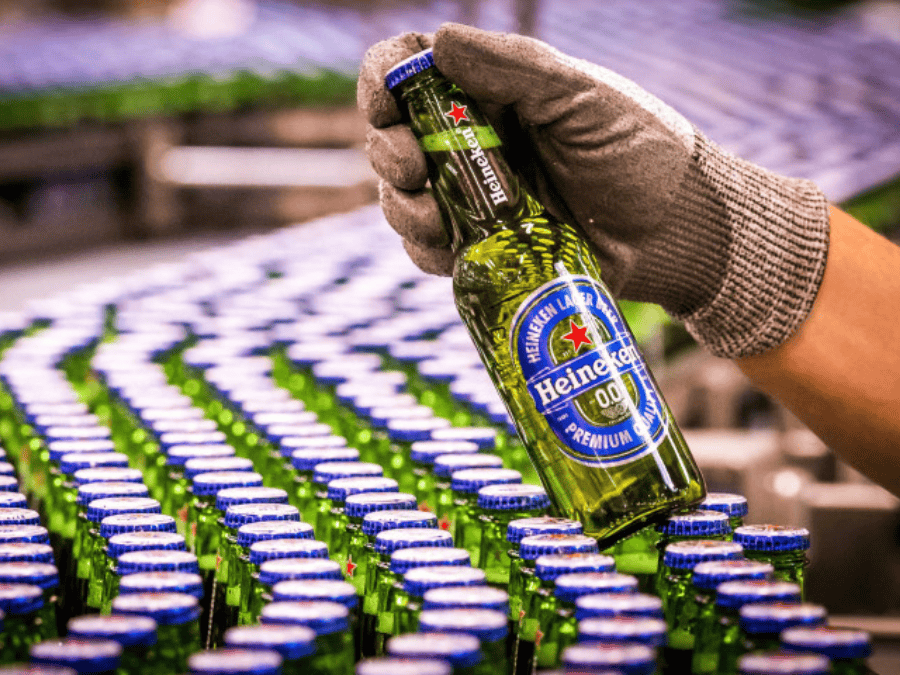
No- & low-alcohol products have been the biggest beneficiaries of the increasingly prevalent moderation trend, with non-alcoholic beer names such as Heineken 0.0 (above) now huge brands in their own right.
The double-digit volume gains recorded across the world’s top ten markets (according to IWSR) in 2024, and the predicted robust gains in the years ahead, are largely driven by zero-ABV beer and by the US market, where IWSR research suggests that 37m consumers were recruited into no-alcohol between 2022 and 2024 alone.
But this is changing: drinkers’ participation in no/low beer is now at a standstill, while other categories across the no/low spectrum are making solid gains, from RTDs to spirits and wine. Meanwhile, consumers are increasingly looking for something more than health and moderation from these products, prioritising flavour, brand attributes and increased availability in both the off- and on-premise.
While older consumers – Boomers and Gen X – may be embedded in the alcohol-free beer segment simply because there wasn’t much else available when they entered the category, Millennials and Gen Zers are more likely to explore and experiment – not looking for a simple replacement for alcohol, but for something more meaningful and engaging.
RTDs – Growing up fast
After the bursting of the hard seltzer bubble in the US, the RTD segment has steadied into a more moderate and less volatile growth pattern, capitalising on its key consumer-friendly traits of convenience, moderation and exploration – particularly among younger (Millennial and Gen Z) drinkers.
In 2024, according to IWSR data, RTD volumes in the world’s leading ten markets increased by 2%. Against a backdrop of TBA (total beverage alcohol) declines, that’s a solid performance, with some markets, such as South Africa and Brazil, recording double-digit gains.
RTDs’ growing maturity may limit future opportunities, with IWSR predicting that volume expansion will be concentrated in four markets: the US, Japan, Brazil and South Africa. As recruitment slows, growth is being driven by increased frequency of consumption. Gains could come from increased penetration of the on-premise, where only about one in eight RTD products is sold, although share numbers are much higher in Brazil and South Africa.
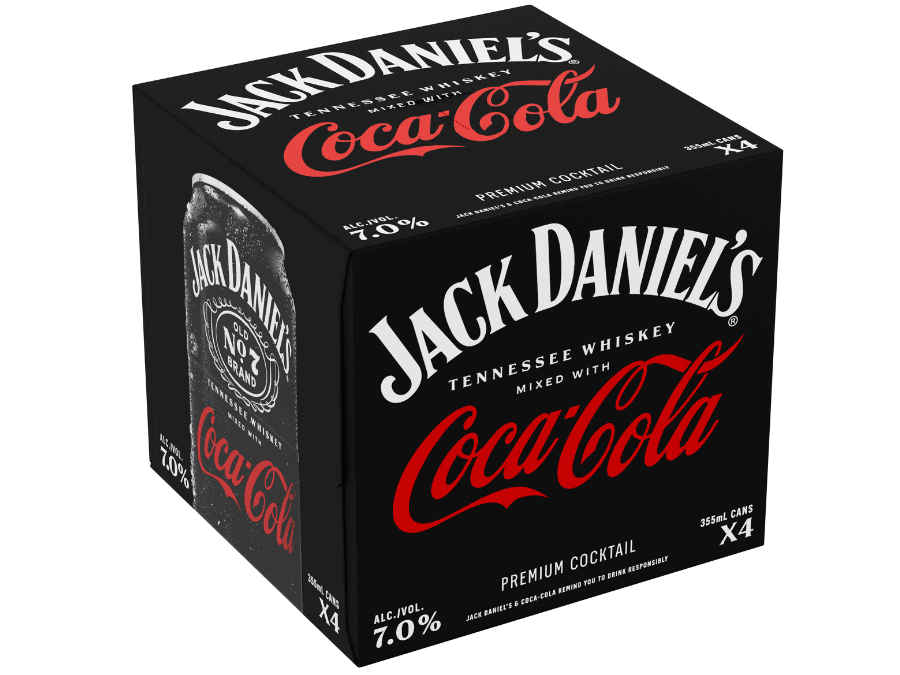
Meanwhile, the growing number of RTD extensions of marquee spirits brands – kick-started by Brown-Forman’s tie-up for Jack Daniel’s with Coca-Cola (above), which hit the US in early 2023 – raises an intriguing question for brand owners: while the presence of a familiar name may persuade consumers to enter the category, is there a risk that a presence in RTDs might tarnish the image of premium brands?