Last month, I was lucky enough to be invited to travel to south-est France to explore the refurbished brand home of Rémy Martin as part of the cognac house’s tricentennial celebrations. The 90-minute taxi journey north from Bordeaux Airport to the Charente region proved a sobering one, with water-logged fields and vineyards on either side of the road for much of the soggy journey.
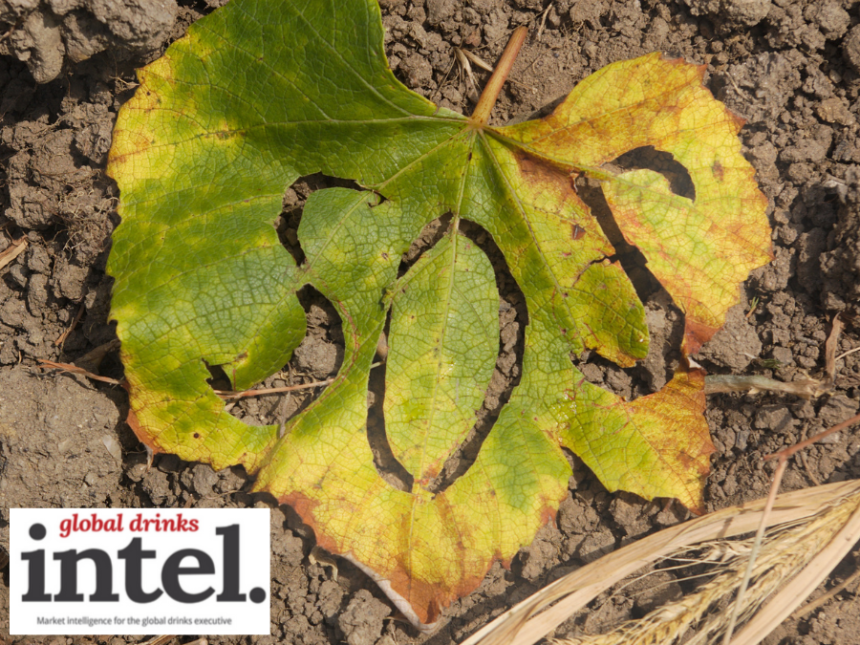
The past few months have seen some dreadful weather hit France, with some regions in October experiencing their worst floods in 40 years. Unsurprisingly, these high levels of precipitation have greatly impacted the country’s wine industry, with France expected to produce one of the smallest vintages of the past century, according to figures recently released by the agriculture ministry.
Wine production in 2024 is estimated to have plunged 18% to a total 39.3m hectolitres – only six vintages in the past century have been smaller. With key regions such as Burgundy and the Loire Valley particularly badly affected by mildew and poor grape development due to the unusually wet start to the summer, France could well lose its position as the world’s biggest wine producer to Spain.
Cognac is deeply connected to nature and the seasons in a way that grain-based spirits such as scotch whisky arguably aren’t. The spirit is shaped by the unique climate and terroir of its namesake region, as well as the tightly controlled rules surrounding harvesting, distillation and ageing stipulated by the appellation. During my stay there, I asked Rémy Martin cellar master Baptiste Loiseau how concerned he was about climate change’s ongoing impact on future cognac production.
Loiseau, a Cognac native, responded that the cognac business had survived many varied crises in its long history, from the phylloxera epidemic, which destroyed most of the grape production in France in the late 19th Century, to freak years in the 20th Century when hail or frost virtually wiped out the entire harvest.
Nonetheless, he acknowledged the scale of the climate crisis facing cognac houses like Rémy Martin.
The brand is working on many fronts simultaneously, Loiseau noted, such as removing unnecessary secondary packaging for its key VSOP expression three years ago, the first big cognac house to do so. At the same time, The company is also working closely with its 800 growers in the Petite and Grand Champagne cru areas to experiment with alternative, hardier grape varietals, while trialling more eco-friendly forms of heat for the distilleries.
“I have a vision of creating a toolbox for the next generation showing the experiments, what did and didn’t work, to help them in terms of what they will face with the weather over the next 50 to 100 years,” Loiseau explained.
Rémy Martin’s hands-on, partnership-led approach to sustainability is typical of a renewed commitment among many forward-thinking drinks companies to find practical solutions to some of the numerous challenges created by climate change. Global Drinks Intel was delighted to highlight some of the leading companies in this crucial field at its second annual ESG Awards, which were held during the TFWA World Exhibition & Conference in Cannes in late September. Large multinationals, such as Diageo and Rémy Cointreau, were among those collecting prizes, but there were also awards for smaller companies such as The Boatyard Distillery, SXOLLIE Cider and Tequila Komos.
At the same time, there’s a degree of scepticism in some quarters about the sheer volume of ESG-related marketing emanating from beverage brand owners, and consumers are right to be on their guard at the ‘greenwashing’ eco-claims of some firms. Yet the scientific evidence supporting the quickening rate of man-made climate change is now incontrovertible – which is why Global Drinks Intel is already busy planning next year’s ESG Awards.
The ‘E’ in ESG rightfully gets plenty of attention in beverage alcohol, but the ‘S’ and ‘G’ rather less so. Earlier this month, marketing expert Chris Tyas warned that brand owners must start to address the elephant in the room — the harmful effects of excess alcohol consumption. Citing World Health Organization data, he flagged that alcohol is the cause of one in 11 deaths in Europe, and behind more than 200 diseases.
Consequently, governments worldwide have grown increasingly hawkish on the issue, hiking alcohol duties and, in the case of Ireland and Scotland, introducing minimum unit pricing. Harsher regulation could well be on the way, Tyas warned, raising the spectre of graphic, cigarette-style health warnings on packaging.
The introduction of no- or low-alcohol line extensions and responsible drinking campaigns, while steps in the right direction, are not nearly enough, he argued. More creativity and ambition is needed, and quickly, before harsher regulation becomes a reality and the alcohol industry loses its agency on the issue.
This article is available to Global Drinks Intel members only.
Click below for details on how to join the Global Drinks Intel community.
Already a member?
Log in here to read the article in full.
If you work for any of the following corporate subscribers to Global Drinks Intel, head here to activate your access.
- AB InBev
- Bacardi
- Campari Group
- Diageo
- Moët Hennessy
- Pernod Ricard
- Proximo Spirits
- Suntory Global Spirits
- William Grant & Sons