

- After initially building momentum in retail, non-alcoholic (NA) brands are increasingly looking to the on-premise to drive discovery, trial and repeat purchase
- NA beer leads the on-premise charge. Established alcohol-free brands are gaining traction through draught, pubs, casual dining and sporting occasions
- Draught remains an opportunity and a challenge. Being on the front bar can help normalise the NA experience, but scarce tap space makes listings hard to come by for smaller brands
- NA consumption is extending beyond the health & wellness ‘months’ into everyday occasions such as a midweek treat
- Functionality offers new opportunities, but brand owners warn against adding ingredients simply to chase the next trend
- NA wine continues to face a significant taste and quality challenge, but the on-premise is emerging as a bright spot as by-the-glass availability improves
Functionality – The next frontier?
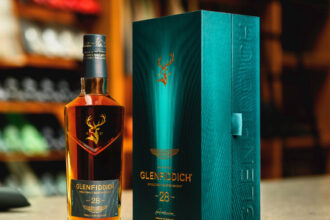
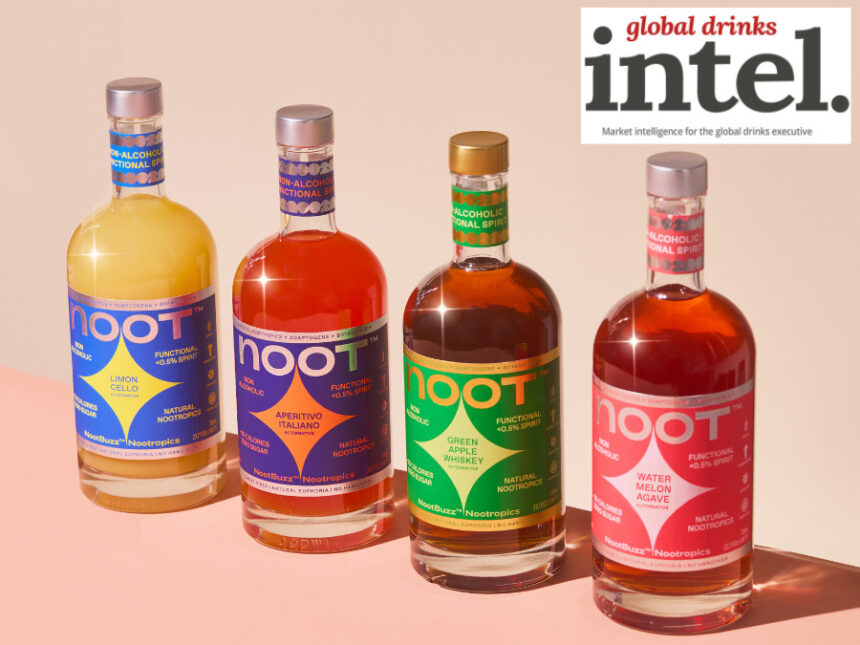
In 2020, brothers Kieron and Christian Barton and Gareth Whittle, the trio behind cider brand Rekorderlig, founded Noot Drinks Co (main image) in Australia. The brand’s non-alcoholic range includes spirits and RTD cocktails containing functional ingredients, including green oat, green tea and lemon balm, all of which promise consumers a “boost”.
Noot’s approach to the on-premise is hands-on, working with bartenders so they feel comfortable selling and serving the brand. Getting venues on board, Whittle says, has been “relatively straightforward so far”. For NA brands, it’s a case of “right time, right place, right product”.
He adds: “It’s a great margin opportunity for the bars, which ultimately, is what they’re interested in.” Whittle believes the on-premise opportunity lies in “curated” drinks and quality offerings. “[Large brands] can buy volume, but if you’re just buying space, eventually consumers say that they don’t actually want that,” he says.
In retail, Whittle believes the category is increasingly moving beyond the alcohol aisle, particularly as functional brands enter the market. “Everything’s occasion-led now,” he says. “That’s the key takeout for the beverage sector: what occasion are you looking at – is it pre-gym, after the gym, early evening, just before bed? That’s the category.”
Retailers, Whittle adds, are already having these conversations. “It’s fascinating to see how things are changing – and how quickly,” he says. But can this approach work in the on-premise, where space is at a premium? “Absolutely, there’s room to categorise by what occasion you’re after, and I think that’s where it’ll head.”
For Whittle, “the dream scenario” is for venues to offer a separate list of functional cocktails. Indeed, perhaps this is the way the wind is blowing, at least in some corners of the hospitality channel. For example, Six Senses’ new US$1,000-plus-a-night “luxury wellness” hotel in London offers a non-alcoholic version of every cocktail on its menu.
On the whole, though, this is not yet the norm, and, according to DioniLife co-founder Damian McKinney, “the on-premise is doing itself a disservice” by not offering more alcohol-free choices.
UK-based DioniLife launched in 2024, with its acquisition of alcohol-free beer Mash Gang, and has since released two new non-alcoholic brands: La Borosa Mexican Agave Spirit and Pavari 17 Mediterranean Aperitif. Both brands are also available in canned RTD cocktails: La Rosa Margarita and Paloma, and Pavari 17 Spritz.
McKinney says it is well known that “54% of drinkers are now moderating”, yet if you enter a bar and “ask what percentage of good-quality non-alcoholic drinks they’re offering, it’s probably 5% at most and the quality will be variable”.
When it comes to cost, McKinney is confident that NA pricing should match alcohol, because consumers want to “fit in”. He says: “Bizarrely, price is also driven by value associated with it. If you give something to somebody cheap, they think it is cheap.”
McKinney feels there is real opportunity for functional products in the on-premise, particularly around hydration and energy in venues like clubs. “Functionality fits the occasion,” he says. “I think that’s the key.”
DioniLife, he reveals, is in the process of testing a functional liquid.
Wine brings up the rear
While NA beer and spirits are looking towards functionality, wine is focused on closing the ‘taste gap’ with full-strength products and building consumer trust.
No/low brand Wednesday’s Domaine describes the NA wine segment as “almost the final frontier in terms of consumer adoption of an alcohol-free alternative”.
Having started life as a 0% ABV brand, the UK-based company has recently launched three 6.5%-ABV SKUs and founder Luke Hemsley says he views both no- and low-alcohol as offering “equal opportunities”.
Channel-wise, Hemsley says the bulk of non-alc wine is still consumed in the off-premise, which leaves the segment “in a state of flux”. He explains: “Supermarkets are still presenting consumers with relatively low-price, low-quality options.
“What’s ultimately happening is there’s a little bit of a trial, but there’s very limited repeat purchase. We’re stuck in a bit of a loop whereby there isn’t sufficient volume of interest or data for retailers to take a punt on higher-quality, more premium options.”
The on-premise, meanwhile, is a “bright spot”, adds Hemsley. In the category’s early days, the risk of wastage made channel operators reluctant to offer alcohol-free wine by the glass, while the cost of committing to a full bottle made consumers hesitant to try it.
“That’s changed and is changing quite rapidly – and that’s reflected in terms of listings that we now have,” Hemsley says. Wednesday’s Domaine is available by the glass across UK restaurant groups Gaucho and Barrafina, boutique hotel chain Cubitt House and pub group Chickpea.
Asked about what is driving the growth, and Hemsley describes it as a “slow virtuous cycle” of supply and demand as consumers begin to seek greater alcohol-free wine choices in the on-premise. Despite the uptick, he says: “Ultimately, as a brand, you must be omnichannel to create different ways for customers to discover and experience your product.”
The power of a familiar label
For Les Grands Chais de France, alcohol-free brand extensions – such as the French wine and spirits group’s JP Chenet 0.0% – lead its on-premise NA offering.
“Extending trusted brands into non-alcoholic variants benefits both operators and consumers,” says UK marketing manager Henry Colyer. “For the trade, it simplifies purchasing by enabling venues to source premium alcoholic and alcohol-free wines from a single, trusted supplier.
“For consumers, trusted brands remove uncertainty. Guests are far more likely to choose an alcohol-free alternative when they recognise the quality and heritage behind the label, giving operators greater confidence that the product will drive repeat orders.”
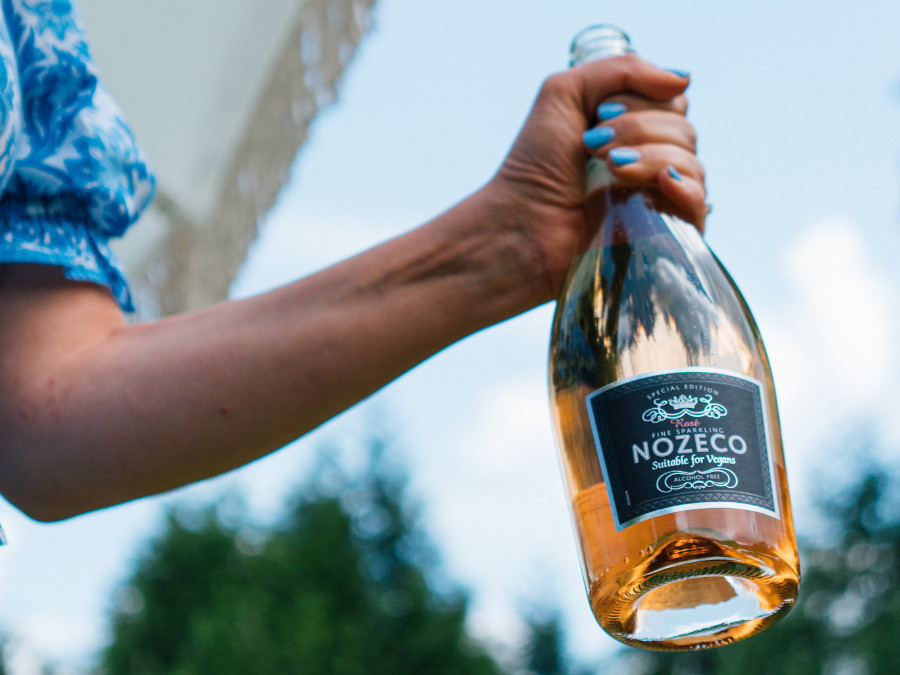
Launched in 2017, the company’s dedicated alcohol-free brand, Nozeco (below), claims to be the “market leader” in the UK. The majority of the mark’s volumes are sold in the off-premise, although Colyer says this is due to “the natural development of a new category rather than a conscious decision”.
Like Hemsley at Wednesday’s Domaine, Colyer says it can be easier to build dedicated NA brands in retail first. “Grocery listings of non-alcoholic wines build trust in product quality, so consumers know what they want when ‘shopping’ in the on-trade,” he says.
Format-wise in the on-premise, Colyer notes a “growing preference” for smaller packs, which offer “quality, profitability and operational efficiency”.
“That said,” he adds, “by-the-glass serves continue to play an important role, particularly in restaurants with strong food-led occasions and sufficient volume to maintain quality. Ultimately, the format should reflect the venue’s trading style and customer demand.”
When the hype settles
So, what comes next for the NA category? Are too many brands going to flood the market?
While quality remains a key consideration, the on-premise is under pressure from all sides, limiting the amount of space that operators can dedicate to alcohol-free brands. Is there a risk of saturation?
“I think there’ll be a fairly brutal overhaul,” says Noot’s Whittle. “Buyers will say, ‘These aren’t delivering.’ We’ve seen it many times across different categories – there’s an initial excitement to get something on shelf and then it settles down.”
Whittle believes the brands that survive will be those with a distinctive proposition and a clear understanding of the occasions they are targeting.
“Consumers are going to be very intentional about the brands that they want to see on shelf or behind the bar,” he says. “Brands need to make sure that they understand what they’re offering – and why.”