

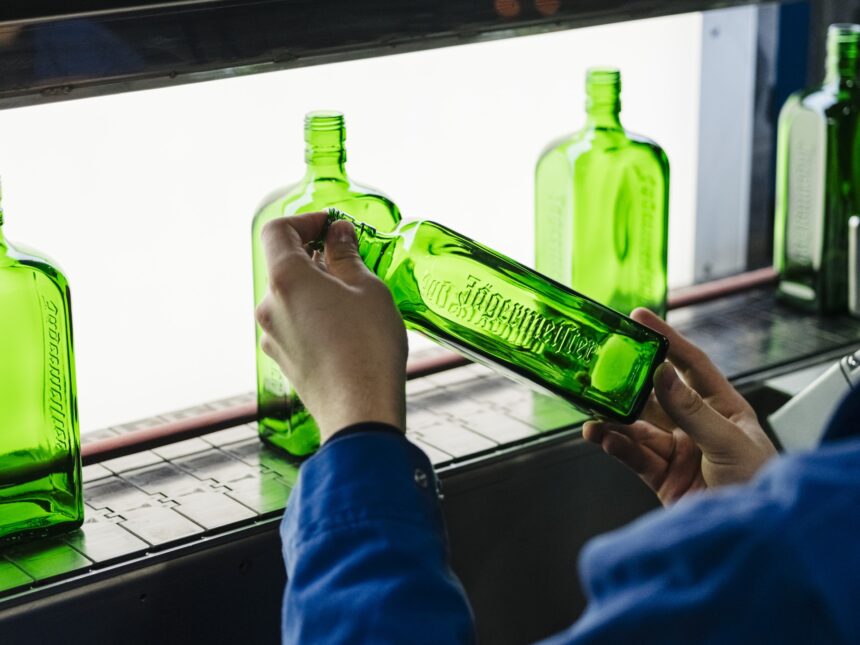
Mast-Jägermeister has started producing some of the green bottles for its namesake herbal liqueur using hybrid-furnace technology.
The German group is permanently shifting around 14m of the Jägermeister brand’s 70cl bottles (equivalent of 1.09m nine-litre cases) a year to the new process “from March”. This forms around 12% of its total annual 70cl-bottle production; in 2025, the company sold 9.15m nine-litre cases of its classic Jägermeister SKU.
Mast-Jägermeister claims to be the first spirits producer to use the dual-fuel system to manufacture green-coloured glass. The new bottles will be manufactured at the Ardagh Glass Packaging facility in Obernkirchen, Germany. The factory uses a ‘NextGen’ furnace, which combines electricity and natural gas in the glass-melting process.
The Teremana Tequila co-owner told Global Drinks Intel it has “no fixed timetable for extending the process to clear glass bottles or to other brands”, adding: “Jägermeister sources its bottles from five glass manufacturers. This multi‑supplier structure is designed to secure long‑term supply while at the same time enabling the company to work with selected partners on targeted innovations, such as the ‘NextGen Furnace’ technology developed together with Ardagh Glass Packaging.”
“The aim is to first gain experience in commercial series production and further optimise processes,” a spokesperson said. “In addition, the availability of this technology is currently limited, as there are only a small number of hybrid glass melting furnaces worldwide. Any further expansion will therefore depend on technical feasibility, economic considerations and infrastructural factors, including access to this technology.”
According to the brand owner, initial results indicate the hybrid-furnace process reduces the carbon emissions created from the production process by around 60% per bottle, compared with “conventional glass manufacturing”.
Mast-Jägermeister estimates around 30% of the liqueur‘s emissions come from bottle manufacturing and aims to halve its emissions “from primary packaging” by 2030.
Earlier this month, the privately-owned company reported a slight rise in full-year sales from 2025 and projected a “cautious outlook” for the months ahead.