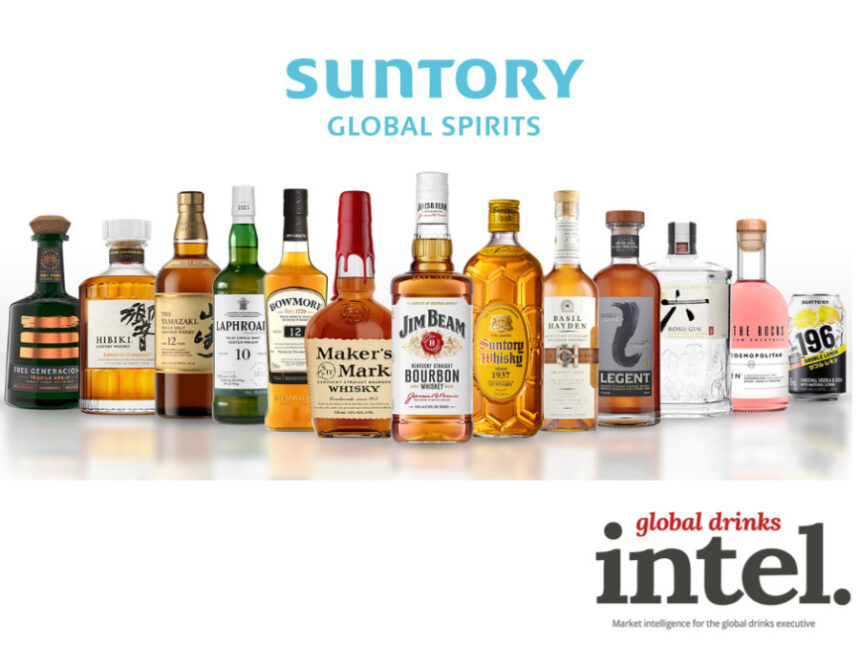
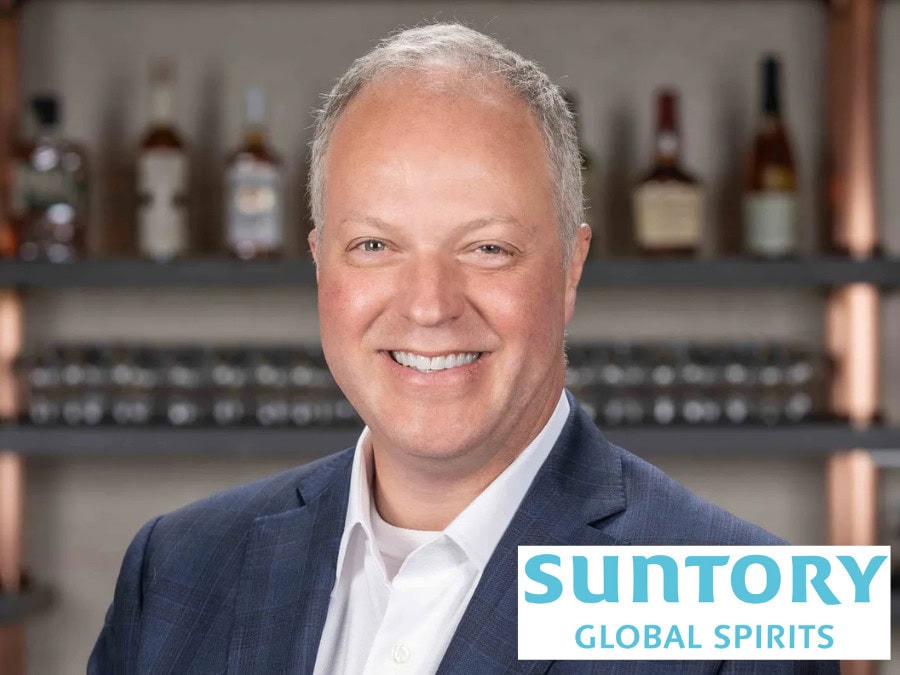
Earlier today, Jim Beam owner Suntory Global Spirits posted a 1.4% dip in sales from the 12 months of 2025. When adjusted for currency impacts, however, Suntory, the spirits arm of Japanese group Suntory Holdings, said its full-year sales lie closer to low-single-digit growth. This result, CEO Greg Hughes (below) tells Global Drinks Intel deputy editor Jessica Broadbent, reflects a “strong performance in a tough operating context”.
Did Suntory Global Spirits perform as you anticipated last year?
Overall, ‘a strong performance in a tough operating context’ would be how I’d put it. We ended up growing by low single-digits in sales for the year [currency adjusted]. I’m particularly proud of how we navigated the challenges in the trading environment, particularly the macroeconomic and category challenges in the US and Europe.
Could you give a bit more colour around what’s going on in the US and Europe, regarding those “market slowdowns” referenced in the results announcement?
From a cyclical standpoint, which is the biggest driver, it’s really around disposable income and the lingering effects of inflation, particularly on the cost of living. The number one driver of beverage alcohol consumption is disposable income, and we’ve seen a contraction there.
When you come to the structural nature, I think it’s a ‘who, where and how’ problem. Gen Z is adopting alcohol at similar rates to previous generations, but there are fewer of them in developed countries, so you have fewer consumers becoming legal drinking age in the US, developed Europe and Japan than you have in the Baby Boomer generation that’s starting to drink less.
It’s just a smaller generation. Where you do see population growth, particularly in younger consumers, is in Latin America, India and emerging Asia. So, you’ve got a different set of consumers coming in: they live in a different place and they’re drinking differently.
The growth of RTD highlights the move towards refreshment, sessionability, and driving which categories they drink as being slightly different than before.
There are tailwinds for the overall industry; once we come through the cyclical nature, I’m confident the industry will get back to growth at a low-to-mid-single-digit, 3%-to-4% range.
The good news is our portfolio is well-suited to that, and we have lots of opportunity to grow outside of the US and Japan. It’s just that the market context is challenging, particularly in developed economies.
With that in mind, what’s your strategy for the younger LDA generation? Are you increasing your focus on those markets with a larger Gen-Z population?
We’re doing two things. First of all, we’re blessed by both our market footprint and our portfolio, in that we have very strong businesses in our two anchor markets of the US and Japan. Then, we have brands that can play across not only those emerging geographies, but also the emerging segments of growth.
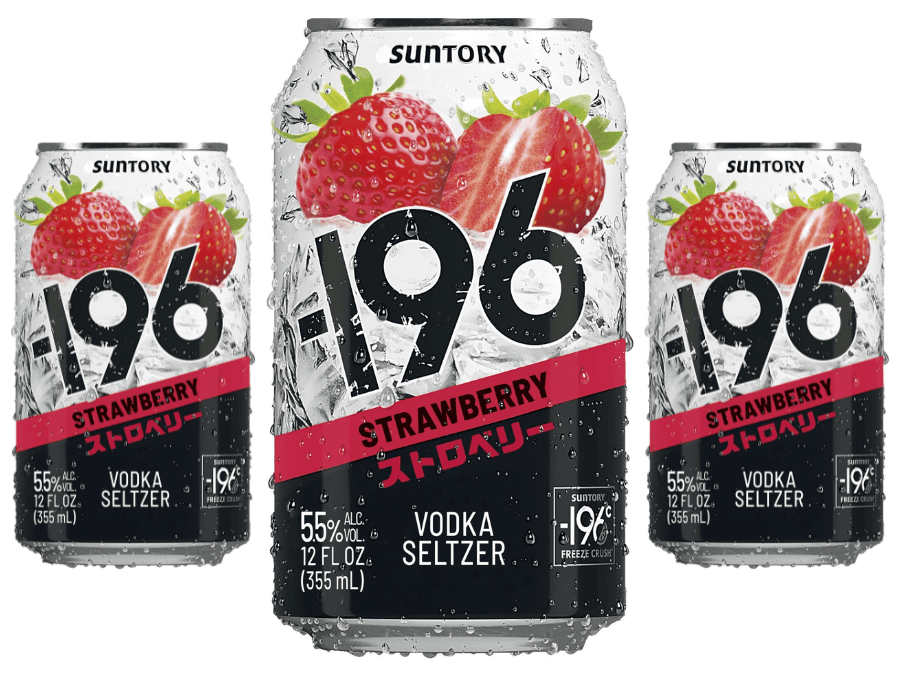
We’re already the number one RTD player in Japan and a strong RTD player in Oceania. Our aspiration is to become the number one RTD player globally. We have deep product-development capabilities, deep route-to-market capabilities, particularly in RTD – and you’re seeing that as we translate strong global brands like -196 from Japan into Australia, the US, the UK and Germany. So, we’re building a global brand behind the likes of -196 and On The Rocks to win in that RTD occasion.
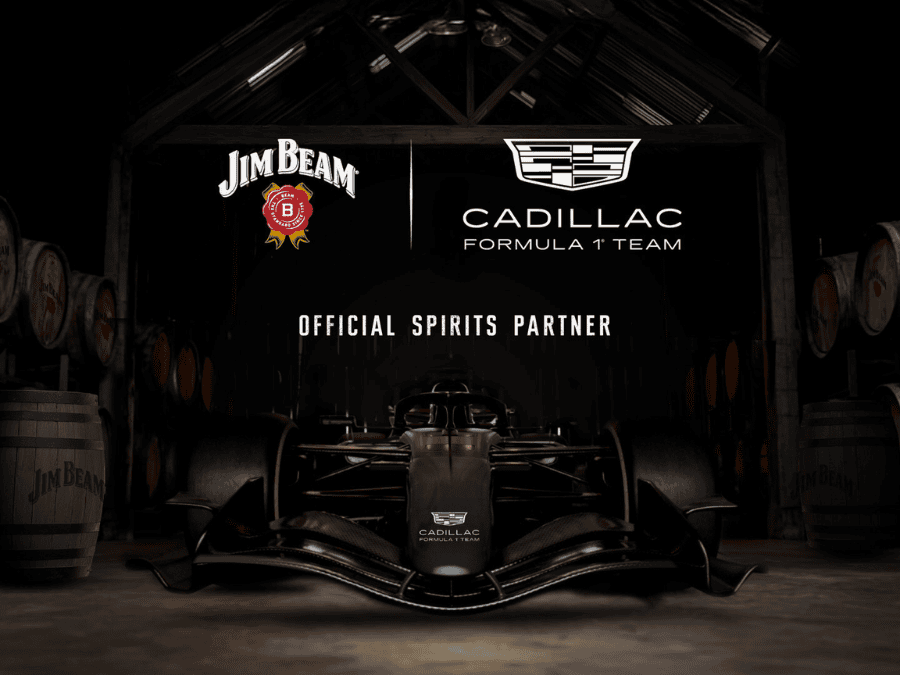
We also see an ability for Jim Beam to play in refreshment. We’ve seen great success with Jim Beam highballs in Asia, as well as Jim Beam & lemonade or iced tea playing in that refreshment occasion, framed much more against beer. So, you see us playing in meal occasions, but also playing at sporting events – we just signed an F1 sponsorship with Cadillac. [It’s about] getting Jim Beam to where younger consumers are in an occasion where they can win against refreshment.
Then, we have a great premium whisk(e)y portfolio with our House of Suntory brands, as well as Laphroaig and Maker’s Mark that can win in premium spirits, both in the US and Japan, but certainly across markets where we’re less developed, like Latin America, India, GTR and Asia – we have a huge opportunity to grow.
Will your RTD NPD and marketing be focused on those Gen Z-heavy regions, then?
In RTD specifically, we’re more geographically focused because RTD is a business where local scale matters. Our big growth focus is primarily with our position in Japan, in Oceania and the aspiration to drive and build a leading RTD business in the US.
Some of our developing markets, which are still much smaller for us, like Brazil or India, will be more focused on our core full-bottle spirits portfolio, because there’s still a huge opportunity to grow those businesses. But certainly, the US is the big growth focus for RTDs.
How crucial is the success of the RTD category to the group’s top line? They’re not a particularly high-margin product.
If you look at category growth in the US – in Europe, it’s the case as well – the rise in where the consumer is going is, to some degree, being driven by RTD. That’s a natural move towards flavour and convenience, which is an evolution in consumer categories everywhere. It’s critical for us to play where the consumer is and where the consumer is going – that will be an important growth driver for us.
While the margins certainly aren’t the same as maybe a premium scotch or a premium Japanese whisky, they’re much better from a cash conversion and velocity standpoint. It’s important to have a mix of both in the portfolio.
Margin matters, but you take dollars to the bank. If you’ve got something that’s higher velocity and selling much more rapidly and is more aligned with consumers, then that can be as economically attractive from a cash and profitability – and value-creation – standpoint, as a high-margin prestige whisk(e)y.
We happen to be blessed with both. Our business in Japan is a great example of a high-velocity RTD and beer business, but also some of the most revered whiskies in the world with our age-statement House of Suntory whiskies. I think we can play on both sides.
You talk about“significant headwinds” for American whiskey in your 2025 results, and you paused production at the Jim Beam distillery in December. What’s actually going on for bourbon at the moment, and how are you managing your brands amid those challenges?
We’re still very optimistic about bourbon, both in the US and globally. Jim Beam and Maker’s Mark continue to outperform the segment and are doing well, and we see high opportunity to continue to invest and grow both brands in their domestic market, but also a massive opportunity for globalisation. Our Jim Beam business was up 20% in India last year, for example, so there’s a long runway for American whiskey outside the US as well as within the US market. We’re continuing to invest in marketing behind the brands, as evidenced by our F1 sponsorship on Jim Beam.
Whisk(e)y is a long-planning-cycle business. The liquid for Jim Beam and Maker’s Mark and our bourbon brands today was laid down four years ago. The category growth rate at the peak of Covid was very different than it has been coming out of Covid. So we were a little out of balance between our inventory position and demand. That’s probably a natural part of the whisk(e)y business.
We chose to shift production to our Booker Noe facility, where we had just done a massive expansion, and that allowed us to produce higher-quality whiskey, and more sustainably. It also allowed us to not have to eliminate any jobs because we were able to move the Clermont distillery employees into the bottling facility at Clermont. This has given us a year to make the same upgrades at Clermont that we had at our Booker Noe facility, so we can produce the same environmental and quality standards. Then, we’ll be able to manage through the inventory balancing in that time with as little disruption to people, quality and sustainability as possible.
That was the rationale behind it. We just need to get our balance back a little bit, because the category has certainly come down off those highs that we saw at the peak of Covid consumption. That’s true for every category.
Will you be reducing your production volumes to rebalance inventories?
We’ll always be trying to match production to demand, to balance the ageing inventory that we have. We think the production moves we’ve made will allow us to get back into balance relatively quickly. But this is a dynamic category, and if demand takes off, we’ll be there and available to bring production up.
If demand doesn’t take off again, then we’ll continue to adjust production levels to make sure we match demand. I think most people will work through the whiskey surplus that exists for us and the whole industry relatively quickly, through distillation adjustments. Then, we’ll recalibrate to make sure we’ve got distillation matched to forecasted demand.
What sort of time scale do you think that will be?
I can’t speak for our competitors, but I think we’ll be through it in a relatively reasonable amount of time. I don’t think it’s years. I think we can be through our situation relatively quickly.
How is the Trump administration’s tariff regime impacting the domestic and export markets for American whiskey?
Tariffs have certainly made the overall spirits market volatile, but there’s been a relatively muted response regarding tariff retaliation against American whiskey. In fact, we’ve seen tariff barriers announced to be coming down in places like India.
The bigger impact has been the Canadian liquor boards choosing to pull American products off their shelves, rather than a tariff impact. Canada was a material market for American whiskey.
But it’s dynamic, and that could change – positively or negatively – at any point. I think the India news could be a real tailwind for American whiskey, because India is the largest whisk(e)y market in the world. If the EU were to decide to be aggressive in a tariff response to the US, then that would certainly be a headwind for the bourbon category.
Do you see the Canadian situation changing soon?
The discussions don’t seem to be progressing. Some of the western Canadian provinces have relaxed their stance a bit, but overall, I think we continue to have less neighbourly relations with Canada than we have traditionally had.
Where are you going to focus the marketing budget for whisk(e)y?
It’ll be across our core focus brands – in bourbon, that’s Jim Beam and Maker’s Mark. But we also think there’s a massive opportunity to globalise our ‘House of Suntory’ (Japanese whisky) brands, and we’ll lead with Hibiki and Toki. Then [in] our peated malts, Laphroaig is the leading Islay malt – we think we can drive a lot of global growth behind Islay scotch.
How important is the success of the new Cadillac F1 team to Jim Beam’s sponsorship? Do you need to be backing a winner?
It’s obviously fun to be with a winning team! Jim Beam’s a brand really more for the people, and for the occasions where people come together. For us, it’s much more about celebrating the fandom and about the people watching the game, and maybe the people in the [more affordable] infield and in the stands, versus the people in the paddock and the podium.
A lot of F1 is about the luxury and the experience and, for lack of a better term, the fancy people of F1. That’s not at the core of who Jim Beam is. This is about the celebration of the sport and the opportunity for people to watch together. We think that Jim Beam, and particularly refreshing Jim Beam cocktails, can play there. We don’t need to necessarily be on the podium celebrating with champagne, because we’d rather be having a good time with Jim Beam, watching the race.
Given F1’s luxury image, was it a consideration to partner with a ‘fancier’ whisk(e)y in your portfolio?
We had a partnership with Bowmore and Aston Martin at one point, and that made a lot of sense. But we wouldn’t have gone into F1 had Cadillac not come on the grid – being a quintessential, premium American brand, and the deep history between the Beam family and the Cadillac company. Jim Beam would drive the yeast that we make Jim Beam with home every night in his Cadillac, to make sure he didn’t lose that trademark family yeast. There’s a replica of that Cadillac at the Jim Beam distillery, and all the Beam family members still drive Cadillacs.
When we heard Cadillac was coming on the grid and was looking for a partner, that’s what really opened the door for us. We feel like we fit with that quintessential American brand. I’m not sure Jim Beam and Ferrari or Mercedes Benz would make a lot of sense to anyone.
We’re a little down the line from the sale of Courvoisier; what are your reflections on having exited cognac? Any regrets?
We have a lot of lovely brands, and it’s often hard to figure out which brands to focus on. If you look at our portfolio, the brands we’ve chosen to focus on are incredible brands. We simply didn’t have enough resources to prioritise cognac in the context of our portfolio, and I don’t regret that decision whatsoever.
I think it’s enabled us to focus on our premium whisk(e)y brands and our RTD business more.
What’s your forecast for tequila in the US? Has the boom ended?
Our footprint is still balanced towards growth. I think tequila is going to come down a little bit from its growth rates, but still should grow. Some of the other spirits categories, like vodka, rum and cognac, might be more challenged in the US, but agave spirits, bourbon, Japanese whisky and RTDs will continue to be strong growth categories for the industry – certainly globally, but also in the US.
What about outside of the US?
There’s a strong potential for globalising agave spirits – both tequila and mezcal. You certainly see tequila at the high-end of the on-trade in cities around the world. It’s not quite at scale yet, so there’s definitely potential for growth.
Whether it’s big enough to be material to the overall spirits market is still an open question.