

What distinguishes ProWine Shanghai from other trade shows in the region, and how do you tailor each to meet local industry needs?
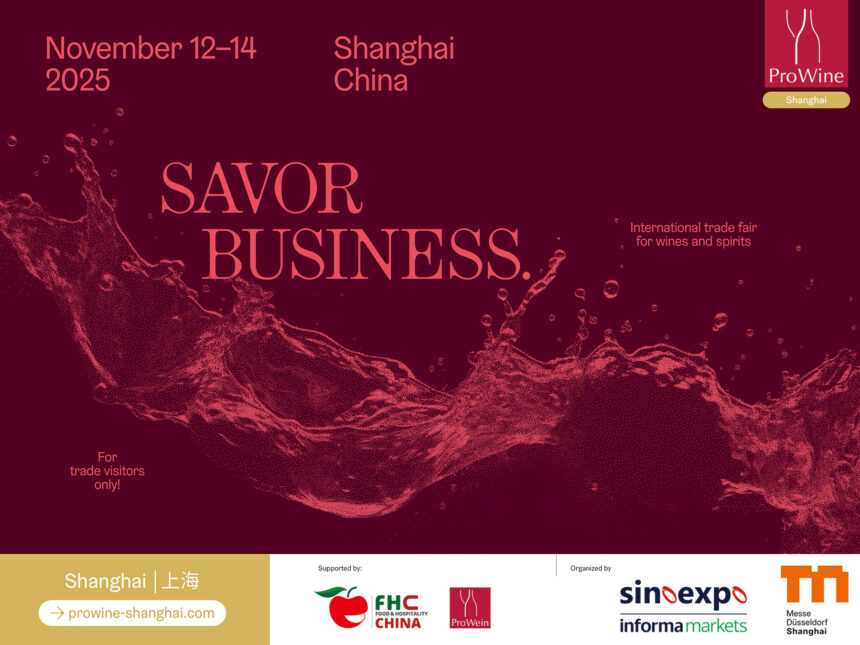
ProWine Shanghai has been deeply engaged with the mainland China market for more than 11 years. What makes it unique is that our fair is purely trade-focused; we connect global wine and spirits producers directly with Chinese trade buyers. We are proud to be part of the global ProWein World family.
Here in Shanghai, we really adapt to the local market – telling stories in a Chinese way, focusing on the country’s key trends and working closely with local experts to help exhibitors understand how the market evolves. This blend of international reach and local insight has made ProWine Shanghai a trusted platform, the first choice for overseas producers entering China and for Chinese wineries looking to grow and scale up.

In what ways are you helping international brands navigate entry or expansion into the Chinese markets?
As a platform, ProWine Shanghai not only connects international producers with Chinese trade buyers and showcases products, but also offers industry forums and masterclasses to share knowledge and foster exchange. In addition, we launched the ‘ProWine International Business Report – China’, to support the industry with valuable insights into future strategic opportunities.
By gathering feedback from across producers and trade, the report, which is based on a dedicated survey of the mainland China market, offers real-world data and insights, from market dynamics to changing consumer preferences. International brands can better understand how the industry works here and make more informed decisions when entering or expanding in China.
Through ProWine Shanghai, international brands can access the full industry chain in China, from importers and distributors to retailers and the F&B sector. Meanwhile our city promotion programme brings brands into more than 80 cities each year, well beyond the major hubs.
Together, these initiatives help brands not only gain market knowledge but also build lasting connections across every step of the chain.
What trends are you seeing in wine and spirits consumption across Shanghai, particularly in terms of premiumisation, innovation or local preferences?
According to our ProWine International Business Report, imported sparkling wines, such as champagne, prosecco and cava, are expected to see strong growth by 2027, alongside premium spirits such as whisky, cognac and gin. Domestic premium wine is also showing good potential, especially from the producers’ perspective.
Innovation is shaping consumption. RTDs and cider stand out as fast-growing categories, especially among younger urban consumers who want convenience and fun drinking experiences.
When it comes to local preferences, domestic beer remains very strong, with the highest positive outlook from trade experts. Baijiu keeps its solid place in the market, although growth expectations are more moderate. Among other spirits, whisky clearly leads the way, followed by cognac, gin and tequila.
It is worth noting that white wine is becoming increasingly popular with Chinese consumers, a trend also reflected at this year’s ProWine Shanghai. The show will welcome the largest-ever German wine pavilion, where riesling continues to attract strong interest, alongside a strong presence from New Zealand wineries, with sauvignon blanc standing out as a key highlight. Both regions, known primarily for their white wines, are actively responding to China’s evolving consumer preferences.
How do you see younger consumers in China influencing demand and product innovation within the wine and spirits sector?
Younger generations care about lifestyle, social sharing, health-conscious choices and products that feel fun and engaging. They are curious and experimental, looking for new flavours, creative packaging and experiences they can share online. This is driving demand not only for more approachable wines and lighter styles, but also for innovative formats such as wine-based cocktails, no- & low-alcohol options, and alcoholic beverages that fit into casual dining and social occasions.
For producers and international brands, it means that success in China is not just about the product itself, but also about connecting with this generation through education, storytelling situated in a Chinese context and aligning with their evolving tastes and lifestyles.
What kind of exhibitors and buyers can participants expect to meet at this year’s trade show in Shanghai?
Last year, we welcomed 650 exhibitors from 32 countries and regions. This edition will again bring together both international and Chinese exhibitors. We are proud to host the largest-ever German wine pavilion, along with strong participation from Argentina, Austria, Australia, Chile, France, Italy, New Zealand, South Africa, Spain, the UK, the US and niche wine regions such as Brazil, Georgia, Lebanon, Serbia and Slovenia. Japan will also showcase sake.
On the domestic side, key producing regions like Ningxia, Xinjiang, Yunnan, and Yantai will all be presented.
While wine remains the main focus, the spirits category is expanding, especially driven by younger and female consumers. Exhibitors include distilleries from Scotland, Ireland, Switzerland, Armenia, Singapore, Germany, Mexico, France, Serbia and Ukraine, with brandy and whisky as the primary categories.
From the visitor perspective, ProWine Shanghai remains a strictly trade-only fair. Our audience covers the full industry chain, from importers and distributors to retailers and the HoReCa sector. Thanks to our city promotion events, we are also seeing a steady increase in visitors from second- and third-tier cities. Last year, we welcomed 20,860 trade visitors, and I am confident that this year we will see even more.
How have you enhanced the event experience – whether digitally or on-site – to increase business value for attendees?
At this year’s edition, we will introduce curated thematic zones such as the Sparkling Tasting Zone and the ProWine Zero, ProWine bar, which is designed to capture the latest industry trends and highlight key categories. Combined with an expanded programme of tastings, masterclasses and forums. These features are designed to enrich the visitor experience by creating an immersive environment where participants can discover, learn and connect, encouraging longer engagement in the halls and fostering stronger business relationships.
We will also focus on long-term business value by sharing market insights and knowledge that can support participants in their future development. In addition, more than 500 VIP buyers will be invited, ensuring high-quality business matchmaking and meaningful opportunities for exhibitors.
Are there any initiatives tied to education, trade partnerships or local sourcing that you’re particularly excited about this year?
This year, we will highlight the premiumisation trend, with leading brands such as Penfolds joining us. As always, we maintain a long-standing partnership with China-based Masters of Wine such as Fongyee Walker MW and Xing Wei MW, as well as the highly respected Professor Demei Li. Each year, they deliver masterclasses and forums at the fair, exploring global wine developments and their relevance to the Chinese market.
In addition, we are preparing engaging themes, for example, ‘Women and Wine’, that we look forward to sharing with our visitors.