

Social
In the Netherlands, AB InBev launched a drink-driving prevention partnership with Uber. Taking inspiration from the classic 1960s road safety slogan ‘Had a drink? Let yourself be driven’, the ‘Have a drink, order an Uber’ campaign has partnered with hundreds of bars and cafes to offer customers 30% discounts on Uber rides home. The three-month trial is part of AB InBev’s broader Smart Drinking global responsibility programme.
AB InBev’s OB Beer division in South Korea commenced a responsible drinking activation ahead of the country’s university festival season. ‘Cass 0.0 Attack’ uses quizzes and games to promote non-alcoholic beverages as alternatives to regular alcohol consumption and heavy drinking at university festivities, and will visit universities around the country this summer.
In Japan, Kirin partnered with Waseda University’s student health association to raise awareness about the importance of responsible drinking. Timed to coincide with the beginning of the academic year, the ‘Kirin Responsible Drinking Seminar’ advises new students on how to deal with anxiety and peer pressure, warning against binge drinking or drinking while still underage.
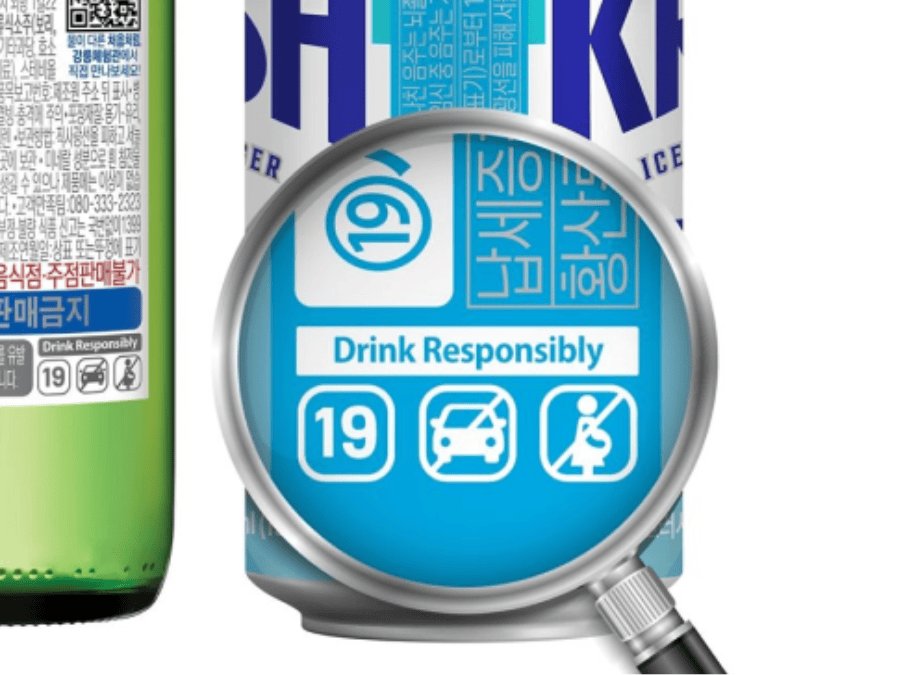
Back to South Korea, and Lotte Chilsung unveiled ‘Drink Responsibly’ labelling (below), starting off with the company’s main brands. A new drink-driving warning symbol has been added to Lotte’s existing label warnings, which concern consumption during pregnancy and underage drinking. While recent legislation requiring a drink-driving warning on alcohol packaging will take effect in 2026, a spokesperson said Lotte was introducing its changes “preemptively” to help establish a “responsible drinking culture.”
Pernod Ricard joined over 20,000 revellers to promote responsible drinking at the Tomorrowland winter festival on the Alpe d’Huez slopes in France. The company distributed reusable water pouches to festivalgoers throughout the daytime, and at night moved among the crowds with ‘Drink More Water’ carts to underscore the importance of staying hydrated.
In late April, Pernod Ricard also attended the ChangeNOW sustainability summit in Paris to lead a workshop called ‘Rethink your Drink: A Bold Take on Responsibility’. The group highlighted several of its responsibility campaigns, including ‘Drink More Water’, and discussed ongoing actions to make moderation cool, mindful choices easy and responsible drinking the new norm.
Aware.org conducted a nationwide survey in South Africa to evaluate teenager’s awareness of the risks associated with underage drinking, as part of its flagship ‘#NOtoUnder18’ initiative. Researchers found high awareness among the country’s teens, who mostly recognise the negative effects of underage drinking. Aware.org commented that the survey results will allow its experts to move from assumption to evidence when designing harm-reduction strategies.
Staying in South Africa, and the Drinks Federation of South Africa launched an industry-wide initiative to promote responsible alcohol marketing. The ‘Small Print, Big Impact’ campaign is designed to make the self-regulatory Alcohol Industry Communications Code of Conduct more widely understood and implemented across the sector, from producers through to marketers and communication teams. The code outlines important marketing standards to ensure that ads are socially responsible, do not target minors, avoid misleading claims and do not glamorise alcohol.
Environment
Asahi partnered with the British Beer & Pub Association and Zero Carbo Forum in the UK to produce a report on the significant climate risks facing the country’s barley and hop crops. The report warns that both crops face diminishing yields and quality due to drier summers and wetter autumns, and offers advice on how brewers, farmers and the Government can work together to mitigate these risks through a whole-of-society approach.
Asahi also switched on its recently-constructed solar farm in the UK, which will provide all of the company’s electricity needs in the country for the next decade. The company’s unit in the country will be implementing a range of biodiversity initiatives at the site, which will generate 22.3GWh of electricity per year.
Carlsberg’s Švyturys-Utenos Alus has become the first climate-neutral brewery in Lithuania. A new 7.5MW solar power plant and a 6MWh battery storage park on site has fully decarbonised the facility.
And in Vietnam, around 200 Carlsberg staff and managers marked World Environment Day 2025 with a coastal clean-up initiative. The volunteers collected over three tons of rubbish from beaches in Phuoc Tinh, helping to restore the natural beauty of the shoreline. Representatives from Denmark’s embassy in the country also joined the volunteers, highlighting the importance of cross-sector environmental partnerships.
Kirin’s Lion unit installed just under 2,450 solar panels at its flagship brewery in East Tamaki, New Zealand. The layout is one of the largest rooftop installations in the country and will provide 14% of the brewery’s electricity needs.
Suntory unveiled its mid- to long-term plans for utilising hydrogen in Japan, with the intention of becoming the first business in the country to engage across the entire green hydrogen value chain, from production to sales. The ‘Suntory Green Hydrogen Vision’ builds on a history of public-private partnerships under the Government’s 2017 Basic Hydrogen Strategy. Suntory collaborated with regional authorities and other partners to create Japan’s largest 16 megawatt Power-to-Gas System in Yamanashi Prefecture, to supply green hydrogen to both of its manufacturing facilities in the region, as well as other neighbouring businesses. The group also plans to use the project to establish a ‘local production for local consumption’ model for green hydrogen supplies in inland regions.
Governance
Staying in Japan, and Asahi has been rolling out function-specific human rights workshops to some of its teams, to help staff apply its ‘Group Human Rights Principles’ within their work. Participants work through case studies and uncover blind spots, with Asahi looking to roll out more sessions across the year.
Diageo partnered with the Wine & Spirit Education Trust (WSET) to launch exclusive spirits training for female staff in India‘s hospitality sector. The programme is for junior professionals and female bartenders, with around 80 women expected to receive internationally-recognised WSET certifications free of charge during the programme’s first phase, thereby improving expanding their employment opportunities.
Finally, in the UK, the William Grant Foundation, which has managed donations to good causes on behalf of William Grant & Sons since 2014, released its 2024 annual review. The latest report details the distillers’ initiatives and donations to a variety of causes linked to health and social support, Scottish culture, natural & built environment and youth opportunities.