

This interview was published for Global Drinks Intel subscribers in June. For details on how to join them, click here.
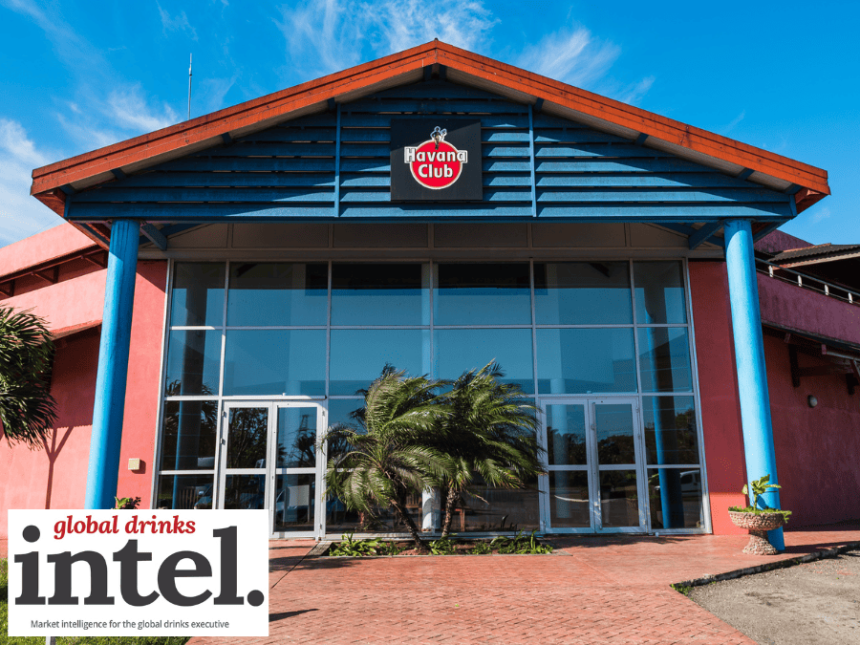
Earlier this year, Global Drinks Intel sat down for an exclusive one-to-one with the CEO of Pernod Ricard’s Havana Club International business, Christian Barré. Over the course of an hour, Barré shared his views on Havana Club’s movement further up the price ladder, the recent flurry of M&A activity in the segment and the rum category as a whole.

Global Drinks Intel: How’s the current landscape looking for Havana Club?
Christian Barré, CEO of Havana Club International: Our last fiscal year – to June 2022 – was a record year for Havana Club, with sales of 4.6m cases, close to 3.3m of which were exports. It’s true for many brands, but the post-COVID recuperation has been much stronger than we expected.
Our biggest markets are mainly Western European; number one is Germany, number two is France and then we have a group of countries, including the UK, Spain and Italy. We are also working on geographic expansion – it’s fine to have a big part of your business in certain areas, but it’s important to diversify your source of growth. We’ve seen growth in many new countries for rum.
Rum’s a very dynamic category, especially in the super-premium-plus and ultra-premium segments. There are many new brands coming to market and established brands are innovating. Recently, we’ve seen a few competitors acquiring premium brands – this will bring additional attention and focus to the category.
GDI: We’ve seen Cuba Ron [the state-owned company that works with Pernod Ricard on Havana Club International] agree new partnerships with competitor brand owners in recent years. What’s Pernod Ricard’s relationship like with Cuba Ron?
CB: The exclusivity was part of the initial agreement, which ended in 2013. But it’s reciprocal; Cuba Ron can sign agreements with whoever they want and on the other side, Pernod Ricard can distribute other rum brands. It’s the normal evolution.
We have a 30-year relationship with Cuba Ron. Both partners know each other very well. The size and importance of Havana Club is such that we’re both very careful in terms of governance. But it’s fair enough. Honestly, it works quite well.
GDI: Does that mean Pernod Ricard is in a position to add rum brands to its portfolio, whereas before it couldn’t?
CB: Yes.
GDI: Are you suffering from ‘fear of missing out’ when the likes of Don Papa and Diplomático are acquired?
CB: We’ve made two steps in that direction, with La Hechicera, an ultra-premium rum from Colombia – a great brand with very good potential – and the minority stake in Sovereign Brands, which owns Bumbu. That’s a demonstration that Pernod Ricard doesn’t stay still and is active in managing its portfolio.
The company will make sure it covers all segments and all consumer types with Havana Club, La Hechicera and Bumbu.
GDI: You’re keen to highlight Havana Club’s higher-end activity, but how big a barrier to entry for ‘expert’ drinkers of rum is a brand that has a strong presence on supermarket shelves?
CB: We have parts of our range available in all [sales] channels. We also have parts of our range that are more channel-specific for experts. Whatever the price of the product, you have a common denominator in terms of quality. You can go up the ladder and you always have a great quality product for the price that you pay.
The risk would be if we decided to go too commercial without taking care of the quality of the product just for the sake of selling more. This is not our strategy.
GDI: As the price of the expression goes up, does the size of the logo go down?
CB: Normally, yes. But, it’s back to the quality credentials. Consumers know it’s great for its quality, but when they buy a bottle for US$200, $300, or $400, do they want to have a big, red Havana Club logo on it? Not sure.
We’ve had – and we still have – a lot of internal debate on this, but we’re very clear on how we want to express the quality of the range according to the level of pricing that we have.
GDI: For years, rum brand owners have said ‘This is the year for rum’. Why are you so sure it’s going to happen now?
CB: There’s a conjunction of factors. For a long time, entry-level white rums were declining in volumes. But, in the past year for the first time, we’ve started to see slight growth.
At the other end, you have this strong dynamism in ultra-premium. If you look at other spirits categories, it very often starts with activity at this end, which then cascades to the rest of the category. In addition to this, there have been the recent acquisitions, again in ultra-premium. You can expect that if companies like Diageo [who bought Don Papa] and Brown-Forman [who acquired Diplomatico] are investing in such brands, it’s not to stay still.
Similar to what we’ve seen in Tequila, I really believe that all the elements are aligning to accelerate the category.
GDI: One reason why the Scotch industry has been so successful is that it’s had firm category definitions that have been easy for consumers to understand. Rum’s never had that. Does it matter?
CB: It’s going to be hard for rum to get its house in order because it’s so diverse in terms of origins and styles. Having said that, as in other categories, the big players have a clear responsibility to communicate our products to consumers.
We need to educate so that consumers know whether it’s an aged or non-aged product, which is pretty easy to explain. Where there’s more confusion is with the solera system: A 20-year-old solera rum, for example, can be mostly four years old with a bit of 20-year-old. Consumers just see a number and they don’t know the process behind it.
It’s true the rules for categories such as Scotch, Cognac and Champagne are clear. Also, Tequila is well structured, But, vodka’s much more flexible.
GDI: Vodka’s more of a volume-focused category.
CB: But you could take the parallel of super- and ultra-premium vodka. It’s a challenge for the category, but we need to work with the trade to make sure the message is properly communicated and that it’s not lost in translation.
GDI: Is there any appetite among the larger brand owners in the category to firm up those definitions or is it more about educating the consumer about existing definitions?
CB: There’s a common interest to make sure there’s no additional confusion or at least to to make sure the existing local rules are well respected. Producing the rum appellation in Cuba has its own rules, in the Dominican Republic it’s another, another in Colombia, in Panama, in the Philippines. I mean, it’s super diverse.
Maybe there’s a lack of clarity for consumers but I think many are buying a product because they’ve tried it and like it. Does rum need a minimum age statement or do they really care? Sometimes yes, sometimes no.
GDI: You’ve lined up Vintage 2007, Havana Club’s first year-statement iteration for later this year.
CB: It’s totally new for us and in Cuba. It’s a way to display the richness of aged rums we have in our warehouse. We’re exploring this like they do in vintage Champagne: They have a release one year, maybe not the next. It will be according to the treasure the maestro ronero will find and decides could be the next vintage for Havana Club. The concept of vintage is a change of mindset from the art of distilling, blending and ageing. It’s an interesting technical exercise for them.
GDI: How has Havana Club been impacted by the supply chain and rising costs issues of recent years, given Cuba’s historical challenges in these areas?
CB: We probably did much better than anyone else! Since 1962, there’s been an embargo on Cuba that puts a lot of pressure on the way companies in the country work, and the way we organise ourselves in terms of logistics ahd procurement. We cannot buy from companies that have anything to do with the US, so we’re used to working in a constrained environment.
When the industry experienced these amazing tensions, I wouldn’t say we didn’t have any problems but we managed to get through the storm quite well, because we had safety stock of dry goods and of finished goods in the market. We didn’t experience any stock-out situations in our markets.
On costs, it’s clear they’ve increased. We expect some kind of slowdown in the increases, particularly in sea freight, which went up drastically but is now at a more reasonable level.
GDI: Do you ship in bulk and bottle in market?
CB: We ship finished product in bulk to Spain where we bottle entry-level rum for many European markets. That’s been the case for many years.
GDI: It would be remiss of us to not ask where things stand with both the Cuba embargo and the long-running disagreement with Bacardi over the Havana Club trademark.
CB: The embargo has existed since February 1962. It probably won’t disappear tomorrow, and we don’t have any specific information on that. We are fully prepared to start selling the ‘real’ Havana Club in the US whenever they will decide.
The Bacardi dispute is a very long one. To cut a long story short, the Havana Club brand, which in the past belonged to the Arechabala family, had been abandoned – they were in different businesses as a family. When the time came to renew their trademark, they didn’t do it. Not only that, but they weren’t selling Havana Club, only a bit in the US.
In 1973, the trademark elapsed and was terminated. Then, in 1976, [state-owned] Cuba Export registered a new Havana Club trademark in the US. Since then, it’s been legally registered with the USPTO [Patent and Trademark Office] and the next renewal will be in 2026.
[Editor’s note: Bacardi purchased the Havana Club recipe and trademark rights from the Arechabala family in 1994.]
You have to take into consideration that Bacardi has tried in many countries to do the same as it is doing in the US [legally challenge the trademark ownership] – they’ve lost everywhere.
When the judge in the US will have to take a decision, we believe it will be based on the same information and that the decision will be in favour of the real Havana Club. We firmly believe the outcome will be positive.
This interview was published for Global Drinks Intel subscribers in June. For details on how to join them, click here.