

2021 was a mixed year for the lively and diverse Italian spirits category, but producers are moving forward with innovative NPD. Simon Molony reports
The most prominent subcategories of Italian spirits are bitters and spirit aperitifs. Aperol Aperitif has achieved international success and is a mainstay of the summer cocktail occasion in Europe with the now ubiquitous Aperol spritz; a marketing campaign in 2017 established a base for Aperol spritz in the US from which it has continued to grow.
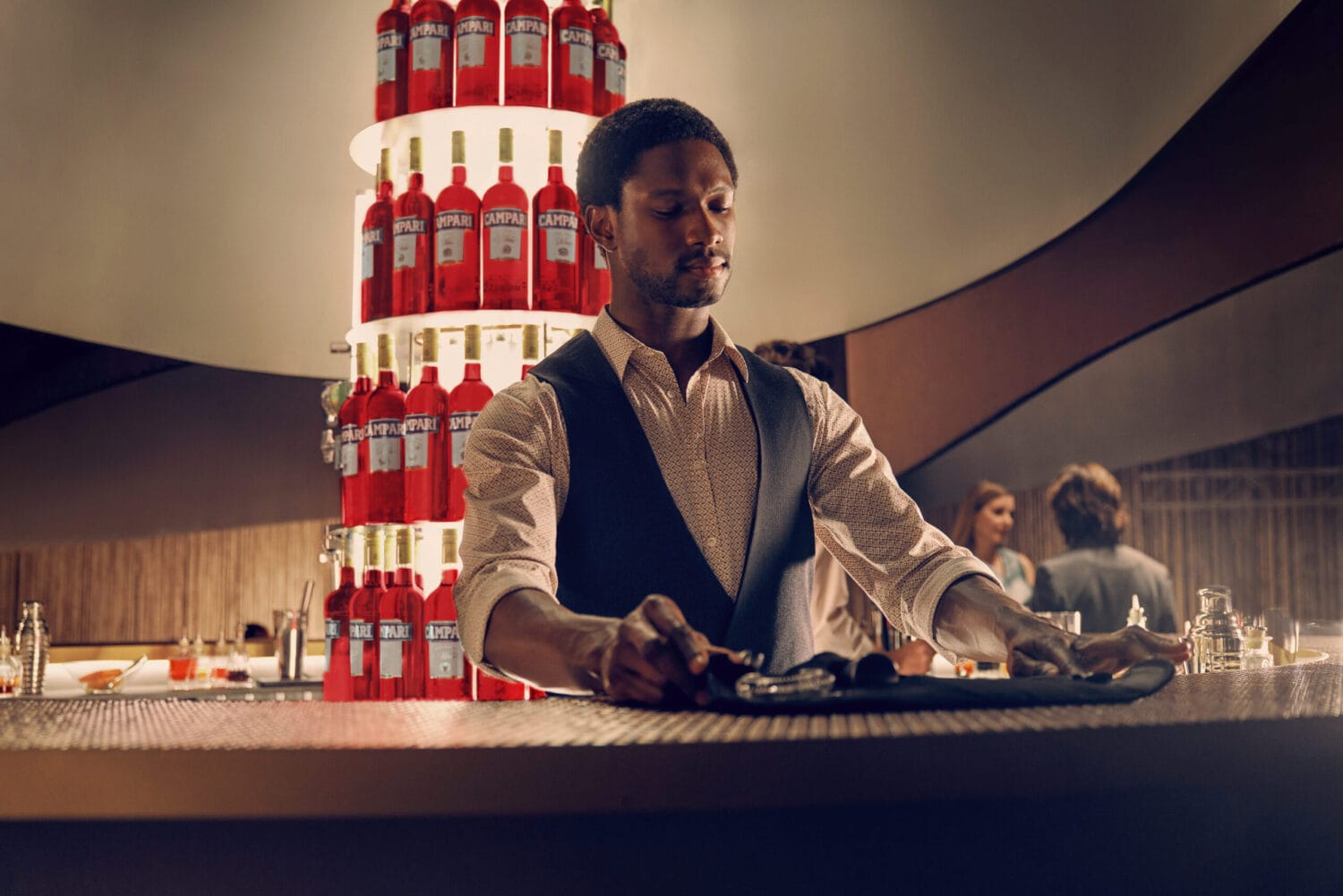
Campari Bitter has also penetrated the global drinks market and represents another established Italian-origin spirits brand. Like Aperol, Campari has been popularised as the ingredient in a spritz cocktail. Campari Group’s half-year results for January to June 2021 shows very high sales growth (+30% year-on-year growth); while this is unsurprising given the depressed state of markets in the first half of 2020, the strength of recovery demonstrates the sustained demand for Campari’s portfolio, led by these iconic Italian brands.
According to the company: “In the first half of 2021, performance was significantly influenced by a favourable comparison base with the first half of 2020. However, the group demonstrated strong business strength, with positive brand momentum across key markets thanks to resilient offpremise dynamics, combined with gradual on-premise reopening.”

The company focused on its long-term growth strategic objectives in terms of brand building and strengthened distribution capabilities in its strategic geographies, including Asian markets. Spearheading these were education initiatives on serve suggestions and a focus on digital engagement to reinforce home consumption of Aperol spritz. The Campari Red Passion digital campaign was also launched during this period.
Another bitter which has established a strong international presence is Caffo’s Vecchio Amaro del Capo. Caffo export area sales director Gabriele Langella says that Europe is, unsurprisingly, the most successful region for the brand. “Apart from Italy, the most successful markets are Germany, Albania, Spain and Belgium,” he explains. Beyond Europe, the most important markets are the US, Australia and Japan. We have a unique export strategy for Vecchio Amaro del Capo — we position it as a premium product in its category of digestive bitters,” says Langella.
According to Langella, the brand performed well in Italy last year, despite the adverse market conditions, and only suffered losses in its export markets. “In 2020, Vecchia Amaro del Capo kept on growing in Italy at a rate of 19% versus 2019 and maintaining a market share of 35.2%, while we had a negative performance for the export market due to the pandemic and the closure of the on-trade channel,” he says. Year-to-date 2021 has highlighted the resilience of the brand and by extension the Italian bitters category as a whole, in both the domestic market and abroad.
Langella says: “In the first half 2021 in Italy, we recorded a further increase of 22% versus the first half of 2020 and also for the export market we not only recovered, but we performed better than the first half of 2019 with growth of 20%. Among the key markets recording this recovery, were Germany, the US, Japan, Albania, Belgium and Australia.”
Pallini Limoncello is also growing its presence in export markets, primarily through brand development. Pallini CEO and president Micaela Pallini says: “Our strongest markets are the US, the duty-free and travel-retail (DF&TR) segment, the UK, Russia, Germany and South Korea. In these markets, we are establishing a strong leadership through continuous brand innovations.” These include the launch of a no-alcohol and a low-calorie Limoncello as well as a vegan Limoncello Cream. Limoncello is a very strong category in Italy. “It became fashionable at the end of the previous century,” Pallini explains. “The trend drivers have been the sweet fresh taste, the possibility of crafting the liqueur at home and the unmistakable colour which reminds of summer.”

Last year was difficult for the brand as a large part of its business is established in the pandemic-struck DF&TR segment; it lost -20% of volume. “In 2021, however, we are in line with the 2019 volume, and we plan to close the year with further growth even though the DF&TR business has not yet fully recovered,” Pallini says.
Beyond these household names, the Italian spirits segment offers a diverse range of products, from the more familiar grappa and sambuca to various liqueurs, gins, brandies and even single malt whisky.
Bottega’s varied product offering is a good example of this. Bottega president Sandro Bottega describes a varied portfolio: “Bottega Gin Bacûr is well introduced in Italy and in the UK. The Mediterranean taste of the distillate and the innovative copper-colour bottle are appreciated by consumers. At the beginning of the year, our Bottega liqueur line was enriched by Pannacotta and Cappuccino flavour extensions, and we are launching Tiramisù. Comparing year-to-date 2021 performance against last year, Bottega says there was growth in turnover. “The good performance is led by the sparkling wines, but also grappa and liqueurs are slightly growing, mainly in Italy and in the European markets,” he says.
Montenegro international marketing manager Valentina Pisano describes positive results even last year: “Vecchia Romagna Brandy saw a considerable increase in sales across all our markets in 2020.
Over the years we have expanded our Vecchia Romagna portfolio to include a more premium and luxury offering with our Riserva range to add Riserva Tre Botti, Riserva Anniversario 200 and a soon-to come new Riserva, which will launch in late October. This has given us access to more affluent and discerning consumer base.”
As the name suggests, Anniversario 200 was launched to celebrate Vecchia Romagna’s 200-year anniversary in 2020. “Its unique selling point is the blending of older, vintage wine spirits — the oldest of which have rested in oak casks for 67 years, while the younger spirits have been aged for at least 23 years,” Pisano says.
Heritage key to appeal
Authenticity and heritage are key to the appeal of Italian spirits, according to Rossi d’Asiago brand owner Nicola Dal Toso. “Consumer appeal based on heritage, trust and high quality is important as ever to the spirits market at present,” he says. “Our liqueurs offer something unique, with genuine heritage and authenticity, and of course, the ‘made-in-Italy’ factor still plays an important role in driving the concepts of quality, tradition and innovation.”
The producer’s portfolio includes Rossi D’Asiago Limoncello which is present in more than 30 countries. “This year we are also launching our Kranebet Botanic Juniper Liqueur on the international market. We are proposing it in the KranebeTonic, an aromatic cocktail that is perfect as an aperitif,” Dal Toso says.
Rossi d’Asiago also produces Antica Sambuca, the leading brand of its kind in the UK. Sambuca remains a popular, traditional drink in Italy and has become a feature of on-premise consumption in export markets like the UK.

Luxardo export director Matteo Luxardo explains that Luxardo Sambuca is now one of the leading sambucas in the world, sold in more than 85 countries. “The quality and the name Luxardo are the secret of our success,” he says.
Dei Cesari is better known outside Italy due to the competition in our local market. During 2020, Dei Cesari performed pretty well; the sales went from local bars and pubs to liquor stores and this was due to home consumption because of lockdown,” he says.
Luxardo launched Luxardo Aperitivo this year to follow its success with Dei Cesari; it is a low-alcohol product ideal for spritzes. “It is a great product with a nice bitter orange aroma,” Luxardo says. “This product is well received in those bars where there are terraces or patios, where you can enjoy a drink with friends and colleagues.”
Aperitivo is a crucial aspect of Italian spirits consumption in the domestic market, as is the appeal of Italian-origin drinks abroad — especially in other European markets where the occasion is also valued. “The aperitivo is envied by the rest of the world,” Luxardo says. “For us, it is something very important, it is a way to interact with our friends, colleagues or families. Getting together and sipping a great drink is, for us, one of the best part of our lives.”
Montenegro’s Pisano describes the aperitivo moment as a ritual: “It’s a tradition that permeates everything we do.” The after-dinner occasion is also key, says Pallini — although Pallini Limoncello is often consumed in cocktails and mixed drinks as aperitifs, 50% is drunk as a digestive. The aperitivo occasion offers opportunity for expansion, says Caffo’s Langella. “The aperitivo occasion is not yet so relevant for our brands, but the launch of the new Petrus Boonekamp Blood Bitter (pictured left) will put more emphasis on this moment,” he says.
Indeed, Caffo has launched a number of new brands in the last year, despite the adverse market conditions. These include Emporia Gin, Vecchio Amaro del Capo Red Hot Edition, aforementioned Petrus and Ferro- China Bisleri. Such expansion is a good indication of the resilience and vibrancy that characterise the Italian spirits segment. ●