

The new frontier for spirits design is moving beyond luxury and extravagance, focusing instead on technology and genuine purpose to connect with an increasingly discerning drinker.
Design has become one of the most powerful brand-building tools in the spirits industry, extending packaging far beyond its utilitarian roots. Yet trying to find consensus among spirits packaging designers on what’s driving the next wave of innovation is almost comically difficult.
Even so, clear themes do eventually emerge: storytelling that deepens brand meaning, sustainability that reassures increasingly eco-aware consumers, aesthetics that engage and surprise, technology and AI that elevate engagement, and brand-protection measures that reinforce consumer confidence. Together, these themes are reshaping what a bottle can say and do in a crowded, fast-moving market.
This shift is also widening the creative lens across areas of drinks packaging design that were once governed almost exclusively by cost, reliability and function. Even in traditionally hard-headed components – such as closures, for example – aesthetics and brand expression are now central considerations as brand owners look to ensure every touchpoint reinforces the story their packaging is trying to tell.
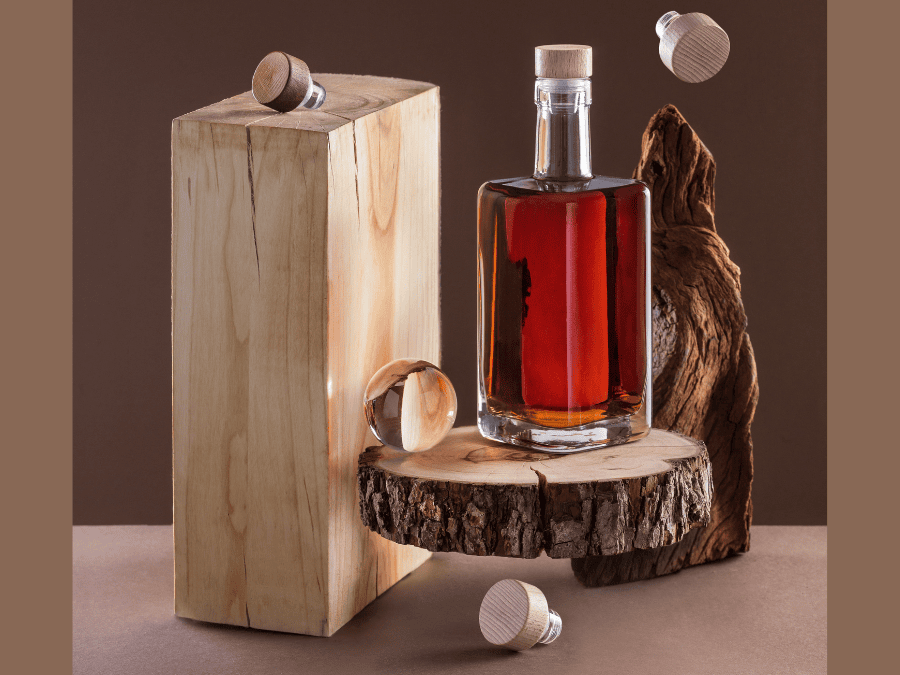
High-end glass closure producer Vinolok provides a wide range of design options, according to marketing manager Klára Kašparová. “The Duet collection (below), for example, combines the purity of glass with wooden elements – closures where a wooden top, in light or dark tones, is seamlessly joined to a glass base.
“The whole product portfolio supports a variety of custom decorations,” she adds, citing the options of laser engraving on both the top and side of the Duet collection, embossing, stamping, colour coating and printing. “This flexibility enables brands to align the closure design with their identity, whether rustic, luxurious, minimalist or craft-driven.”
The Czech closure company has experienced increased “demand for special shapes” to provide standout, adds Kašparová. “Vinolok’s Edge collection provides creative, non-traditional shapes, giving bottlers more freedom to make their bottles truly distinctive.”
Design – What’s in and what’s out
It is in the realm of aesthetics – shapes, colour, materials, typefaces and textures – where designers most often diverge, revealing just how subjective the craft can be. To pinpoint what’s on trend, it can be easier to focus on what is falling out of favour, rather than chasing what’s in.
“For the love of God, no more ribbed bottles,” pleads the creative director at Manchester, UK-based agency Love, Garry Calderwood. “Despite the undeniable beauty of the forerunners like Harris Gin and Lind & Lime, it’s sadly become ubiquitous.”
Also heading for the design bin for Calderwood, who has nearly 25 years’ experience with drinks clients such as Beam Suntory, Moët Hennessy, Diageo and William Grant & Sons, are what he terms “meaningless extravagances”. These include “brick-heavy bottles, mega caps and overfoiling to the point of Liberace-level ostentation”, as well as “meaningless clutter and faux authenticity”, such as exhaustively detailed back labels and fake “craft” ephemera.
“It’s all a bit like walking into a chain pub with depressing old prints on the walls,” he says.
As for what’s in, Fredrik Svalstedt, COO at Swedish agency Pond Design, whose client roster includes Pernod Ricard’s Jameson Irish whiskey and Absolut vodka, says that both agencies and clients are becoming more adventurous with bottle labels. “Driven by the same force, that much within the spirits world has long looked uniform, brands are now pushing visual boundaries through label design,” he says.
“We see labels of different sizes, unexpected shapes and asymmetric compositions that challenge convention and add a new layer of character to the bottle.”
There is a move away from performatory ‘greenwashing’ to genuinely responsible design, especially in the luxury scotch whisky sector, notes Matt Waldron, senior designer at branding agency Bloom, a London-based firm with a portfolio that includes Lagavulin single malt, Inch’s cider and Foster’s lager.
“Brands are increasingly embracing recyclable materials, sustainable labels, non-toxic glues and recycled glass,” he says. “It’s likely that companies will start investing in eco-foils and finishes that retain the tactile, premium feel consumers expect while reducing environmental impact.
Sustainability may now be an automatic element of the design process, but premium-positioned brands must still balance consumer expectations.
“Secondary packaging, in particular, remains a challenge,” admits the founder & CEO of B Corp-certified UK brand Hattiers Rum, Philip Everett-Lyon. “The reality is it’s often wasteful, environmentally questionable and expensive, yet it’s still expected within the industry – especially for gifting and luxury retail.”
Unlock the power of unboxing
Although much of today’s spirits design focuses on storytelling and provenance, there is a growing demand for packaging to surprise and stimulate. The popularity of online unboxing culture has only amplified that demand, with consumers expecting packaging to deliver a moment of theatre as well as information.
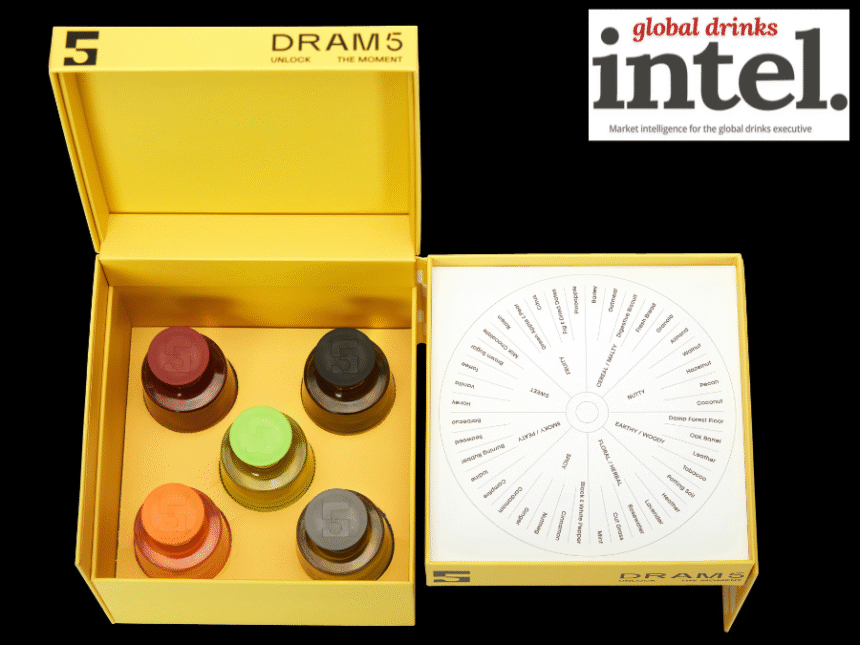
Dram5 (top image), a new limited-release whisky blind-tasting box containing five 5cl single-cask, natural-colour, non-chill-filtered scotch whiskies, leans directly into this shift. Company owner & founder Yu Song describes the brand’s philosophy as stripping back branding bias.
“At the heart of Dram5 is the belief that whisky should be discovered through taste, not reputation,” he insists. “By removing labels, logos and preconceptions, we allow flavour to take centre stage, encouraging curiosity, conversation and genuine discovery.”
This approach, Song notes, has shaped everything from “the sculptural simplicity of the box” to “the deliberate rhythm of the unboxing”, creating what Song calls “quiet theatre, immersive, elegant and ultimately driven by the joy of not knowing what comes next”.
Smart packaging – The need for balance
Smart packaging is becoming a strategic asset for drinks brands, enabling everything from on-pack special effects to deeper product stories via QR codes and enhanced security through NFC tags.
Yet, while the technology is advancing quickly, consumer acceptance depends on a careful balance: brand owners are pushing for richer digital engagement, while designers must ensure these features feel intuitive, unobtrusive and genuinely useful rather than gimmicky.
“I think new technology has a clear role to play, both in protecting brand integrity and enriching the consumer experience,” maintains Angus Lugsdin, co-founder & director of Devon, UK-based craft distillery Salcombe Distilling Co. “Features like QR codes and digital tags can help reduce counterfeiting while also opening up a new dimension of storytelling.
“By scanning a pack, consumers can be taken on a deeper brand journey, discovering the provenance of our ingredients, the craft behind the spirit, and the people and places that inspire it,” he adds. “It’s a simple but powerful way to extend the experience beyond the bottle, creating a more personal and immersive connection with the brand.”
However, technology for technology’s sake can be a turn-off for digital native Gen Z customers, warns Bronwen Westrip, executive creative director at Denomination, a drinks design consultancy based in Australia, the UK and the US.
“Today’s consumers, especially Generation Z, are increasingly cynical and weary of digital gimmicks,” Westrip says. “They’re cautious about data capture and actively avoid unnecessary screen time. In this context, the key question becomes: how do you make consumers want to use these technologies and, quite honestly, how do you make them care?
“A tap or scan that leads only to a static web page will be quickly forgotten. But a digital experience that brings the brand to life in a way that’s uniquely relevant – a guided tasting, an interactive way to ‘split the G’, a tailored cocktail recommendation or access to limited releases – can transform authentication into a moment of delight.”
Countering counterfeit
Denomination’s Westrip also stresses the important role smart packaging technology has to play in combating the interconnected problems of counterfeit alcohol and illicit alcohol poisoning.
“As incidents of counterfeit and tampered alcohol rise, particularly cases linked to ethanol poisoning in travel and emerging markets, means consumer safety has moved to the centre of the conversation in global spirits,” she says. “What was once a niche issue is now a mainstream concern.
“As travellers and collectors seek assurance that what’s in the bottle is genuine and safe, tamper-evident and interactive packaging is fast moving from innovation to necessity. Trust and transparency are increasingly crucial to category growth and loyalty.”
Though consensus on the next ‘in’ design remains elusive, the convergence of meaningful storytelling, verifiable sustainability and useful technology ensures that packaging is now the dynamic, indispensable stage for every brand’s identity.
Pentawards – ‘Premium’ spirits packaging now about ‘values rather than vanity’
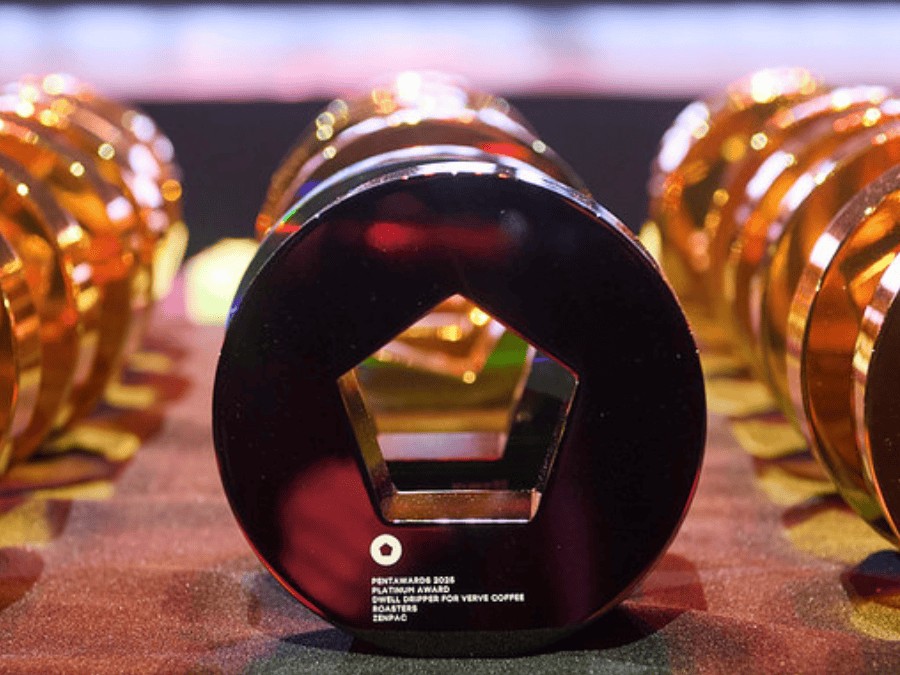
Firmly established as the world’s leading packaging competition and now in its 19th year, the Pentawards (above) continues to serve as a barometer for where design is heading.
Spirits dominate the beverage category, according to marketing manager Chloe Scanlan. “We see this [category] consistently grow every year, including for 2025,” she confirms. With entries arriving from more than 60 countries, the category revealed strong creative momentum not only from established markets such as the UK, the US and Japan, but also across South America and Mexico, with entries from that region “earning top recognition”.
A clear shift is emerging in how ‘premium’ is being expressed via packaging, notes Scanlan. “Heavy glass and ornate finishes are giving way to smart material innovation, refined restraint and design that communicates values rather than vanity,” she says.
This year’s Pentawards winners epitomise this new design priority, Scanlan says, highlighting Diageo’s Johnnie Walker Blue Label Ultra, Hennessy Paradis Cognac and Mexican whisky Gran Maizal as examples.
“The lightest 70cl whisky bottle ever produced”, Johnnie Walker Blue Label Ultra’s teardrop-shaped vessel harnesses ultra-lightweight engineering to use 29% less glass than its predecessors, while challenging long-held luxury codes.
Creative studio NR2154 partnered with premium hardwood producer Danzer on its Hennessy Paradis redesign, using 3D veneer technology and waste wood to create “a sculptural, fluid form with surprising lightness”.
Meanwhile, branding studio Human “broke entirely new ground” with its design for Mexican corn whisky Gran Maizal, incorporating corn leaves into its label and mud on the bottle neck – a textural narrative rooted in Mexican tradition.
Elevated cues are now also influencing packaging designs in the booming no/low space, adds Scanlan, pointing to Stranger & Stranger’s hobnail-textured bottle design for La Petite Victoire Non-Alcoholic Blanc De Blancs Wine as leading the charge.
Storytelling proved another defining force, with bottle and label designs for Nochaca Tequila and amaro and limoncello line Nazionale Spirito Italiano showing that “cultural specificity, when executed with craft, adds emotional depth without sacrificing shelf impact”. Even technology-forward entries, like Fujifilm’s Japanese sake Fujioh, “connected provenance and process in fresh ways”.
Sustainability, Scanlan concludes, is no longer a trend but “the baseline”. The Johnnie Walker Black Label Paper Bottle exemplified this future-facing outlook, using PulPac’s Dry-Moulded Fibre to cut weight and emissions while retaining brand equity.
As EPR legislation looms, Scanlan notes that brands are already pivoting toward lighter, mono-material and easier-to-recycle solutions.
Members-only intel
Keep reading this members-only article – and every one like it
- ✓All paywalled news and interviews
- ✓Category and market data
- ✓Monthly GDI magazine
- ✓Full archive + daily newsletter
Secure checkout · Cancel any time · Company invoices available
Already a member? Log in
See all plans, incl. 10-reader and corporate
Check if your company already pays for you Your company may already give you free access.
Corporate subscribers: AB InBev, Bacardi, Campari Group, Diageo, Moët Hennessy, Pernod Ricard, Proximo Spirits, Suntory Spirits Group, William Grant and Sons.
Activate company accessNot ready yet? Get the headlines free in our daily newsletter.
Sign up free