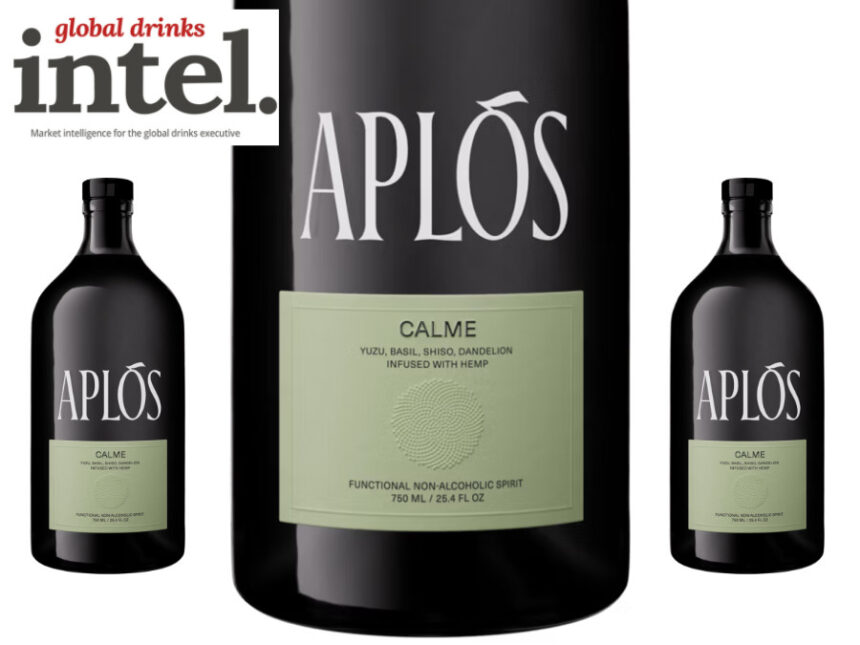
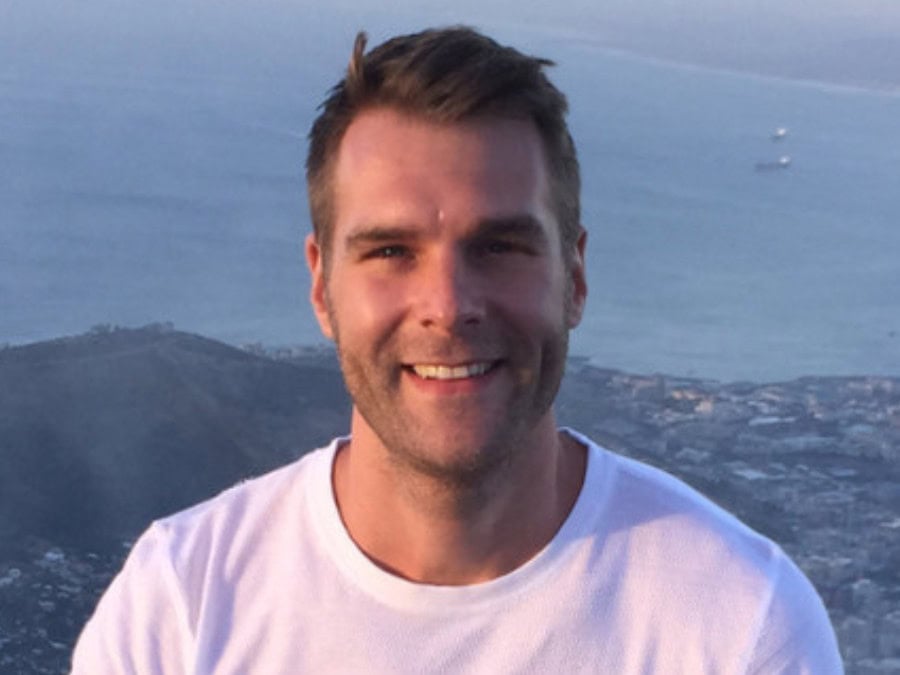
Just over five years ago, David Fudge teamed up with Emily Onkey to co-found Aplós, an alcohol-free functional spirit that encouraged consumers to “rethink the way you drink”. Global Drinks Intel editor Olly Wehring caught up with Fudge earlier this year to learn more about Aplós and the burgeoning functional non-alcoholic spirit segment.
You didn’t have a drinks industry background before you launched Aplós.
I’ve been a marketer for my whole career of over 20 years, but I’ve worked with start-ups for about 15 years. I was in media and fashion before, and I had the fortunate experience of working for two other founders in start-ups. That gave me an itch to start something myself.
I’d never been a big drinker and had always had that familiar internal debate anytime I was out with friends – do I want to participate or do I want an unaffected night’s sleep? I’ve always liked to wake up early and go to the gym, so even though I love the ritual of it, alcohol didn’t really suit my lifestyle.
Working for another entrepreneur who didn’t come from the industry that he was building a company in, I learned that it’s an advantage that I don’t come from the drinks industry – I have a beginner’s mindset. Essentially, entrepreneurs try to build the world they want to live in; they want to change and disrupt things. To do that, you really need to think differently, so I view it as an advantage that I don’t come from the industry.
I’m not so naive as to think that I know everything, so my co-founder, Emily Onkey, and I have made a concerted effort to bring in industry experts. We have half a dozen drinks industry executives who are investors, and two of our board members were successful executives at LVMH and Diageo.
We knew we needed people who aligned with our vision to build a next-generation drinks brand that will anchor the bar of the future globally.
How long has Aplós been going for?
We launched in December 2020 – in the middle of Covid – with one SKU in e-commerce. For the first year, we focused on e-commerce, then we introduced our second spirit in our second year. We’ve been slowly building since then, and in the last couple of years, we’ve focused more on the traditional on- and off-premise channels.
We’re just in the US now, but we’ll look to expand into Europe when the timing is right.
Did you feel a resistance to change from within the drinks industry?
For sure! Anytime you enter an industry as a newcomer, there’s a heavy level of scepticism, particularly in an industry like this, which is so relationship-driven. So many people have spent their entire careers in this industry.
We’re currently going through a once-in-a-generation realignment of the adult beverage industry, and as humans, we don’t love change – there’s always some resistance, and I definitely felt that early on. But the consumer is ahead of the industry: We spoke to hundreds of bartenders before we launched to understand what the consumer was asking for.
It’s only really been in the last year that we’ve seen the stakeholders in the on-premise in the US start to proactively reach out to us. Two years ago, when not everyone had a non-alc programme, it was a much more difficult sell. Now, it’s becoming a must-have, and things are starting to open up. There’s still a certain level of resistance of an old-school nature. That’s natural, but it will continue to loosen up as the category continues to grow significantly.
When you say that the consumer is ahead of the industry on no- & low- alcohol, how do you mean?
The buyers in the on- and off-premise have caught up, and beverage alcohol suppliers are aware of what’s happening as they see it in their own numbers. But, I think a lot of them still have a ‘wait and see’ approach. Many are in a period of optimising their current portfolios for where the industry is headed. They’re focused on the across-the-board industry challenges, because of the shift in consumer behaviour.
We’ll get out of that soon enough, but I understand they’re triaging their own businesses and optimising for the future, while also having a ton of interest in what’s happening now in the alcohol-alternative space.
What’s been the brand’s route-to-market journey?
We launched direct-to-consumer through e-commerce because that’s what we knew. We also knew that through D2C, we could get customer feedback and understand if we had product/market fit more quickly.
I was definitely naive to the traditional on- and off-premise ecosystem, and what it takes to be successful in those channels. You really can’t outsource your story as a young brand, you have to have feet on the street, with people who are telling your story. It feels like pushing a boulder up a hill to start, then things start to snowball over time. That’s where we are now: We laid the foundation in 2024, saw a tonne of momentum in 2025 and we’re taking that into 2026.
A lot of brands in no & low have focused on chain retail primarily because they think it’s easier to scale more quickly. We’ve taken a more diversified – some would say ‘traditional’ – approach. We believe you build a brand in the on-premise and you sell it in the off-premise. You can’t have one without the other.
What’s been the highest hurdle for Aplós so far?
It depends on what day of the week you ask! I mean, entrepreneurship is not for the faint of heart. There are days when you feel like you’re being continuously punched in the face, then there are days when you feel like you’re on top of the world.
The fragmented data infrastructure in the on- and off-premise can be really challenging. Things aren’t as directly attributable to an ROI. That sticks out as a big hurdle.