

- A collapse in the price of agave has fuelled heavy discounting, allowing tequila to be the only major spirits category to achieve volume growth in 2025, despite Mexico’s economic slowdown
- The broader spirits market is struggling with a contracting economy, high inflation and a significant hardening of regulations regarding alcohol health warnings, sustainability and digital marketing
- While mainstream no- & low-alcohol products have failed to gain traction, consumers are increasingly exploring premium agave alternatives like mezcal and sotol, alongside a surging interest in international whiskies and RTDs
- Producers are leveraging the World Cup as a critical platform for premium cultural storytelling and limited-edition releases to capture spending from an expected 5.5m visitors to the country
In Mexico, crashing agave prices and cheaper 100% agave tequilas have given the category a boost. However, despite the promise of this summer’s World Cup, the wider spirits category faces a raft of different challenges in the country.
As we approach the midway point in a volatile 2026, the market for spirits in Mexico is moving in two opposing directions.
One brightly lit path is illuminated by Mexico’s growing reputation as a dynamic, culturally influential drinks market, reflected in its globally admired bartending talent (Mexico City’s Handshake Speakeasy was ranked second in the latest World’s 50 Best Bars list), deeply rooted agave heritage and the growing international cachet of luxury brands, such as Clase Azul. Not for nothing did Bacardí choose Mexico to become the latest location to roll out its international ‘Shake Your Future’ programme to foster young bartending talent last month.
At the same time, mainstream producers and distributors are navigating a second, more challenging path beset by the country’s slowing economic growth, intensifying regulatory scrutiny, wallet-emptying inflationary pressure and an increasingly crowded, competitive landscape.
According to figures from the Imarc Group, Mexico’s overall beverage alcohol market is valued at US$24.82bn, growing at a modest 2.28% CAGR through to 2034. With price a key factor, it’s worth noting that beer, not spirits, remains by far the country’s most popular choice, accounting for 94% of total consumption volumes.
Mexico’s wider economic backdrop is becoming increasingly difficult to ignore, despite the fillip that co-hosting (with Canada and the US) the FIFA World Cup this summer will likely provide. In the first quarter of this year, the economy contracted by 0.8%, underperforming expectations and reinforcing concerns that the country has entered a prolonged low-growth phase. Inflation remains elevated, putting pressure on the consumer’s disposable income.
Increased regulatory scrutiny
This year has also brought a noticeably significant hardening of the regulatory environment for beverage alcohol in Mexico. Proposed health warning legislation on drinks packaging, sustainability mandates under Mexico’s circular economy framework introduced this January, and tougher digital marketing oversight are signalling the end of what – by international standards – has been a relatively permissive era for alcohol packaging and marketing.
Tightening regulatory scrutiny on the drinks sector is not the only way in which Mexico is falling into line with global trends. As in so many other markets, RTDs are rapidly gaining ground, driven by their popularity among younger Millennial and Gen Z consumers. In 2024, RTDs in the country grew by 6.2% in volume and by 12% in value year on year, with the category predicted to grow to a value of over MXN16.5bn ($957.9m) by 2029, according to Euromonitor International data.
At its Investor Day in October last year, El Jimador and Herradura owner Brown-Forman noted its “huge RTD business” in Mexico, revealing its tequila-based New Mix brand enjoyed annual sales in the country of 12m cases.
No- & low-alcohol disappoints while whisk(e)y gains
Despite the progress of RTDs, Mexico is an outlier in its lacklustre take-up of no- & low-alcohol products. “Mexico is well behind the developed world in this trend,” confirms IWSR Central & South America research director José Luis Hermoso.
“While there is definitely strong growth in percentage terms, the base is still tiny. Beer is probably the category showing more growth – driven mainly by the major brewers pushing their international no-alcohol marketing.”
Alcohol-free sparkling wine has also broken through, says IWSR’s Hermoso, as “no-alcohol sparkling wine is perceived to taste better than no-alcohol still wine”. But, he adds, “in still wine and spirits, the no-alcohol category remains tiny”.
While no/low remains stuck in second gear, whisk(e)y, whether of Scotch or American origin, continues to gain traction. By 2034, according to the Imarc Group, Mexico’s whisk(e)y market is set to grow from $905.2m this year to $1.47bn, with demand in cities such as Mexico City, Guadalajara and Monterrey driving a healthy CAGR of 5.52%.
Brand owners are taking note: Brown-Forman has flagged the country’s potential for its flagship Jack Daniel’s – after the US and the UK, the market is now the group’s third-largest – and unsurprisingly, Irish whiskey producers are also eyeing possible growth.
Late last year, The Irish Whiskey Association (IWA) held a tasting event in Mexico City and took part in a conference on Geographical Indications, a badge of provenance that both Irish whiskey and tequila enjoy. Over the past four years, according to the IWA, exports by value have grown fourfold, albeit from a very small base, with director Eoin Ó Catháin hailing Mexico’s “bright opportunity”, given its “growing middle class” and “strong, proud spirits tradition”.
Agave price collapse
It’s been a volatile few years for tequila, by far Mexico’s most popular spirit, where a dramatic collapse in the price of agave has seen major tequila brand owners reduce prices on key value and standard brands.
This discounting allowed tequila to grow in volume in 2025 – the only major spirits category to do so, according to IWSR’s Hermoso. The agave correction has created very different dynamics across different price tiers. While lower-cost tequila brands have benefited from reduced raw material costs, he argues that premium tequila’s pricing structure remains more insulated.
“Agave prices have a much smaller impact on the price of premium tequilas than they do on standard or value brands,” Hermoso explains. “Whether they’re buying for (drinking) at home or in the on-trade, consumers choose premium brands for status. Also, ageing, taste, bottle design, packaging and marketing are much more important cost components for premium brands.”
That emphasis on experience and identity is increasingly central to how major tequila players are positioning themselves domestically. At Pernod Ricard’s House of Tequila – home to the Olmeca, Código 1530 and Altos brands – premiumisation is being framed less as a linear trading-up story and more as an expansion of consumption occasions.
“In Mexico, our portfolio is deliberately structured to serve different occasions and consumer needs, from accessible premium to ultra-prestige,” says the division’s digital & communications director for North Latin America, Israel Salgado. “Growth isn’t happening at one single end of the spectrum: it’s happening across occasions. Accessible-premium continues to drive scale, while prestige segments – particularly extra añejo – are growing faster, fuelled by consumers trading up and seeking more distinctive, high-quality experiences.”
A more adventurous tequila buyer
Salgado is at pains to highlight that Mexicans are not “just trading up” but “exploring”. He says: “Categories like cristalinos, jovens and mezcal reflect a broader appetite for new flavour profiles and more diverse consumption occasions.
“We are responding to this by expanding beyond traditional tequila formats and embracing the full agave spectrum. Mezcal, for example, plays a key role in this strategy. With brands like Ojo de Tigre, offering joven and reposado expressions, we’re addressing consumers who are already familiar with agave, but are looking for more complex and distinctive experiences.”
Meanwhile, at lower price points, the sheer proliferation of brands has intensified competition, especially within the blanco and reposado segments. Andalusí Beverages’ international director, Francisco Ruiz, believes the overproduction of agave has led to a “minor crisis” of brands “flooding the market”.
In this challenging climate, he claims that Andalusí’s tequila-based cream liqueur line, Peligro Catrina, has found favour with younger LDA consumers.
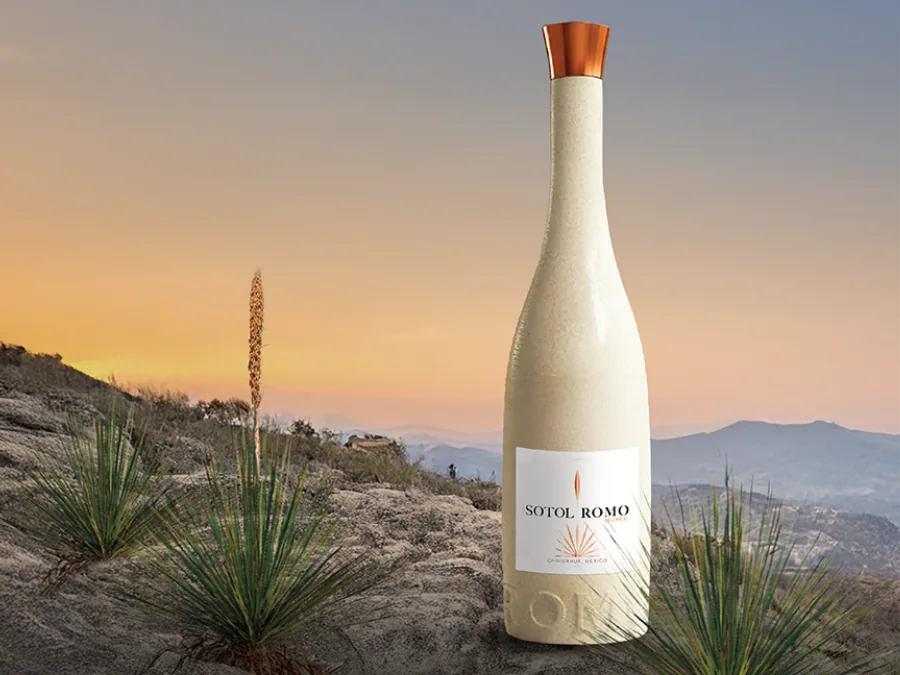
Is 2026 sotol’s year?
While tequila has retained its dominance, Mexico’s alternative agave-based spirits are also gaining ground, following in the footsteps of mezcal, which is now a global category. Once considered niche, regional spirits such as bacanora and raicilla are enjoying double-digit growth, while sotol has been feted as a breakout high-end ‘wild’ spirit for 2026.
The founder of the Sotol Romo (above) brand, Claudia Romo Edelman, describes the sub-category as “one of Mexico’s most authentic and least understood spirits”. She says: “It’s often referred to as the ‘third pillar’ of Mexican spirits, alongside tequila and mezcal, but is fundamentally different. It’s made from the Dasylirion plant, not agave, and grows wild in the deserts of northern Mexico, maturing over 15 to 20 years in extreme conditions.”
Sotol’s limited scale is both an advantage and a restrictor. “The supply is naturally constrained,” Edelman says. “These are wild plants that take many years to mature, but that’s also part of the category’s value.” Consumer education remains the primary challenge: “Most simply do not know what sotol is. That’s where the real work is: education, storytelling and creating experiences that allow people to discover it.”
World Cup opportunities
Edelman sees the FIFA World Cup, which Mexico is co-hosting in June and July, as a “major moment for Mexican culture globally”. She says: “We are actively exploring ways to be part of that moment authentically, whether through partnerships, curated experiences or targeted activations.”
The tournament, which the Government predicts will attract 5.5m visitors to Mexico, is generating a wave of commemorative releases and marketing campaigns. Clase Azul recently unveiled a limited-edition Spirit of Champions release, while Diageo has launched World Cup-themed limited editions for several brands popular in the Mexican market, including Don Julio, Smirnoff, Johnnie Walker and Buchanan’s.
Rather than focusing purely on visibility, companies are increasingly using the event as a platform for cultural storytelling. The House of Tequila’s Salgado says: “Major cultural moments like this are an opportunity to showcase the richness of Mexican culture and its connection to agave spirits.”
Of course, mega sporting events don’t automatically translate into a sustained spending boom – the 2024 Paris Olympics offered a sobering reminder of that. But for a spirits sector battling several headwinds, the arrival of millions of high-spending visitors could just be the lifeline that the spirits category in Mexico needs.