- Trends are becoming more micro, and consumers remain fickle. Being able to adapt rapidly is key.
- Sustainability is less relevant today than before. Consumers are feeling the pinch and are less likely to invest in green products. Couple this with anti-eco political rhetoric, and there’s an uphill battle.
- Keep an eye on the kitchen. Food trends are bleeding into drinks and cocktails – an opportunity for brands to get ahead.
- No- & low-alcohol is driving flavoured spirits’ performance. Adapt to lower-ABV serves for cut-through.
- There’s optimism that the market will pick up again this year.
When it comes to flavoured spirits and liqueurs, only one thing is certain: that nothing is. From the breadth of offering to the speed at which trends emerge (hello, social media), this is a category that’s difficult to predict – and even harder to manage an NPD line for.
Factor in the very real variance in geographic taste preferences and traditions, and it feels like the 2025 flavoured spirits scene is a jigsaw of hyper-local microtrends. While a few overarching themes prevail, the key takeaway is that there’s lots going on, but it’s not always consistent.
The financial performance
The numbers speak to this patchy performance. In 2023, according to IWSR data, flavoured vodka saw 3% volume growth globally, as did whiskey/whisky. Rum, meanwhile, was flat.
Within those key categories were some surprising regional winners and losers. While India, the third-biggest market for flavoured vodka with 13% share, saw sales soar by 21%, the US (with 35% share) witnessed a decline of 7%.
There were mixed fortunes for markets elsewhere. For flavoured whiskey/whisky, Brazil posted a 34% increase, while the segment’s other main markets were either flat or up by low single-digits. Rum was the most unpredictable, with India (a stalwart for many categories) the only major market in growth. There were far more uniform declines elsewhere.
The beacon lighting the way for all is – unsurprisingly – the no- & low-alcohol category. Granted, the base is considerably smaller, and the category’s history is barely a few chapters long (brand pioneer Seedlip was only founded ten years ago). But that doesn’t take the edge off its rapid growth.
Globally, volume sales for no & low leapt by 15% in 2023. Every major market aside from France saw strong double-digit growth. Even the US, the Achilles heel for many brands in recent times, posted 38% gains. With many dealing in flavour extension, it’s party time for no/low-alc – and one seemingly without a hangover.
For everyone else, there’s a challenge afoot. “Last year was not easy,” attests Benoit de Truchis, export director at drinks group Spiribam. The company’s product portfolio spans rums, via its Saint Lucia Distillers unit, and liqueurs, with Joseph Cartron. There should be more momentum by mid-2025, De Truchis predicts.
But when there’s inherently so much variation in flavoured spirits, how does a brand achieve cut-through? How does one even start to develop a product when trend cycles are increasingly rapid? This is the fundamental conundrum, and one that brings in an array of wider cultural, environmental and commercial trends.
The fickle consumer
“Predicting which flavours will resonate with an audience is a mix of art, science and strategic insight,” says Luxardo export director Matteo Luxardo. “It requires an understanding of consumer behaviour, analysing of trends and the anticipation of shifts in preferences.”
Forecasting these shifts ahead of time is the tricky part. After all, who saw the massive trend for cocktail floats coming until it exploded on TikTok?
Spiribam’s De Truchis is placing a bet on the revival of cassis for the coming year. This seems sensible; Cassis is brightly coloured, easily mixable, sweet and, importantly, relatively low in alcohol.
The vision is to promote a new way of drinking cassis, with the cassis crush as a suggested serve, comprising cassis, lemon juice, sparkling water and a little salt – easy, eye-catching and with a broad appeal.
Ukrainian vodka brand Nemiroff, meanwhile, is taking a different approach, especially in markets that have yet to reach peak saturation. “While predicting trends isn’t easy, we’ve found that simple, single-note flavours have limited potential,” says CEO Yuriy Sorochynskiy.
The theory here is that modern consumers are drawn to more complex combinations. “Flavours with more depth and character,” Sorochynskiy adds, citing Nemiroff Burning Pear with its pear, honey and pepper recipe.
Pernod Ricard’s Havana Club is embracing this fickleness and using flavour to recruit consumers from other categories. “Finishing rum in unusual casks, like with Havana Club Smoky, which is aged in Islay malt whisky barrels, allows us to engage drinkers from categories such as cognac or peated whisky,” notes the rum brand’s international marketing director, Nathalie Parte. “This approach offers a bridge for consumers.”
Don’t overlook locality
One consumer trend that has taken hold globally is an increased localisation of taste preferences. Indeed, while it’s long been the case that what works in one market may not resonate in another (cultures, after all, are not homogeneous), the differences are starker than ever.
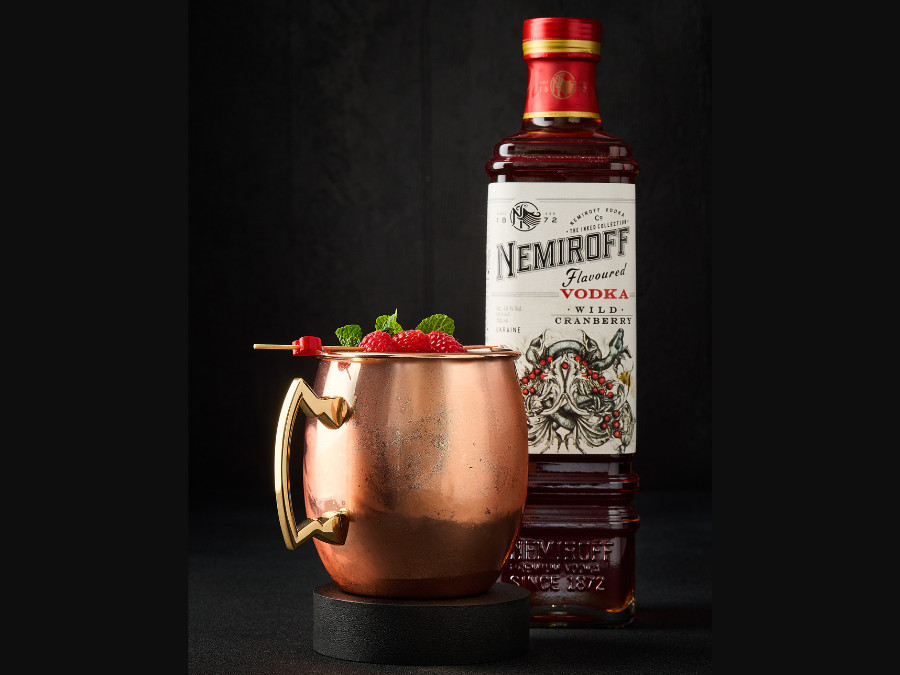
This geographical – and subcultural – movement has been recognised by Nemiroff. In the UK and Benelux, where the brand’s ‘Inked Collection’ has been performing well, “bold, rich flavours and natural ingredients” are driving consumer choices. Back home in Ukraine, meanwhile, it’s all about berry flavours.
“This reflects local preferences rooted in traditional liqueurs, and it’s where products like Nemiroff The Inked Collection Wild Cranberry (above) shine,” says Sorochynskiy. Citrus flavours follow berries here, but there is more of a singularity that resonates.
This cuts both ways. While consumers in different regions want different things, there’s a sense-of-place element too. “Consumers increasingly value authenticity, sustainability and cultural connection,” says Luxardo. “Products that emphasise local ingredients or a sense of place resonate strongly across multiple demographics.”
A trend that taps into this sense more than any other is the increasing importance of culinary whims. This isn’t a literal drink-and-food-pairing association; It’s about popular ingredients and flavour groupings translating evermore seamlessly from the kitchen to the bar. “The rise of global cuisine has introduced consumers to unique flavours, for example, yuzu, pandan or turmeric, that are now being adapted into liqueurs,” attests Luxardo. Hence the development of infused spirits, liqueurs and mixers.
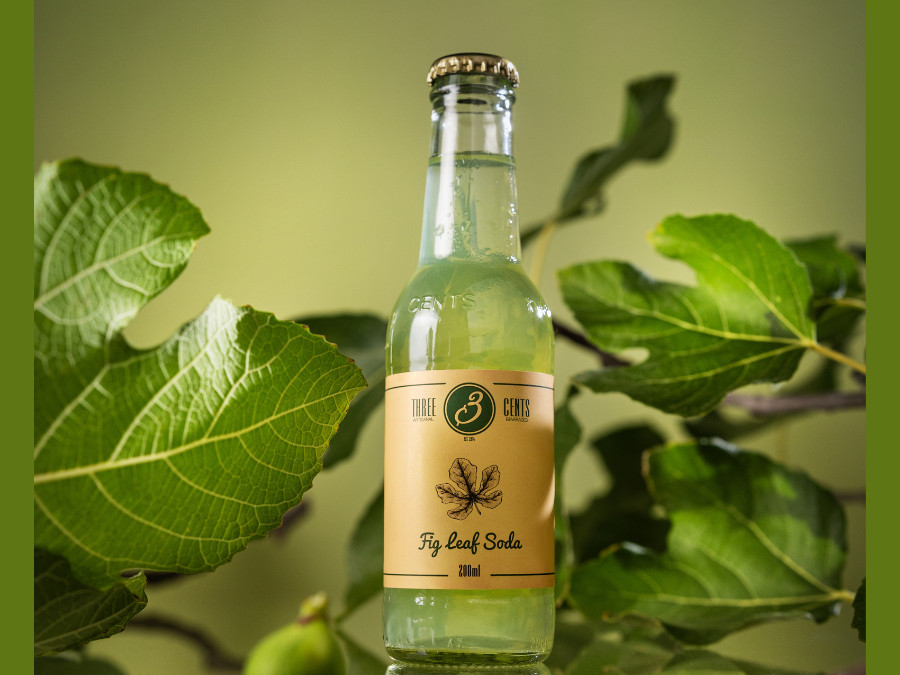
For flavoured mixers brand Three Cents, fig leaf was a major UK taste trend throughout last year, appearing on menus up and down the country, from curries to desserts. In response, Three Cents recently launched its Fig Leaf Soda (below).
“Fig leaf has long been a favourite in the culinary scene and it’s starting to make a name for itself in cocktails,” explains founder George Bagos. “We believe it’ll be the flavour profile of 2025.”
Bagos believes its sweet-fruity-earthy profile provides bartenders with an array of opportunities to get creative with flavour. Suggested serves include old fashioneds, tequila long drinks, or as a mixer with bitters and vermouths.
Turning to food for inspiration explains the shift to more savoury cocktails that we’ve witnessed in recent years. In the non-alc space, a brand that’s made waves is Botivo. The 2021-founded aperitivo is made using apple cider vinegar and honey, and is designed specifically for mixing.
Earlier this year, a new variant was launched in partnership with Berry Bros & Rudd, where a slightly tweaked recipe was aged in ex-Islay whisky barrels for three years.
While co-founder Sam Paget Steavenson wasn’t looking to replicate a whisky, the savoury profile has proved popular. “I’ve always been into more savoury botanical flavours versus the sweeter ones,” he says. “While that’s a personal preference of mine, I do think it’s becoming more common now.”
Expect more to follow in this space.
The sustainability conundrum
One topic that divides opinion is the role sustainability plays in influencing a consumer’s choice. While there are more options among spirits, no/low-alc brands and mixers than ever before, does a brand’s green credentials help sway that choice?
For Havana Club, it’s a yes. “Sustainability is no longer a ‘nice-to-have’,” says Parte. “It’s a decisive factor for today’s consumers.” Many are willing to pay a premium for products that align with their values, she says, and this approach is on the rise. In response, Havana Club has cut the weight of its glass bottles by as much as 16%, resulting in a saving of 2.3 kilotons of CO2 a year. “While flavour remains king,” Parte adds, “sustainability can absolutely tip the scales when consumers are faced with a choice.”
Spiribam’s De Truchis agrees, adding that the on-premise is invested too. The company’s Cartron liqueurs are available in 5- and 10-litre formats, with shipping in bulk cutting down its carbon footprint dramatically.
Others, however, are unconvinced.
“The sustainability credentials of a liqueur increasingly influence purchasing decisions,” says Luxardo. “But whether they override flavour preference depends on several factors.” Among those factors, according to Luxardo, are the target audience, the category, the perceived trade-off and price.
Nemiroff has identified a difference between the trade, which prioritises working with value-driven companies, and consumers. “In the vodka category,” notes Sorochynskiy, “we observe only a minor influence of sustainability on direct consumer purchasing decisions, with quality, flavour and price remaining the main drivers.”
With sustainability proving an increasingly divisive issue come election time, and cost-of-living increases remaining stubbornly high in many markets, it’s unsurprising that ‘being green’ seems to have slipped down the consumer’s list of priorities.
Whether this will change is unclear, but looking ahead, brands seem keen to bet on local flavours, savoury elements and complex flavours driving appeal. Against a contradictory backdrop, it seems flavoured spirits could go anywhere this year.
This article is available to Global Drinks Intel members only.
Click below for details on how to join the Global Drinks Intel community.
Already a member?
Log in here to read the article in full.
If you work for any of the following corporate subscribers to Global Drinks Intel, head here to activate your access.
- AB InBev
- Bacardi
- Campari Group
- Diageo
- Moët Hennessy
- Pernod Ricard
- Proximo Spirits
- Suntory Global Spirits
- William Grant & Sons