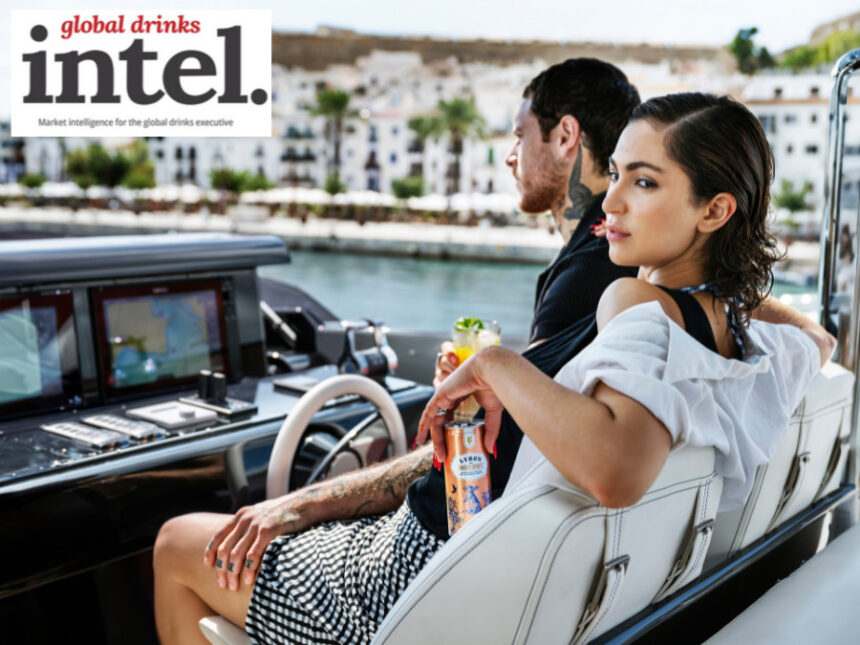
As no- & low-alcohol drinks gain wider acceptance, it’s an exciting time for the sector. “People are looking for healthier, more mindful drinking options, and the market is booming,” says the Europe, UK & Middle East marketing manager at alcohol-free spirits, wine & RTD producer Lyre’s, Benedicta Tornieri.
“Trends like ‘zebra striping’ – alternating between alcoholic and non-alcoholic drinks – are catching on, especially with younger people. It’s great to see non-alcoholic drinks becoming more mainstream.”
The founder & CEO of alcohol-free wine brand Zeno, David Hodgson, agrees: “The segment has evolved from being sobriety focused to a stand-alone drinks segment, embracing lifestyle and nutrition trends, which has helped to take the stigma out of its image.”
This change in attitudes represents a significant cultural shift, both challenging traditional notions of social drinking and helping to move the fledgling category beyond the opportunity of temporary abstinence.
Fergus Fitzgerald, head of production at brewer Adnams, which produces 0.5% ABV beer, wine and cider, feels “people have built no- & low-alcohol into their normal drinking and socialising”. With Adnams’ Ghost Ship 0.5% beer enjoying its biggest-ever sales month in December 2024, the trend appears to be category-wide.
The moderation trend underpinning no/low’s growth shows no sign of slowing down, says Laura Willoughby, co-founder of UK-based retailer & mindful drinking advocate Club Soda. “Seventy-four per cent of UK adults are cutting back on alcohol, according to Kam Insights, and predictions are that alcohol reduction will be a key health conversation in 2025,” she points out.
On-premise visibility of alcohol-free drinks is also growing, adds Willoughby, and the off-premise channel is starting to play a more prominent role. “I am hoping smaller and specialist retailers will follow the lead of [UK alcohol mutiple] Majestic, who have just launched a Club Soda Collection in their stores, offering diverse alcohol-free options beyond global brand extensions,” she says.
Better-quality products drive greater engagement
Growing openness to no/low alternatives has been driven at least in part by rapid innovation within the category.
While investor and consumer engagement has increased “as no/low becomes a stand-alone drinks segment,” Zeno’s Hodgson says “massive growth from a small base, with hundreds of new product launches” has led to improvements in the quality and choice of products – as well as premiumisation.
“Better products and brand presentation facilitate increased pricing and yield for the segment and, of course, better products and choice for consumers,” he says.
The CEO & founder of non-alc producer Spirits of Virtue, Roddy Nicoll, notes that since the company started operations in 2018, “the presentation and quality of the products being offered has changed beyond recognition across all sectors”.
However, despite this emergence of “high-quality, sophisticated non-alcoholic drinks”, Nicoll believes the no/low category is “still very new to most consumers”.
That said, drinkers who do embrace no/low are keen to experiment, so category development has continued apace, points out Zeno’s Hodgson. “The increasing availability and variety of non-alcoholic options have encouraged consumers to explore different products, leading to a more dynamic and innovative market landscape,” he says.
Alcohol-free spirits are ‘redefining the category’
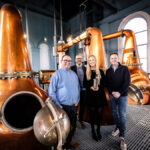
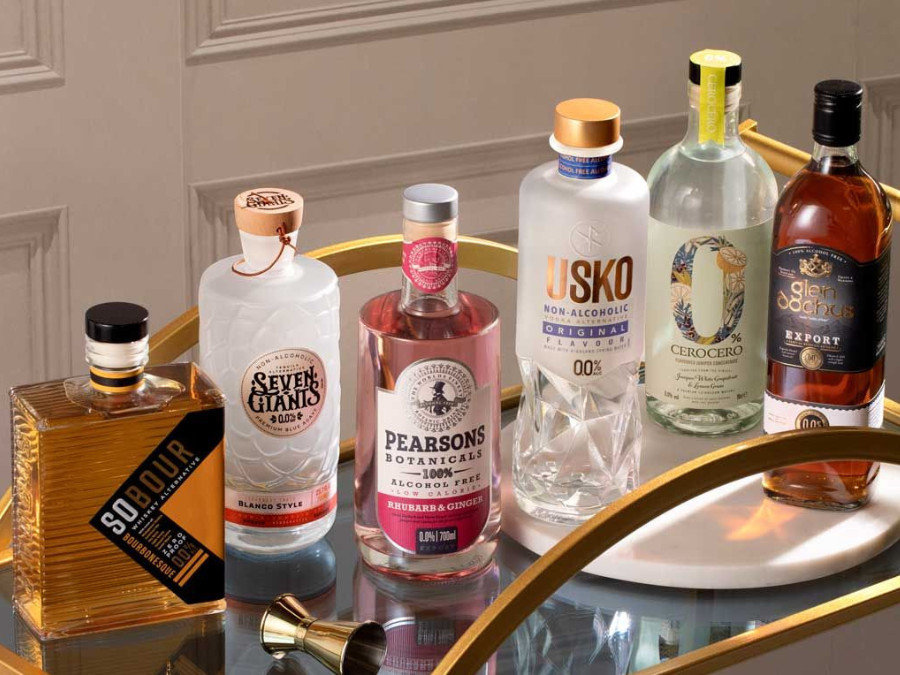
With non-alcoholic gins and botanical spirits well-established, Nicoll says rapidly growing interest in dark spirits, led by rum and malt, is a key category trend. Spirits of Virtue (below) is well placed to benefit, he maintains, with alcohol-free whiskies and rum.
The company’s business & product development director, Angela Mount, also notes the rise of alcohol-free tequila, mirroring trends in full-strength alcohol. “We’ve seen huge interest in our three-strong range of non-alcoholic agave drinks under the Seven Giants brand,” she says. Mount flags the “massive potential” in no/low spirits and sees it as “probably the most versatile of the sectors, allowing producers to become extremely creative and innovative with flavour profiles and use of ingredients”.
Lyre’s Tornieri, meanwhile, also feels that no/low spirits offer greater opportunities for further growth and innovation than wine or beer. “Spirits have such versatility,” she says. “You can craft cocktails that are just as sophisticated and flavourful as their boozy counterparts.
“There’s a lot of room to grow and innovate in this space, which is exciting for both brands and consumers.”
Lyre’s portfolio, for example, continues to develop and now includes alcohol-free alternatives to tequila, gin, whisky, amaretto and rum, as well as a sparkling wine and a range of cocktail RTDs. Launched in Australia five years ago, the brand is now available in around 60 markets and claims to sell a bottle every 30 seconds. “We’ve been keeping the innovation flowing,” says Tornieri. “Since our launch in 2019, Lyre’s has developed one of the most impressive ranges of non-alcoholic spirits.”
Alcohol-free spirits are “redefining the category”, says Club Soda’s Willoughby, noting the “innovative alternatives to traditional spirits styles” offered by brands such as Three Spirit UK, Everleaf and Botivo. There’s also an increase in functional non-alc options with potential health or mood-boosting benefits, including Smiling Wolf’s range of functional spirits, which launched late last year.
New tech helps non-alc wine join the race after a slow start
Wine has also seen significant growth and is the biggest-selling category in Club Soda’s Tasting Room. “Wine contributed most of the 600% increase in alcohol-free sales for Majestic last year, which is why they have invested in expanding their range, especially in wine,” says WIlloughby.
There’s been “a huge leap in taste and quality”, she adds, with UK brand Noughty and “European trailblazers” like France’s Moderato and Spain’s Zeno “leading the way”.
Zeno’s Hodgson says recent improvements in technology have allowed companies to create better-quality non-alcoholic wines. “Wine was a late starter purely because of its complexity,” he says. “It’s incredibly difficult to get right, hence Zeno taking over three years of R&D before we launched.
“Technology is continuously improving and we’re banking more experience that we reinvest in NPD and increased sophistication in our products. Alcohol-free wine is improving across the board.”
A trend towards lower sugar levels in no/low beverages is also producing more versatile wines, says Hodgson. “We’ve worked hard to reduce the residual sugar [RS] in our wines, which enhances food-pairing,” he says, explaining that Zeno has “developed new techniques for palate balance and texture” without relying on sugar. “Our latest release wines are mainly just 1.8g/100ml RS,” he notes.
Crafting alc-free still red wine remains a challenge, because the liquid’s interplay of flavours, aromas and texture is intricately tied to its alcohol content. But Danish non-alc drinks producer Muri has developed a unique approach, which could be a gamechanger. In October, the company launched a non-alcoholic still red wine made using “multi-layered fermentation techniques”, in partnership with New York wine bar The Four Horsemen, which is renowned for its wine list.
“It’s super-cool that somewhere as esteemed as The Four Horsemen has come on board with the new wave of drinks in our category,” says Muri founder Murray Paterson. “Still reds are particularly challenging to make when they do not contain alcohol, so our collaboration has been great, as we’ve proven you can create texture and velvety mouthfeel without the booze.
“There are obviously many companies doing single fermentations very well [like kombucha], but in terms of the complexity of blending multiple fermentations together, I believe we are the only one.”
The challenger – Mid-strength spirits to ‘overtake alcohol-free’?
Alcohol-free spirits may be leading on the innovation front right now, but there is a challenger on the horizon.
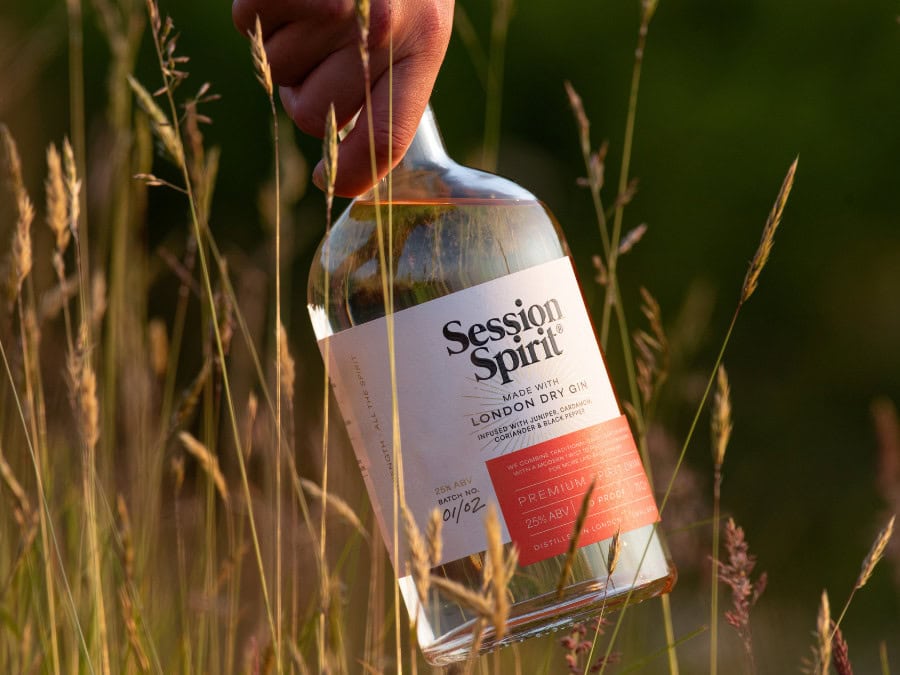
A new segment of mid-strength ABV brands is developing rapidly and according to Session Spirit CEO Brad Crompton, could eventually “overtake the alcohol-free movement in terms of volume”. He believes mid-strength will be “the next big trend in the lower-ABV sector”, pointing to last year’s relaunch of its Session Spirit made with London Dry gin (above).
“[In 2024] we saw a 427% increase in our direct-to-consumer sales alone,” he says, claiming the product’s 25% ABV offers the “perfect balance between strength and moderation”. The company is focusing on the UK before expanding overseas, he explains. “The UK is the biggest market for gin, with around 11m gin drinkers, and, with up to 90% looking to moderate, according to Drinkaware. It’s prime for the mid-strength acceleration that will begin to gather pace in 2025.
“I expect to see more mid-strength brands burst onto the scene in the coming years across a variety of different alcohol types, followed by one of the bigger brands. I also see a shift towards premiumisation.”
Muri’s Paterson also thinks the no/low sector could look very different in the future. “I believe Muri is part of a trend where more drinks companies look to ideas and techniques normally associated with gastronomy,” he says.
“With the normalisation of more mindful drinking, I hope the reductive term ‘non-alcoholic’ will become a thing of the past, as drinks become categorised on craft and deliciousness rather than ABV.”
This article is available to Global Drinks Intel members only.
Click below for details on how to join the Global Drinks Intel community.
Already a member?
Log in here to read the article in full.
If you work for any of the following corporate subscribers to Global Drinks Intel, head here to activate your access.
- AB InBev
- Bacardi
- Campari Group
- Diageo
- Moët Hennessy
- Pernod Ricard
- Proximo Spirits
- Suntory Global Spirits
- William Grant & Sons