

This article has been available to Global Drinks Intel subscribers since June. For details on how to join them, please click here.
Almost universally, the liqueur category is soaring across Europe. In order to keep the continent’s consumers and bar customers sweet, however, brands need to remain agile and innovative.
From cream to fruit, citrus to coffee, liqueurs in Europe are as vibrant as the taste spectrum it spans. The segment is also hard to pin down, with so many spirit bases, line extensions, flavours and end uses.
But with very few exceptions, it’s thriving. After all, you can’t have a global cocktail renaissance without liqueurs. In 2021, according to Euromonitor, liqueurs globally recorded a 7% volume gain on the year prior. In Europe alone, IWSR Drinks Market Analysis puts the year’s volumes increase at a more impressive 12.3%.
While the growth follows a slight pandemic-related decline, it’s clear that liqueurs are in rude health in Europe. What’s driving demand? A glance at the styles that are pulling ahead confirms it’s clearly cocktail trends. Indeed, egg liqueurs and cassis are the only two major sub-segments to post volume losses – and their declines are only modest. Meanwhile, coffee, cream, limoncello and amaretti charge on, and brands are playing in these spaces with energy and creativity.
All eyes on decadence and colour; coffee continues its run
Estonia-based Liviko owns Vana Tallinn, a line of rum-based liqueurs. The brand is exported to around 40 markets, but retains a strong focus on Scandinavia and Eastern Europe. Earlier this year, Liviko secured new distribution with Conaxess Trade Beverages in Denmark, a market that is seeing its own dynamic cocktail revolution.
There’s a real focus on decadence - bringing a spin to the more classic cream liqueur variations. New launch Vana Tallinn Tiramisu Cream is a case in point. “The stars of this silky cream liqueur are the delicious tiramisu and aromatic coffee, along with the classic rum and citrus fruit flavours of Vana Tallinn,” says Liviko's export marketing specialist, Gloria Hallaste. The extension joins the likes of marzipan, ice cream, chocolate and coconut varieties.
“We can see this trend in coffee flavours as well,” Hallaste continues, noting the pending roll-out of Vana Tallinn Coffee Espresso. “We are constantly developing new, trendy flavours. Consumers are constantly looking for something new.”
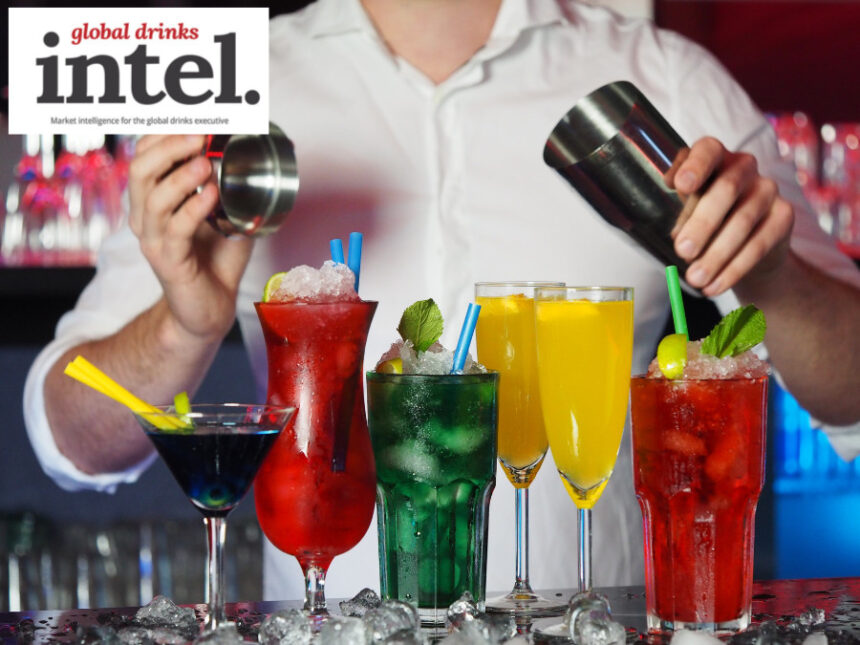
Liqueurs that feature in particularly vibrant cocktails are a focus for De Kuyper Royal Distillers, a consumer trend that global marketing director Godelief van Erve says is being driven by social media. “This year, we particularly focus on the colour cocktail trend and having the right cocktail for every moment that a cocktail can be enjoyed,” she says. “As colourful cocktails like the Clover Club or the Paloma - with their Instagrammable pink look - are trending, we observe De Kuyper Raspberry and Grapefruit liqueurs gaining popularity.” De Kuyper Passionfruit and Crème de Café are also performing well as the Porn Star Martini and Espresso Martini cement their statuses as modern classics.
Savoury serves launching their challenge?
One trend that doesn’t immediately feel at home with liqueurs - which generally must contain a minimum of 100g of sugar per litre - is the rise of savoury cocktails. As consumers develop a taste for vegetal, herbal and sometimes even maritime drinks, will liqueurs fall behind?
“For De Kuyper, it's important to have the right offer for everyone’s taste,” says van Erve. “It's about balance. Some savoury cocktails still have sweeter components in them to create the perfect mix. We also have liqueurs like De Kuyper Sour Rhubarb, that are the right fit for these types of cocktails.” She also signposts to the broader De Kuyper portfolio, especially Rutte Dutch Dry Gin, which works in a Rutte Basil Smash.
Giffard is another supplier playing in the more savoury space. Emilie Giffard, head of brand development, confirmed the company#s European business is growing at 30% year on year. For her, sugar can be used as a balancer even in savoury cocktails.
“We see an expectation of complex taste and balanced sweetness to bring sophistication to the creation,” says Giffard. Two years ago, Giffard launched a chilli liqueur that includes Agricole rum from Martinique and a maceration of peppers from the Espelette PDO. “This results in a strong aromatic intensity with warm and spicy notes, but also with freshness,” she continues. “Sugar is a question of balance, we lower the level to keep the freshness of the peppers, but we keep enough to enhance the taste.”
Engagement and education
Liqueurs are arguably the spirit that requires the greatest education levels. Some are sippable, of course, but many require some level of cocktail education for a bartender or, indeed, for a home consumer.
For brands to shine, outreach is as important as flavour innovation. Liviko is “always thinking outside the box” in this space, says Hallaste. Sales incentives and cocktail competitions are popular strategies. “In Vana Tallinn Speed Round, bartenders have the opportunity to test their speed, accuracy and skill in making Vana Tallinn cocktails.” Last winter, the brand took several Estonian bartenders on a skiing trip to Finland.
For De Kuyper, video how-tos across social media and other digital channels are important. “The intention is to inspire and educate about cocktails and cocktail-making,” explains van Erve. Meanwhile, Giffard has pushed into book publishing. “The quality of the content needs to be unique, relevant and original,” says Emilie Giffard. She points to the brand’s Giffard Tattoo Bartender Book. “It gathers bartender stories across Europe, making the link between cocktails, art and tattoos.”
Practical support for the on-premise
Understanding how bartenders use products, then helping them with that application, is a new frontier when it comes to liqueur brand marketing. The concept of pre-batching isn’t new, but it's an area where brands are competing on technical excellence.
“The on-trade is suffering from staffing issues, and we see more and more bars using pre-batch or tap cocktails,” Giffard says. “To help them with prep, in a few months we will launch a range of liqueurs and syrups in 5-lite 'Bag-in-Boxes'.”
It’s a strong concept that answers the need beyond simple time constraints. “We chose this packaging because it's convenient for preps, but is also eco-friendly,” she adds.
Liqueurs have momentum, and the segment is successfully riding the cocktail wave. Brands are aligned with current trends and, for the most part, things are operating very well. But to stay ahead - especially when it comes to more macro sentiments - brands will need to innovate beyond flavour.
Liqueur applications, sustainability and communication will be the next battlegrounds.
This article has been available to Global Drinks Intel subscribers since June. For details on how to join them, please click here.