

This article was initially published in the March issue of Global Drinks Intel magazine. For details on how to subscribe click here.
From agave to rum and classic cocktails, the spirits category continues to play a dominant role in the on-premise channel’s high-energy consumption occasion.
“People are definitely celebrating more and aren’t holding back on their spend in these high-volume and high-energy haunts globally.” So says the global brand ambassador for Crystal Head Vodka, PJ Jaurre.
It’s a sentiment echoed by hospitality consultant Anna Sebastian who works with luxury food-and-beverage outlets in areas such as menu development, creative angle and service training. “I think people want that high-energy level back,” she says of the style of bars that consumers are seeking. “Places like hotel bars are changing and new bars are more accessible, designed for people to be standing up. People just want to have fun.”
The trend is certainly evident in the UK, where a survey by sales & event management platform Tripleseat found 53% of consumers in the country are planning one to two “celebratory events” in the first six months of 2023. If London alone is anything to go by, recent activity in the on-premise is also a testament to consumers wanting to carouse more: the opening of music venue The Lower Third, which serves twists on classic cocktails, boilermakers (beer cocktails) and canned wines in multiple spaces; the relaunch of The Savoy’s Beaufort Bar, which brought with it Champagne and caviar bump moments, and the soon-to-open Raffles London at The OWO [Old War Office building], which will no doubt bring with it its trademark celebratory hospitality.
Sebastian namechecks global group Ennismore as an example of a brand reintroducing these kinds of celebratory spaces into the international hospitality sector. Indeed, Jaurre’s experience travelling around the globe representing Crystal Head Vodka for the past 12 months has provided valuable insight into how bars are creating more high-energy atmospheres for guests.
“One venue that stands out has to be Zuma Bar & Restaurant in Mykonos,” he says. “With the high energy and the party atmosphere they create, it has to be one of the craziest places we’ve visited. Some of the trends we’re seeing are old-school drinks making a big comeback: people want to drink Pornstar Martinis, Espresso Martinis and Cosmos… they want their cocktails to be a little boozier, they want to taste the alcohol a little more than they used to. They’re still after value for money when it comes to cocktails, but they’re actively asking for the spirits and the brands they want to drink.”
Soderbergh’s Bolivian brandy targets experience-led venues
When it comes to experience-led high-energy occasions, a brand that is seeing itself often aligned with music-based hospitality venues is Singani 63, a Bolivian brandy owned by film director Steven Soderbergh that can be found in lively spaces like The Lower Third, Acme Fire Cult and The Natural Philosopher – and that’s just in London.
Last winter, TT Liquor also featured the brand in a cocktail in its music venue Cellar Bar in a twist on a Daiquiri, while Tony Pescatori’s new bar and club. Alma by Sucre. uses it in its Mama Quilla cocktail. It would also be remiss not to mention the collaboration with Magic Mike Live, where Singani 63 is used in cocktails at the live shows that, if social media is anything to go by, are high energy indeed.
High-energy consumption occasion key to growth of premium brands
Despite current financial crises around the world, it seems the desire of consumers for premium drinks brands isn’t slowing, and the high-energy market will be key to its growth in years to come. “Whenever there’s been a recession, research shows that although people are more cautious with their spending, they are also a lot more engaged with the products they buy and tend to choose to upgrade on their usual tipple,” says mezcal brand Ojo de Dios co-founder Barry Halstead.
According to on-premise data insight consultancy CGA by NielsonIQ, nightclubs are one of the key channels for brand owners looking to boost the performance of their premium spirits offerings. North America regional director Matthew Crompton says: “CGA’s previous research into the late-night and high-tempo occasion highlighted the opportunity for spirits suppliers, with our latest OPM (on-premise measurement) research reinforcing that not only are spirits a key category within the nightclub channel, but that consumers are also increasingly interested in more premium spirits options – particularly within tequila and vodka.”
Elsewhere, Diageo’s research seems to align with this – the group projects that by the end of this year, the premium spirits industry will gain 600m new consumers.
The sales director of UK-based distribution agency Highball Brands, Jody Monteith, has also observed the uptick in premiumisation. “What performs well is the more high-end and more premium expression,” he says. “We have an organic vodka called Eight Lands which performs well, while the more expensive the whisky/whiskey, the better [its performance], to be honest.”
Monteith also reveals that operators are coming to Highball Brands to request more premium tequila offerings, and are beginning to venture more into the booming mezcal segment. (Globally, mezcal is expected to grow at a CAGR of 22.6% between 2023–31 to reach US$2.1bn by 2031, according to recent data by Straits Research.)
Agave-based beverages help partygoers get into the spirit
Of all the spirits categories, it won’t come as a surprise to learn that agave-based spirits, predominantly tequila, are leading the charge. According to The Ministry of Economy and the Agricultural Markets Consulting Group, exports of tequila totalled $3.6bn between January and October 2022, an increase of 34.1% compared with the same period in 2021.
Monteith has certainly seen sales of Highball’s agave portfolio increase in recent months. “People are enjoying it in a much more varied way and we’ve seen a lot more creativity with the agave category,” he says. Meanwhile, Stuart Ekins, director of sales and marketing company Cask Liquid Marketing, has seen a decent uplift in the agave brands he looks after – Ocho Tequila and Quiquiriqui Mezcal – which is no surprise considering some of the venues his brands can be found in [London’s Café Pacifico, Side Hustle and The Groucho Club, for example]. “They’re both seeing substantial growth as they fall into that sense of party, abandonment, hedonism,” he says.
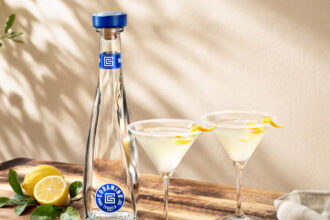
Jaurre is also seeing a strong increase in people ordering Crystal Head’s Onyx, which is sourced from blue weber agave. “Agave spirits are growing hugely around the world – it’s a really exciting time for us as a brand to have our agave variant available to so many open-minded party people who once only wanted to drink straight vodka or Champagne in clubs and high-energy venues.” Ojo de Dios Hibiscus Mezcal has also just had a successful launch in the UK and is set for an international roll-out this year.
Another party-leaning category that’s finally making its mark on the international on-premise scene is rum in its many myriad forms. According to IWSR Drinks Market Analysis, premium-plus rum volumes are expected to climb by a CAGR of 6% between 2021 and 2026, with value increasing by a CAGR of 6.5%. The growth is fuelled by the continued spread of cocktail culture and brands such as Takamaka [from Seychelles], Don Papa [The Phillipines] and Santiago de Cuba [Cuba], are all making concerted efforts in the high-energy on-premise. The premiumisation opportunity for rum has not gone unnnoticed by the multinationals – indeed, Don Papa was acquired by Diageo at the start of this year for a cool $281.6m.
Return of the Vodka Martini
Meanwhile, vodka, the original ‘party drink’, is enjoying a resurgence by way of a classic cocktail that is increasingly appearing on bar menus around the world: the Vodka Martini.
“The Martini is having a bit of a revival, which ties into that hedonistic ‘wanting to go out and let loose more’ attitude,” says Cask Liquid’s Ekins who believes vodka’s revival is also being driven by “more flavoursome brands” launched in recent years. “Vodka Martinis are a more sophisticated way of partying and we’ve picked up listings for Martinis in less-expected venues,” he says.
UK brand ambassador for Singani 63 Tatjana Sendzimir also cites the Martini resurgence as a nod to how consumers want to drink in 2023. “Recently, The Hawksmoor’s Martini twists have us very excited,” she says. “There’s the reinvention of the ultimate disco drink like the Lychee Martini, created by Liam Davy for all UK Hawksmoor properties, or the twist on a Breakfast Martini at Hawksmoor NYC.” Indeed, Hawksmoor’s Ultimate Martini menus are an ode to a classic that seems to be steering drinkers into a more hedonistic and celebratory space for 2023.
Well, cheers to that.
This article was initially published in the March issue of Global Drinks Intel magazine. For details on how to subscribe click here.