- In the US, craft distilling is down in both value and volume, but the category continues to grow domestically in terms of distillery numbers
- The craft industry in general needs to adjust to a changing demographic if it is going to continue to thrive
- Provenance, uniqueness and authenticity are becoming evermore important as consumers gravitate to brands with stories to tell
- Canadian craft distilleries are riding a wave of optimism thanks to a surge in patriotic behaviour
- Whiskey/whisky is the category with the most growth and potential globally by far
As the spirits industry struggles globally, craft distilling faces its first-ever downturn, exemplified by several high-profile bankruptcies in the US. But are there opportunities to be found among the challenges?
The years since the end of the Covid-19 pandemic have not been kind to distilleries of any size. Sales are down – although some studies show that they are consistent with historical patterns, just reduced from inflated pandemic consumption – while the media never seems to tire of reminding us that Gen Z is turning its collective back on alcohol – although there are signs there, too, that this might be more a temporary blip than a long-term trend.
For the multinational distillers, with their deep pockets and ability to rely on emerging markets to compensate for declines in more established regions, it is a serious situation, but for the most part a manageable one.
However, for craft distillers with exponentially smaller customer bases and comparatively minuscule distribution, it’s a tightrope walk between survival and insolvency.
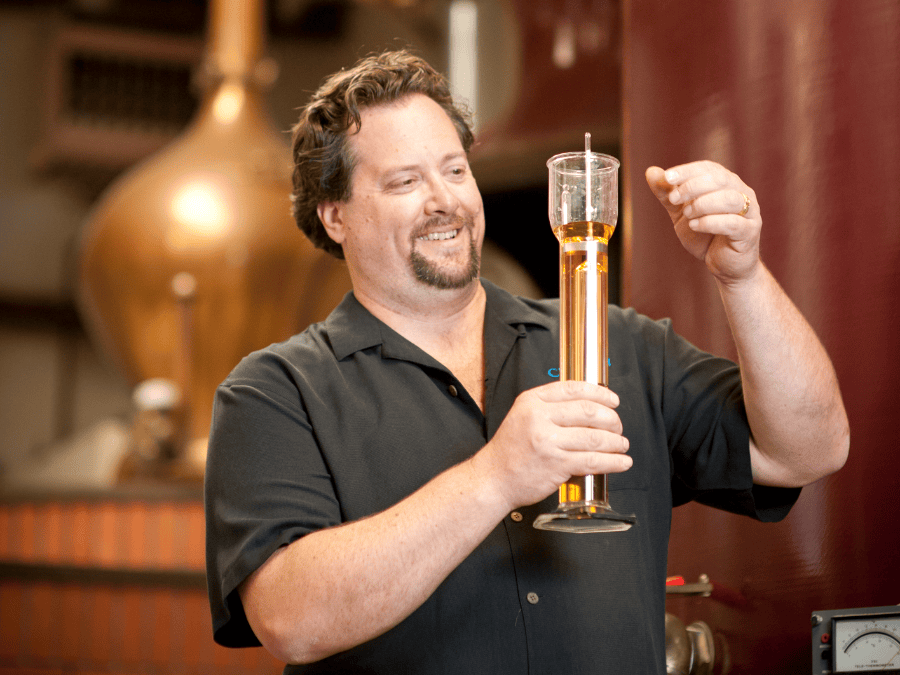
It’s also indicative of an industry that’s changed rather dramatically through the decades, and particularly so over the past ten to 15 years. Few people have had the sort of front-seat view of these changes as Marko Karakasevic (below), master distiller & co-owner of the craft-pioneering Charbay Distillery in California, famously the holder of US distilling permit number 177.
“When I first started making vodka with real fruit and distilling whiskey from finished beer, nobody else was doing that,” says Karakasevic. “The industry’s evolved a lot [since then], but the core hasn’t changed; great spirits still come from real ingredients, real technique and time. The landscape keeps changing, but for us, it always comes back to doing the work and letting the spirit speak for itself.”
Over the border in western Canada, the Okanagan Valley is home to British Columbia’s oldest craft distillery, Okanagan Spirits. Tyler Dyck (above), the company’s CEO – and head of the Canadian Craft Distillers Alliance – agrees with Karakasevic that the sector is evolving. “The spirits consumer is now catching up to the wine industry and the culinary industry, and demanding to know where the product comes from,” he says.
“[So] craft distilleries need to move to a model that is terroir-specific, because within the next 20 or 30 years, there’s going to be a decline in those ubiquitous spirits that don’t have a link to anywhere or anything unique about them, and an uptick in those with a story to tell.”
One brand that definitely has a story to tell is the new Swiss vodka, Vodka57. In fact, says founder & director Giulio Dorrucci, the brand’s story and ingredients are key parts of its identity.
“Unlike mass-market brands, every detail of Vodka57 is intentional, from the choice of raw materials to the traditional handcrafting in small batches,” says Dorrucci. “The key is building a loyal audience that identifies with the refinement, provenance and artistry behind our brand, [which is] a slower but ultimately more lasting process.”
Refined distillery experience
Also key to building and maintaining a core consumer base for craft is a refinement of the distillery experience, says industry watcher & author of The Spirit of Rye, Carlo De Vito.
“The waves of Baby Boomers who paid exorbitant sums for bottles of single malt scotch or high-end bourbons are not being replaced,” says De Vito. “Their children and grandchildren are looking to forge their own paths, and with that the craft beverage industry must reshape itself.
“For this reason, in the coming years you will see the days of the speakeasy and darkly lit bar give way to brighter spaces and a different set of offerings, especially innovative cooking with fresh ingredients.”
This changing demographic is also on the mind of Joe Milner, MD of Onikishi Japanese whisky owner Milestone Beverages, who sees pricing and branding as key components of the four-year-old brand’s success.
“[Companies like] Suntory have amazing brands, but they tend to price them significantly higher and with allocations, so we feel that the opportunity is to strategically price Onikishi slightly lower,” says Milner.
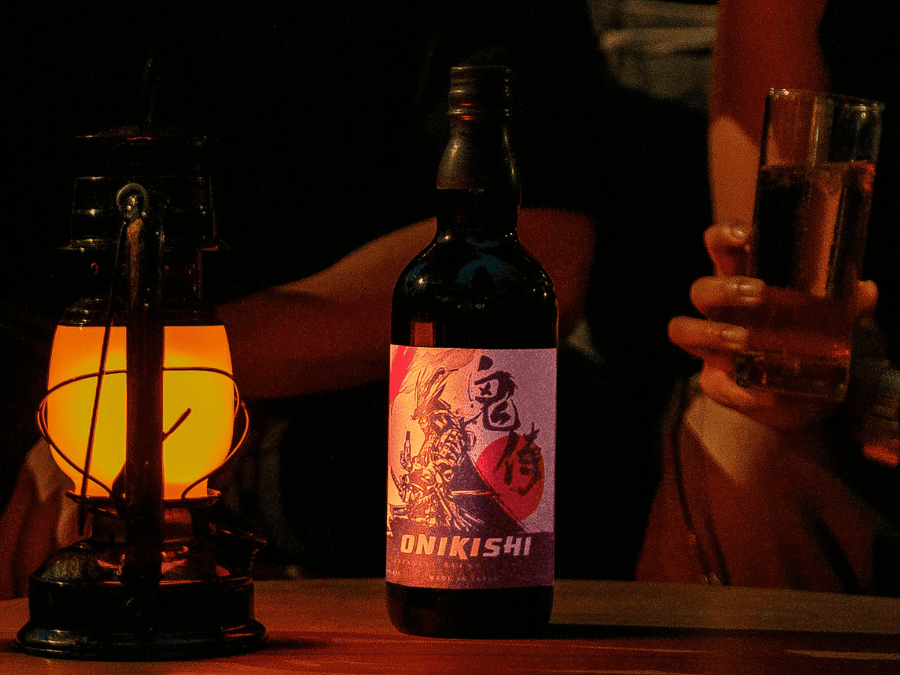
“Since much of the Japanese whisky category has the same design elements, like a pagoda with a mountain or kanji calligraphy, we think that Onikishi has hit a sweet spot with our ‘Demon Knight’ anime branding, which seems to resonate really well with trade and consumers.”
Declines in volume and value
Still, there would appear to be as much pessimism as there is optimism in certain corners of the craft spirits category, especially in the US where a dourer view is fuelled by the recent bankruptcies of several high-profile craft distilleries.
According to the Craft Spirits Data Project, a report produced annually by the American Craft Spirits Association in partnership with Park Street, 2023 witnessed the first decline in volume and value for the craft segment since the report’s creation in 2016. The decreases were relatively small, 3.6% in volume and 1.1% in value, and more broadly in line with the performance of the larger spirits market, but still give the industry cause for some concern.
Craft’s share of the overall spirits market was likewise down, although in increments so small that they might well qualify as rounding errors; -0.3% in volume and -0.2% in value.
Interestingly, despite such headwinds, the Craft Spirits Data Project report notes that craft distilling remains in growth mode in the US, adding 316 distilleries in 2024 compared to 2023. Distilleries also continue to invest in their infrastructure, with overall investment by American craft spirits businesses reaching an impressive US$885m in 2023, although down slightly on a per-distillery basis.
For author De Vito, the declining volume and value numbers are not just statistical irregularities or corrections, but rather signs of the new status quo.
“I don’t see small craft spirits producers making a bigger dent in the market in the coming years, [but] simply holding onto those percentages will be seen as a major victory in the current environment,” he says. “For many, flat is the new win [and] just as in wine or beer, any craft distiller that gets too big will eventually be bought up by the big boys.”
Unexpected upside of Trump’s threats and tariffs
North of the border, and Okanagan’s Dyck offers a rosier outlook. “Before [US President Donald] Trump’s comments about Canada becoming the 51st state, I’d say that the industry was a bit pessimistic overall,” he says.
“But that statement really rallied Canadians around Canadian products and Canadian-made spirits, to the point that people who come to our distillery are asking us where our grain fields are. Frankly, this is the most optimistic our industry has been for the last decade, and it’s because of Canadians supporting Canadian companies.”
Whiskey/whisky shoots ahead
In what seems to be something of a global spirits trend, Dyck says that he sees one particular category performing at a far better rate than all others combined. “This year has been the year of whiskey/whisky, for sure,” he says, noting that 80% of his distillery’s sales are now whisky and 75% of those are his bourbon-style whiskies.
Both De Vito and Charbay’s Karakasevic concur.
“Whiskey/whisky has kind of taken over in popularity,” notes Karakasevic. “It makes sense, since it’s what a lot of people drink and it’s what they expect from a distillery, and if a distiller sits on it for a few years, you can charge more for it, so I understand why distilleries get into it.”
De Vito takes the view one step further. “The real brass ring of North American distilling, no matter which side of the border you’re on, is single malt whisky,” he says. “It’s still the dream of many of the distillers out there and it’s still seen by many as the highest expression of the distiller’s craft.”
Of course, this is also a segment in which the multinational distillers are extremely active, which raises the question of whether crafts can compete in whiskey/whisky. For Milestone’s Milner, it’s hardly a concern.
“I’ve always thought that Onikishi (above) plays in the broader whiskey/whisky space, rather than Japanese whisky specifically,” he says. “Sure, there might be a small subset of consumers who are loyal to Japanese whiskies, but I feel in general that many consumers are starting to experiment outside of traditional scotch categories.”
Ultimately, those ‘broader’ spirits markets may be where craft has to perform, rather than in the more specialised craft niche. But where craft beer headed towards the mainstream when growth began to slow, and wound up suffering for it, craft spirits needs to maintain its integrity and uniqueness.
As Karakasevic notes: “What makes craft distilling special is the human part. You can’t automate intuition – knowing when to cut, when something’s right, when to leave it alone – that only comes from being there and doing it yourself.”