

After vodka and rum, brandy is the third-largest international spirits category. In 2022, it posted strong growth, with volumes rising by 7.6%, according to the latest data from IWSR Drinks Market Analysis. While growth in brandy’s biggest markets – India and the Philippines, where inexpensive expressions dominate – accounts for much of the segment’s recent expansion, IWSR found that global volumes of premium-and-above brands rose by 9.1% in the year.
Growth at this end of the price ladder was particularly strong in key Central and Eastern European markets, including Russia, Romania and Poland. As premiumisation has continued to develop, brand owners have introduced more higher-end and exclusive iterations, as well as tapping into buoyant demand for cocktails and no/low-alcohol products.
Of the top ten brands in the standard-and-above segments in 2022, one of the fastest-growing was Rémy Cointreau’s St-Rémy, which posted a 9.7% year-on-year lift in global volumes. The brand’s executive director, Aveline Rimbaud, believes premiumisation is one of the key factors behind the brandy’s recent development.
“We’re still seeing the clear trend for premiumisation in the category, which started a few years ago,” she says. “The segment above US$15, which represents a third of the category’s value, is the most dynamic, with a 22% value increase in 2022.”
Rimbaud feels that as consumer interest in provenance rises, a greater emphasis on heritage is also important. “Consumers are asking for high-quality products and craft brandies, both in terms of distinctive flavours and artisanal look and feel,” she explains. “In that sense, we see customers shifting to more qualitative products, looking for more information on the terroirs and the production process, which drives innovation in premium brandy.”
Transparency will feature strongly in upcoming product launches, Rimbaud adds. “Consumers want to know what’s in the products and how they’re made.”
Harnessing the power of packaging
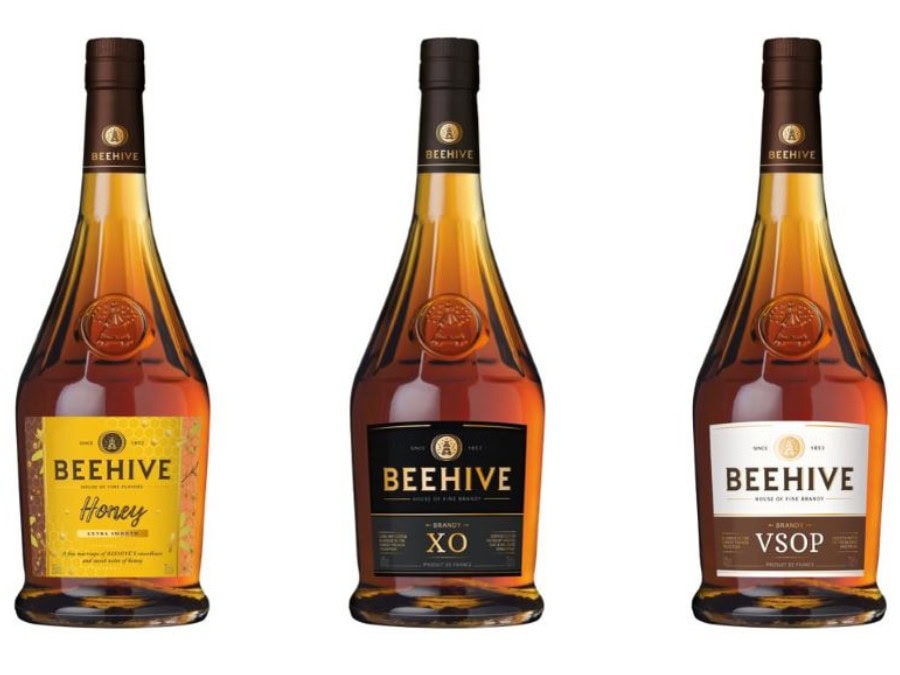
Heritage and craft are also a focus for La Martiniquaise-Bardinet’s Beehive (below), and this is showcased in new packaging that also features a more modern and premium image and began rolling out last month. International brand manager Léna Rusek says: “By updating Beehive’s packaging with a more contemporary feel, we aim to celebrate the story of how Beehive got its name, and reflect the exceptional quality of our brandy, as we move into increasingly premium territory.”
The fastest-growing markets for the brand include the Middle East and Northern Europe, as well as China, where Beehive XO, in particular, is growing in popularity.
Romanian brand Alexandrion also recently introduced an updated visual identity – in August 2023 – with a new logo and packaging featuring the tagline ‘Exceptional Every Day’. Alexandrion Group global CMO Rob Curteis says: “There remains a significant opportunity to broaden the brand’s appeal and to recruit a new generation of drinkers both in Romania and globally.”
With Alexandrion seeking to rapidly expand its international footprint, Curteis agrees there is a global trend towards premiumisation in brandy, although he feels this is mainly driven by consumers trying international premium brands in place of locally produced brands.
In Romania, where brandy is the second-biggest spirits category and showing strong growth, Curteis says: “As with other categories, we are seeing some premiumisation, but it’s really the mainstream products that are driving growth.”
Alexandrion dominates Romania’s brandy market and sells more than 6m bottles internationally each year. Other key markets for the brand are Germany, Italy, Spain, the UK and Ukraine.
The mixability angle
New serves can help build consumption for Alexandrion, which is currently mainly drunk over ice or straight, explains Curteis. “Approximately 30% of consumption is as a mixed drink with ginger ale, cola or lemonade,” he says.
“To further drive category penetration, we do wish to drive mixed drinks more. We believe Alexandrion and ginger or lemonade, or even sparkling wine with loads of ice could be a great aperitif or summer drink.”
St-Rémy’s Rimbaud agrees that brandy’s suitability for long drinks, combined with the cocktail trend, can help develop its appeal. “People tend to picture consumers drinking brandy neat or over ice, but thanks to its remarkable versatility, brandy is a wonderful ingredient for many cocktails,” she says. “It has a long and rich history of being enjoyed in classic cocktails such as the metropolitan, the brandy alexander and the sidecar, which have been the driving force behind the current mixology culture.
“The cocktail trend has helped restore brandy’s place in the cocktail world and introduce it to a younger crowd.”
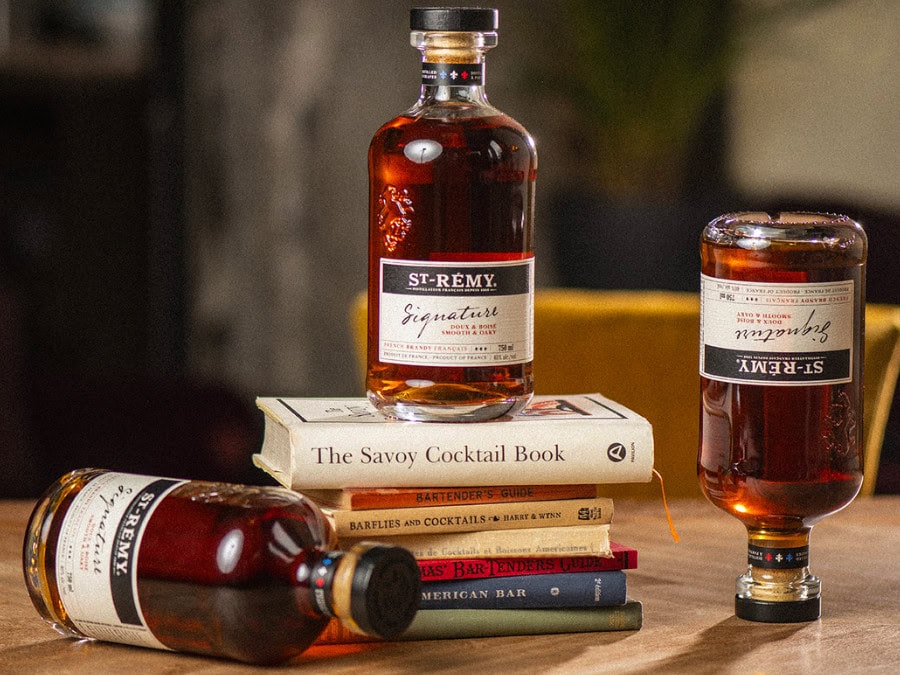
Rimbaud says St-Rémy Signature (below) – launched domestically in 2020 and into global travel retail with activations in Dubai and Sri Lanka airports last November – taps into the popularity of cocktails. “We can clearly see the growing trend for mixology and its impact on the way consumers drink our products,” she explains. “It’s the reason why we launched St-Rémy Signature a couple of years ago. Thanks to its versatility, this smooth and oaky, double-matured brandy blends perfectly with a variety of cocktails.”
La Martiniquaise-Bardinet global marketing manager Laure Habbouse agrees that cocktails are a key way to develop the segment’s consumer base. “We really believe in cocktails,” she says. “We have a strong drinks strategy with best serves, and this is how we’ll be able to renew our consumer base.”
Brandy also lends itself to lower-ABV drinks, targeting consumer demand for no- & low-alcohol drinks, according to Rimbaud. “As part of the cocktail trend, we also clearly see a growing interest for lower-alcohol alternatives,” she says. “This is why we created a series of five cocktail recipes made with St-Rémy XO and Signature, that contain less than 8% ABV, in partnership with our long-term friend of the house, French mixologist Matthias Giroud.”
Flavour extensions, NPD and limited editions ‘keep momentum going’
Flavoured variants are another way to attract new consumers to brandy, says Habbouse. “Flavoured brandy allows the brand [Beehive] to recruit non-traditional brandy drinkers.”
With key markets for Beehive’s Honey variant including the Middle East and Northern Europe, Habbouse says the new packaging design can help widen Beehive Honey’s appeal and attract new drinkers.
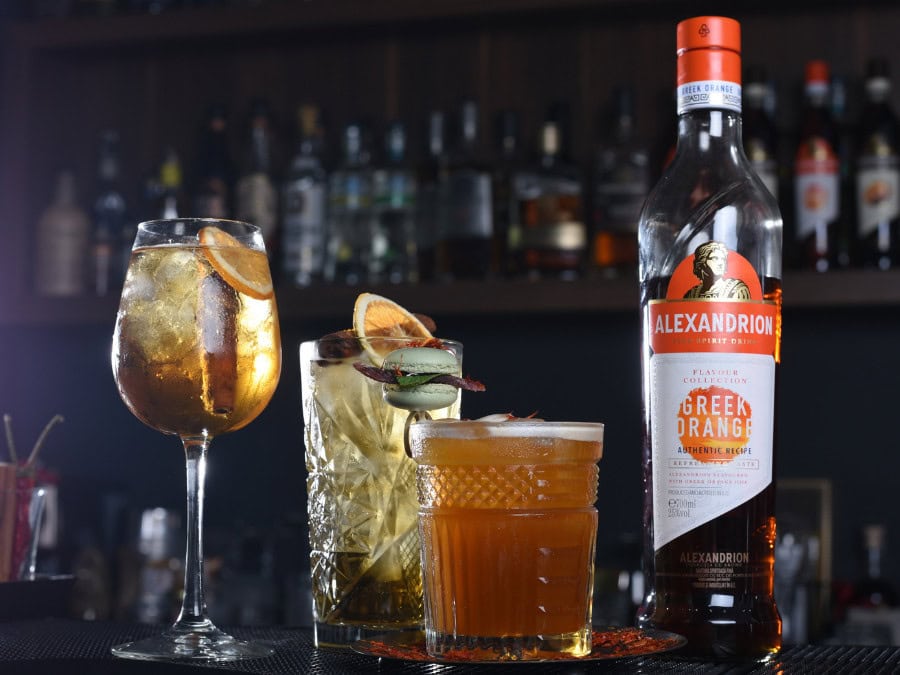
Alexandrion Brandy’s range, meanwhile, includes Brazilian Coffee and Greek Orange (below), which each make up around 5% of total sales, according to Curteis. While he says the company “will continue to monitor opportunities”, it currently has no firm plans to introduce additional flavours. Sales of Alexandrion’s flavoured extensions are focused on its home market of Romania, where Curteis says: “It’s a small, but growing segment.”
At St-Rémy, which has recently enjoyed healthy sales in India, including in the country’s GTR channel,the UK, the UAE, China, Australia and the Baltics, innovation is a key focus, with the brand introducing several new high-end lines in recent years. These include the St-Rémy Cask Finish Collection, launched in 2018. “Starting with the release of St-Rémy Finished in Chardonnay Casks, this collection has been a real success across the domestic and duty-free markets where we launched it,” says Rimbaud.
“This is why this first edition was then followed by numerous others, finished in casks that previously contained cabernet sauvignon, Barbados dark rum, Islay scotch whisky, sherry, sauternes wine and port. We wrapped up this collection in October 2023, with the release of St-Rémy Finished in Calvados Casks. This limited edition of only 12,850 bottles was created in collaboration with world-renowned and multi-awarded calvados producer Château du Breuil.”
As well as managing the products from the core St-Rémy range (VSOP, XO and Signature), Rimbaud says master blender Cécile Roudaut “creates limited editions that stir the curiosity” of consumers. “We want to satisfy their desire for novelty, as they continually look for new launches and high-end products,” she explains. “Our challenge is to constantly reinvent ourselves and our product range to keep the momentum going.”
Beehive is also building its higher-end presence and released a 170th anniversary line in 2022. Rusek says of the limited-edition cuvée, a blend of Beehive Original XO and 15-year-old eaux-de-vie: “It’s complex and showcases the expertise in blending that we’ve honed through the generations.”
Habbouse adds: “It was initially a limited edition but was very successful, so we decided to keep it for a few years.”
Signposting how the wider brandy category can develop, Rusek concludes: “Our brand is proof that innovation and heritage can sit side by side.”