In global travel retail, the non-scotch whiskey/whisky category is growing at a healthy pace. That said, scotch whisky’s crown is in no danger of slipping. In 2022, scotch remained more than two-and-a-half times larger in volume terms than non-scotch whiskey/whisky in the channel, despite the latter recording a post-pandemic sales increase of 79.4%, according to IWSR Drinks Market Analysis.
Non-scotch also lags sizably in premiumisation terms. IWSR data shows that scotch’s super-premium segment is over 14 times larger than non-scotch’s. Even so, both American and Irish whiskies – the two largest segments of the non-scotch category – are heading in an upwards direction.
Jack Daniel’s leads premiumisation drive in GTR
A clear illustration of this trend was Brown-Forman’s launch last year of the GTR-exclusive Jack Daniel’s American Single Malt. The 45%-ABV sherry cask-finished malt whiskey retails for US$99.99 per 1-litre bottle. In contrast, standard Jack Daniel’s Old No.7 currently retails for $33 for a 1-litre bottle with Duty Free Americas at New York’s JFK International Airport.
“The duty-free trade has responded positively to the launch of Jack Daniel’s American Single Malt, expressing enthusiasm for this super-premium release,” says Brown-Forman’s GTR marketing director, Stéphane Morizet. “Its sales performance is tracking very nicely ahead of our expectations for the first-year allocation, with many trade customers eager for more.”
According to Morizet, Jack Daniel’s, GTR’s best-selling American whiskey, enjoyed a strong year in 2023, with the brand’s partnership with the McLaren Formula 1 team helping it appeal to a more diverse group of consumers. “The introduction of exclusive and limited-edition offerings like the Jack Daniel’s & McLaren [bottle], as well as super-premium-plus expressions such as Jack Daniel’s American Single Malt, played a significant role in boosting sales,” he explains.
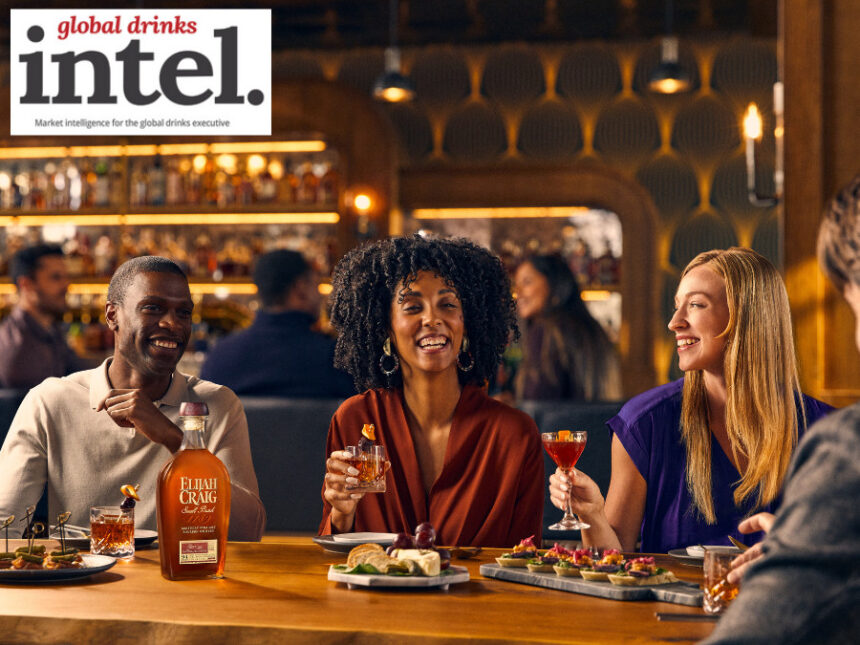
The American whiskey segment in GTR remains dominated by two brand owners, Brown-Forman and Beam Suntory, but others are starting to muscle in. Heaven Hill Distillers, for example, has a stable of American whiskies, including Elijah Craig, Evan Williams and Heaven Hill Bottled-in-Bond. Despite this arsenal, the privately-owned company’s GTR business has been focusing effort on Black Velvet, the Canadian whisky acquired by Heaven Hill from Constellation Brands in 2019.
“Heaven Hill is working diligently to expand its presence in travel retail, where some of our competitors have flourished for years,” says international MD Bryan Fallon. “It’s a growing priority for the business. We have a robust plan to develop our brands in travel retail and are very excited about working with customers to offer our whiskies to travellers.”
Jameson’s premium-plus focus
Unsurprisingly, Pernod Ricard’s Jameson, the world’s best-selling Irish whiskey with annual sales of 10.7m cases to June 2023, dominates non-scotch sales in GTR. The classic core expression, Jameson Original, remains a beacon for the brand globally, but in GTR, the triple cask-matured channel-exclusive, Jameson Triple Triple, is a key focus, followed by Jameson Black Barrel, a blend of small-batch grain whiskies.
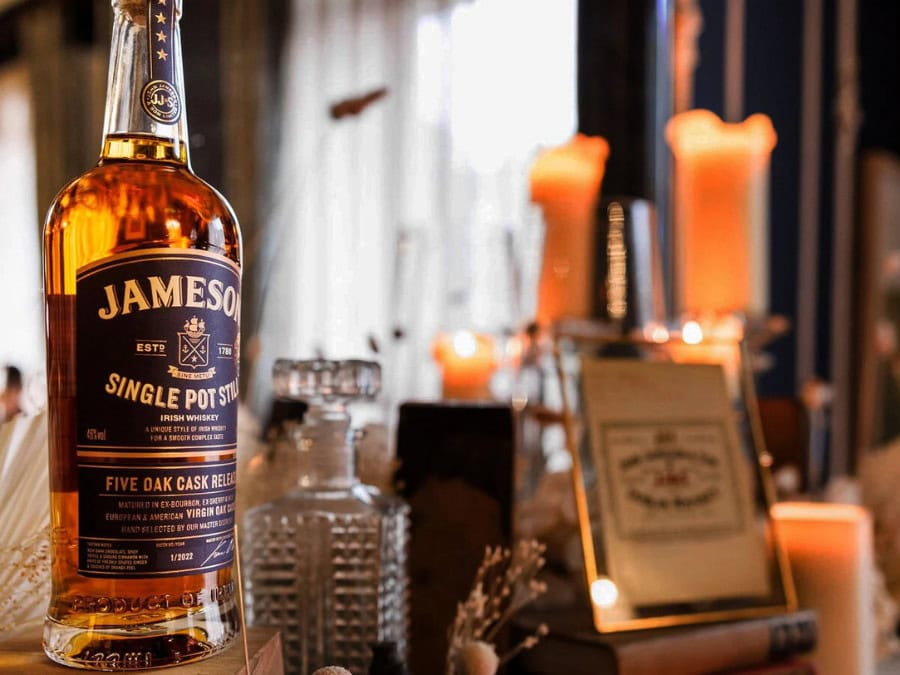
“For an enhanced premium moment, we launched Jameson Single Pot Still (above) last year,” says Pernod Ricard’s VP of marketing in GTR, Liya Zhang. “Starting last month, distribution extended to World Duty Free [stores] in the UK. Jameson Single Pot Still embodies the traditional Irish whiskey-making style after which it is named. Malted and unmalted barley is triple distilled for a rich silkiness with distinctive pot-still spiciness.”
The US, Europe and Australia are Jameson’s main GTR markets, but demand is also on the rise in other regions, according to Zhang. “Jameson is seeing strong uptake by Indian nationals, so hub airports that service this consumer are of growing importance, as well as flagship airports in Asia where we have strong interest in the next generation of curious whiskey/whisky consumers – for example, Singapore and Korea.”

Shortages limit Japanese whisky’s potential
In contrast to both Irish and American whiskies in 2022, Japanese whisky grew a modest 4.2% in GTR. This was a reflection of both the Asia-Pacific region’s slower post-pandemic recovery and the stock-constrained nature of the Japanese industry. This frustrating state of affairs isn’t going away anytime soon, according to IWSR GTR manager Jairo López Suárez.
“The growth in popularity of Japanese whiskies, especially overseas, is driving the need for an increase in supply,” he explains. “The current imbalance between supply and demand could heavily impact their potential in GTR. Price increases, caused by stock shortages and other economic pressures, are affecting the growth of the market.”
Despite these challenges, Beam Suntory continues to build on Japanese whisky’s meteoric overseas rise with high-profile airport activities, most recently with a pop-up store at Frankfurt Airport T1 in January. The activation, in partnership with Gebr Heinemann, featured guided tastings of Hibiki and Toki whiskies. The final airport pop-up in a series of events to mark the House of Suntory’s centenary also showcased limited-edition anniversary design bottles of the flagship Yamazaki 12-year-old and Hibiki Master Select.
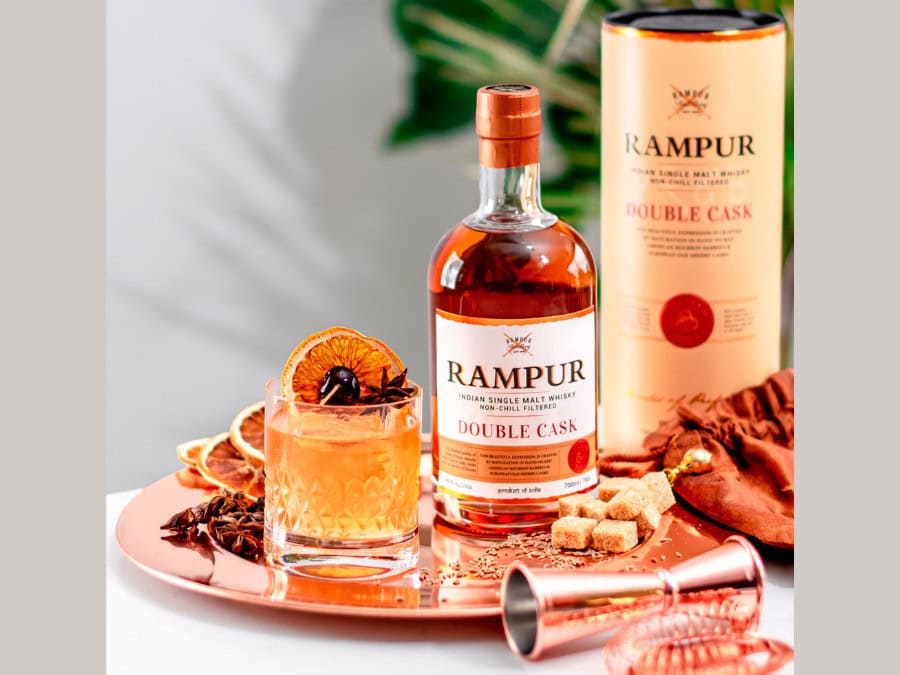
Indian whisky continues to make ‘rapid’ headway in GTR
Indian whisky’s GTR sales grew nearly 122% in 2022 – albeit from a very small base – and the outlook for this fledgling segment looks bright. The global reputation of Indian whisky continues to rise, while international travel among Indians is expected to increase to 130% of pre-pandemic levels this year, then to 171% by 2026, according to travel retail analyst m1nd-set.
“The Indian duty-free business is growing rapidly, with not only more passengers flying but also the opening of newer international airports,” says Sanjeev Banga, president of international business at Radico Khaitan, whose main whisky brand in GTR is Rampur Single Malt. “Indians are now very proud of having world-class Indian single malts available at duty-free shops and are buying for their own consumption as well as gifting.
“Also, flyers from other nationalities are willing to experiment and are keen to try Indian single malt. All these factors are helping the healthy growth of Rampur at New Delhi, Mumbai, Hyderabad and Bangalore airports.”
In addition to distribution in the wider Indian subcontinent and the Middle East, Banga notes that Rampur is also now available in both European and Asian GTR outlets. Currently, he says the channel focus is on Rampur Double Cask (above), aged in ex-bourbon and European oak -sherry casks; Rampur Asava, matured in ex-bourbon and -cabernet sauvignon casks, and channel-exclusive Rampur Trigun. More GTR-only expressions are on the way, he reveals.
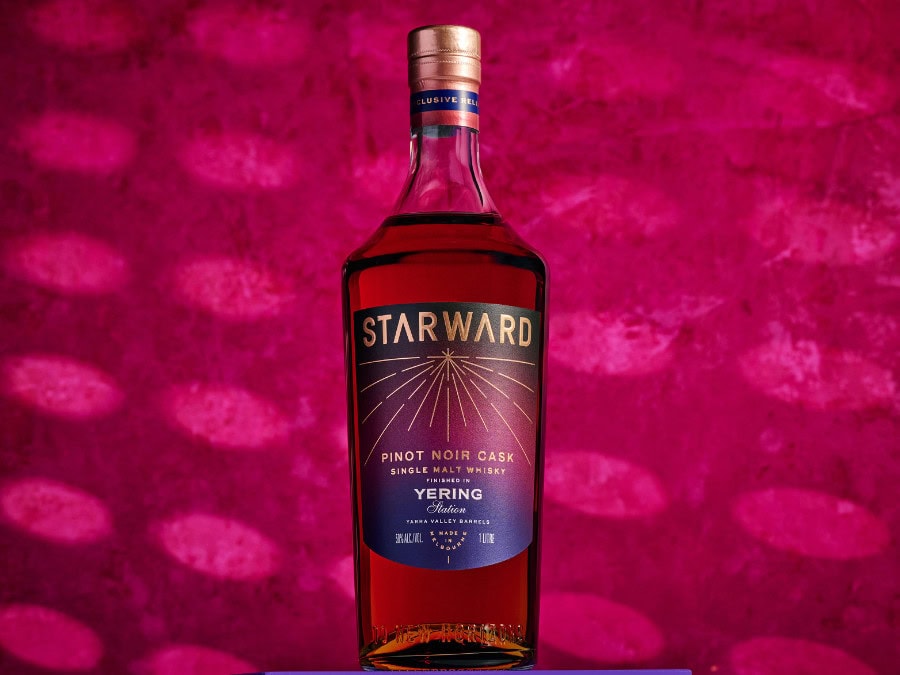
English and Australian expressions gaining sought-after shelf space
The last two decades have seen a boom in world whiskey/whisky, with new producers emerging from all corners of the globe. With limited resources, these new brand owners often find it difficult to gain distribution in a channel dominated by the deep pockets of multinational groups.
One new arrival to make the breakthrough is England’s Cotswolds Distillery, which has recently even managed to gain a listing with China Duty Free Group, China’s biggest GTR operator.
“Despite the economic headwinds coming from China, we hope to build on our presence within international stores and in Hainan,” says international sales & GTR director Lynsey Eades. “It’s early days in terms of the [CDFG] listing, but we have our entire GTR range and some limited single cask editions exclusively available. From a broader perspective in 2024, we’re also focusing on South-East Asia, Japan and Korea where, in most cases, Cotswolds Distillery has a domestic presence we can further leverage.
“Gaining shelf space in GTR when you’re not a global brand is one of the biggest challenges that a medium-sized brand like Cotswolds Distillery faces,” she adds. “One of the unique elements in our arsenal is that we’re pioneering the route forward for English whisky into GTR. Our ‘English for Whisky’ marketing campaign has supported our position and there’s been an excellent rollout across the seas and into airports.”
Another whisky to crack the channel is Melbourne’s Starward, an award-winning distiller that matures its whiskies in red wine barrels from nearby Victorian wineries. After securing its place in the domestic on- and off-premise, Starward turned its attention to GTR, building a strong presence at Melbourne and Sydney Kingsford Smith airports, while gaining a foothold in the US, Europe and Asia through listings at San Francisco, New York JFK, Copenhagen, Istanbul and Singapore Changi airports.
“In 2024, our targets are firmly focused on doubling our travel retail business by adding distribution across new locations, as well as increasing awareness of our whisky by building as much visibility and driving trial,” says Starward’s commercial director, Scott English. “We’re always open to opportunities that allow us to drive awareness of the New World whisky category through the channel, and we’re looking forward to continuing this in 2024.”
Starward’s success in GTR is part of a larger, mostly upbeat picture for non-scotch whiskey/whisky as travelling consumers become more adventurous in their purchasing choices and buyers allocate more precious shelf space to expressions produced outside Scotland.
This article is available to Global Drinks Intel members only.
Click below for details on how to join the Global Drinks Intel community.
Already a member?
Log in here to read the article in full.
If you work for any of the following corporate subscribers to Global Drinks Intel, head here to activate your access.
- AB InBev
- Bacardi
- Campari Group
- Diageo
- Moët Hennessy
- Pernod Ricard
- Proximo Spirits
- Suntory Global Spirits
- William Grant & Sons