

- Growth is now shaped by disciplined route-to-market strategies, with domestic, export and global travel retail playing distinct roles rather than delivering easy volumes
- Trade expectations have hardened, with distributors prioritising differentiation, supply confidence and long-term vision
- Producers are resisting downward extension, instead focusing on building repeat purchase and normalising Australasian whisky within premium whisky repertoires.
As the category looks toward scaling for global growth, Australasian whisky producers face tougher questions around their pricing discipline, distribution strategy and attractiveness for repeat purchase.
For much of the past decade, Australasian whisky has been defined by its youth. New distilleries, liquid and markets created a sense of momentum that was as much about possibility as performance.
Today, however, that framing feels increasingly outdated.
The category has moved on from asking whether Australian and New Zealand whisky belongs on the global stage towards a more pragmatic question: how do we build sustainable businesses in an ultra-premium, supply-constrained category amid tighter global conditions?
As New Zealand’s Scapegrace (above) co-founder Mark Neal puts it: “New Zealand and Australian whisky has moved beyond novelty. The conversation now is about consistency, scale and building brands that can compete globally.”
That evolution is reshaping how producers think about value creation, distribution, pricing and education – and is forcing tougher decisions about where to play and where not to.
Three-channel market, by design
Value for Australasian whisky is no longer concentrated in a single sales channel. Instead, producers are navigating a three-part market made up of domestic, export and global travel retail, each serving a different commercial function.
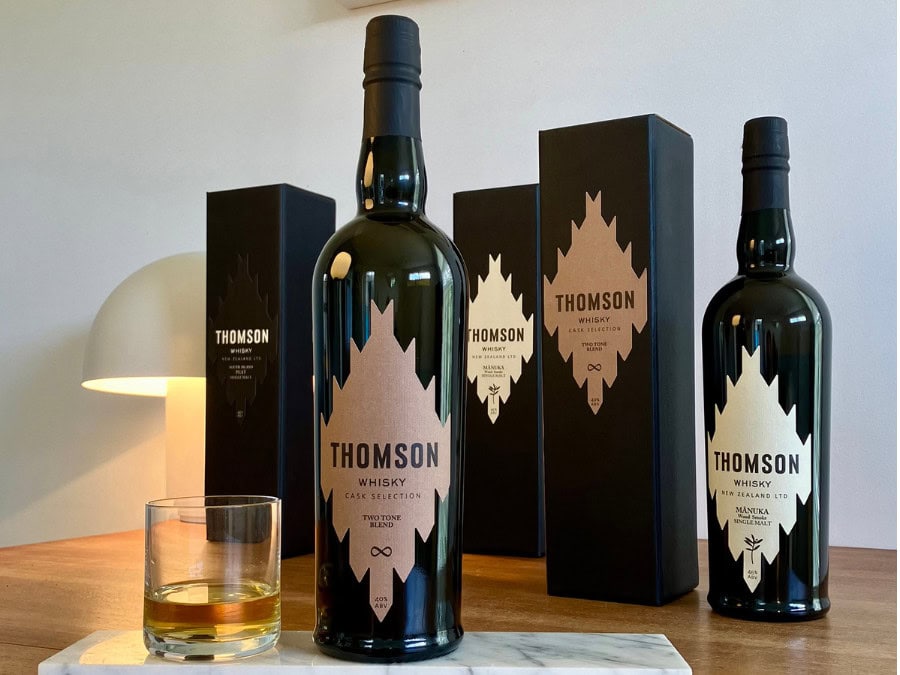
For Thomson Whisky (below), an Auckland-based craft whisky business founded in 2009, maintaining balance across all three has become essential. “All three areas – domestic sales, GTR and export markets – are still playing valuable roles in making up our sales mix,” says co-founder Rachael Thomson.
In a volatile global environment, she argues, diversification provides resilience. “Having a good channel mix is incredibly important at the moment and allows us to respond to market dynamics both here at home and overseas,” she says.
In Australia, however, the weighting is different. Lark Distillery CEO Stuart Gregor says that “domestic sales and GTR command the lion’s share of Australian whisky sales”. Meaningful exports remain limited across the category, including at Tasmania-based Lark, though Gregor sees that as an opportunity rather than a weakness.
“There’s something very special and unique about Australian whisky – Tasmanian in particular,” he says. “Australian whisky sits at a bit of a critical juncture – we need a couple of brands to crack the international market for the world to turn its attention to what we do.”
The picture is similar but more tightly controlled at fellow Tasmanian distillery Sullivans Cove. Brand & communications coordinator Miranda Lidgerwood says that “value is currently being created across all three [channels], but in different ways”.
Domestic markets remain critical “for brand depth, advocacy and long-term loyalty”, while export markets offer “brand elevation and validation, particularly in mature whisky regions that understand scarcity, age and single cask philosophy”.
The GTR channel, meanwhile, is approached more carefully. “It plays an important visibility role, but is most effective when it supports an existing reputation rather than introducing a brand,” Lidgerwood says, reflecting a wider caution about stretching limited stock too thinly.
Scapegrace has taken a similarly deliberate approach. Neal describes domestic markets as “foundational”, particularly New Zealand, where the company focuses on “building credibility, driving trial and repeat”. Export markets, he adds, are where “long-term value is unlocked through premiumisation, sustainable scale and provenance-led storytelling.”
Instead, GTR is positioned firmly as a brand-building tool. “It remains strategically important as a discovery and awareness channel rather than a pure volume driver,” Neal says, citing Scapegrace’s presence across New Zealand airports and key international hubs such as Heinemann Sydney.
Sharper edges draw distributors
While awareness of Australasian whisky has grown, securing listings has not become easier. If anything, expectations have hardened. “You must have whiskies that are truly unique and that have a real edge, or you won’t be considered by distributors in this competitive environment,” says Thomson Whisky’s founder. “There’s no room for average products that are going to be ‘wallpaper’ in a retail environment.
“You not only need excellent whisky. You need consumer ‘glue’ in the form of your brand, your community engagement, your energy and your ability to understand what consumers want.”
Sullivans Cove’s Lidgerwood describes a similar dynamic from the buyer side. “There’s strong interest and also growing discernment,” she says. Buyers, she notes, are increasingly focused on “genuine differentiation in production philosophy, provenance, consistency of quality and long-term credibility”.
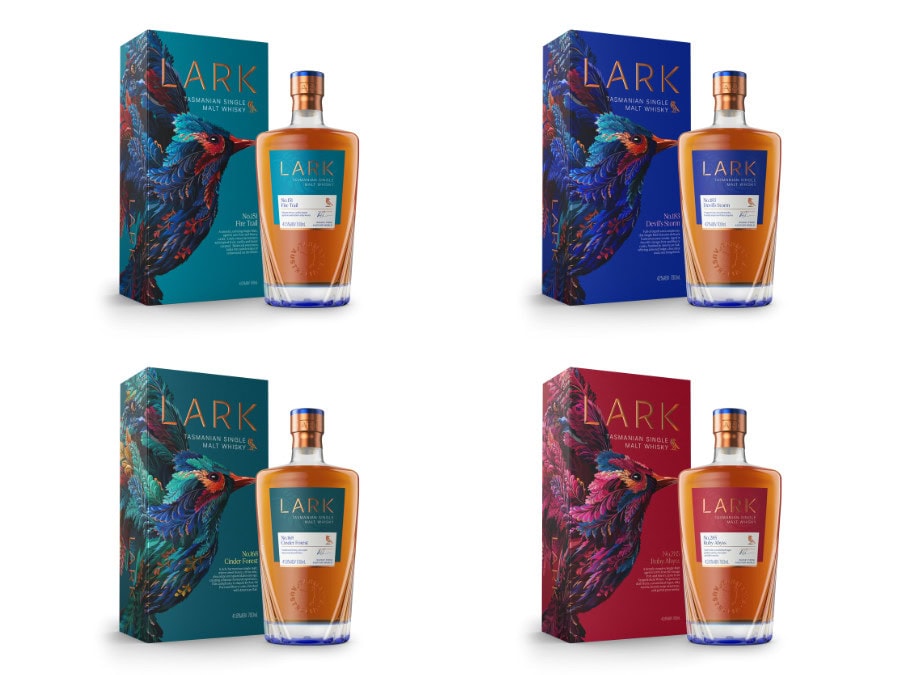
For Lark’s Gregor, receptivity varies significantly by market. “We are receiving a good reception in some and less enthusiasm in others,” he says. In Asia, the response has been encouraging: “Our distribution partner in Malaysia, who represents huge global brands like The Macallan and Kavalan, couldn’t be more excited for the potential of Lark (below).”
The challenge, Gregor notes, is ensuring packaging, pricing and product are aligned. “We think we’re getting closer to having the best packaging, pricing and product that we have had in our history,” he says.
At range review, priorities are clear. “Liquid quality first,” Lidgerwood says, followed closely by “story, scarcity management and, of course, price.” Retailers, she adds, are also asking harder questions about future intent, particularly “whether a producer has a clear long-term vision rather than simply a successful first release”.
Scapegrace’s Neal has seen this shift play out. “Receptivity to New Zealand whisky has improved significantly over the past three to five years, as quality and consistency have been proven,” he says.
As scepticism has fallen away, it has been replaced by a sharper focus on fundamentals, including supply confidence and brand support. “Buyers are placing increasing importance on credible production scale and confidence in long-term supply,” he adds.
Scarcity as strategy, not as stunt
Scarcity remains one of the defining features of Australasian whisky, particularly in the ultra-premium segment. The challenge for producers is to manage that scarcity without undermining trade relationships or stalling brand growth.
“Scarcity is unavoidable in ultra-premium whisky,” says Lidgerwood, “particularly for producers working with small volumes, long maturation periods and single cask programmes.” The solution, she argues, lies in being strict rather than in seeking to expand. “The balance comes from transparency, discipline and long-term planning.”
Rather than pushing for volume, Sullivan’s Cove prioritises predictability. “The focus for us is on consistency and philosophy, so that even when allocations are small, partners understand what to expect year after year,” Lidgerwood says.
Thomson frames the issue more bluntly. “With regards to scarcity and preciousness versus the need for volume, it’s a dance,” she says. “Plan ahead, crack a killer product early and back it fiercely with solid production plans and funding.” Once whisky is ready, she adds, “it must be positioned perfectly and geared to move.”
Expansion, in Thomson Whisky’s case, has been deliberately slow. “Our approach has been to enter one new market at a time, so we can tell our story and build brand love in a very intentional way,” she says. The objective is to ensure “you have enough well-priced stock to support trade partners, while preserving the sense of scarcity.
Pricing holds, but discipline matters
In a tightening global market, pricing has become one of the most closely watched indicators of category health. So far, Australasian whisky appears to be holding up, provided pricing is clearly justified.
At Thomson Whisky, “the NZD75–135 [US$45–80] price points are moving for core range”, while “another more premium window of NZD180–225 for our collectable single cask bottlings” continues to perform.
Rather than extending the core range downwards, Thomson says the company chose to launch a separate whisky liqueur, protecting brand equity while reaching a more accessible price point.
Neal says: “The most resilient price points remain at super-premium, where consumers perceive authenticity, quality and value.” While there is pressure at the very top end, he warns against chasing volume through moving downwards as “racing to the bottom risks diluting brand equity”.
Gregor is frank about Lark’s positioning: “Our whiskies start at AUD170 [US$115] per bottle, so we’re definitely a luxury, nice-to-have product,” he says. “No one would say we’re an essential basket item.”
As a result, pricing discipline is critical. “We think we’ll do all or most of our volumes at the AUD150–250 mark,” he says, with a small number of products sitting above or slightly below that range.

From novelty to repeat purchase
As Australasian whisky matures, producers agree that the next phase of growth depends less on excitement and more on habit. The challenge is to move from one-off purchases to repeat engagement.
“The category needs to move beyond ‘New World novelty’ positioning toward clear, repeatable style cues,” Neal says. Education, he argues, should help consumers understand “why it belongs in your regular rotation”, not simply why it exists.
At Sullivans Cove (above), Lidgerwood agrees, calling for trade education that focuses on “production decisions, maturation environments and long-term intent” to build confidence and encourage return visits to the category.
Local context also needs to be communicated. “Educating drinkers on local ingredients, climates, maturation conditions, ageing time frames and terroir would be beneficial,” says Thomson.
What unites these perspectives is a shared belief that the category’s future lies in normalisation rather than hype. As Neal concludes: “Sustained growth comes when whisky is positioned as approachable, repeatable and relevant to modern drinking occasions.”
Australasian whisky, it seems, no longer needs to shout to get noticed.
This article is available to Global Drinks Intel members only.
Click below for details on how to join the Global Drinks Intel community.
Already a member?
Log in here to read the article in full.
If you work for any of the following corporate subscribers to Global Drinks Intel, head here to activate your access.
- AB InBev
- Bacardi
- Campari Group
- Diageo
- Moët Hennessy
- Pernod Ricard
- Proximo Spirits
- Suntory Global Spirits
- William Grant & Sons