- Regional premiumisation – Tier 2 and 3 cities are seeing significant consumer interest in premiumisation, driven by rising incomes and adventurous middle-class Gen Z and Millennial drinkers
- Indian single malt boom – Homegrown brands are now comfortably outselling imported malt scotch in the domestic off-premise, prompting industry efforts to standardise and certify authentic Indian single malts
- Trade agreements – Recent FTAs with the UK and EU have slashed steep 150% import tariffs, potentially boosting market access for scotch whisky distillers and European spirits producers
- Karnataka reforms – Retail price controls are being deregulated and taxation shifted towards ABV, with the aim of simplifying the system and boosting revenue
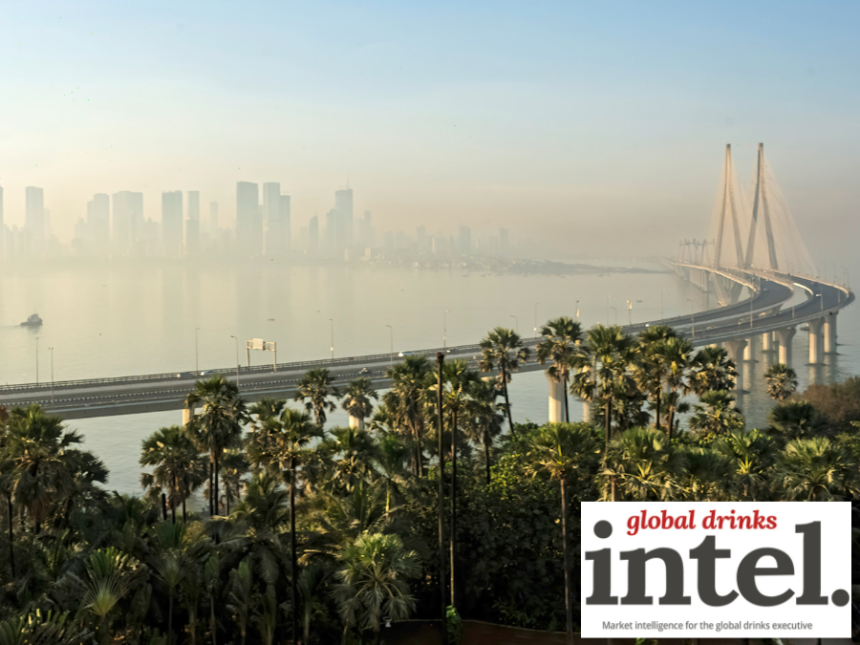
For all its logistical complexities, high taxes and regulatory frustrations, India continues to hold the title of the world’s most exciting market for spirits, offering domestic and overseas brands long-term potential without many of the consumer-led challenges facing more mature territories, where alcohol consumption is declining.
Earlier this year, IWSR predicted that every major alcohol category will grow at a CAGR of 3% to 4% over the next decade. Between 15m and 20m young Indian consumers reach legal drinking age annually, meaning India’s pool of potential customers for alcohol is fast approaching 1bn.
Mass-market Indian Made Foreign Liquor (IMFL) brands may still generate most of the volume sold in the Indian market, but profitability is increasingly driven by premiumisation.
According to Abhishek Khaitan, the MD of Radico Khaitan, one of India’s biggest domestic spirits producers, premiumisation is no longer limited to India’s major cities. “It has structurally shifted beyond major metros into tier 2 and 3 cities, such as Lucknow, Jaipur, Chandigarh and Indore,” he says. “Driven by rising disposable incomes, increased global exposure and upgraded retail environments, consumers in these emerging markets are actively trading up to super-premium IMFL and craft spirits.”
As proof of the trend, Khaitan points to the success of the company’s ‘Prestige & Above’ portfolio, which sold 16.7m cases in the firm’s fiscal 2026, accounting for 45.6% of its total volumes. “This shows that premiumisation is not a niche trend for us, but a structural shift in our business,” he insists.
Khaitan explains that the company focuses on availability, visibility and aspiration in smaller cities by harnessing its broad portfolio, which includes super-premium options such as Morpheus Super Premium Brandy and 8PM Premium Black Whisky, as well as luxury lines like Rampur Indian Single Malt, Kohinoor Dark Rum and Jaisalmer Gin.
Allied Blenders & Distillers is another major domestic player committed to a premiumisation path, as evinced by the ambitious roll-out of ABD Maestro. Operating as the first “dedicated super-premium and luxury subsidiary” established by a domestic Indian spirits producer, ABD Maestro has built a 15-brand portfolio spanning whisky, vodka and gin within a year of launch.
Key ABD Maestro launches have included AODH Irish Whiskey, capitalising on India’s 57% surge in Irish whiskey imports in 2024; Rangeela Contemporary Indian Vodka, co-created with creative partner & Bollywood star Ranveer Singh; and Zoya Pink Mix Berries Gin, a small-batch line extension flavoured with strawberry, cranberry, blackberry and raspberry.
ABD’s wider premiumisation strategy is also reflected in the performance of its flagship brand ICONiQ White. Sitting within the company’s ‘Prestige & Above’ portfolio, the international blended whisky surpassed 10m cases in the company’s financial 2026, just 43 months after launch.
ABD has expanded the brand’s distribution into the Canteen Stores Department, one of India’s largest retail chains, and backed ICONiQ White with high-profile youth marketing, including the title sponsorship of the NH7 Weekender 2026 music & culture festival, India’s answer to Glastonbury.
Scotch seeks to capitalise on FTA
Scotch whisky has long been viewed across India as a symbol of sophistication, hospitality and social aspiration since the colonial era. In 2025, India was the category’s top-selling volume market, selling 220m bottles – a 15% year-on-year increase – while also becoming scotch’s third-largest market by value, up 15% to GBP286m (US$390).
Yet scotch’s share of the country’s overall spirits business is a paltry 2%, according to IWSR. UK-based distillers will be hoping that the landmark UK–India free trade agreement (FTA), which came into effect in July, will unlock future growth through an immediate tariff reduction on scotch and other UK whisky from 150% to 75%, with rates reducing to 40% over a ten-year period.
At Pernod Ricard – one of India’s biggest spirits players, with its Royal Stag IMFL whisky selling an astonishing 32.6m cases in 2025 – aged spirits & champagne division CEO Nodjame Fouad claims the FTA will support “Scotland’s ambitions” and enhance “competitiveness in a key international market”.
The founder of English whisky & gin producer Cotswolds Distillery is also upbeat. India’s “exceptionally high level of import tariffs”, Dan Szor explains, has been a “major barrier” to growth. “The reduction in those tariffs should make a meaningful difference, improving accessibility for consumers and encouraging greater investment throughout the supply chain,” he adds.
India has been signing FTAs with other nations and trading blocs, most notably February’s interim deal with the EU, which will see duties on imported spirits (also set at 150%) slashed to 40% – a potentially massive boost for European spirits producers eyeing a bigger Indian footprint.
Regulation and red tape
IWSR senior consultant Jason Holway is at pains to point out that carving out a spirits business in India remains a challenge. “Brand owners remain keen to take part in the Indian market, but need to be prepared for it to take longer than they would like,” he counsels. “The recently concluded FTAs deliver opportunity but do little, if anything, to address this regulatory complexity.”
On the legislative front, April brought significant changes to one of India’s largest and most lucrative drinks markets: Karnataka. The south-western state deregulated government-administered retail price fixing earlier this year, in order to raise revenue and cut red tape, rationalising its tax brackets from 16 to eight and effectively allowing manufacturers to set their prices based on market forces.
At the same time, the state introduced a new policy taxing liquor based on actual alcohol content (ABV) rather than on liquid volume or price. The globally recognised Alcohol in Beverage (AIB) excise duty system will be introduced in Karnataka over the next three to four years.
Indian malts gain ground
While blended scotch whisky continues to grow as a category in India, single malt scotch is losing ground to home-produced malt whiskies. “Indian malt whisky now comfortably outsells malt scotch in the Indian domestic retail market,” explains IWSR’s Holway. “Experimentation and trialling seem to have migrated from other, less well-known malt scotch brands to increasingly well-regarded and popular Indian malt whiskies.”
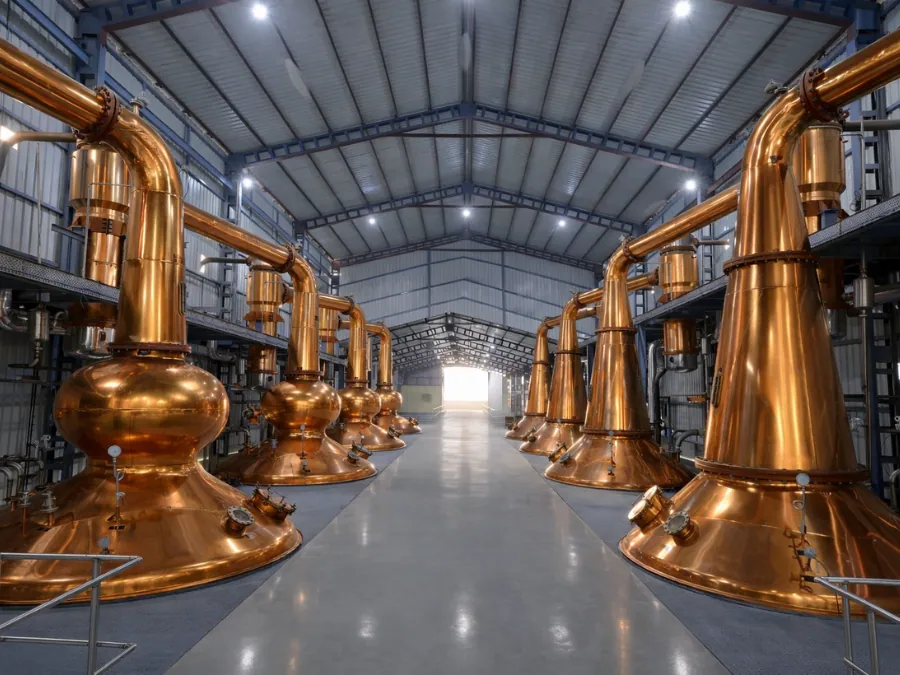
Piccadily Agro Industries’ flagship single malt Indri has become a juggernaut, growing sales and winning critical acclaim. The brand swept the top three spots in both the ‘Best Indian Whisky’ and ‘Best Single Malt’ categories at the International Whisky Competition 2026, led by the Diwali Collector’s Edition 2025, which scored 93.53 points to take first place. The company has also undertaken a massive INR10bn (US$105m) expansion of its Indri Distillery (below) to boost production capacity and is planning a new production facility in Chhattisgarh.
“Our increased capacity is designed to replicate, not reinvent, the processes that have made Indri one of the world’s most awarded Indian single malts,” says Indri Distillery master blender Surrinder Kumar. “The same raw materials, the same production philosophy, the same copper pot still distillation, the same cask selection standards and the same rigorous quality controls will continue to define every drop we produce.”
With the Indian single malt category booming, Kumar believes it was the right time to establish guidelines and benchmarks to define ‘Indian single malt’ – a new Certification Trademark and secure hologram system for the category were introduced in June.
Building a collector following
Another sign of the growing importance of the Indian single malt category is its expanding secondary market – mirroring that of scotch – with collectors eager to buy rare expressions.
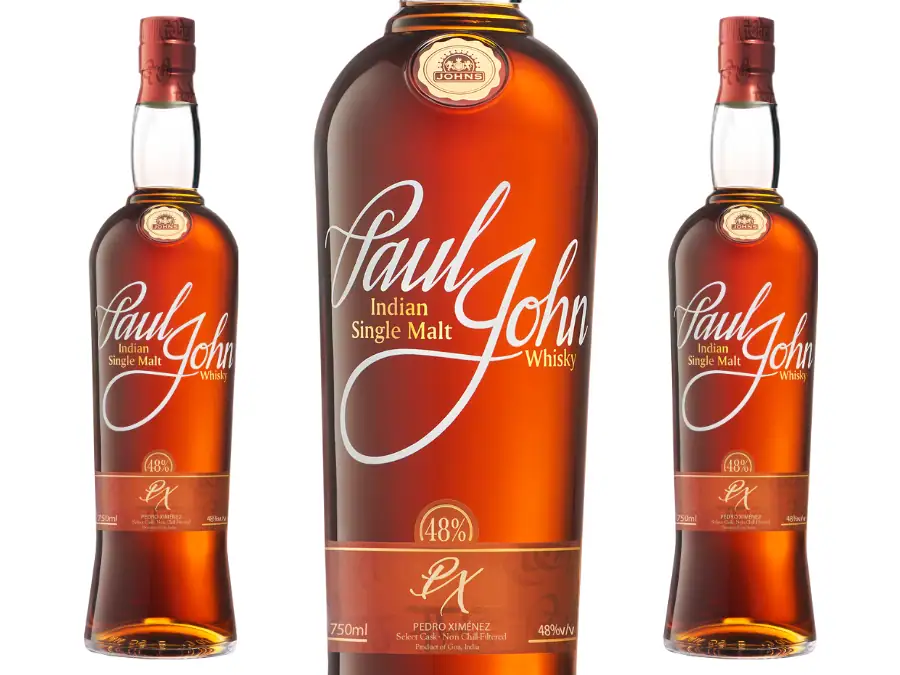
It’s a trend John Distilleries continues to benefit from. “Increasingly, enthusiasts are looking beyond everyday consumption to seek out rare and limited releases that reflect the creativity and craftsmanship of a distillery,” says a company spokesperson. “Paul John’s annual Christmas Edition, now in its ninth year, has become one of the country’s most anticipated limited releases. Beyond celebrating the expertise of our master distiller, Michael D’Souza, these editions also offer a glimpse into the innovation and cask styles that may shape our future portfolio.
“We have also been among the pioneers in nurturing India’s single cask culture, collaborating on exclusive bottlings with whisky clubs and private collectors.”
New growth drivers emerge
Looking at the prospects for other spirits categories, IWSR’s Holway says tequila should continue to grow, and domestic agave-based spirits will perform well in its shadow. “Irish whiskey remains popular; flavoured rums are being drunk in good quantities; and vodka, particularly flavoured variants, volumes are growing,” he says.
Certainly, Radico Khaitan has high hopes for its fast-growing Magic Moments Vodka, which enjoys a 60% market share across the country. The brand’s flavour extensions now account for 75% of its volumes, up from 65% last year.
“Our strategy is to grow vodka beyond being a metro-led category,” says Abhishek Khaitan. “We are doing this through flavoured variants, accessible premium formats and consumer-relevant innovations such as the Flavours of India range, including Jamun, Mango and Thandai. These products are seeing demand not just in metros, but in tier 2 markets. We are also seeing strong traction in states such as Uttar Pradesh, Rajasthan, Madhya Pradesh and Maharashtra.”
Demand for spirits is likely to increase across more tier 2 and 3 markets, according to Holway, who points to a growing openness among younger LDA consumers to social occasions where alcohol consumption is increasingly accepted.
“In this context, showcasing taste and status through the choice of higher-quality brands is becoming more important, underpinning sustained uptrading,” he says. It is yet another factor bolstering the industry’s optimism about India’s long-term potential for premium, full-strength spirits.
This article is available to Global Drinks Intel members only.
Click below for details on how to join the Global Drinks Intel community.
Already a member?
Log in here to read the article in full.
If you work for any of the following corporate subscribers to Global Drinks Intel, head here to activate your access.
- AB InBev
- Bacardi
- Campari Group
- Diageo
- Moët Hennessy
- Pernod Ricard
- Proximo Spirits
- Suntory Global Spirits
- William Grant & Sons