

This article has been available to Global Drinks Intel subscribers since July. For details on how to join them, please click here.
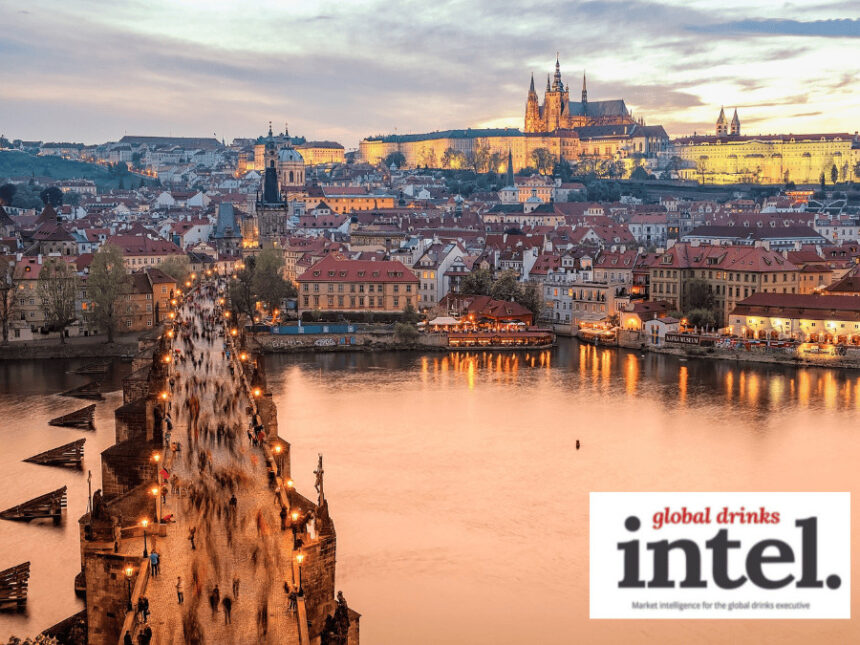
Famous for its light – and cheap – lager, the Czech capital is home to a diverse and vibrant after-dark scene that offers cosy cocktail spots, hidden absinthe bars and a spirits distillation scene all of its own.
The first thing to know about Prague is that it’s home to more than one-tenth of the population of the Czech Republic – or Czechia as it is now popularly known. This means that, like the rest of the country, Pražans (or in the more inelegant English, Praguers) drink more beer per capita than the residents of any other nation on earth – a lot more. Last year, for example, the 136 litres of mostly lager enjoyed by every Czech was roughly twice the amount of beer drunk by each Briton and American.
The scene
Given the high per capita consumption, it’s no surprise that the dominant drink throughout the city’s dining and drinking establishments is beer, more specifically Světlý Ležák, literally ‘light (coloured) lager’. Despite this, both the total amount consumed and the proportion consumed in pubs – called hospodas – and restaurants has been dropping steadily for years.
Between 2009 and 2022, not only did consumption drop from 159 litres per capita to the present day’s 136 litres, but the percentage consumed in the on-premise channel, according to the Czech Beer & Malt Association, dropped from nearly half to less than a third.
“Unfortunately,” says the association’s Martina Ferencová, “rising prices and economic uncertainty are keeping people at home more, which is having a negative impact on the catering sector. Yet to fully recover from the pandemic’s harsh effects, it now faces new challenges. Furthermore, the Government is considering raising VAT (value added tax) on catering services and draught beer, which could be the final nail in the coffin for many pubs.”
Fortunately, Prague remains a popular travel destination for both Eastern and Western Europeans, and the tourism industry is helping to somewhat offset the decline in domestic on-premise spending. While he notes that, post-Covid, a lot of the city’s bar owners realised that tourists were not the be-all and end-all for their businesses, George Němec, operator of the ‘Tour de Bar’ Prague cocktail tour and a beverage hospitality consultant, adds that “if there were no tourists, things would be much more difficult”.
This is particularly the case in the areas known as the Old Town, or Staré Mӗsto, and New Town, or Nové Mӗsto, where most of the city’s bars – especially its cocktail spots – are clustered.
The trends
Where non-beer drinks are concerned, as is the case in so many cities these days, gin is leading the way, according to Němec. “All the local bartenders visit the major European hospitality trade shows and take inspiration from them,” he says. Thus, as go the European cocktail trends, which have been emphasising gin for some time, so goes the Prague scene.
That sentiment is echoed by Mikuláš Pitonák, a four-year bartender at the Old Town’s Hemingway Bar. While his customers are still mostly tourists, Pitonák says Czechs are starting to embrace cocktails, albeit slowly. “We’re beginning to get there, but mostly with the classics,” he says, noting that while the bar’s hosts will often, when seating customers, encourage them to chat with their bartender and request bespoke cocktails based upon their preferences and mood, “most people still order from the menu”.
Of note at the Hemingway is the spirits menu, which features ten pages of rum listings compared with only two-and-a-half for whiskies. While Pitonák says this is because the bar embraces the spirit of its namesake, and therefore heavily stocks the drinks Hemingway favoured, Němec notes that there’s also a historical element to the popularity of rum in the city.
“Rum was the first western spirit to arrive in Prague after the Velvet Revolution [in 1989],” he says. “So it was the first to be embraced by the Czech people. It was a time when it seemed like we had Cuban-themed cocktail bars on every corner.”
There’s also a new spirit of creativity on display in Prague these days, says Lukáš Dvořák, manager of the family-run Banker’s Bar and La Casa de la Havana Vieja. “[Bartenders are] using new ingredients, combining them in special ways with an individual touch, and modifying them with clever techniques,” he says. “Everybody tries to use non-mainstream brands to be different.”
The local players
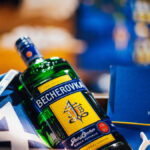
Of the handful of historic Czech liquor brands, the clear leader – and the one that comes first to mind – is Becherovka, a herbal liqueur first produced over two centuries ago and acquired by Pernod Ricard in 1997. Unfortunately, says Němec, himself a one-time international ambassador for Becherovka, the brand’s efforts to instil itself into local cocktail culture have been less than successful.
“International brands, led by Diageo and Pernod Ricard, are really moving forward with creativity and promotion,” he says. “Becherovka, not so much.”
Also a bit lost in time is slivovich, and its various related spirits, which Němec says is viewed as the drink of one’s grandfather. (‘Slivo’ means plum, so other fruit brandies will bear similar names with their fruit noted first, such as hruškovich for pear brandy and meruňkovich for apricot).“You’ll still find it [slivovich] in every pub, with most bartenders looking for the best producer they can find,” he says, “but it doesn’t sell a lot.”
What does sell, as evidenced by even a brief stroll through the city centre, is absinthe. “Absinthe still has the ‘forbidden spirits’ reputation,” says David Šikola, bartender at Absintherie Jilská in the Old Town. “We never had [absinthe] prohibition here, so people still think the Czech Republic is the only place you can get it.”
Šikola adds that the majority of his customers at the Absintherie are tourists, an observation echoed by Němec, who notes that: “Czechs are not big absinthe drinkers.”
As far as modern local spirits go, they are few, as Prague’s post-Velvet Revolution thirst was for international brands rather than local ones. Among the leaders is the young gin producer Garage22, which Němec says only began production in the wake of the pandemic, and the sustainability-focused Landcraft, based 30 minutes outside the city.
The international players
While global brands maintain an obvious presence in Prague, Dvořák of the Banker’s Bar, complains that they aren’t very active in the city.
“Young people like to drink cocktails a lot,” he says, “It’s a part of their lifestyle, but we need huge projects on social media to help our bars attract new guests. For now, at least, it’s only bars doing that work, as the big spirits brands don’t care about it, certainly not compared to what they do in the UK and other countries of Western Europe.”
Němec is more upbeat, but also notes that some brands are doing much more than others, and that there’s still a way to go. “Some international brands are moving forward, certainly Diageo as the biggest and Pernod Ricard second, although it used to have more of a leadership role,” he says. “Bacardi is not so active though.”
Challenges & opportunities
As is common elsewhere, the biggest challenge faced by Prague bars is staffing, according to Dvořák. “We tried to keep every bar worker (after Covid), but older ones didn’t last,” he says, “Now, we’re open only five days a week.”
Where selling cocktails is concerned, Němec adds that “price is a real factor”, as the almost absurdly low price of beer at most Prague bars – EUR2–EUR3 (US$2.20–$3.30) for a half-litre – makes it a challenge to ask five times or more that amount for a cocktail.
Still, hope is on the horizon, Němec notes, with several high-end hotels expected to open in the city over the coming years, the bars of which he expects to expand and extend the market for creative cocktails. In the meantime, all the experts we consulted agreed that it would be nice to see the big international brands step up more to help out the industry.
Until then, well, there’s always beer.
This article has been available to Global Drinks Intel subscribers since July. For details on how to join them, please click here.