

This article was initially published in the February issue of Global Drinks Intel magazine. For details on how to subscribe, click here.
Multicultural Manchester offers an on-premise as eclectic and individual as the people who call the city in England’s north-west their home. Jaq Bayles reports.
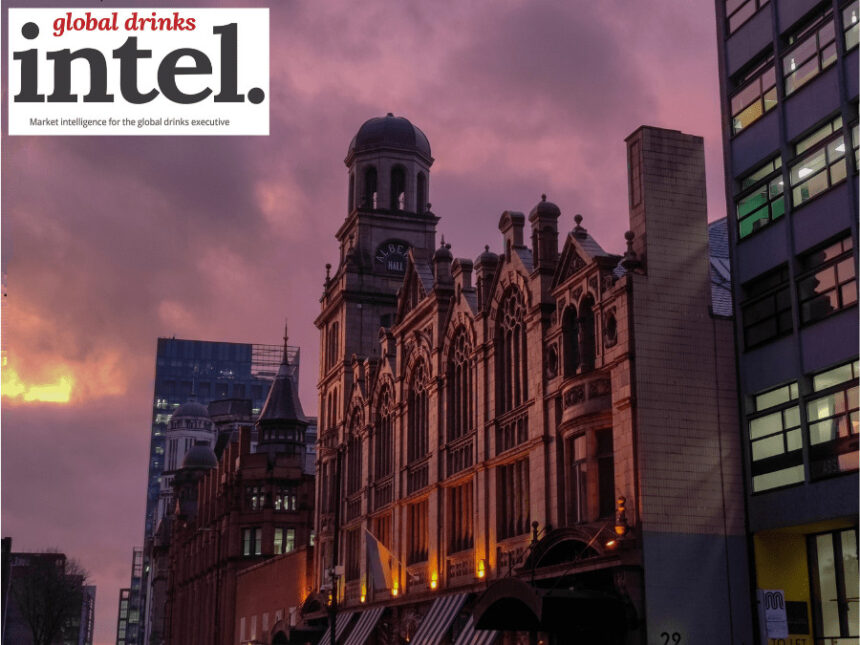
It’s almost impossible to talk about Manchester without substituting the ‘n’ for a ‘d’. The term ‘Madchester’ surfaced in the late 1980s to describe the music and way of life that developed in the UK’s second-largest city, rejuvenating its cultural scene and leading to one of the most vibrant and diverse communities in the world.
The scene
With a population of 532,200 (2021, Office for National Statistics), Manchester is one of the most culturally diverse cities in the UK, with an estimated 153 languages spoken thanks to its long history of migration from all over the world. There’s also a huge student population, continuing the ’24-hour party people’ image started by the ‘Madchester’ movement and the legendary Hacienda club.
But, according to Fiona Boulton, manager of natural wine bar Kerb in the up-and-coming on-premise hot-spot Ancoats, the city is struggling to keep hold of younger consumers. “There are fewer young people in the city centre,” she says. “Manchester is becoming an expensive place to live. I’ve heard that a lot of people who work remotely from London have moved to Manchester because it’s cheaper – I think that’s probably driving up rent and house prices. In Ancoats, you don’t hear a Manchester accent very often.”
While that may be indicative of wider trends across the UK since the pandemic, it hasn’t impacted Manchester’s on-premise yet. In the city centre alone, there are some 650 bars and nightclubs, ranging from boutique cocktail hangouts to warehouse dance offerings.
The Northern Quarter is known for its ‘cool’ offerings that are especially popular with students. The district is home to eclectic bars such as Crazy Pedro’s Pizza Parlour; 7 Sins with its games offerings, from shuffleboard and pool to arcade classics; and The Pen And Pencil, which takes its name from the New York bar popular with the original ‘mad men’ – TV journalists and advertising execs – in the 1950s.
Spinningfields has a reputation for being a bit ‘posher’ than other areas and the place to go for a glamorous night out. It is home to The Ivy and Hawksmoor as well as myriad upmarket cocktail bars, among them Schofield’s Bar, the first Manchester bar to gain a listing in ‘The World’s 50 Best Bars’. Opened in 2021 in the Art Deco Sunlight House on Quay Street, the bar is run by eponymous brothers Daniel and Joe.
“We have a huge range of people in our demographic,” says Daniel Schofield. “Our most common guest would be a young professional, given that we are in the CBD area of Manchester and surrounded by offices, but we get guests as young as 18 and as old as 80 to 90 on occasion.”
At the weekends, Spinningfields tends to draw larger groups, including stags and hens, which head for the bigger venues.
Over in the Gay Village neighbourhood, the famed Canal Street is the centre of LGBT late-night action and proof that Manchester is one of the most gay-friendly cities in the country. Elsewhere, Deansgate – a mile-long road that runs through the city centre – offers a variety of pubs, wine bars, cocktail bars, tiki dives and rock clubs.
Once the heart of industrial Manchester, Ancoats is one of the latest areas to thrive under an influx of people enticed by new apartment blocks, so it’s little wonder that innovative new bars and restaurants have opened up there. One of the latest is the aforementioned Kerb, which is tapping into consumer interest in natural or low-intervention wine.
“Kerb is super-relaxed, really informal,” says Boulton. “We do things like art exhibitions once a month. It’s a space where people can hang out and don’t have to listen to the spiel about wine if they don’t want to. They can just come in and have a glass. It’s not like a serious wine bar and I guess that appeals to younger people. There’s a lot of young people in Ancoats.”
The oldest member of staff at Kerb is 25.
The trends
It’s hard to pinpoint a specific trend given the breadth of Manchester’s hospitality offering, but Schofield has seen a spike in demand for classic cocktails.
“While there will always be the innovative, progressive and concept-driven bars, we’ve noticed a huge resurgence in classic cocktails, particularly since the pandemic,” he says. “The Old Fashioned and Negroni are two of our most-ordered cocktails. This shows how much more interested the guest has become. When I first started bartending in the north of England, the Negroni wasn’t popular at all. Now, we sell at least 30 to 40 per night.”
Back at Kerb and Boulton believes natural wine could follow craft beer as a trend – she is noticing more natural wine bars opening, including Erst, also in Ancoats, and Isca in Levenshulme, which has held pop-ups in the city centre.
Local players
Manchester is a hotbed for craft brewing, many boasting their own taprooms and brewery tours alongside their takeaway offerings. Among the well-known names locally are the McAvoys – the beer-brewing Seven Bro7hers and gin- and rum-making Four Sis4ers – who claim to be “the largest family of direct siblings in the global alcohol industry”. Earlier this year, the family announced plans to merge the two businesses to create “a one stop shop for craft beer, gin and rum”.
Seven Bro7hers run five venues throughout the city – at the Webridge Enterprise Centre, Ancoats, Media City, Salford and Manchester Airport T1 – plus the Liverpool Beerhouse. Four Sis4ers Distillery is in Salford Quays.
Cloudwater Brew Co, which is known for its use of seasonal ingredients, is another brewing name synonymous with Manchester and there are numerous others. Manchester Gin is distilled at the Spirit of Manchester Distillery and the company also has its own bar, Three Little Words, under the railway arches in the heart of the city. Spirit of Manchester also produces One-Eyed Rebel Spiced Rum, Manchester Spirit Flavoured Botanical Vodka and Forty-Five Vermouth, and has recently announced it is making the city’s first single malt whisky.
Challenges and opportunities
Across the UK, the on-premise channel has suffered greatly from a perfect storm of events – Brexit, the Covid-19 pandemic, the war in Ukraine and now the cost of living and energy crises. Late last year, Greater Manchester’s night-time economy advisor, Sacha Lord, launched a Christmas campaign to support the region’s hospitality industry. The scheme was aimed at encouraging consumers to support venues by gifting family and friends a night out over the festive season.
There have already been many closures of bars and restaurants throughout the city, but Daniel Schofield remains optimistic about the future. “While there were, sadly, a few casualties on the back of the pandemic, most bars and restaurants have been busier than ever since the lockdowns and restricted periods,” he says. “It was evident that, while many people were making great food and drinks at home – ourselves included – they really missed the atmosphere and general hospitality that you receive in a good venue. We feel this can’t be replaced and it’s a part of our culture to be somewhere and be looked after.
“The cost of living crisis is definitely having an effect,” Schofield adds. “We’re seeing an increase in our costs of goods, plus an increase in utility prices.”
The industry is also facing a global recruitment challenge, points out Schofield. “But it seems like it’s getting better,” he notes. “There’s always light at the end of the tunnel and in some ways, [the challenges] push and inspire us to be better, to justify our guests visiting us.”
This article was initially published in the February issue of Global Drinks Intel magazine. For details on how to subscribe, click here.