- American whiskey brand owners face tough trading conditions at home, with the value of the domestic market falling for the past two years in a row
- The performance in the US has been exacerbated by the situation in Canada, where the ongoing political row has shut the category off from one of its most lucrative global markets
- Export strategies are diverse, with some distillers still heavily reliant on domestic sales, but others targeting high-potential destinations such as Brazil, China and India
- Through all this, many brand owners are holding their nerve, maintaining production and highlighting growth areas such as age-stated iterations and American single malt
American whiskey distillers and brand owners are under no illusion that the challenges they continue to face in their home market aren’t going anywhere soon. It’s little wonder, then, that more effort and investment is going into engaging consumers and stimulating demand overseas.
Generally speaking, when the going gets tough, companies tend to play down the evident difficulties, insisting that everything is all right, even as production is curtailed and workers are laid off.
Not so in the plain-speaking world of American whiskey.
“Right now, I’d characterise the US domestic market as being in a ‘survival of the fittest’ phase,” says Joe Milner, MD of Milestone Beverages, owner of the Stateless American whiskey brand. “We’re seeing a bit of a perfect storm: a heavy downturn driven by high inventory levels, significant discounting and a general cooling of consumer demand.
“Premiumisation isn’t necessarily over, but it’s definitely hitting a wall at the top end. People are moving away from those US$180-plus bottles and looking for value. The new ‘sweet spot’ for premium spirits has really shifted down to that $50 to $70 range and even below.”
The reasons behind this shift are not specific to the American whiskey category. “The market has faced a number of headwinds in the past year, with significant impact from the rising cost of living and historically low consumer confidence,” says Heaven Hill Brands CMO Matt Blevins. “I believe that has influenced – at the margins – the number of occasions for a consumer who is very intentional about their discretionary income.”
The impact is all the more jolting given the extended period of growth that preceded it. Between 2003 and 2025, according to figures from the Distilled Spirits Council of the United States (Discus), the value of the American whiskey market in the US soared by close to 300%, topping US$5bn.
The only two years in that entire timescale that showed declines? The last two.
“The American whiskey market seemed to operate on a single, unwavering trajectory – upward,” says WhistlePig CEO Alex Roberts. “That has clearly changed. What we’re witnessing now is a market that has decelerated, with growth concentrating among brands that consumers feel a genuine connection to.”
The US remains ‘dynamic’
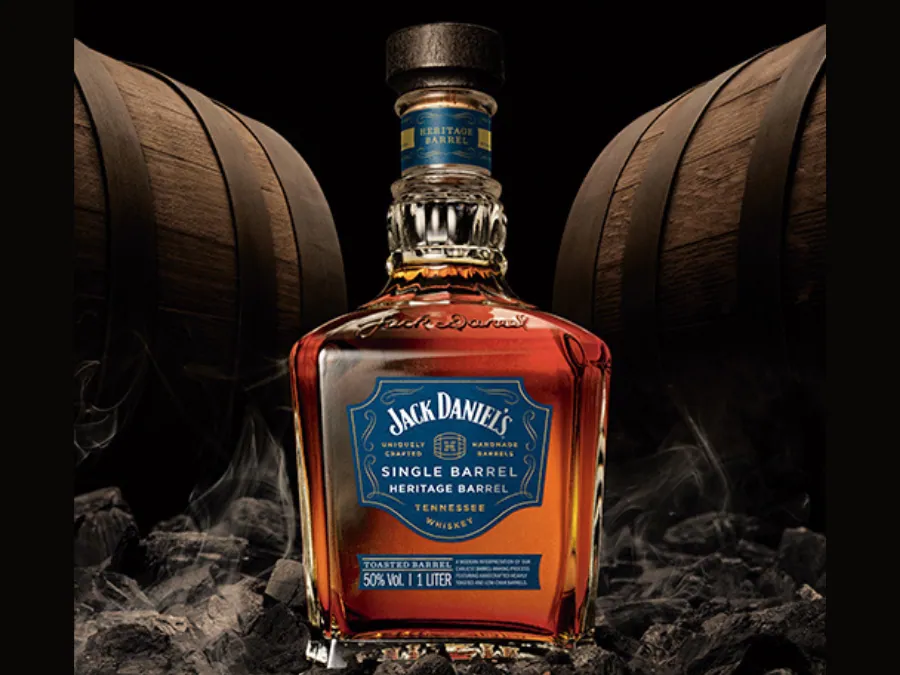
Describing the US market as “dynamic and challenging” Brown-Forman’s Americas president, Michael Masick, insists: “The appetite for authenticity remains robust,” highlighting examples such as Jack Daniel’s Single Barrel Heritage Barrel (above), the popularity of which prompted Brown-Forman to make the expression a permanent part of the brand’s range.
At Campari Group, Wild Turkey is proving “resilient”, according to the group’s House of Whiskey & Rum MD, Raul Gonzalez, with full-year sales in 2025 rising by 2%, thanks primarily to the US market.
“Our total category performance was offset by a demand-led shortage on some premium Russell’s Reserve whiskeys,” Gonzalez adds, “but overall, we’ve seen positive indicators from the market. We’re continuing to see strong demand for our limited releases, like the Wild Turkey Master’s Keep Series and Russell’s Reserve Rickhouse Series.”
In similar fashion, Suntory Global Spirits’ Jim Beam and Maker’s Mark brands outperformed the American whiskey category last year, says the company’s VP of American whiskey, Regan Clarke.
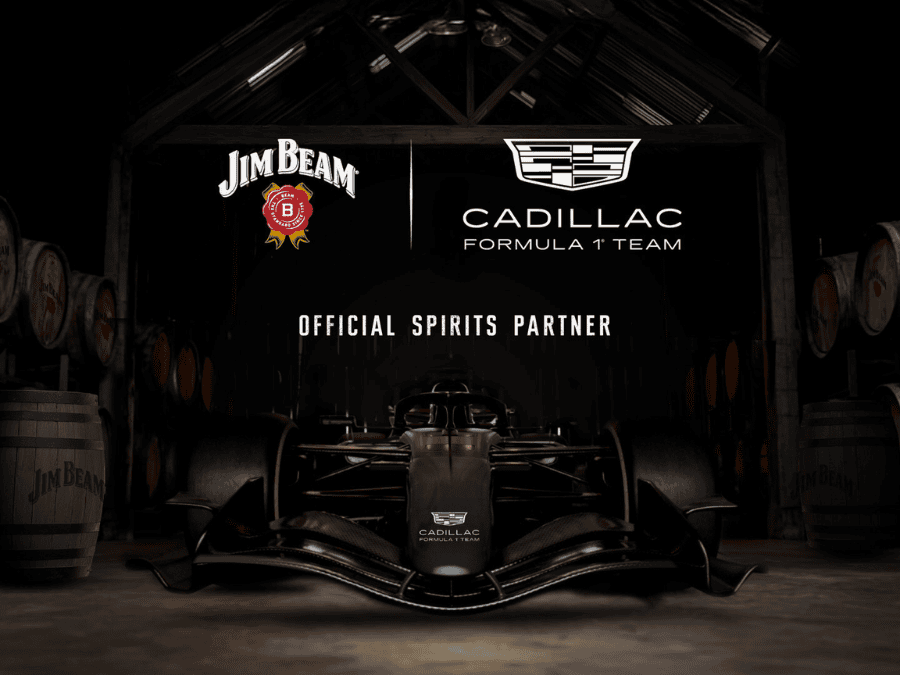
“We want to tap into the relevant occasions where our consumers are, such as leaning into fandom with sports partnerships like Jim Beam and the Cadillac Formula 1 team (below) and US Soccer, and Maker’s Mark’s partnership with [women’s basketball league] Unrivaled,” she adds.
Strain on small distillers
Growth is not impossible, but brands are having to work harder to capture and retain the attention of consumers. “Premiumisation is not over insofar as truly unique releases continue to be prized by connoisseurs,” says Matt Magliocco, executive VP of Chatham Imports, which oversees Michter’s export business.
“At the mass-market level, however, there’s an increasing consumer sensitivity to pricing and an awareness of how discretionary purchases fit into overall budgets that may be challenged by inflation and other economic factors.”
In a crowded market where growth is elusive, the dangers are starker for smaller distillers, who tend to be at the mercy of rising costs and interest rates.
Blevins at Heaven Hill voices cautious optimism and the conviction that he has “a hard time seeing premiumisation stalling for an extended period”. However, he nonetheless acknowledges: “Where you see that pressure most acutely is with smaller, newer producers, particularly as consolidation continues in the middle tiers.
“Larger, more established operators tend to have more flexibility to navigate cycles, while smaller players feel those shifts earlier.”
The Canadian shutdown
One challenge that all exporters have had to deal with is the effective shutdown of the Canadian market, as the political spat between Washington and Ottawa led to US products being removed from retail shelves.
“Our Sagamore Rye from Maryland has been completely shut out of the Canadian market since February 2025,” reports Disaronno Group’s global chief commercial officer & Disaronno International USA CEO, Robert Cullins. “We continue to monitor the situation with the hopes that trade barriers will normalise in the future, and American products are welcomed back into Canada, with a tariff or without.”
Magliocco admits that Michter’s has been “heavily impacted” by the situation, adding: “While it’s gratifying that Alberta and Saskatchewan have reversed this regrettable policy in their respective provinces, the remainder of the country – including the powerhouse markets of Ontario, Québec and British Columbia – remains off-limits to us.”
He speaks for many producers when he says: “Canada was, and we hope always will be, an excellent market for American whiskey. We very much hope that the Canadian Government lifts this unfortunate ban and allows its citizens to enjoy free choice.”
New frontiers
With difficult trading conditions in their home market and Canada mostly a no-go area, it’s little wonder that American whiskey brand owners are casting their eyes further afield, across the Pacific and Atlantic Oceans.
Here, strategies diverge: while the likes of Suntory Global Spirits and Brown-Forman have long pursued international growth, others, such as Heaven Hill, remain largely US-focused, for good or ill.
“Our international strategy is focused on disciplined expansion, rather than broad diversification,” explains Blevins. “We are prioritising a select group of markets where our brands, and particularly American whiskey, have a strong right to win.
“A good example is global travel retail, where we’ve recently invested in building a dedicated team. This channel presents a strong opportunity for brand discovery, especially for premium American whiskey and tequila, and allows us to engage consumers in a highly experiential environment.”
By contrast, Masick reports Brown-Forman is pursuing “multiple runways for growth”, including Mexico and Brazil – the latter is the top export market for Jack Daniel’s flavour extensions – alongside Poland and Türkiye.
He adds: “We’re also nurturing high-potential countries like India, where we’re looking to expand distribution to reach more of the population, and Italy and Japan, where our transitions to owned distribution are beginning to yield benefits.”
India is the most obvious prize. Last year, Clarke says, Jim Beam’s business was up 20% in the country, while Milner describes India as “far and away the most exciting market” for Milestone, with Mumbai and Bangalore on his immediate radar – using local bottling to help the business target 50,000 cases in the next few years.
WhistlePig is available in 20 international markets, but Roberts warns that exporting is no easy fix. “What makes international markets genuinely different from the US is that domestic success doesn’t automatically travel,” he says.
“Many American whiskey brands rely heavily on the awareness and cultural momentum they’ve built at home. But internationally, that equity doesn’t transfer in the same way. Consumers are less familiar with the brand landscape, the reference points are different, and the competitive set is entirely distinct.”
Weathering the storm
These are tricky times for American whiskey, but distillers seem to be holding their nerve. Brown-Forman’s significant investment behind Woodford Reserve is aimed at replicating the global value growth seen for Jack Daniel’s over the past 25 years – but in only a decade.
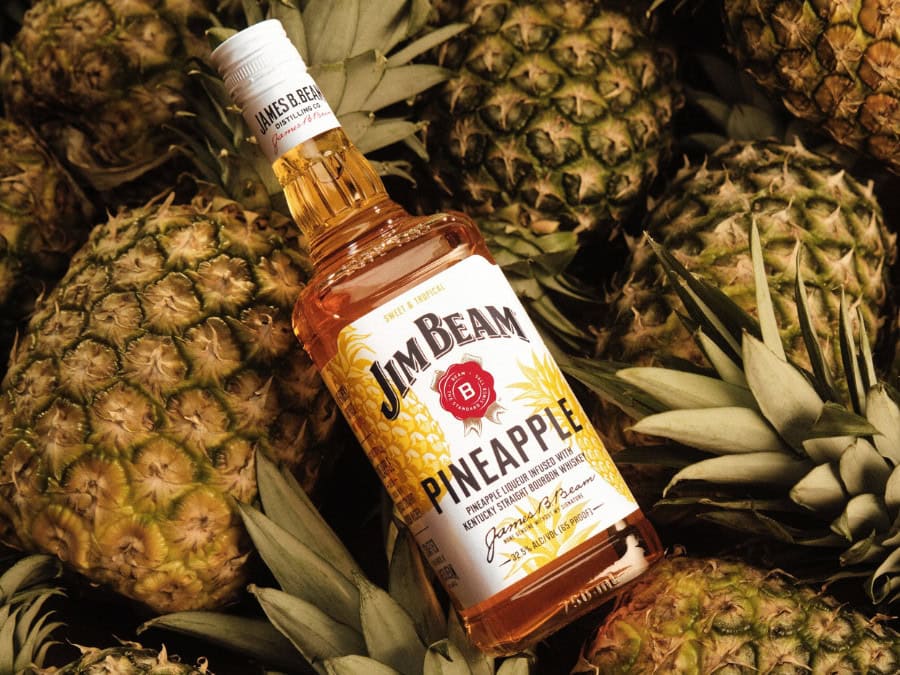
Suntory Global Spirits’ Clarke ticks off a list of consumer-friendly innovations, including Jim Beam Pineapple (above) and the On The Rocks Whiskey Sour with Jim Beam RTD.
Meanwhile, Campari Group’s Gonzalez highlights the success of age-stated whiskeys such as Wild Turkey 101 8-year-old and Russell’s Reserve 13-year-old, and WhistlePig’s Roberts points to the “real momentum” found by the fledgling American single malt segment.
Inventories across the industry are still bloated, but Cullins insists that Sagamore’s production schedules remain “relatively unaffected”, while Magliocco points out that Michter’s inventory planning is based, in some cases, on sales in 35 years’ time; the company’s distilleries in Shively and Fort Nelson continue to lay down spirit.
“Heaven Hill has weathered storms like these for generations,” adds Blevins. “We’re preparing for long-term growth while navigating near-term volatility.
“The pace of the market may be more measured in 2026, but we remain confident in the underlying strength of the category and are focused on ensuring we’re all well-positioned when conditions improve.”
Members-only intel
Keep reading this members-only article – and every one like it
- ✓All paywalled news and interviews
- ✓Category and market data
- ✓Monthly GDI magazine
- ✓Full archive + daily newsletter
Secure checkout · Cancel any time · Company invoices available
Already a member? Log in
See all plans, incl. 10-reader and corporate
Check if your company already pays for you Your company may already give you free access.
Corporate subscribers: AB InBev, Bacardi, Campari Group, Diageo, Moët Hennessy, Pernod Ricard, Proximo Spirits, Suntory Spirits Group, William Grant and Sons.
Activate company accessNot ready yet? Get the headlines free in our daily newsletter.
Sign up free