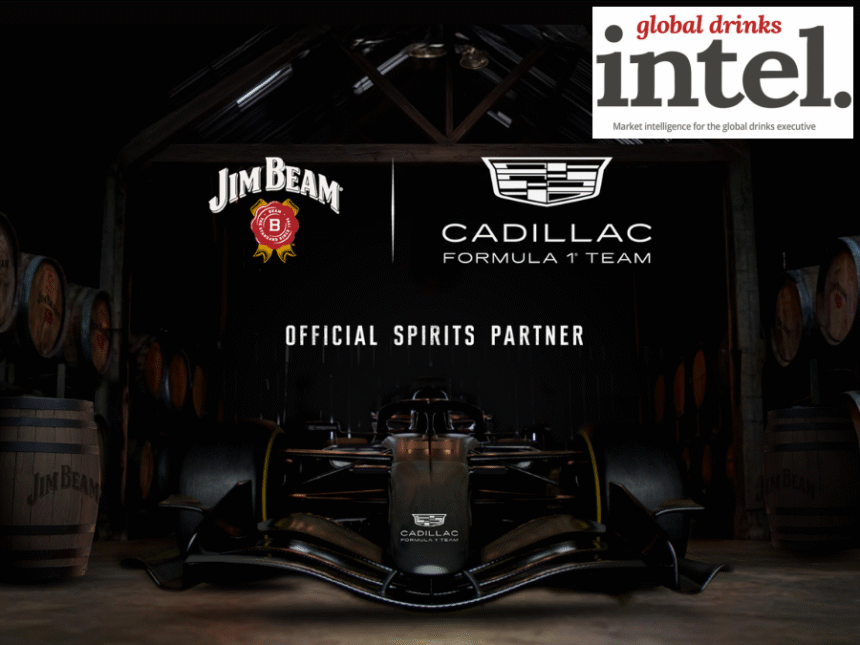
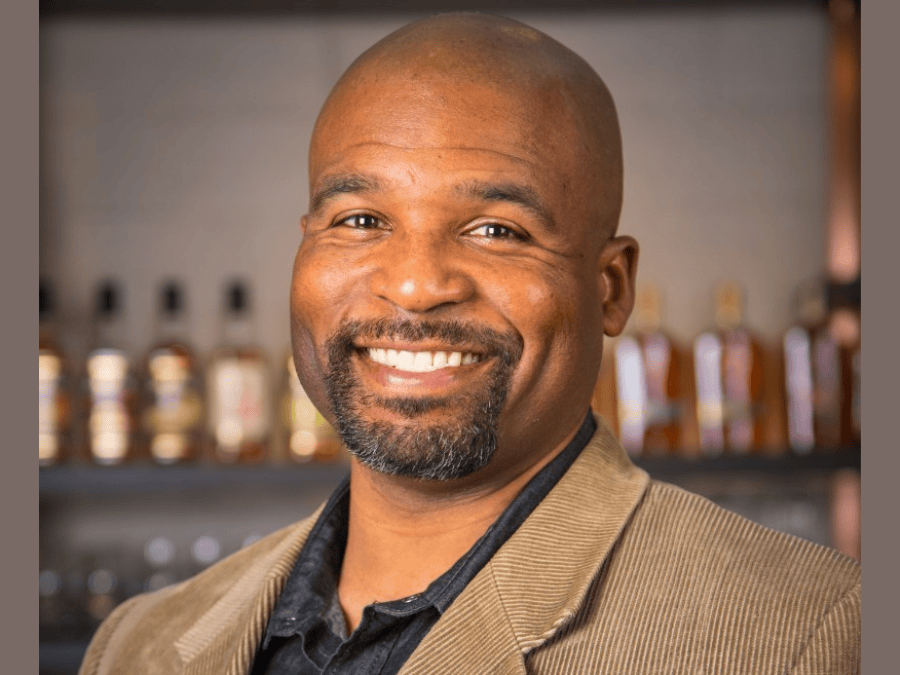
Last month, Suntory Global Spirits secured ‘official spirits partner’ status for its Jim Beam flagship with the newly-founded Cadillac Formula 1 Team. Shortly afterwards, Global Drinks Intel editor Olly Wehring talked with Rashidi Hodari (below), the MD of the group’s James B Beam Distilling Co unit, to understand the rationale behind the high-profile tie-up.
How did you get where you are today?
My background is in consumer packaged goods, but before that, I was a proud member of the US Army for five years. I’ve been with the company for just over eight years and joined when we were headquartered in Chicago.
I’ve worked across a lot of different sectors and categories. Before I became the MD for James B Beam, I was the MD for our tequila portfolio. I’ve been in my current role since the beginning of 2024 and report in to chief global brands officer Robbie Millar.
My responsibilities are to oversee the growth strategy both in the short to long term, as well as oversee the product portfolio and innovation pipeline. I also work closely with our founders to make sure that our home place communicates the stories that we want to tell and ensure the markets have what they need to grow and win with our portfolio.
Where does James B Bean Distilling Co sit within Suntory Global Spirits?
It’s one of our brand houses, along with The House of Suntory and our scotch whisky house. It’s one of our pivotal houses.
What prompted the sponsorship arrangement with Cadillac Formula 1?
We did look across the whole gamut of beverage brands in Formula One. There’s no cookie-cutter approach, be that in activation or engagement scale. That gave us confidence that we could come with our own approach – We can be Jim Beam and do so globally and connect with the F1 audience.
While the audience currently is predominantly male, that’s rapidly changing. There’s a growing fan base that’s younger, and more diverse from different demographics around the world. They’re not necessarily a singular type of consumer.
How long will the tie-up run for and how much has it cost?
It’s multiple years. We’re not getting into the details of the agreement in terms of financial outlay, but it’s important enough that it’s going to organise engaging on a global level.
Has Beam had any motor racing connections previously?
We’ve had partnerships in NASCAR and in IndyCar here in the US, and Beam was a major sponsor of Dick Johnson Racing in Australian Supercars. We’ve participated before, but not at a global level. It’s been more of a regional play in the past.
Have these arrangements provided a textbook for the new one?
What you’re seeing here is in line with how our company’s evolving – it’s also in line with a lot of our competitors. The world is very different to how it was five or ten years ago. The need to compete at a global level is critical, to the brand, to our brand house and to the company.
It feels like we’re doing the right thing in the right place.
Which markets do you expect to connect best with the sponsorship?
The best way that we think about this is, there are markets where there’s a direct overlap between a Grand Prix and brand excitement, such as China and Brazil. Then, there are other markets, such as Germany and India, that are important to our business but don’t have races. There’s an F1 fan base and there’s a way to engage with them, but it won’t be around a race weekend. We’ll be thinking about the optimal way to make sure those consumers in those markets understand why Jim Beam is partnered with Cadillac.
The traditional view of F1 and its premium nature is one way of showing up – We know from the very beginning that’s not what Jim Beam is; Jim Beam’s a whiskey for everybody, so we can’t show up at exclusive events that limit who gets access to it. We have to think about how to be Jim Beam everywhere we go.
How are you going to leverage this partnership across markets with different levels of familiarity with Jim Beam?
We work closely with our local marketing teams to understand their appetite, their investment, their growth profile and how much they want to – and can – engage across the different races.
The old playbook was that you just execute race weekend 20 times and you win. Nowadays, we’re in a war for attention. That’s a different thing to just trying to win on race weekend.
Are you at the stage yet of having the KPIs nailed down?
We are at that stage, but I prefer to keep them within our team.
If we can make sure that people know what Jim Beam’s all about and give them a refreshing cocktail when they’re enjoying F1, then we’re going to have a chance to accomplish the goals that we have before us.
What’s your definition of success for the sponsorship?
People, particularly in the industry, perceive that they know what Jim Beam’s about. We get very caught up in price point being an indicator of quality. So, the narrative is that, as a standard whiskey, Jim Beam must not be that good.
We’re very proud of the whiskey we make and why it was created. We want to share that story around the world, which is why we’ve partnered with Cadillac. Jim Beam’s always had a community connection here in Kentucky, We want to show that connection around the world, which is something that nobody else is trying to do.
Is F1’s premium position an opportunity to premiumise Jim Beam’s price point?
The mission of the brand is to make a quality whiskey that’s accessible to people. We have to do that while remaining cognisant of our price and our price strategy.
The plan isn’t to do this so that we can price more. It’s to make sure that the quality is known and give people a chance to try it and share it with those that they care about, and make it a valuable part of the communities that they live in.
How has Jim Beam been performing in 2025?
I don’t want to speak for everybody in the spirits industry, but over the last few years, it’s been easy to get comfortable that growth was readily available.
We’re excited that we’re growing share in the categories and segments that we play in. We also know that these are hard yards right now – It’s not easy. It’s going to take everyone working together to get where we want to go.
Is the growth opportunity for Beam geographic primarily, or is it in premium extensions?
Without wanting to give a non-answer, it’s a little bit of both. Part of what we’re trying to do is compete at a global level against the biggest players that exist. We’ve always done that but in a sort of followership mindset.
Now we’re looking at what the brand needs, to become a meaningful part of the community. That’s what will provide ample opportunities for growth.
Where are Beam’s top markets?
There’s Germany, the US, Japan, Australia. Global travel retail’s also pretty big for us.
Which macroeconomic headwinds are impacting the brand the hardest?
As an industry, we talk a lot about structural changes and cyclical changes. Both of them are real, but part of what’s getting us so excited about this sponsorship is that we need to break away from what’s worked in the past and do new things to make our brands come to life.
The market conditions are challenging, and their difficulty means we have to operate differently. We have to think about how to engage with consumers where they are and how to give them solutions that fit into their lives.
The economic climate often impacts discretionary income, and we want to make sure that we’re in the consideration set for it.
How do you get a brand that’s been around for as long as Beam to connect with those younger LDA consumers?
There’s no singular answer. A lot of it is about going back to basics, telling your brand story clearly and succinctly in the mediums and channels that they pay attention to. Our ‘best enjoyed together’ positioning is an integral part of why we exist, and we want to push that connection to them in the appropriate channels, to express to them that that’s what Jim Beam’s all about.
Does the Cadillac sponsorship come from a personal love of F1, by any chance?
It’s F1! It’s the most popular global sport that exists. For me to say that no fans of F1 contributed to this would not be accurate. But it wasn’t me saying that it’s F1 or nothing.
We’re trying to solve a business challenge. We’re trying to tell our brand story in a way that’s going to be attractive to the next generation of whiskey consumers – F1 provides a huge opportunity to do that.